𝐁.𝐀𝐈: 𝐅𝐑𝐎𝐌 𝐀𝐈 𝐈𝐍𝐓𝐄𝐋𝐋𝐈𝐆𝐄𝐍𝐂𝐄 𝐓𝐎 𝐎𝐍-𝐂𝐇𝐀𝐈𝐍 𝐀𝐂𝐓𝐈𝐎𝐍 🤖⚡
The most interesting question in AI is no longer only “What can an AI understand?”
It is increasingly becoming:
“What can an AI actually do?”
That shift takes AI beyond conversation and toward execution.
𝐅𝐑𝐎𝐌 𝐑𝐄𝐀𝐒𝐎𝐍𝐈𝐍𝐆 𝐓𝐎 𝐀𝐂𝐓𝐈𝐎𝐍
An AI model can analyze information, reason through a problem, and recommend a course of action.
But reasoning alone cannot move an asset, call a smart contract, or complete an on-chain transaction.
There needs to be an execution layer connecting intelligence with authorized actions.
https://t.co/WxSbpZT10x’s BAIclaw introduces an agent-wallet architecture designed to allow configured AI Agents to interact with supported blockchain operations.
𝐓𝐇𝐄 𝐀𝐆𝐄𝐍𝐓 𝐋𝐎𝐎𝐏
Think about the workflow:
Information → Reasoning → Decision → Authorization → Blockchain Action → Recorded Result
The model handles intelligence.
The Agent coordinates the task.
The wallet provides the authorization layer.
The blockchain records the resulting action.
That is fundamentally different from a traditional chatbot that produces text and stops there.
𝐖𝐇𝐘 𝐖𝐀𝐋𝐋𝐄𝐓𝐒 𝐌𝐀𝐓𝐓𝐄𝐑
For autonomous Agents, wallets can become more than places where users hold assets.
They can act as controlled execution interfaces—provided permissions, spending limits, supported operations, and security boundaries are properly configured.
This creates a bridge between AI decision-making and programmable financial infrastructure.
𝐓𝐇𝐄 𝐀𝐆𝐄𝐍𝐓𝐈𝐂 𝐃𝐈𝐑𝐄𝐂𝐓𝐈𝐎𝐍 🚀
The bigger opportunity is not simply putting AI on a blockchain.
It is connecting intelligence, authorization, execution, and settlement into one workflow.
https://t.co/WxSbpZT10x is building around that convergence, moving the concept of AI from something that only answers questions toward systems that can potentially perform authorized actions within Web3 environments.
The future Agent may not just tell you what to do.
It may be able to reason, request permission, and execute the task.
More Explore→https://t.co/C62UoKy3v6
@BAI_AGI@justinsuntron #TRONEcoStar
𝐁.𝐀𝐈: 𝐁𝐔𝐈𝐋𝐃𝐈𝐍𝐆 𝐀𝐈 𝐈𝐍𝐅𝐑𝐀𝐒𝐓𝐑𝐔𝐂𝐓𝐔𝐑𝐄 𝐃𝐄𝐕𝐄𝐋𝐎𝐏𝐄𝐑𝐒 𝐂𝐀𝐍 𝐀𝐂𝐓𝐔𝐀𝐋𝐋𝐘 𝐔𝐒𝐄 🤖💻
AI adoption is not driven by models alone.
A powerful model becomes much more useful when developers can integrate it into applications without rebuilding the entire infrastructure stack from scratch.
That is where https://t.co/WxSbpZT10x’s developer-focused API layer becomes relevant.
𝐅𝐀𝐌𝐈𝐋𝐈𝐀𝐑 𝐀𝐏𝐈 𝐏𝐀𝐓𝐓𝐄𝐑𝐍𝐒
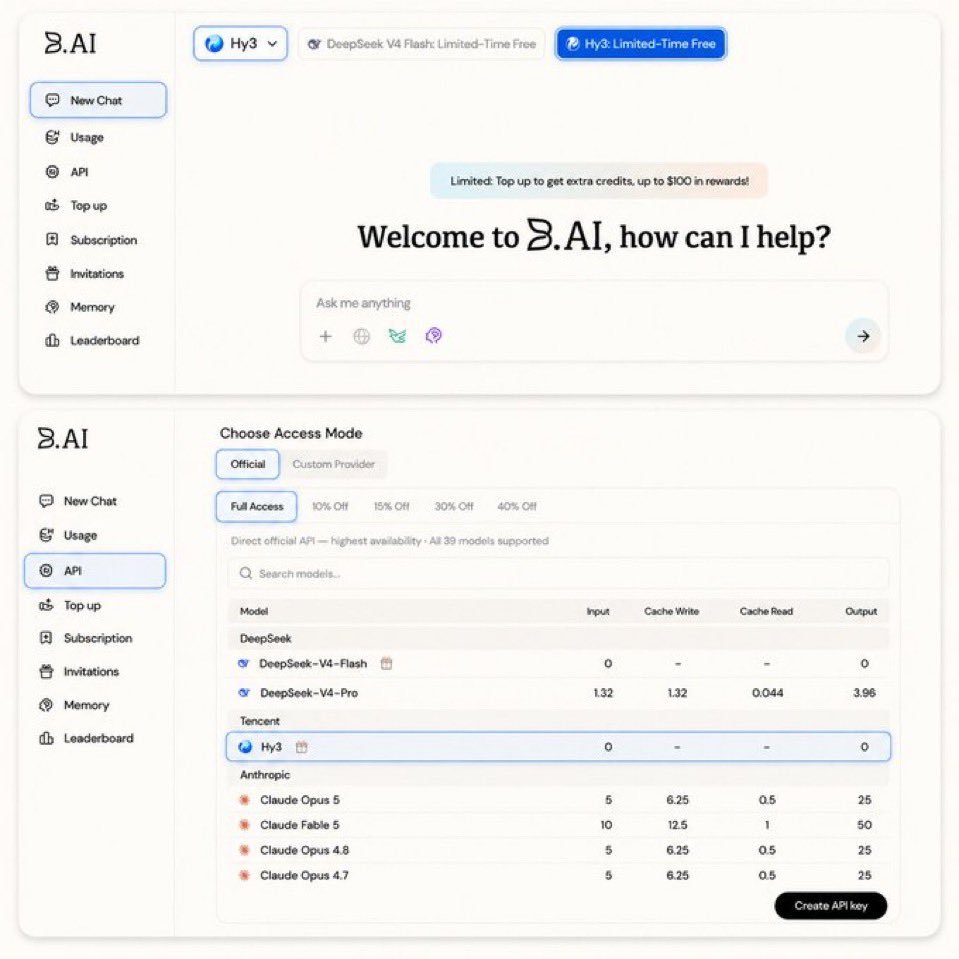
https://t.co/WxSbpZT10x supports OpenAI-compatible Chat Completions and Responses interfaces, alongside Anthropic-compatible Messages interfaces.
For developers already working with these integration patterns, this can make connecting applications to https://t.co/WxSbpZT10x more straightforward.
The goal is not to force developers to learn an entirely new interaction model.
𝐁𝐔𝐈𝐋𝐃 𝐖𝐈𝐓𝐇𝐎𝐔𝐓 𝐑𝐄𝐁𝐔𝐈𝐋𝐃𝐈𝐍𝐆 𝐄𝐕𝐄𝐑𝐘𝐓𝐇𝐈𝐍𝐆
An AI application needs more than access to a model.
Developers also need infrastructure for authentication, model selection, API requests, responses, streaming, usage management, and application integration.
A consistent API layer can reduce the amount of plumbing required between an application and the intelligence it uses.
That matters even more as teams begin working with multiple model families.
𝐌𝐔𝐋𝐓𝐈-𝐌𝐎𝐃𝐄𝐋 𝐀𝐂𝐂𝐄𝐒𝐒 𝐂𝐇𝐀𝐍𝐆𝐄𝐒 𝐓𝐇𝐄 𝐖𝐎𝐑𝐊𝐅𝐋𝐎𝐖
Different applications can require different capabilities.
Coding may need one model.
Reasoning may favor another.
Multimodal tasks may require something else.
A unified infrastructure layer can make switching between these capabilities easier for developers.
𝐃𝐄𝐕𝐄𝐋𝐎𝐏𝐄𝐑𝐒 𝐀𝐑𝐄 𝐓𝐇𝐄 𝐁𝐑𝐈𝐃𝐆𝐄 🌐
Model providers create intelligence.
Developers turn that intelligence into products, agents, tools, and everyday applications.
https://t.co/WxSbpZT10x is building around that bridge by giving developers an API-oriented environment for accessing and integrating AI capabilities.
The bigger shift is simple:
AI becomes more powerful when developers can actually build with it.
More Explore→https://t.co/C62UoKy3v6
@BAI_AGI@justinsuntron #TRONEcoStar
𝐃𝐄𝐄𝐏𝐒𝐄𝐄𝐊 𝐕𝟒.𝟏 𝐅𝐋𝐀𝐒𝐇 𝐎𝐍 𝐁.𝐀𝐈: 𝐁𝐔𝐈𝐋𝐓 𝐅𝐎𝐑 𝐋𝐀𝐑𝐆𝐄-𝐒𝐂𝐀𝐋𝐄 𝐀𝐈 𝐖𝐎𝐑𝐊𝐅𝐋𝐎𝐖𝐒 ⚡🤖
The AI model landscape is expanding quickly, and access to the right model can be just as important as the model itself.
https://t.co/WxSbpZT10x continues adding different model families to its platform, with DeepSeek V4.1 Flash offering another option for demanding AI workflows.
𝐋𝐀𝐑𝐆𝐄 𝐂𝐎𝐍𝐓𝐄𝐗𝐓, 𝐌𝐔𝐋𝐓𝐈𝐌𝐎𝐃𝐀𝐋 𝐂𝐀𝐏𝐀𝐁𝐈𝐋𝐈𝐓𝐘
According to the supplied specifications, DeepSeek V4.1 Flash features a 552B-parameter backbone and a 1M-token context window, with support for text and image inputs.
That combination is designed for workflows where the model needs to process large amounts of information while maintaining context.
𝐖𝐇𝐄𝐑𝐄 𝐋𝐎𝐍𝐆 𝐂𝐎𝐍𝐓𝐄𝐗𝐓 𝐌𝐀𝐓𝐓𝐄𝐑𝐒
Large context windows can be particularly useful when working with:
💻 Large software repositories
📚 Complex technical documentation
📊 Large datasets and structured information
🤖 Multi-stage Agent workflows
Instead of repeatedly breaking information into smaller pieces, longer context can allow more of the relevant material to remain available within a single workflow.
𝐓𝐇𝐄 𝐑𝐄𝐀𝐋 𝐕𝐀𝐋𝐔𝐄 𝐈𝐒 𝐁𝐄𝐘𝐎𝐍𝐃 𝐎𝐍𝐄 𝐌𝐎𝐃𝐄𝐋
The interesting part about https://t.co/WxSbpZT10x is not simply adding another model to a growing catalogue.
As model capabilities become increasingly specialized, developers need choice, accessibility, and a consistent infrastructure layer.
Different tasks can require different models.
https://t.co/WxSbpZT10x’s multi-model environment makes that diversity more practical by bringing multiple AI capabilities into a connected platform.
𝐅𝐑𝐎𝐌 𝐌𝐎𝐃𝐄𝐋𝐒 𝐓𝐎 𝐀𝐈 𝐈𝐍𝐅𝐑𝐀𝐒𝐓𝐑𝐔𝐂𝐓𝐔𝐑𝐄 🚀
The future of AI may not be about choosing one model forever.
It may be about having the right model available for the right task.
DeepSeek V4.1 Flash adds another option to that growing ecosystem, while https://t.co/WxSbpZT10x provides the infrastructure layer through which developers and Agents can access increasingly diverse AI capabilities.
More Explore→https://t.co/C62UoKy3v6
@BAI_AGI@justinsuntron #TRONEcoStar
𝐁.𝐀𝐈 𝐂𝐎𝐃𝐄: 𝐁𝐑𝐈𝐍𝐆𝐈𝐍𝐆 𝐀𝐈 𝐃𝐄𝐄𝐏𝐄𝐑 𝐈𝐍𝐓𝐎 𝐓𝐇𝐄 𝐃𝐄𝐕𝐄𝐋𝐎𝐏𝐌𝐄𝐍𝐓 𝐖𝐎𝐑𝐊𝐅𝐋𝐎𝐖 🤖💻
AI coding is moving beyond simple code generation.
Modern development workflows increasingly involve AI systems that can understand repositories, reason about architecture, debug issues, manage context, and work through multi-step engineering tasks.
https://t.co/WxSbpZT10x is extending into this workflow with BAI Code.
𝐀 𝐂𝐎𝐌𝐌𝐀𝐍𝐃-𝐋𝐈𝐍𝐄 𝐀𝐈 𝐖𝐎𝐑𝐊𝐅𝐋𝐎𝐖
BAI Code is designed as a command-line AI programming tool, bringing AI assistance directly into the developer’s working environment.
Its support for multi-model switching, session management, and context compression is particularly relevant for longer development sessions where maintaining useful project context matters.
𝐖𝐇𝐘 𝐌𝐔𝐋𝐓𝐈-𝐌𝐎𝐃𝐄𝐋 𝐂𝐎𝐃𝐈𝐍𝐆 𝐌𝐀𝐓𝐓𝐄𝐑𝐒
There is rarely one perfect model for every engineering task.
One model may be useful for complex reasoning.
Another may perform strongly on coding.
A different model may fit a particular project or workflow.
A multi-model environment allows developers to select tools according to the task instead of forcing every problem through the same model.
𝐅𝐑𝐎𝐌 𝐀𝐈 𝐂𝐇𝐀𝐓 𝐓𝐎 𝐀𝐈 𝐄𝐍𝐆𝐈𝐍𝐄𝐄𝐑𝐈𝐍𝐆 🚀
The larger shift is that AI is becoming part of the development environment itself.
The workflow can evolve from:
Ask AI → Receive code
toward:
Understand → Plan → Code → Test → Debug → Iterate
That requires AI systems capable of handling context, tools, repositories, and longer-running tasks.
𝐓𝐇𝐄 𝐁𝐈𝐆𝐆𝐄𝐑 𝐏𝐈𝐂𝐓𝐔𝐑𝐄 🌐
https://t.co/WxSbpZT10x’s move into coding infrastructure reflects a broader transition from conversational AI toward AI-assisted software engineering.
When developers can combine multiple models inside a practical command-line workflow, AI becomes less of a separate chatbot and more of a working layer inside the development process.
More Explore→https://t.co/C62UoKy3v6
@BAI_AGI@justinsuntron #TRONEcoStar
𝐁.𝐀𝐈 × 𝐌𝐄𝐓𝐀𝐌𝐀𝐒𝐊: 𝐁𝐑𝐈𝐍𝐆𝐈𝐍𝐆 𝐀𝐈 𝐂𝐋𝐎𝐒𝐄𝐑 𝐓𝐎 𝐓𝐇𝐄 𝐖𝐄𝐁𝟑 𝐖𝐀𝐋𝐋𝐄𝐓 𝐋𝐀𝐘𝐄𝐑 🤖🦊
AI infrastructure becomes more useful when interacting with it does not require users to learn an entirely new workflow.
That is why wallet connectivity matters.
https://t.co/WxSbpZT10x’s MetaMask connectivity within the TRON ecosystem creates another access point between AI services, Web3 wallets, and blockchain-based operations.
𝐀 𝐅𝐀𝐌𝐈𝐋𝐈𝐀𝐑 𝐀𝐂𝐂𝐄𝐒𝐒 𝐋𝐀𝐘𝐄𝐑
For users already familiar with MetaMask, wallet connectivity can make interacting with supported Web3 applications feel more natural.
Instead of treating AI infrastructure and blockchain wallets as completely separate environments, https://t.co/WxSbpZT10x brings them closer together through a connected experience.
𝐖𝐇𝐄𝐑𝐄 𝐀𝐈 𝐌𝐄𝐄𝐓𝐒 𝐖𝐀𝐋𝐋𝐄𝐓𝐒
The connection becomes more interesting because https://t.co/WxSbpZT10x is focused on more than conversational AI.
Its broader architecture involves Agents, APIs, wallets, payments, and blockchain-based operations.
That means the wallet can become an important part of the Agent ecosystem—providing access to assets and authorized on-chain interactions.
𝐓𝐇𝐄 𝐈𝐍𝐅𝐑𝐀𝐒𝐓𝐑𝐔𝐂𝐓𝐔𝐑𝐄 𝐋𝐀𝐘𝐄𝐑 🌐
Think about the relationship:
AI → Intelligence
Agents → Execution
Wallets → Authorization & Assets
Blockchain → Settlement
https://t.co/WxSbpZT10x operates around the intersection of these layers.
As AI Agents become more capable, connectivity with Web3 infrastructure can help bridge the gap between what an Agent can understand and what it can actually do.
𝐓𝐇𝐄 𝐁𝐈𝐆𝐆𝐄𝐑 𝐏𝐈𝐂𝐓𝐔𝐑𝐄 🚀
The convergence of AI and Web3 is not simply about adding AI features to wallets or blockchain applications.
It is about creating infrastructure where intelligence, identity, authorization, assets, and execution can work together.
https://t.co/WxSbpZT10x’s MetaMask connectivity adds another piece to that emerging infrastructure stack.
More Explore→https://t.co/C62UoKy3v6
@BAI_AGI@justinsuntron #TRONEcoStar
𝐁.𝐀𝐈 × 𝐓𝐑𝐎𝐍: 𝐁𝐔𝐈𝐋𝐃𝐈𝐍𝐆 𝐓𝐇𝐄 𝐒𝐄𝐓𝐓𝐋𝐄𝐌𝐄𝐍𝐓 𝐋𝐀𝐘𝐄𝐑 𝐅𝐎𝐑 𝐀𝐈 🤖🌐
AI Agents can reason, coordinate tasks, and interact with digital services. But if they are going to participate in an economy, they also need a reliable way to settle value.
That is where the connection between https://t.co/WxSbpZT10x and TRON becomes interesting.
𝐖𝐇𝐘 𝐓𝐑𝐎𝐍 𝐌𝐀𝐓𝐓𝐄𝐑𝐒
TRON already provides established blockchain infrastructure for stablecoin transfers, payments, and on-chain applications.
For autonomous software, this creates a potential settlement environment without requiring an entirely separate financial network.
The infrastructure already exists. The emerging question is how Agents can interact with it.
𝐀𝐈 𝐌𝐄𝐄𝐓𝐒 𝐒𝐓𝐀𝐁𝐋𝐄𝐂𝐎𝐈𝐍 𝐒𝐄𝐓𝐓𝐋𝐄𝐌𝐄𝐍𝐓
An Agent could eventually need to pay for data, APIs, compute, storage, models, or specialized digital services.
Stablecoins can provide a programmable digital settlement mechanism for these machine-driven interactions.
https://t.co/WxSbpZT10x’s role sits around connecting AI services and Agent infrastructure with payment and settlement capabilities.
𝐅𝐑𝐎𝐌 𝐇𝐔𝐌𝐀𝐍 𝐏𝐀𝐘𝐌𝐄𝐍𝐓𝐒 𝐓𝐎 𝐌𝐀𝐂𝐇𝐈𝐍𝐄 𝐏𝐀𝐘𝐌𝐄𝐍𝐓𝐒
The bigger shift is not simply putting AI on a blockchain.
It is enabling software to participate in economic activity under defined permissions.
An Agent could potentially identify a resource → request a service → make an authorized payment → receive the result → continue its workflow.
That requires intelligence, execution, identity, permissions, and settlement to work together.
𝐓𝐇𝐄 𝐁𝐈𝐆𝐆𝐄𝐑 𝐏𝐈𝐂𝐓𝐔𝐑𝐄 🚀
AI provides intelligence.
Agents perform tasks.
TRON provides blockchain settlement.
https://t.co/WxSbpZT10x connects the layers.
This convergence could become an important building block for an emerging machine-driven digital economy, where autonomous software does more than generate information—it can interact with services and participate in value exchange.
More Explore→https://t.co/C62UoKy3v6
@BAI_AGI@justinsuntron #TRONEcoStar
𝐁.𝐀𝐈: 𝐁𝐔𝐈𝐋𝐃𝐈𝐍𝐆 𝐓𝐇𝐄 𝐌𝐀𝐑𝐊𝐄𝐓𝐏𝐋𝐀𝐂𝐄 𝐅𝐎𝐑 𝐀𝐈 𝐒𝐄𝐑𝐕𝐈𝐂𝐄𝐒 🤖🌐
The next stage of AI may not be defined by humans choosing a chatbot and asking questions.
It could be defined by Agents discovering, selecting, paying for, and using specialized digital services based on what they need.
That requires a different kind of infrastructure.
𝐀𝐆𝐄𝐍𝐓𝐒 𝐍𝐄𝐄𝐃 𝐀 𝐒𝐄𝐑𝐕𝐈𝐂𝐄 𝐋𝐀𝐘𝐄𝐑
An Agent might need a specific model for reasoning.
Another could require an external API.
Another may need specialized data, compute, storage, or an on-chain operation.
Instead of treating these resources as isolated tools, an AI service marketplace can make them accessible through machine-readable interfaces that software can discover and interact with.
𝐓𝐇𝐄 𝐏𝐀𝐘𝐌𝐄𝐍𝐓 𝐏𝐈𝐄𝐂𝐄
Finding a service is only part of the problem.
If an Agent needs to purchase access, there must also be a way for software to handle payment.
https://t.co/WxSbpZT10x’s support for x402 points toward this machine-to-machine payment model, where digital services can potentially be accessed through standardized payment flows.
𝐅𝐑𝐎𝐌 𝐀𝐈 𝐔𝐒𝐄𝐑𝐒 𝐓𝐎 𝐀𝐈 𝐂𝐔𝐒𝐓𝐎𝐌𝐄𝐑𝐒
This creates an interesting shift.
Today, humans are the primary customers of AI services.
Tomorrow, an Agent could become a consumer of digital resources—choosing a service, requesting it, paying for it, and incorporating the result into a larger workflow.
𝐓𝐇𝐄 𝐀𝐆𝐄𝐍𝐓𝐈𝐂 𝐄𝐂𝐎𝐍𝐎𝐌𝐘 🚀
The bigger opportunity is not simply more AI models.
It is an ecosystem where intelligence can discover resources, resources can expose services, and payment rails can connect the two.
https://t.co/WxSbpZT10x is building toward that convergence of AI, APIs, Agents, and machine-readable payments.
The future AI marketplace may be less about humans browsing tools—and more about Agents choosing the resources they need.
More Explore→https://t.co/C62UoKy3v6
@BAI_AGI@justinsuntron #TRONEcoStar
𝐁.𝐀𝐈: 𝐖𝐇𝐄𝐑𝐄 𝐀𝐈 𝐈𝐍𝐓𝐄𝐋𝐋𝐈𝐆𝐄𝐍𝐂𝐄 𝐌𝐄𝐄𝐓𝐒 𝐖𝐄𝐁𝟑 𝐈𝐍𝐅𝐑𝐀𝐒𝐓𝐑𝐔𝐂𝐓𝐔𝐑𝐄 🤖🌐
AI and Web3 are often presented as separate technological movements.
AI brings reasoning, generation, and automation.
Web3 brings ownership, identity, payments, and decentralized infrastructure.
https://t.co/WxSbpZT10x sits at the intersection of these capabilities.
𝐀𝐈 𝐍𝐄𝐄𝐃𝐒 𝐌𝐎𝐑𝐄 𝐓𝐇𝐀𝐍 𝐀 𝐌𝐎𝐃𝐄𝐋
A powerful model can generate responses and solve complex problems, but an autonomous Agent needs much more.
It needs identity, access, tools, execution, payments, and permissions.
That is where the infrastructure layer becomes important.
https://t.co/WxSbpZT10x is building an environment where AI services, APIs, model access, and Agent-oriented Web3 components can work together.
𝐖𝐄𝐁𝟑 𝐂𝐀𝐍 𝐁𝐄𝐍𝐄𝐅𝐈𝐓 𝐅𝐑𝐎𝐌 𝐀𝐆𝐄𝐍𝐓𝐒
The relationship works in both directions.
AI Agents can reason about information and coordinate workflows, while Web3 provides programmable ownership, wallets, transactions, and decentralized execution.
This creates a potential bridge between intelligence and economic activity.
𝐅𝐑𝐎𝐌 𝐂𝐇𝐀𝐓𝐁𝐎𝐓𝐒 𝐓𝐎 𝐀𝐂𝐓𝐈𝐎𝐍
The deeper shift is not simply putting AI inside blockchain applications.
It is enabling software that can reason → identify → access resources → execute authorized actions → interact with other systems.
That requires more than intelligence alone.
It requires infrastructure that connects models with real execution environments.
𝐓𝐇𝐄 𝐀𝐆𝐄𝐍𝐓𝐈𝐂 𝐃𝐈𝐑𝐄𝐂𝐓𝐈𝐎𝐍 🚀
https://t.co/WxSbpZT10x’s broader vision sits around this convergence: AI provides intelligence, while Web3 can provide identity, ownership, payments, and programmable execution.
The interesting question is no longer only “How smart is the model?”
It is also:
“What can that intelligence actually do?”
More Explore→https://t.co/C62UoKy3v6
@BAI_AGI@justinsuntron #TRONEcoStar
𝐬𝐓𝐑𝐗: 𝐓𝐔𝐑𝐍𝐈𝐍𝐆 𝐒𝐓𝐀𝐊𝐄𝐃 𝐓𝐑𝐗 𝐈𝐍𝐓𝐎 𝐏𝐑𝐎𝐃𝐔𝐂𝐓𝐈𝐕𝐄 𝐂𝐀𝐏𝐈𝐓𝐀𝐋 ⚡
Staking TRX can be more than simply locking tokens and waiting for rewards. With JustLend DAO’s sTRX, staked TRX becomes a liquid representation that can participate in multiple economic activities across the TRON ecosystem.
𝐓𝐖𝐎 𝐑𝐄𝐖𝐀𝐑𝐃 𝐒𝐎𝐔𝐑𝐂𝐄𝐒
🏛️ TRON STAKING & GOVERNANCE REWARDS
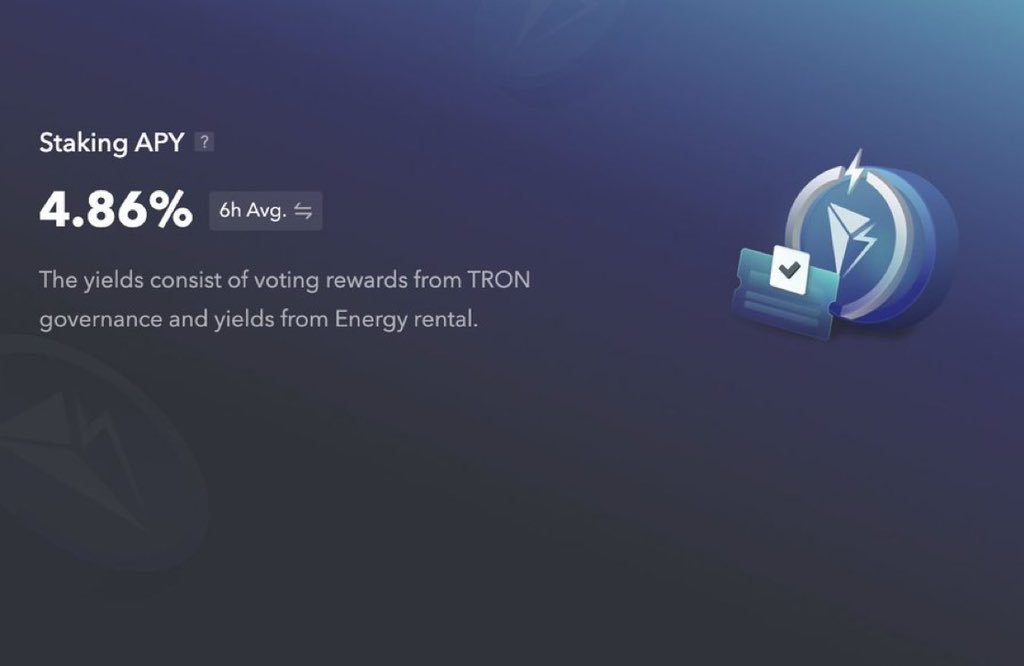
When TRX is staked through sTRX, it contributes TRON Power that can participate in Super Representative voting. The associated voting rewards form one component of the potential sTRX yield.
⚡ ENERGY RENTAL REVENUE
The staked TRX also generates Energy that can be rented through JustLend DAO’s Energy Rental activity. Revenue from this activity provides another component of the sTRX reward structure.
This creates an interesting connection between TRON staking economics and network-resource demand.
𝐓𝐇𝐄 𝐀𝐏𝐘 𝐈𝐒 𝐀 𝐌𝐎𝐕𝐈𝐍𝐆 𝐌𝐄𝐓𝐑𝐈𝐂
🎯 6H Average APY: 4.86%
This is a snapshot rather than a fixed return. APY can change as Super Representative rewards, Energy demand, rental conditions, and other underlying factors change.
𝐅𝐑𝐎𝐌 𝐓𝐑𝐗 𝐓𝐎 𝐬𝐓𝐑𝐗
Stake TRX → Receive sTRX → Participate in staking economics → Capture rewards from connected activities
The key idea is composability.
Instead of treating staking as an isolated activity, sTRX connects staked TRX with additional utility inside the TRON ecosystem while maintaining a tokenized representation of the position.
𝐓𝐇𝐄 𝐁𝐈𝐆𝐆𝐄𝐑 𝐏𝐈𝐂𝐓𝐔𝐑𝐄 🌐
Liquid staking becomes more interesting when the underlying asset can participate in multiple economic systems.
One staked asset. Multiple potential reward sources.
As always, variable APY does not guarantee future returns, and users should understand smart-contract, staking, liquidity, and market risks before participating.
Explore: https://t.co/pjp3axESMv
@Justinsuntron@Defi_Just #TRONEcoStar
𝐁𝐈𝐍𝐀𝐍𝐂𝐄 𝐖𝐀𝐋𝐋𝐄𝐓 × 𝐓𝐑𝐎𝐍: 𝐌𝐀𝐊𝐈𝐍𝐆 𝐔𝐒𝐃𝐓 𝐓𝐑𝐀𝐍𝐒𝐅𝐄𝐑𝐒 𝐌𝐎𝐑𝐄 𝐒𝐄𝐀𝐌𝐋𝐄 ⚡
Blockchain transfers are often technically simple but can feel complicated from a user’s perspective.
You have USDT.
You know the recipient.
You enter the amount.
Then comes the question: what pays the network fee?
That extra layer of complexity is exactly where fee abstraction becomes valuable.
𝐔𝐒𝐃𝐓 𝐂𝐀𝐍 𝐇𝐀𝐍𝐃𝐋𝐄 𝐓𝐇𝐄 𝐅𝐄𝐄
With Binance Wallet’s supported TRON transfer flow, users can select USDT as the Network Fee Payer when transferring USDT and other supported TRC-20 assets.
Instead of separately thinking about the asset being transferred and the network asset required for fees, the experience can remain centered around the transaction itself.
Select USDT → Enter recipient → Review → Choose USDT for the fee → Confirm
That is a much more intuitive way to present blockchain infrastructure.
𝐀𝐁𝐒𝐓𝐑𝐀𝐂𝐓𝐈𝐍𝐆 𝐓𝐇𝐄 𝐂𝐎𝐌𝐏𝐋𝐄𝐗𝐈𝐓𝐘
TRON’s resource model involves Bandwidth and Energy, while TRX can cover applicable network costs when resources are insufficient.
The underlying architecture is important, but everyday users should not necessarily need to understand every technical detail before sending stablecoins.
Good wallet UX translates infrastructure into simple actions.
𝐆𝐀𝐒𝐅𝐑𝐄𝐄 𝐅𝐈𝐓𝐒 𝐓𝐇𝐄 𝐒𝐀𝐌𝐄 𝐃𝐈𝐑𝐄𝐂𝐓𝐈𝐎𝐍
GasFree also focuses on fee abstraction for supported stablecoin transfers, helping reduce the need to manage a separate TRX balance specifically for gas.
Together, these approaches point toward a broader shift:
Blockchain infrastructure can remain sophisticated underneath while becoming simpler on the surface.
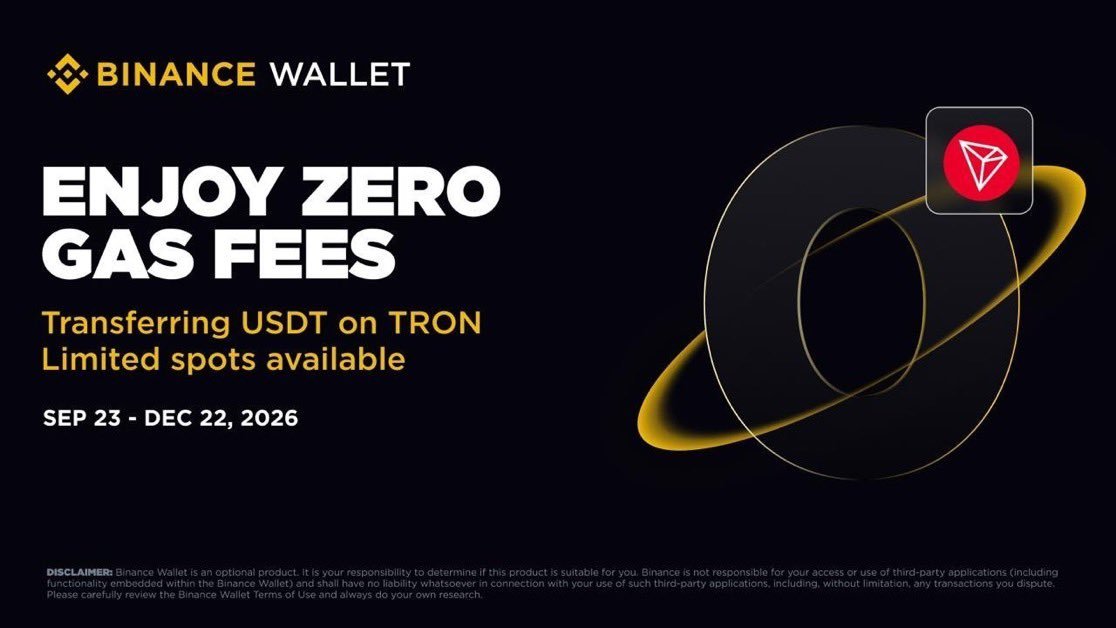
𝐙𝐄𝐑𝐎 𝐆𝐀𝐒 𝐅𝐄𝐄 𝐂𝐀𝐌𝐏𝐀𝐈𝐆𝐍
From September 23 to December 22, 2026, Binance Wallet is offering limited zero-gas-fee transfers for USDT and other TRC-20 tokens on TRON, subject to promotional availability. After the promotional allocation is exhausted, the stated campaign fee is 1 USDT per transaction for the remainder of the campaign.
The bigger story is not simply the fee.
It is making stablecoin transfers feel more like a simple payment experience and less like a lesson in blockchain mechanics.
@justinsuntron@DeFi_JUST #TRONEcoStar
𝐉𝐔𝐒𝐓𝐋𝐄𝐍𝐃 𝐃𝐀𝐎: 𝐖𝐇𝐄𝐑𝐄 𝐂𝐀𝐏𝐈𝐓𝐀𝐋 𝐌𝐄𝐄𝐓𝐒 𝐏𝐀𝐑𝐓𝐈𝐂𝐈𝐏𝐀𝐓𝐈𝐎𝐍 ⚡
DeFi adoption is not only about TVL or token activity. It is also about how many people participate, how much capital supports the ecosystem, and whether that infrastructure creates real opportunities for on-chain financial activity.
JustLend DAO highlights that connection with two notable figures:
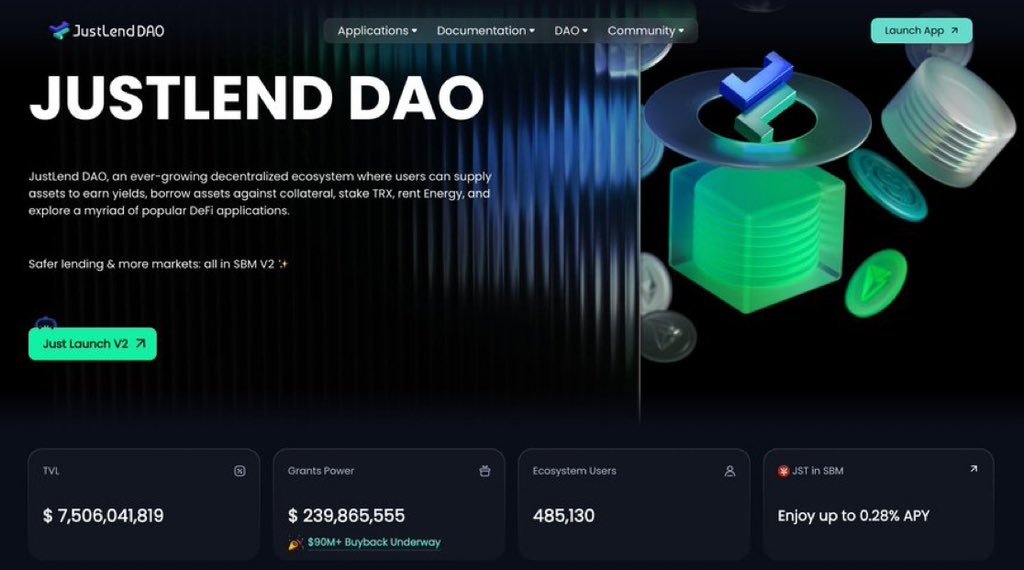
💰 $239M+ in grants power
👥 485K+ users
𝐂𝐀𝐏𝐈𝐓𝐀𝐋 𝐂𝐀𝐍 𝐁𝐔𝐈𝐋𝐃 𝐓𝐇𝐄 𝐅𝐎𝐔𝐍𝐃𝐀𝐓𝐈𝐎𝐍
More than $239M in grants power represents a substantial resource base around the ecosystem.
The important question is not simply the size of the number, but how resources support development, liquidity, participation, and new financial strategies across the TRON DeFi environment.
𝐔𝐒𝐄𝐑𝐒 𝐌𝐀𝐊𝐄 𝐓𝐇𝐄 𝐈𝐍𝐅𝐑𝐀𝐒𝐓𝐑𝐔𝐂𝐓𝐔𝐑𝐄 𝐌𝐄𝐀𝐍𝐈𝐍𝐆𝐅𝐔𝐋
With 485K+ users, JustLend DAO has a substantial participant base interacting with decentralized financial infrastructure.
Users can supply assets, borrow liquidity, manage positions, and explore different DeFi strategies. Each interaction contributes to the broader activity taking place across the ecosystem.
𝐅𝐑𝐎𝐌 𝐂𝐀𝐏𝐈𝐓𝐀𝐋 𝐓𝐎 𝐔𝐓𝐈𝐋𝐈𝐓𝐘
The bigger picture is the relationship between capital, users, liquidity, and utilization.
Capital provides the foundation.
Users create activity.
Liquidity enables financial markets.
Utilization gives that liquidity a purpose.
That is why adoption metrics are worth watching alongside traditional DeFi statistics.
𝐓𝐇𝐄 𝐁𝐈𝐆𝐆𝐄𝐑 𝐏𝐈𝐂𝐓𝐔𝐑𝐄 🌐
$239M+ in grants power.
485K+ users.
Together, these figures provide a snapshot of the scale developing around JustLend DAO and the wider TRON DeFi ecosystem.
The next stage of DeFi infrastructure will depend not only on attracting capital, but also on turning participation into useful, sustainable on-chain activity.
@Justinsuntron@DeFi_Just #TRONEcoStar
𝐆𝐀𝐒𝐅𝐑𝐄𝐄: 𝐓𝐇𝐄 𝐒𝐈𝐌𝐏𝐋𝐄𝐑 𝐖𝐀𝐘 𝐓𝐎 𝐌𝐎𝐕𝐄 𝐒𝐓𝐀𝐁𝐋𝐄𝐂𝐎𝐈𝐍𝐒 ⚡
Stablecoins are becoming a core part of on-chain finance, but transferring them can still create friction when users need a separate token just to pay network fees.
GasFree focuses on removing that extra step for supported stablecoin transfers on TRON.
𝐒𝐄𝐕𝐄𝐍 𝐃𝐀𝐘𝐒. 𝐑𝐄𝐀𝐋 𝐀𝐂𝐓𝐈𝐕𝐈𝐓𝐘.
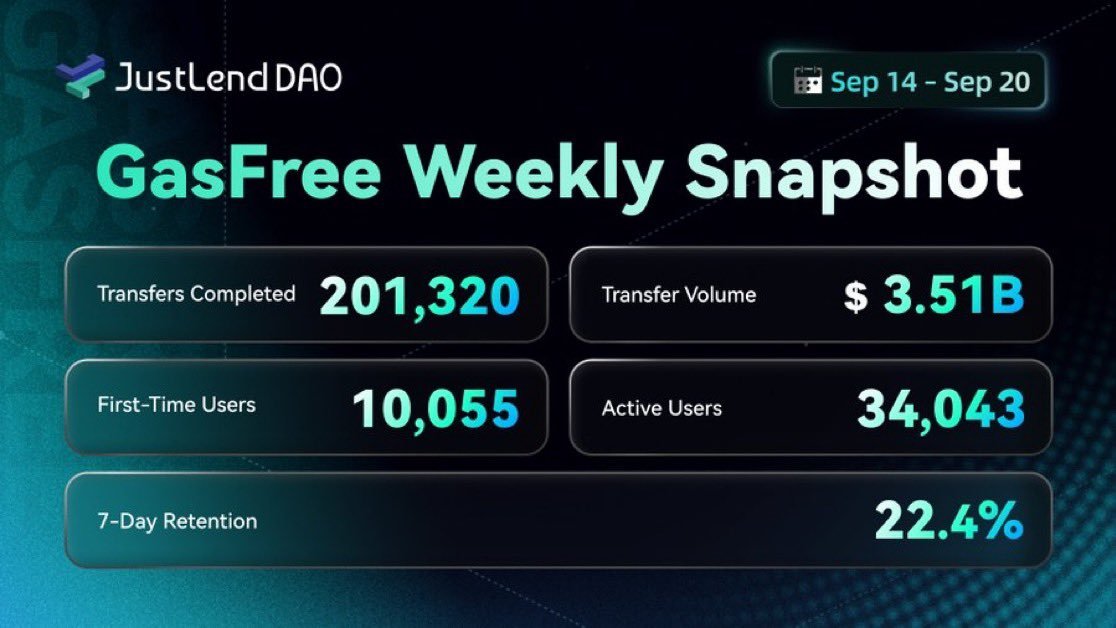
⚡ 201,320 transfers completed
💵 $3.51B total transfer volume
👥 10,055 first-time users
These numbers show more than transaction activity. They highlight how infrastructure designed around simpler user experiences can support practical stablecoin movement.
𝐓𝐑𝐀𝐍𝐒𝐅𝐄𝐑𝐒 𝐀𝐓 𝐒𝐂𝐀𝐋𝐄
Over 200K transfers in seven days represents substantial movement across the GasFree infrastructure.
For stablecoins to become increasingly useful for payments, settlement, liquidity management, and everyday transfers, the process needs to be straightforward.
GasFree addresses one specific friction point: users can transfer supported stablecoins without needing to separately hold TRX specifically for gas.
𝐓𝐇𝐄 𝐕𝐎𝐋𝐔𝐌𝐄 𝐓𝐄𝐋𝐋𝐒 𝐀𝐍𝐎𝐓𝐇𝐄𝐑 𝐒𝐓𝐎𝐑𝐘
$3.51B in seven-day transfer volume demonstrates the amount of stablecoin value moving through the infrastructure.
Stablecoins are not simply assets sitting in wallets. Their usefulness also depends on how easily that value can move between users and applications.
𝐔𝐒𝐃𝐓 + 𝐔𝐒𝐃𝐃 𝐎𝐍 𝐓𝐑𝐎𝐍
GasFree supports $USDT and $USDD, helping simplify transfers across two important stablecoin assets in the TRON ecosystem.
The experience becomes easier to understand:
Hold stablecoins → Transfer them → Gas handled → Less friction
The 10,055 first-time users also show how simplified infrastructure can support newcomers alongside existing participants.
𝐓𝐇𝐄 𝐁𝐈𝐆𝐆𝐄𝐑 𝐏𝐈𝐂𝐓𝐔𝐑𝐄
Stablecoin adoption is not only about liquidity or supply.
It is also about usability.
201,320 transfers. $3.51B volume. 10,055 first-time users.
GasFree is focused on making supported stablecoin transfers on TRON more practical by reducing one of the extra steps users face when moving value on-chain.
@Justinsuntron@DeFi_Just #TRONEcoStar
𝐆𝐀𝐒𝐅𝐑𝐄𝐄: 𝐓𝐔𝐑𝐍𝐈𝐍𝐆 𝐒𝐓𝐀𝐁𝐋𝐄𝐂𝐎𝐈𝐍 𝐓𝐑𝐀𝐍𝐒𝐅𝐄𝐑𝐒 𝐈𝐍𝐓𝐎 𝐀 𝐒𝐈𝐌𝐏𝐋𝐄𝐑 𝐔𝐗 ⚡
Stablecoins are becoming an important part of on-chain finance, but the transfer experience can still involve an extra step: keeping TRX available for network fees.
GasFree is designed to abstract that requirement for supported stablecoin transfers, allowing users to focus on moving their assets rather than managing a separate gas balance.
𝐓𝐇𝐄 𝟕-𝐃𝐀𝐘 𝐒𝐍𝐀𝐏𝐒𝐇𝐎𝐓
⚡ 201,320 transfers
💵 $3.51B transfer volume
👥 10,055 first-time users
These figures provide a useful snapshot of activity across the GasFree infrastructure.
𝐕𝐎𝐋𝐔𝐌𝐄 𝐒𝐇𝐎𝐖𝐒 𝐓𝐇𝐄 𝐒𝐂𝐀𝐋𝐄
More than 200K transfers in seven days shows substantial transaction activity.
The $3.51B volume adds another perspective, highlighting how stablecoins can function not only as assets held in wallets, but also as tools for moving value across an on-chain ecosystem.
𝐍𝐄𝐖 𝐔𝐒𝐄𝐑𝐒 𝐀𝐃𝐃 𝐀𝐍𝐎𝐓𝐇𝐄𝐑 𝐋𝐀𝐘𝐄𝐑
The 10,055 first-time users are particularly relevant from a UX perspective.
For newcomers, having to acquire and maintain a separate token purely for transaction fees can create unnecessary complexity.
GasFree aims to reduce that friction by handling the gas layer for supported transfers.
𝐔𝐒𝐃𝐓 + 𝐔𝐒𝐃𝐃 𝐎𝐍 𝐓𝐑𝐎𝐍
GasFree supports $USDT and $USDD, bringing the simplified transfer experience to two major stablecoin assets within the TRON ecosystem.
The broader idea is simple:
Stablecoin → Transfer → Gas handled → Less friction
That abstraction can make stablecoin movement more accessible for payments, transfers, liquidity management, and other on-chain activity.
𝐓𝐇𝐄 𝐁𝐈𝐆𝐆𝐄𝐑 𝐏𝐈𝐂𝐓𝐔𝐑𝐄
Stablecoin adoption is not only about supply or liquidity.
It is also about how easily users can move and use that value.
201,320 transfers. $3.51B volume. 10,055 first-time users.
GasFree is building around one important part of that experience: making supported stablecoin transfers on TRON simpler.
@Justinsuntron@DeFi_Just #TRONEcoStar
𝐉𝐔𝐒𝐓 𝐖𝐄𝐄𝐊𝐋𝐘: 𝐖𝐇𝐄𝐑𝐄 𝐋𝐈𝐐𝐔𝐈𝐃𝐈𝐓𝐘 𝐌𝐄𝐄𝐓𝐒 𝐃𝐄𝐌𝐀𝐍𝐃 ⚡
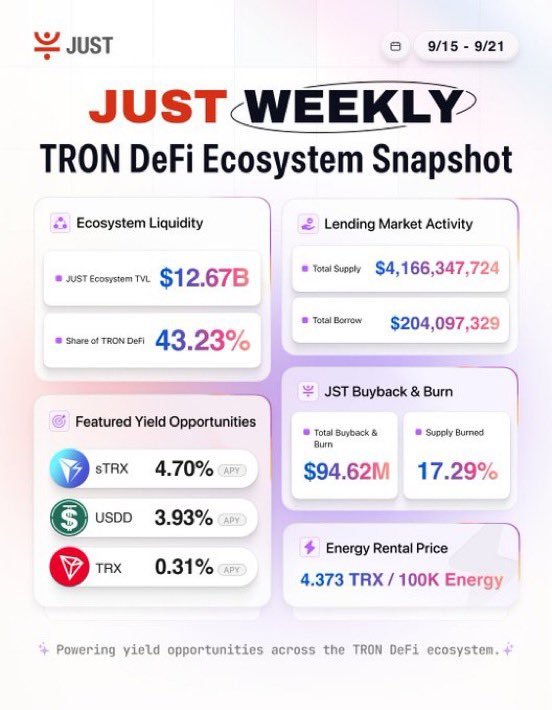
September 15–21 brought another weekly snapshot of activity across the JustLend DAO lending ecosystem, highlighting continued participation on both sides of the market.
𝐒𝐔𝐏𝐏𝐋𝐘 𝐁𝐔𝐈𝐋𝐃𝐒 𝐓𝐇𝐄 𝐅𝐎𝐔𝐍𝐃𝐀𝐓𝐈𝐎𝐍
Supply is where lending liquidity begins.
When users supply assets, they contribute capital that can potentially become available to borrowers. This creates the underlying liquidity base that allows decentralized lending markets to function.
But supplied capital is only part of the picture.
𝐁𝐎𝐑𝐑𝐎𝐖𝐈𝐍𝐆 𝐒𝐇𝐎𝐖𝐒 𝐃𝐄𝐌𝐀𝐍𝐃
Borrowing represents another side of the same market.
When participants borrow, available liquidity is being accessed for different on-chain purposes. This creates an interaction between capital providers and capital users.
The fundamental cycle is:
Supply → Liquidity → Borrowing → Utilization
That interaction provides more information than looking at either supply or borrowing in isolation.
𝐂𝐀𝐏𝐈𝐓𝐀𝐋 𝐈𝐍 𝐌𝐎𝐓𝐈𝐎𝐍
A lending ecosystem becomes more dynamic when liquidity is not simply sitting inside a protocol but is being accessed according to market demand.
For suppliers, assets contribute to the available liquidity base.
For borrowers, that liquidity provides access to capital.
For the protocol, these interactions form the foundation of decentralized lending activity.
𝐖𝐇𝐘 𝐖𝐄𝐄𝐊𝐋𝐘 𝐃𝐀𝐓𝐀 𝐌𝐀𝐓𝐓𝐄𝐑𝐒
One snapshot provides a moment.
Weekly data provides a way to observe how participation changes over time.
The September 15–21 update shows continued supply and borrowing activity across JustLend DAO, adding another data point to the broader TRON DeFi landscape.
𝐓𝐇𝐄 𝐁𝐈𝐆𝐆𝐄𝐑 𝐏𝐈𝐂𝐓𝐔𝐑𝐄
DeFi is not only about how much capital enters a protocol.
It is also about how liquidity is supplied, accessed, utilized, and recycled through transparent on-chain infrastructure.
Liquidity creates capacity. Demand creates utilization. Their interaction creates the lending market.
JUST Weekly provides another window into that ongoing activity.
@Justinsuntron@DeFi_Just #TRONEcoStar
𝐉𝐒𝐓 𝐌𝐀𝐑𝐊𝐄𝐓 𝐀𝐂𝐓𝐈𝐕𝐈𝐓𝐘: 𝐕𝐎𝐋𝐔𝐌𝐄 𝐁𝐑𝐈𝐍𝐆𝐒 𝐀𝐃𝐃𝐄𝐃 𝐀𝐓𝐓𝐄𝐍𝐓𝐈𝐎𝐍 📈
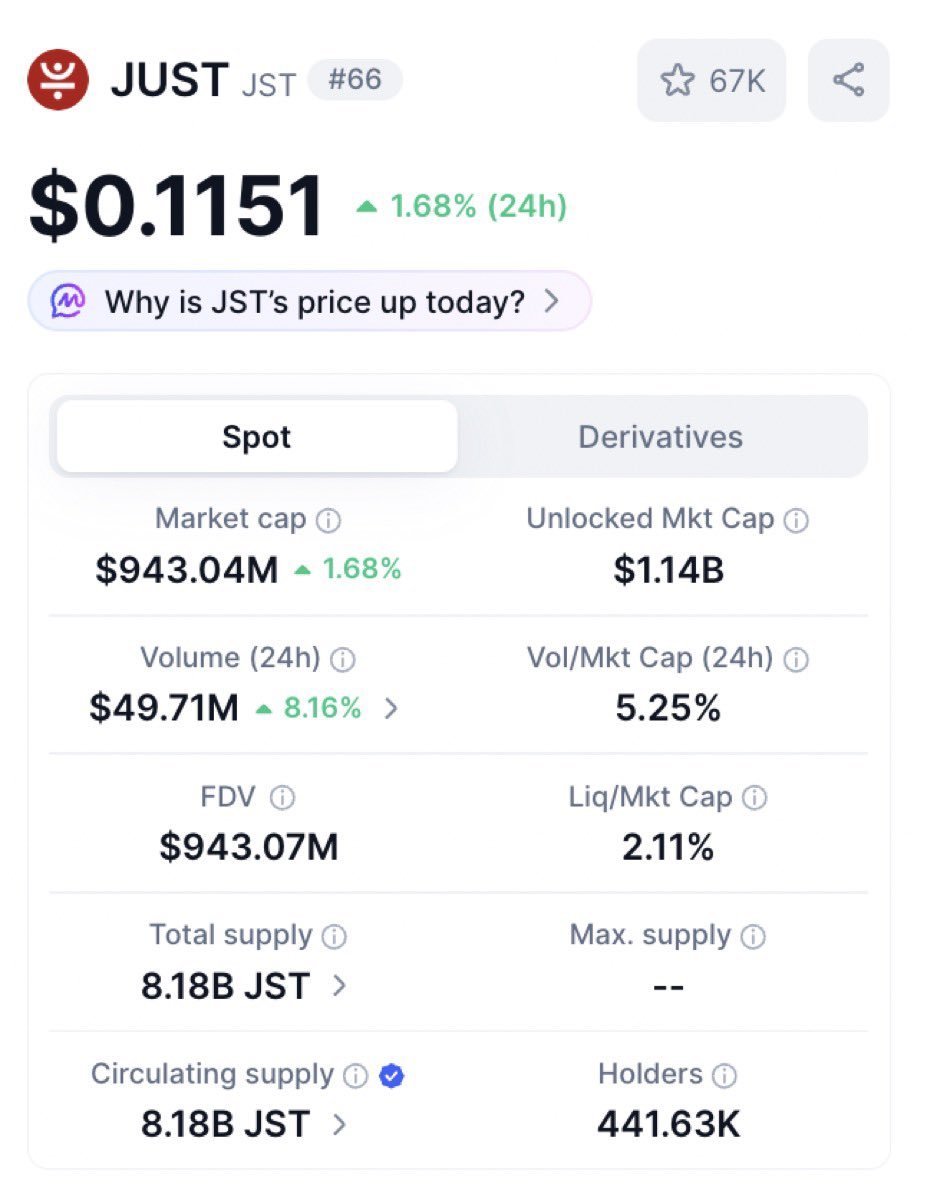
The latest market snapshot for $JST highlights increased trading activity alongside a positive 24-hour price movement.
𝐓𝐇𝐄 𝐋𝐀𝐓𝐄𝐒𝐓 𝐌𝐀𝐑𝐊𝐄𝐓 𝐒𝐍𝐀𝐏𝐒𝐇𝐎𝐓
🔹 Market Cap: $943.04M
🔹 24h Trading Volume: $49.71M
🔹 24h Volume Change: +8.16%
🔹 24h Price Change: +1.68%
These figures offer a snapshot of how market participants interacted with $JST during the measured period.
𝐕𝐎𝐋𝐔𝐌𝐄 𝐈𝐒 𝐀 𝐊𝐄𝐘 𝐀𝐂𝐓𝐈𝐕𝐈𝐓𝐘 𝐌𝐄𝐓𝐑𝐈𝐂
The $49.71M in 24-hour volume represents the amount of $JST traded during that period, while the 8.16% increase in volume indicates higher trading activity compared with the previous measurement.
Meanwhile, the 1.68% positive price movement shows that the token’s market price also moved upward during the same window.
However, one short-term snapshot does not establish a long-term trend. Volume and price can change quickly across crypto markets.
𝐁𝐄𝐘𝐎𝐍𝐃 𝐎𝐍𝐄 𝐍𝐔𝐌𝐁𝐄𝐑
Each metric tells a different part of the story.
Market capitalization reflects the market value of the token supply.
Trading volume provides a view of market activity and liquidity during a specific period.
Price movement shows how the market valuation changed over that timeframe.
Looking at them together gives more context than focusing on price alone.
𝐉𝐒𝐓 𝐖𝐈𝐓𝐇𝐈𝐍 𝐓𝐇𝐄 𝐉𝐔𝐒𝐓 𝐄𝐂𝐎𝐒𝐘𝐒𝐓𝐄𝐌
$JST is connected to the broader JUST ecosystem on TRON, where decentralized finance infrastructure, liquidity, lending, and borrowing create an interconnected on-chain environment.
The latest snapshot is therefore another data point worth tracking as market participation develops.
Nearly $1B in market capitalization. Almost $50M in daily volume. Positive 24-hour price movement.
The numbers provide context—not a guarantee of what comes next.
@Justinsuntron@DeFi_Just #TRONEcoStar
𝐉𝐔𝐒𝐓𝐋𝐄𝐍𝐃 𝐃𝐀𝐎: 𝐋𝐈𝐐𝐔𝐈𝐃𝐈𝐓𝐘 𝐌𝐄𝐄𝐓𝐒 𝐂𝐀𝐏𝐈𝐓𝐀𝐋 𝐔𝐓𝐈𝐋𝐈𝐙𝐀𝐓𝐈𝐎𝐍 ⚡
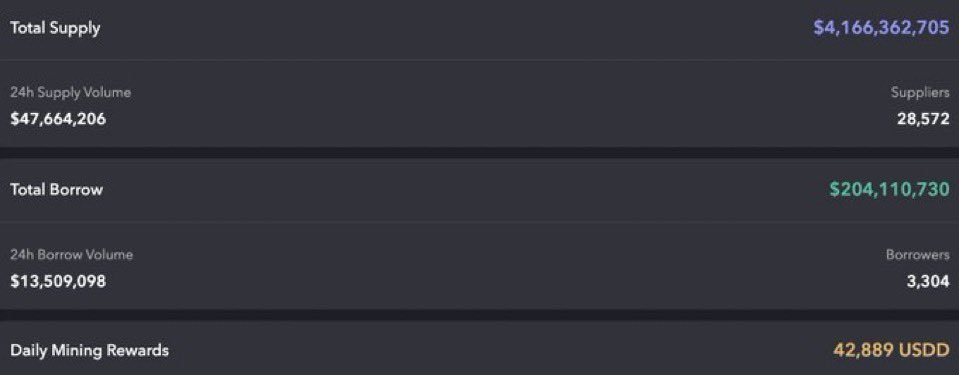
JustLend DAO continues to show substantial DeFi activity, with the latest snapshot highlighting $7.56B TVL, $4.16B supplied, and $204.11M borrowed.
Daily rewards are also reported at 42,889 $USDD, adding another dimension to the ecosystem’s activity.
𝐓𝐕𝐋 𝐒𝐇𝐎𝐖𝐒 𝐓𝐇𝐄 𝐁𝐑𝐎𝐀𝐃𝐄𝐑 𝐒𝐂𝐀𝐋𝐄
At $7.56B, TVL provides a high-level view of the assets represented across the JustLend DAO ecosystem.
But TVL alone does not explain how that capital is being used.
𝐒𝐔𝐏𝐏𝐋𝐘 𝐂𝐑𝐄𝐀𝐓𝐄𝐒 𝐓𝐇𝐄 𝐋𝐈𝐐𝐔𝐈𝐃𝐈𝐓𝐘 𝐁𝐀𝐒𝐄
The $4.16B supply figure represents assets supplied across lending markets.
This supplied liquidity forms the foundation that allows other participants to access decentralized borrowing markets.
𝐁𝐎𝐑𝐑𝐎𝐖𝐈𝐍𝐆 𝐓𝐔𝐑𝐍𝐒 𝐋𝐈𝐐𝐔𝐈𝐃𝐈𝐓𝐘 𝐈𝐍𝐓𝐎 𝐀𝐂𝐓𝐈𝐕𝐈𝐓𝐘
The $204.11M borrowed figure shows that a portion of available liquidity is being accessed by borrowers.
The relationship matters:
Supply → Liquidity → Borrowing → Capital Utilization
That cycle is an important part of how decentralized lending markets function.
𝐃𝐀𝐈𝐋𝐘 𝐑𝐄𝐖𝐀𝐑𝐃𝐒 𝐀𝐃𝐃 𝐀𝐍𝐎𝐓𝐇𝐄𝐑 𝐋𝐀𝐘𝐄𝐑
The reported 42,889 $USDD in daily rewards represents another component of participation within the ecosystem.
Together, TVL, supply, borrowing, and rewards provide a broader snapshot than any single metric can offer.
𝐓𝐇𝐄 𝐁𝐈𝐆𝐆𝐄𝐑 𝐏𝐈𝐂𝐓𝐔𝐑𝐄
The key is not simply how large each number is, but how these metrics interact.
$7.56B TVL → $4.16B supply → $204.11M borrowing → 42,889 $USDD daily rewards.
These figures illustrate a lending ecosystem where liquidity, borrowing, and incentives operate together across TRON DeFi.
Metrics can change over time, so the latest snapshot should always be checked directly before making any decisions.
@Justinsuntron@DeFi_Just #TRONEcoStar
𝐔𝐒𝐃𝐃 𝟐.𝟎 𝐒𝐔𝐏𝐏𝐋𝐘 𝐌𝐈𝐍𝐈𝐍𝐆: 𝐖𝐄𝐄𝐊 𝟏 𝐑𝐄𝐖𝐀𝐑𝐃𝐒 𝐀𝐑𝐄 𝐑𝐄𝐀𝐃𝐘 ⚡
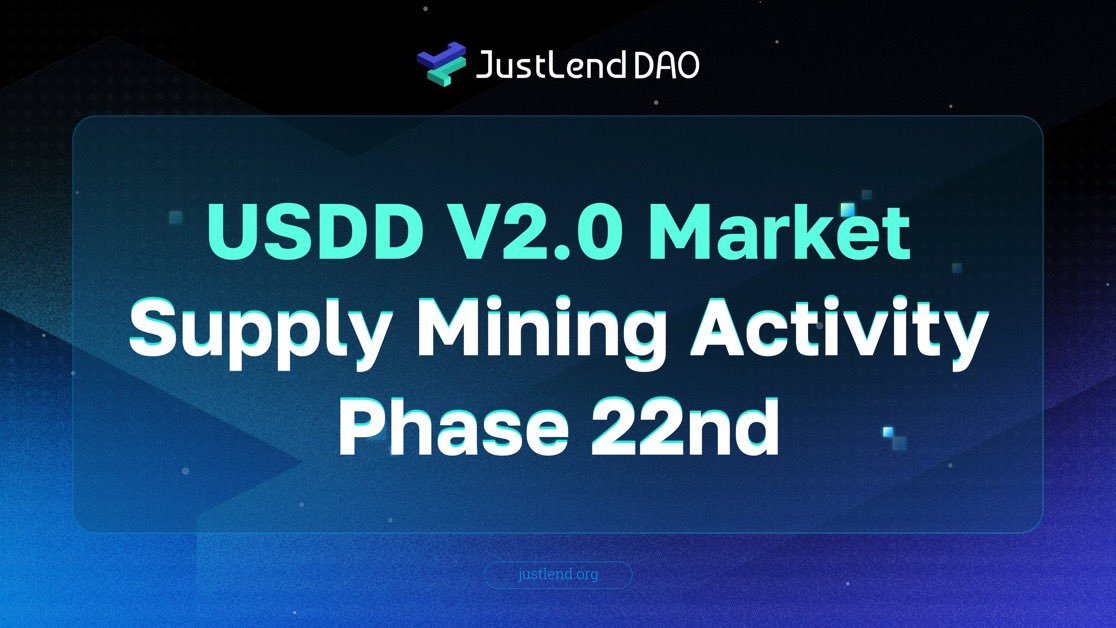
USDD 2.0 Supply Mining Phase 22 — Week 1 rewards are now live, giving eligible participants the opportunity to claim rewards earned from their qualifying USDD supply activity through JustLend DAO.
𝐖𝐄𝐄𝐊 𝟏 𝐈𝐒 𝐂𝐎𝐌𝐏𝐋𝐄𝐓𝐄
For users who participated during the first week, the next step is simple: check the available reward balance and complete the claim process through the official JustLend DAO platform.
The campaign follows a recurring structure where eligible USDD supply activity can contribute toward weekly rewards.
𝐒𝐔𝐏𝐏𝐋𝐘 → 𝐀𝐂𝐂𝐔𝐌𝐔𝐋𝐀𝐓𝐄 → 𝐂𝐋𝐀𝐈𝐌
Participants supply eligible USDD through the designated JustLend DAO market.
As the campaign progresses, qualifying activity contributes toward the applicable weekly reward cycle.
Once rewards become available, eligible users can claim them through JustLend DAO.
𝐂𝐎𝐍𝐒𝐈𝐒𝐓𝐄𝐍𝐂𝐘 𝐌𝐀𝐓𝐓𝐄𝐑𝐒
A recurring mining campaign is not only about the initial supply. Each week creates another checkpoint to review participation and available rewards.
With Week 1 now live, participants in Phase 22 can check their positions, verify their rewards, and follow the campaign as subsequent weeks continue.
𝐔𝐒𝐃𝐃 × 𝐉𝐔𝐒𝐓𝐋𝐄𝐍𝐃 𝐃𝐀𝐎
USDD provides the stablecoin liquidity layer, while JustLend DAO provides the lending infrastructure where eligible supply activity takes place.
If you participated in Week 1, make sure you use the official platform to verify and claim your rewards, and review the campaign terms before taking any additional action.
𝐖𝐄𝐄𝐊 𝟏 𝐑𝐄𝐖𝐀𝐑𝐃𝐒 𝐀𝐑𝐄 𝐋𝐈𝐕𝐄. 𝐂𝐇𝐄𝐂𝐊. 𝐕𝐄𝐑𝐈𝐅𝐘. 𝐂𝐋𝐀𝐈𝐌.
@Justinsuntron@DeFi_Just #TRONEcoStar
𝐖𝐈𝐍𝐤𝐋𝐈𝐍𝐊 𝐀𝐍𝐘𝐀𝐏𝐈: 𝐁𝐑𝐈𝐃𝐆𝐈𝐍𝐆 𝐎𝐔𝐓𝐒𝐈𝐃𝐄 𝐃𝐀𝐓𝐀 𝐈𝐍𝐓𝐎 𝐖𝐄𝐁𝟑 ⚡
Smart contracts are powerful because they execute transparently and predictably on-chain. But their native view of the world is limited to blockchain-accessible information.
That creates an important infrastructure gap.
𝐓𝐇𝐄 𝐎𝐑𝐀𝐂𝐋𝐄 𝐁𝐑𝐈𝐃𝐆𝐄
WINkLink AnyAPI is designed to connect external APIs and data sources with smart contracts, allowing decentralized applications to interact with information beyond the blockchain environment.
The concept is simple:
External Data → AnyAPI → Smart Contract → dApp
Instead of keeping applications isolated from the outside world, an oracle layer can provide a pathway for relevant external information to become usable within on-chain logic.
𝐌𝐎𝐑𝐄 𝐃𝐀𝐓𝐀, 𝐌𝐎𝐑𝐄 𝐀𝐏𝐏𝐋𝐈𝐂𝐀𝐓𝐈𝐎𝐍 𝐏𝐎𝐒𝐒𝐈𝐁𝐈𝐋𝐈𝐓𝐈𝐄𝐒
External APIs can contain information that decentralized applications may need for specific workflows.
That can expand what developers are able to design, from applications requiring external information to automated systems that react to data-driven conditions.
The key value is not simply putting data on-chain.
It is creating a reliable connection between blockchain logic and the broader digital environment.
𝐁𝐔𝐈𝐋𝐃𝐈𝐍𝐆 𝐀 𝐌𝐎𝐑𝐄 𝐂𝐎𝐍𝐍𝐄𝐂𝐓𝐄𝐃 𝐃𝐀𝐏𝐏 𝐄𝐂𝐎𝐒𝐘𝐒𝐓𝐄𝐌
As Web3 applications become more sophisticated, developers increasingly need infrastructure that connects smart contracts with information outside the chain.
WINkLink AnyAPI represents one part of that connectivity layer.
More data connections → more possible inputs → more programmable applications.
That is why oracle infrastructure matters: it helps smart contracts interact with a world that does not naturally live on-chain.
Explore: https://t.co/JP348naT7m
@Justinsuntron@WINKLink_Oracle #TRONEcoStar
𝐁.𝐀𝐈 𝐑𝐄𝐒𝐏𝐎𝐍𝐒𝐄𝐒 𝐀𝐏𝐈: 𝐎𝐍𝐄 𝐈𝐍𝐓𝐄𝐑𝐅𝐀𝐂𝐄, 𝐌𝐎𝐑𝐄 𝐀𝐈 𝐏𝐎𝐒𝐒𝐈𝐁𝐈𝐋𝐈𝐓𝐈𝐄𝐒 ⚡
The AI model landscape is expanding quickly, and developers need flexibility without rebuilding their infrastructure every time a new model arrives.
https://t.co/WxSbpZT10x’s Responses API upgrade moves toward exactly that: a more unified way to access an expanding multi-model ecosystem.
𝐎𝐍𝐄 𝐑𝐄𝐒𝐏𝐎𝐍𝐒𝐄 𝐋𝐀𝐘𝐄𝐑
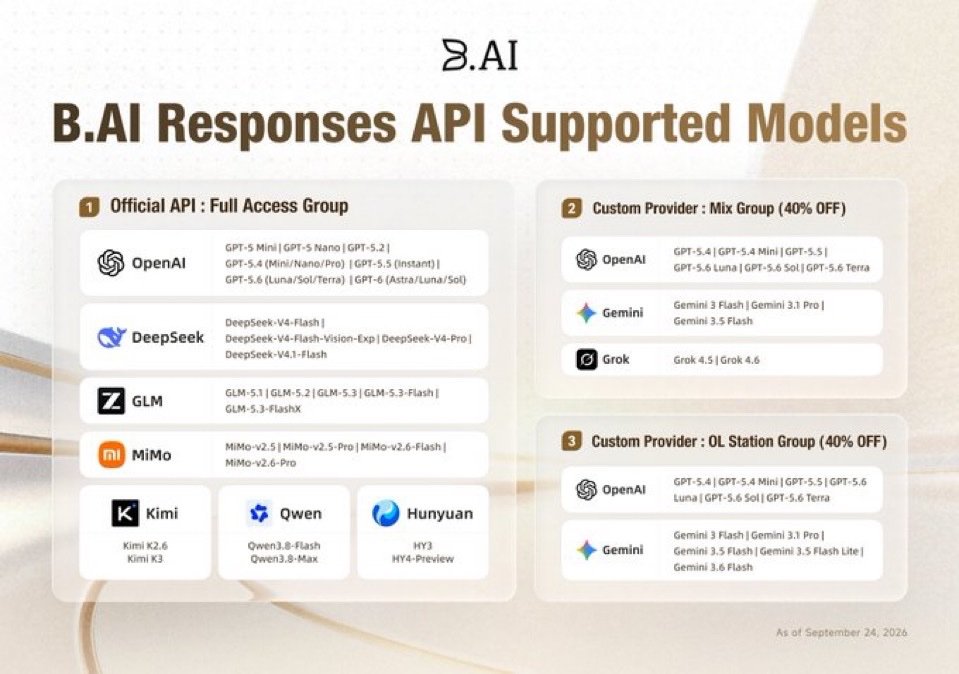
Models that support the upstream Responses API can now be accessed through https://t.co/WxSbpZT10x’s unified /v1/responses endpoint.
Instead of creating completely different integration flows for different model families, developers can work through a consistent API interface.
𝐏𝐋𝐔𝐆 𝐀𝐍𝐃 𝐏𝐋𝐀𝐘 𝐌𝐎𝐃𝐄𝐋 𝐄𝐗𝐏𝐀𝐍𝐒𝐈𝐎𝐍
One of the most interesting parts is future model support.
When https://t.co/WxSbpZT10x adds eligible models from already-integrated vendors, developers can access them through the Codex client without additional configuration, according to the supplied update.
That means the integration layer can expand while the developer workflow remains relatively consistent.
𝐀 𝐁𝐑𝐎𝐀𝐃𝐄𝐑 𝐌𝐎𝐃𝐄𝐋 𝐔𝐍𝐈𝐕𝐄𝐑𝐒𝐄
The update expands access across several model ecosystems, including:
🔹 MiMo
🔹 Qwen
🔹 Hunyuan
🔹 OpenAI
🔹 Gemini
🔹 Grok
Different models can serve different requirements, from reasoning and coding to text processing and broader AI workflows.
𝐋𝐄𝐒𝐒 𝐈𝐍𝐓𝐄𝐆𝐑𝐀𝐓𝐈𝐎𝐍 𝐅𝐑𝐈𝐂𝐓𝐈𝐎𝐍
Developers can configure their API Key and Base URL, connect their workflow, and work with supported models through the https://t.co/WxSbpZT10x infrastructure.
The value is not simply having more models.
It is having an access layer that can keep expanding without turning every new model into another integration project.
𝐓𝐇𝐄 𝐅𝐔𝐓𝐔𝐑𝐄 𝐈𝐒 𝐌𝐔𝐋𝐓𝐈-𝐌𝐎𝐃𝐄𝐋
As AI applications become more specialized, developers may need different models for different tasks.
A unified API layer gives that diversity a simpler foundation: one interface, broader model access, and more flexibility to build.
https://t.co/WxSbpZT10x is moving toward an infrastructure where model expansion happens behind the scenes while developers stay focused on what they are building.
More Explore→https://t.co/C62UoKy3v6
@justinsuntron@bai_agi #TRONEcoStar
𝐁.𝐀𝐈 × 𝐌𝐈𝐌𝐎-𝐕𝟐.𝟔: 𝐌𝐀𝐊𝐈𝐍𝐆 𝐀𝐃𝐕𝐀𝐍𝐂𝐄𝐃 𝐀𝐈 𝐌𝐎𝐑𝐄 𝐀𝐂𝐂𝐄𝐒𝐒𝐈𝐁𝐋𝐄 ⚡
https://t.co/WxSbpZT10x is bringing Xiaomi’s MiMo-V2.6 series into a limited-time promotional campaign, giving developers a lower-cost way to explore advanced reasoning, coding, multimodal capabilities, and Agent workflows.
Starting September 25 at 15:00 SGT:
🔸 MiMo-V2.6-Flash — 90% OFF
🔸 MiMo-V2.6-Pro — 50% OFF
𝐅𝐋𝐀𝐒𝐇 — 𝐁𝐔𝐈𝐋𝐓 𝐅𝐎𝐑 𝐇𝐈𝐆𝐇-𝐓𝐇𝐑𝐎𝐔𝐆𝐇𝐏𝐔𝐓 𝐖𝐎𝐑𝐊
MiMo-V2.6-Flash focuses on native omni-modality, fast execution, and repeated AI interactions.
It is positioned for high-frequency API calls, software development, automated Agents, and workflows where throughput and compute efficiency are important.
With the promotional 90% OFF rate, developers can test these workflows with a substantially lower entry cost during the campaign period.
𝐏𝐑𝐎 — 𝐃𝐄𝐒𝐈𝐆𝐍𝐄𝐃 𝐅𝐎𝐑 𝐃𝐄𝐄𝐏𝐄𝐑 𝐑𝐄𝐀𝐒𝐎𝐍𝐈𝐍𝐆
MiMo-V2.6-Pro targets more demanding workloads, including complex reasoning, Computer Use, research assistance, multimodal generation, UI automation, and advanced Agent decision-making.
The supplied Xiaomi evaluation information highlights performance across several demanding reasoning and Agent benchmarks, giving developers another option for workflows where depth and sophisticated execution matter.
𝐓𝐖𝐎 𝐏𝐑𝐎𝐅𝐈𝐋𝐄𝐒, 𝐃𝐈𝐅𝐅𝐄𝐑𝐄𝐍𝐓 𝐖𝐎𝐑𝐊𝐋𝐎𝐀𝐃𝐒
Flash is centered on throughput and efficiency.
Pro is centered on reasoning depth and complex execution.
That distinction gives developers more flexibility to match model capability with the actual requirements of an application rather than using one model for everything.
𝐋𝐎𝐖𝐄𝐑 𝐂𝐎𝐒𝐓, 𝐌𝐎𝐑𝐄 𝐑𝐎𝐎𝐌 𝐓𝐎 𝐄𝐗𝐏𝐄𝐑𝐈𝐌𝐄𝐍𝐓
Lower promotional pricing can make repeated testing, API integration, Agent development, and multimodal experimentation more accessible.
Two models. Two workload strategies. One https://t.co/WxSbpZT10x ecosystem.
More Explore→https://t.co/C62UoKy3v6
@justinsuntron@bai_agi #TRONEcoStar