According to director Frank Henenlotter, when "Frankenhooker" (1990) was brought before the MPAA for certification, it ran into trouble.
One day, the head of the MPAA, Richard Heffner called the production company & said to the lady secretary,
"Congratulations, you’re the first film rated 'S."
She asked, "'S?' For s € x?".
He replied, "No, 'S' for 'Sh!t'".
After the incident, Producer James Glickenhaus fought back and brought the feud public. The MPAA ultimately gave the film an 'X' rating. They refused it and released the movie unrated.
(Frank Henenlotter's interview with Alan Bett, The Skinny, 2013 & IMDb)
Today is the 112th birthday of one of the greatest filmmakers of all time, Mario Bava. Throughout his career, he made lots of great & influential movies with very little resource. While most of his movies are celebrated by the film community, the one that often gets overshadowed is "Rabid Dogs" (1974). Even though Bava's greatest movies are giallos, this film is a claustrophobic hostage drama with elements of poliziotteschi genre.
The film was incomplete as it ran into many obstacles & finally one of the producers pulled out. It was incomplete & not released during Bava's lifetime. Long story short - The movie was bought by Bava's frequent collaborator Alfredo Leone in mid 1990s. He then asked Bava's son, Lamberto to shoot new scenes, changed the ending and music. It was released under the title "Kidnapped". But Leone also kept Bava's original version out of respect & for his fans.
If you have time, make sure to see "Rabid Dogs", you won't be disappointed. You will be amazed by the ending. I don't want to spoil it, but you won't see it coming.
HIGHLY RECOMMENDED.
@DannyDrinksWine IDK, Arnold’s career was still pretty strong after LAH (TRUE LIES, JUNIOR). It was actually BATMAN AND ROBIN that damaged him in Hollywood, but then he was elected governor.
Director John McTiernan, on the other hand, ended up, broke and in prison.
Peter Bogdanovich explains how Samuel Fuller helped him with the script of 'Targets' (1968):
"Interviewer: 'Targets' (1968) is very much a film of its moment. I sense you had strong feelings about what was going on in the country in the late ’60s
Bogdanovich: I thought that we were entering into a pretty decadent era. The violence reflected the f***ed-up-edness of the period. 'Targets' is a very savage film. Unfortunately, it’s still relevant.
Initially, I ki||ed Karloff off in the middle of the picture because I didn’t know what else to do with him. We only had him for two days. Then I asked Sammy Fuller to read it. We had a script called 'Before I D!e', and Sammy read it and said, “Come over to the shack.” That meant, come over to his house. “Come over to the shack. We’ll go over it.” So I went over, and he said, “Why do you ki|| Karloff in the middle of the picture?” I said, “Well, we only have him for two days.” He said, “Never think about that! Never think about limitations while you’re writing a script! Write what you want! You’ll figure out how to do it later.”
Well, that was a huge point. You can’t kill your star off in the middle of the picture. Then Sammy asked if we had any footage from 'The Terror' (1963) in which Karloff is in a tuxedo. I said we did. “Great! You’ve got him in a tuxedo for a personal appearance.” He gave me the idea of the kid seeing Karloff coming toward him on the screen and coming toward him in reality, which is a great coup de theâtre. I mean, I don’t believe it for a minute, but it works. I sweated to make that work.
Interviewer: Fuller didn’t want to be credited—why?
Bogdanovich: We talked for about two or three hours. Sammy paced up and down, and we discussed things. I’d write down what he said. When it was over, I said, “Jesus, Sammy, you’ve rewritten the whole script. You should get credit for this.” “No credit, no credit.” “But, Sammy, you’ve had so much great input on this.” “No credit, no credit.” “Why not?” “If you give me credit, they’ll think that I did the whole thing.” “You practically did, Sam.” “No credit, no credit.” My character in the picture is named Sammy Michaels. That was a tip of the hat to Sammy—his full name was Samuel Michael Fuller."
("Picturing Peter Bogdanovich", Peter Tonguette, 2020)
P.S: Remembering the great American Filmmaker Peter Bogdanovich on his 87th birthday!
@DannyDrinksWine Bold, brilliant, original, and still PB’s best film, before he took the wrong fork in the road and decided to become the Xerox Director. Only approximated by SAINT JACK, PB’s “return to Roger Corman” after a string of big budget stinkers.
Bette Davis on her favourite movies:
"To have a favorite film you have to consider not only what you had to do in it, how great a part it was, how well or not well you did it. There's also the story, how it was edited and how it was put together. Many times you're very disappointed as to how you dreamed it —and how it actually came out. I think three —no, four —films came out the way I prayed they would. Certainly 'Dark Victory' (1939), certainly 'Jezebel' (1938), certainly 'Now Voyager' (1942), and certainly 'All About Eve' (1950). All of those came out with every expectation fulfilled. Many of the others had things I like, but there were disappointments in how the director did it, how it was put together, what was cut out, etc."
("Take 22: Moviemakers on Moviemaking", Judith Crist, 1984)
Clip from:
All About Eve (1950)
Director: Joseph L. Mankiewicz
@DannyDrinksWine Actually, Coppola saved it. He publicly berated executive Ned Tanen when Tanen inexplicably trashed the film after a successful preview; he offered to buy the film and release it himself. Coppola then spent weeks lobbying Universal to release the film without cuts/reediting.
Sir Christopher Lee considered "The Crimson Cult" (1968) to be one of the worst movies in his entire career. He only accepted the part as he came to know about Boris Karloff's deteriorating health, and he wanted to work with Karloff for one last time. Karloff was 80 at that time. The photograph of Boris Karloff which was taken after the production of this movie, was placed on the walls of Christopher Lee's home. It was signed by Karloff & it stated, "Dear Christopher, many many more together, I hope." Karloff died shortly after the movie was released.
@DannyDrinksWine Not a classic, but atmospherically shot by the great John Coquillon; Karloff is wonderful, and the creepy Lovecraftian dream sequences featuring Barbara Steele are unnerving. Apparently a cold, damp, miserable shoot that sickened Karloff, which may have colored Lee’s opinion.
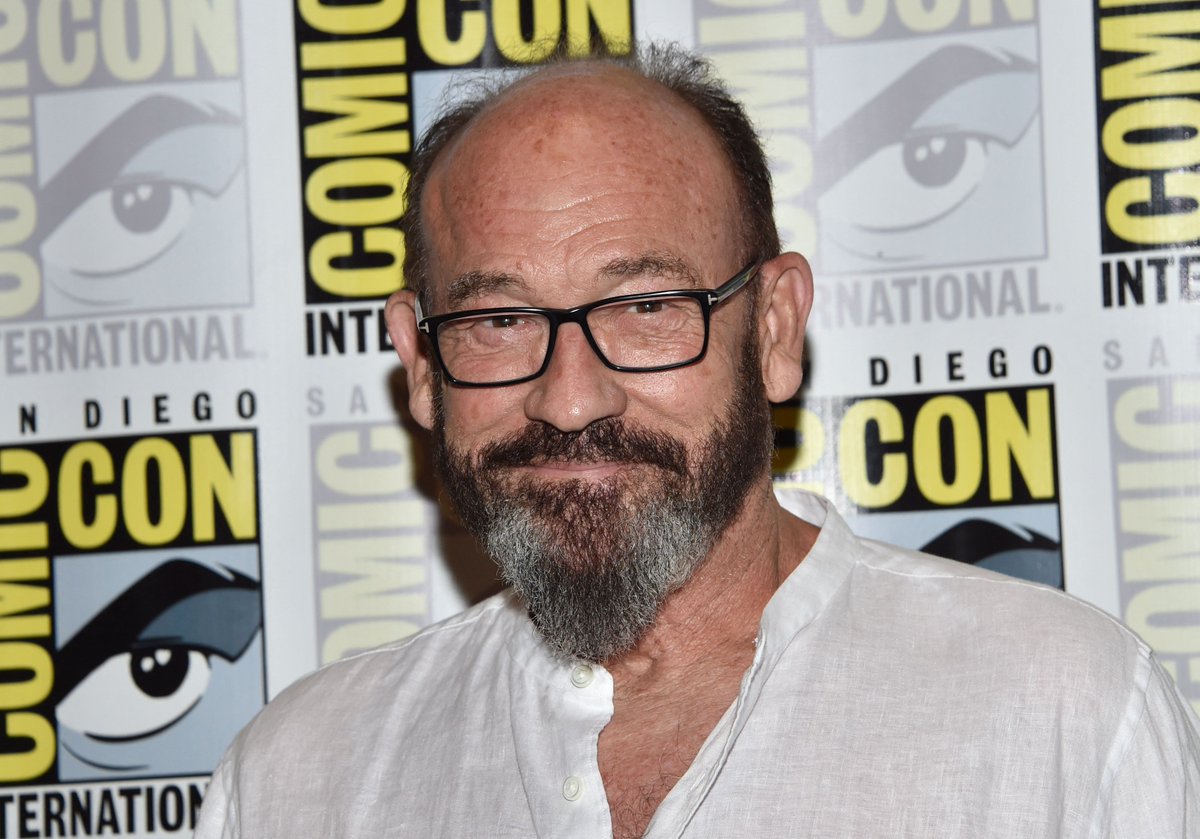
Filmmaker Chuck Russell has passed away at 74.
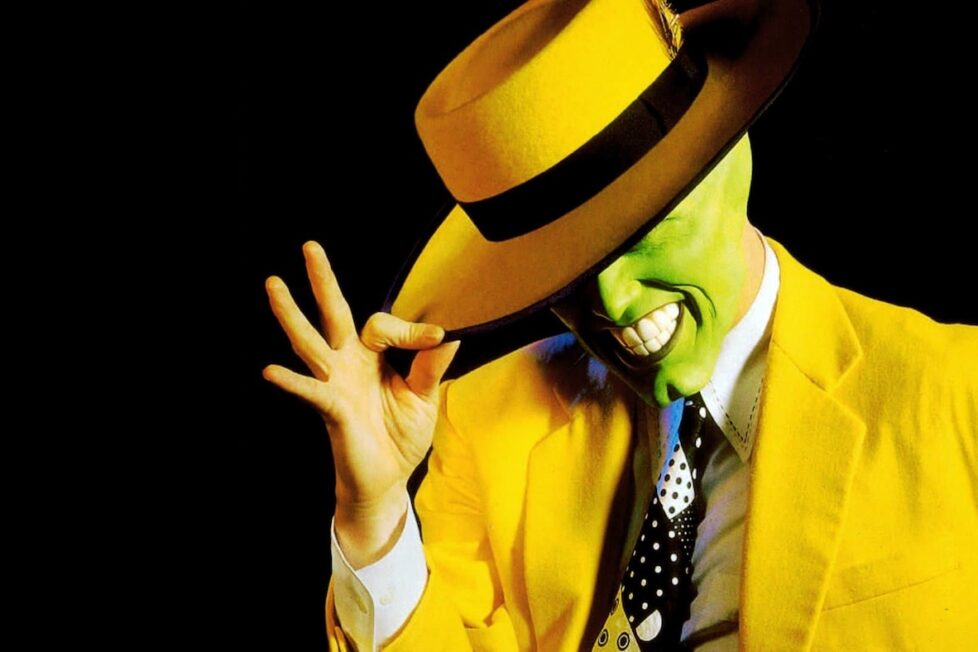
Chuck Russell directed The Blob & Nightmare on Elm Street: Dream Warriors in the 1980s, and later directed The Mask, Eraser, Bless the Child, The Scorpion King, and Witchboard (2025).
A horror legacy that will never be forgotten.
Ringo Lam on why he made "Full Contact" (1992):
"I did not want to create a film that had anything to do with the sociological or political issues and situations of the time. I wanted to wash my hands of them and start with a clean slate. People had threatened to ch0p me up, accused me of having wrong political views and I didn’t want to have anything to do with those things. I wanted to make a film with a style no one could put a finger on."
("Kaiju Shakedown: Ringo Lam", Film Comment, 2014)
P.S: On this day, 34 years ago, "Full Contact" (1992) was released in Hong Kong.
@DannyDrinksWine I’ve always wondered why Whale didn’t use Colin Clive for the role. He had that similar velvet voice. Of course, Rains was terrific, an excellent choice.
@DannyDrinksWine Damon improvised this scene w/out telling anyone & his first attempt was embarrassing slop. Spielberg humored him & they eventually came up with the scene as filmed, but honestly it’s only slightly less embarrassing slop.
Damon tried this w/Eastwood too but was shut down.
Orson Welles on the reason he chose to make "The Trial" (1962) & deviating from Kafka's work:
"Interviewer: In the transposition of 'The Trial' to the cinema, there is a fundamental change; in Kafka’s book, K’s character is more passive than in the film.
Welles: I made him more active, properly speaking. I do not believe that passive characters are appropriate to drama. I have nothing against Antonioni, for example, but, in order to interest me, the characters must do something, from a dramatic point of view, you understand.
Interviewer: Was 'The Trial' an old project?
Welles: I once said that a good film could be drawn from the novel, but I, myself, didn’t think of doing it. A man came to see me and told me he believed he could find money so that I could make a film in France. He gave me a list of films and asked that I choose. And from that list of fifteen films I chose the one that, I believe, was the best: The Trial. Since I couldn’t do a film written by myself, I chose Kafka."
(Orson Welles' intervie with Juan Cobos, Miguel Rubio & Pruneda, Cahiers du Cinéma, 1964)