“Ukraine Decoded” is a Substack publication. Written by an American born in Ukraine, who is an ex-Ukrainian journalist, veteran, and history aficionado.
Today is the birthday of Konstanty Plisowski (1890), a Polish Brigade General born in the central Ukrainian region of Podillya (current Vinnytsia). He was a cavalry commander, remembered for his bravery in World War I and for stopping the ragtag Bolshevik cavalry of Semyon Budyonny.
But mostly Plisowski is known for volunteering out of his retirement to command the troops in the Polish Defensive War of 1939 against the pre-WWII Soviet invasion.
In particular, he led the defense operation of the Berestechko Fortress (currently Brest in Belarus) but was captured by the Soviets. They tortured and murdered him in a detention cell in the secret police NKVD building in Kharkiv, Ukraine, in April 1940.
On this day in 1989, during the Paris Air Show at Le Bourget Airport, the Soviet Union stunned the world with An-225 Mriya (Dream) the largest cargo aircraft ever built, designed for transporting oversized payloads, including the Soviet Buran space shuttle. The aircraft was designed and manufactured in Ukraine.
Ironically, this only completed An-225 was destroyed by the Russian Army in February 2022 during the Battle of Antonov Airport near Kyiv, at the start of Russia’s full-scale invasion of Ukraine. The Ukrainian government pledged to build another An-225 someday in the future.
Soviet Buran space shuttle completed only a single automated orbital flight in 1988 before this costly, unbearable Moscow's program was canceled.
On this day in 2024, the newest Ukrainian long-range attack drones struck the remote Russian air base "Aktyubinsk." The strike damaged Su-57 parked on the tarmac, one of only a few Russian stealth multirole fighter jets of the latest 5th generation. The distance from Kyiv to Aktyubinsk is 718 miles (1,156 km).
#OnThisDay #history #Ukraine #OTD #OnThisDayInHistory #Russia #AirForce #aviation #drones #war
On this day in 2023, Ukraine launched its long-anticipated summer counteroffensive, with the main thrust directed toward the Zaporizhzhia region in the south. The strategic objectives were ambitious: breach Russian defensive lines, advance to the Azov Sea, and ultimately isolate Russian-occupied Crimea by severing key supply routes.
This operation followed two major successes in 2022 but unfolded under faded momentum, far more challenging conditions, and ultimately stalled with limited territorial gains and high costs. This failure cast a shadow over the reputation of then-Commander-in-Chief General Valeriy Zaluzhnyi, who later faced dismissal.
Read analysis of it in Ukraine Decoded, the Substack publication: https://t.co/tw9BGnmFP9
Photo credit: 22nd Ukrainian Mechanized Brigade, 2025.
On this day in 2025, the Ukrainian F-16 "Fighting Falcon" fighter jet shot down the Russian multirole Su-35 "Super Flanker" during a dogfight in the air above the Kursk Oblast of Russia. This is the first known combat kill of the newest Russian air superiority fighter jet.
Today is the birthday of Ivan Lukashevych, 55, a Ukraine's Brigade General of military counterintelligence, who is awarded with the highest title Hero of Ukraine (2025). He's a designer of MCR Horizon's Lord, the newest Ukrainian anti-materiel sniper rifle. He's also a co-creator of Sea Baby, the series of unmanned sea surface drones that devastated Russian Black Sea Navy and shadow tanker fleet.
On this day in 2014, during the early stages of Russia's hybrid invasion of Ukraine, Russian mercenaries led by the FSB operative Ihor Gorkin and armed with MANPADs shot down a Ukrainian Air Force An-30B reconnaissance aircraft near the occupied city of Sloviansk in the Donbas region.
The aircraft conducted surveillance and photographic reconnaissance over the area. Despite the aircraft catching fire, the crew heroically diverted the burning plane away from nearby apartment blocks to minimize civilian casualties. Out of the eight crew members aboard, five were killed, including the pilot, Lieutenant Colonel Kostiantyn Mohylko.
https://t.co/Pi8SExhUpO
On this day in 2014, the chocolate businessman Petro Poroshenko was inaugurated as Ukraine's fifth President following the bloody EuroMaidan uprising, the Russian annexation of Crimea, and the hybrid invasion of the Donbas. He made painful compromises with Russia and signed two Minsk Agreements making a deal with the Donbas separatists and buying several more years of peace. Currently, Poroshenko is sanctioned in his own country and criminally investigated for alleged treason.
On this day in 2023, the Russian forces blew up the Kakhovka dam over the Dnipro River in southern Ukraine, causing its destruction, mass flooding, and ecological disaster with casualties and displacement of affected civilians down the river.
Photo credit: Maxar. #OTD #OnThisDay #Ukraine #war
On this day in 2000, U.S. President Bill Clinton touched down in Kyiv for a visit that underscored Ukraine’s growing importance on the post-Cold War stage. Fresh off his re-election in 1999, Ukrainian President Leonid Kuchma hosted the American leader for talks centered on deepening Western integration, advancing democratic and economic reforms, and finally addressing the lingering nightmare of the Chernobyl nuclear disaster.
Read more about it in Ukraine Decoded, the Substack publication! https://t.co/RkWkhy4Tfw
Today is the birthday of Ruslan Khomchak, 59, a Ukrainian army general who commanded the troops that were massacred during their exit from the Russian encirclement near Ilovaisk in the Donbas region in August 2014. The command of the Anti-Terrorist Operation, incl. Khomchak, believed in Russian assurances that the passage would be safe.
Officially, 366 Ukrainian soldiers were killed during the withdrawal, with 429 severely wounded and 300 captured. This unprecedented loss triggered the first round of Minsk Agreements where Kyiv had to compromise with separatists backed by Moscow. General Viktor Muzhenko, then Commander-in-Chief, suggested that the incompetence of Ukrainian commanders, and the large number of Russian troops fighting for the separatists, were largely to blame for such disastrous outcome.
Nevertheless, general Khomchak was elevated to the top military posts, including the Commander-in-Chief of Ukraine's Armed Forces in 2020-2021, by the comedian Volodymyr Zelensky immediately after he became President. Critics say that at that time Ukraine ignored basic preparations for the full-scale war.
Currently, Khomchak is the deputy chief of the National Security and Defense Council, the highest wartime executive body led personally by Zelensky.
On this day in 1989, the largest train catastrophe in the Soviet Union occurred near Ufa, Siberia. Two passenger trains carrying up to 1,500 people in sleep cars exploded and burned down while passing each other at night in a valley filled with natural gas. In minutes, 575 passengers burned alive, including 181 children. 623 passengers survived but got burns and various injuries.
The gas entered a low-lying valley over 3 hours due to a technological accident -- a rupture in the above-ground gas pipeline transporting it from Siberia to the Russian regions near the Volga River. The catastrophe could have been prevented if the pipeline personnel had shut it down immediately after the alert of a sharp pressure drop. Instead, the shift manager ordered an increase in gas pumping to ensure industrial consumers receive it in full.
This tragedy, along with the Chornobyl nuclear disaster of 1986, is another example of top-level managerial negligence in the USSR, because decision makers were all Communist Party appointees, who prioritized ideology over safety and people's lives.
On this day in 2010, during a storm in Kyiv, lightning struck the flagpole of Ukraine's Parliament building, shutting down the legislature's electricity.
The strike symbolically disrupted the hearings of the constitutional amendment, introduced by the pro-Russian President Viktor Yanukovych, who demanded that NATO aspirations be removed from the Constitution.
This amendment was never adopted, and the Constitution still states that Ukraine will join NATO someday.
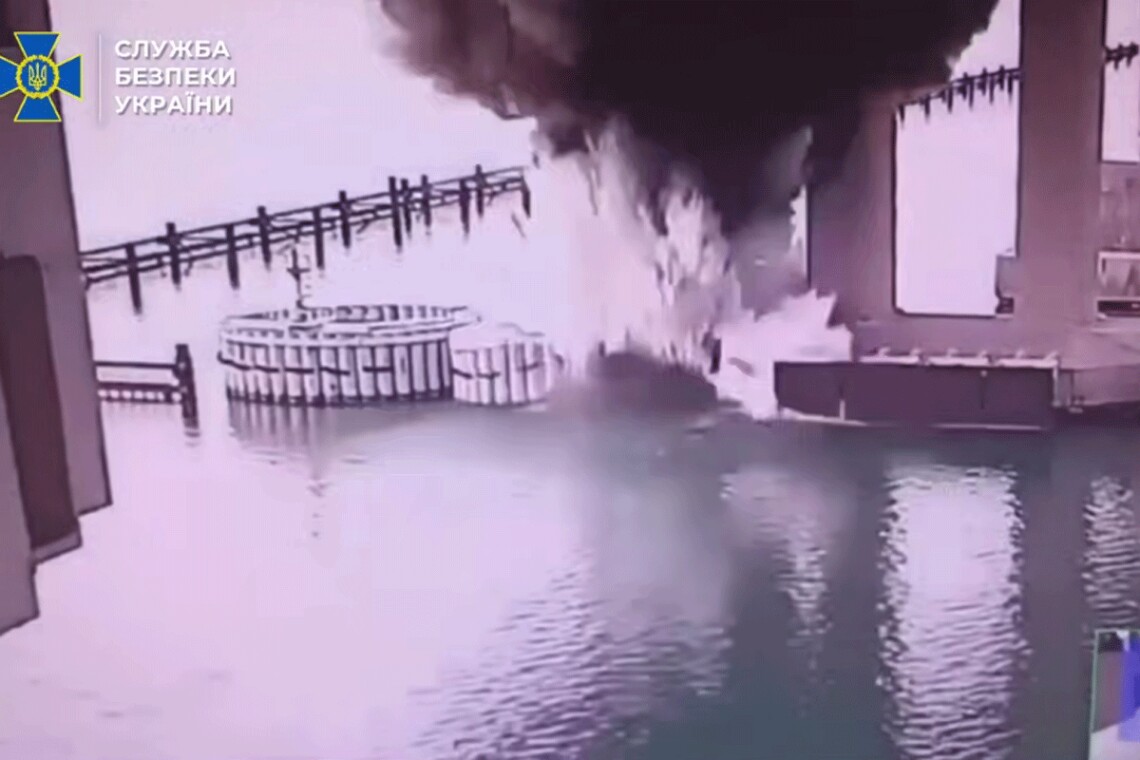
On this day in 2025, the sea-surface Ukrainian kamikaze drone operated by the Security Service struck one of the pillars of the Kerch Bridge connecting mainland Russia and occupied Ukrainian Crimea. The explosion was intended to boost the morale of Ukrainian society, and it didn't cause structural damage sufficient to collapse the bridge.
On this day in 1938, the Communist authorities of the Ukrainian Soviet Republic split the unified region of Donbas into two separate administrative entities: the Donetsk and Luhansk Oblasts. (Then it was called Stalin and Voroshilov Oblasts, respectively)
This Donbas division still exists and is even promoted by Moscow, including in the Constitution of the Russian Federation in the form of the puppet Donetsk and Luhansk People's Republics.
Currently, Russian President Vladimir Putin demands Ukraine's withdrawal from those administrative entities in exchange for the end of his war.
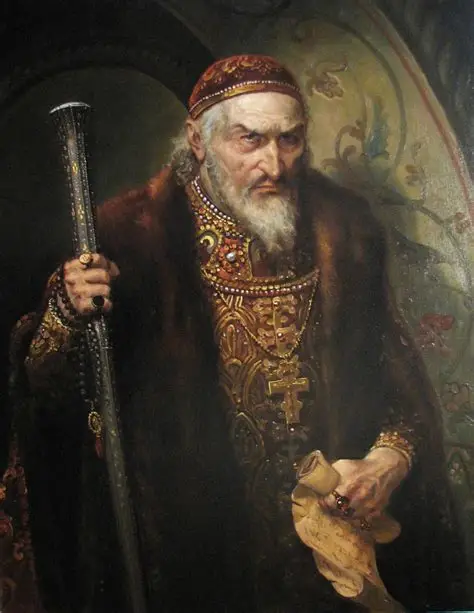
On this day in 1571, the first Russian Tsar Ivan the Terrible denounced his title after Moscow was burned down by the armies of Devlet I Girai, the Tatar Khan from Crimea (the only long-surviving state of the Golden Horde).
Instead of leading the defense of Moscow, Ivan abandoned the capital city, left his people to die, and hid in Suzdal's monastery. Tatars found him there and he pledged allegiance to the Crimean Khan, agreed to title himself only as a "Moscow Prince" and promised to pay taxes to the Crimean Khanate.
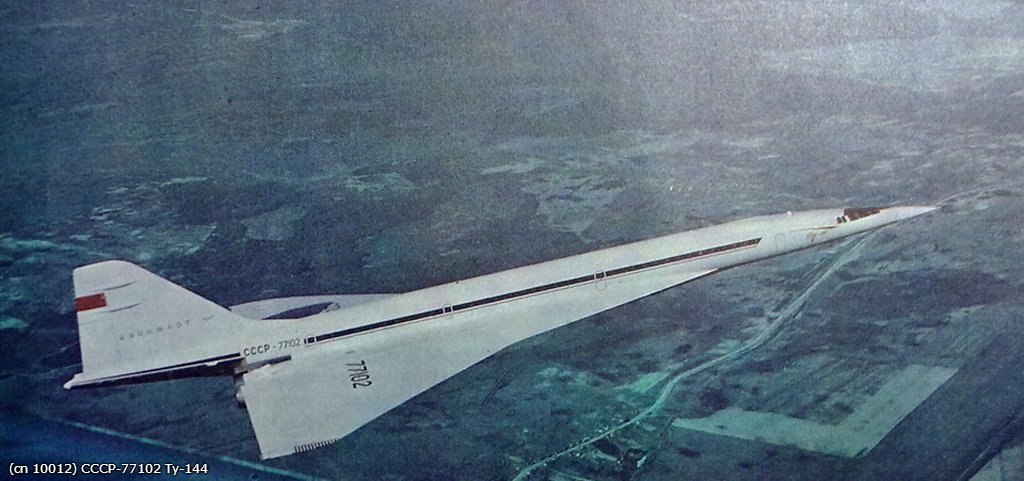
On this day in 1973, during the Paris Air Show at Le Bourget Airport, the second production model of the Soviet supersonic passenger aircraft Tupolev Tu‑144S was destroyed in a crash that killed 14 people and injured 60.
To impress the Western audience, Mikhail Kozlov and Valery Molchanov piloted their Tu-144S irresponsibly, performing a very risky display that included extreme low‑altitude passes and steep climbs. At an altitude of 280 m and a speed of 780 km/h, the front left wing detached, struck the main left wing, and punctured a fuel tank. The aircraft lost control, disintegrated mid‑air, and crashed in flames in the town of Goussainville, Val‑d’Oise.
#OTD #OnThisDay #history
On this day in 1959, Filip Konowal, the Canadian WWI hero, died in Quebec. This Ukrainian, who has been awarded the Victoria Cross—the British Empire’s highest award for gallantry—is one of the most remarkable figures in world military history. https://t.co/MVcxjz9akp
#OTD #OnThisDay #history #Ukraine
On this day in 1652, the Ukrainian Hetman Bohdan Khmelnytsky purchased from the Crimean Khanate 15,000 Polish POWs, who were captured after their defeat in the Battle of Batog in southern Ukraine. Khmelnytskyi bought Polish POWs not to grant them freedom and send them home, but to execute them.
This was his brutal revenge for the same brutality demonstrated by the Polish occupation army that executed thousands of Ukrainian fighters after the Battle of Berestechko in 1651.
On June 1-2, 1652, the combined force of about 40,000 Ukrainian Kozaks and their allied Tatar troops from Crimea defeated the 20,000 force of Polish cavalry and German Landsknechts (infantry mercenaries) at the Battle of Batog in southern Ukraine.
The Ukrainians under the command of Hetman Bohdan Khmelnytsky and his Colonel Ivan Bohun caught the enemy camp by the Batog mountain at the Southern Bug River by surprise. They also had an overwhelming number of troops and used the landscape to their advantage -- the Polish and Germans were blocked by the river and had nowhere to retreat or get reinforcement. The camp was destroyed in 2 days, and the Polish commander, Hetman Marcin Kalinowski, as well as Mark Sobieski, the elder brother of the future Polish King John III Sobieski, were killed.
This victory renewed Ukraine’s control over its southern lands down to the Dnister River, and proved the effectiveness of light Kozak cavalry and the “wagenburg” ground combat tactics against heavy European cavalry.
On this day in 2014, the Russian mercenaries began the 3-day-long armed assault on the Luhansk office of Ukraine's Border Service (detachment # 9938). They opened fire from 7.62mm AK rifles, 12.7mm NSV-12 "Utyos" machine gun, and the RPG anti-tank grenade launchers. They filmed and photographed themselves portraying the attack as "a genuine fight of the people of Luhansk for freedom."
The Ukrainian Su-27 jet, which flew in to provide air support, couldn't open fire on the attackers because they were sitting on the roofs of the apartment buildings and used civilians as a "live shield."
On June 4, having 8 wounded, the Ukrainian Border Guards withdrew from the attacked location. The losses among Russian mercenaries are unknown.