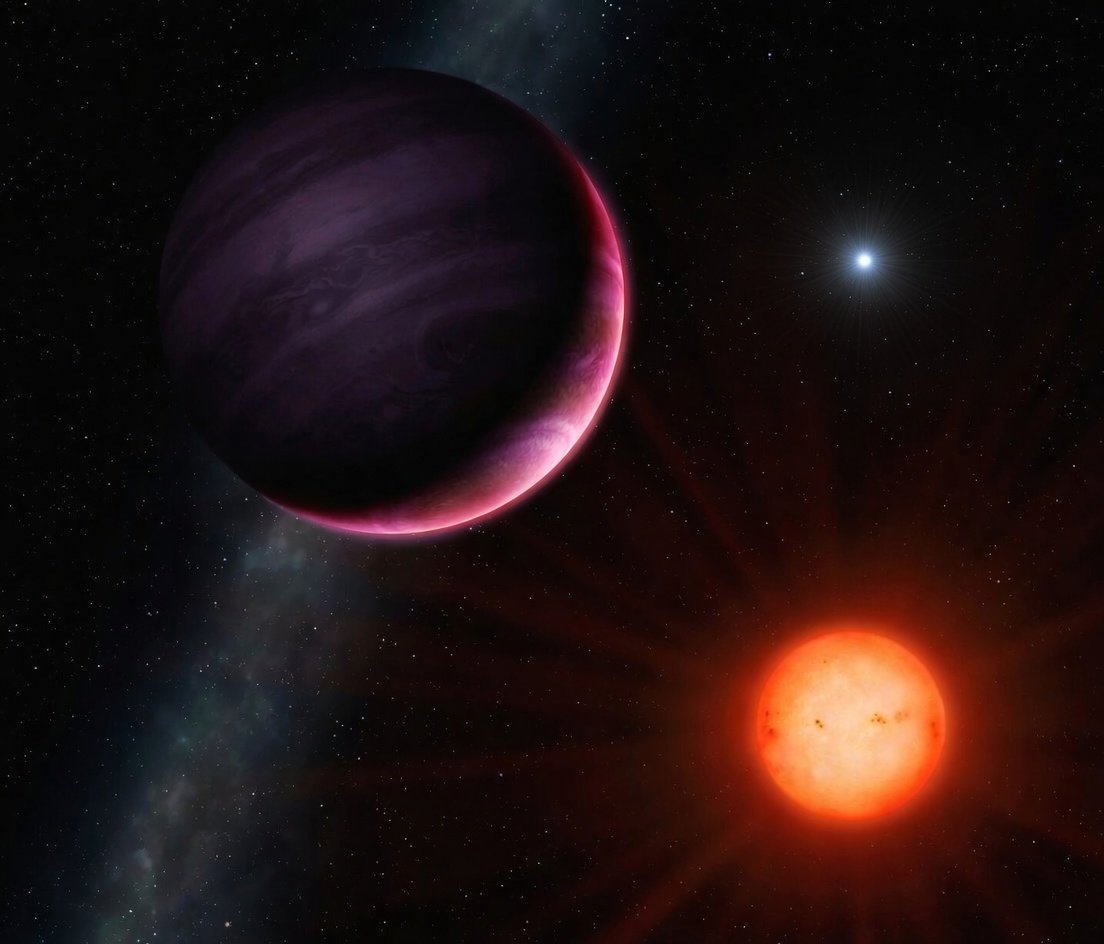
In May 2022, I discovered a planet candidate via @planethunters on @the_zooniverse. Today it is officially confirmed as TOI-5628 Ab, and our paper published in ApJL. I am grateful to Dr. Tianjun Gan of Westlake University for inviting me as a co-author.
https://t.co/PkZVgeTjmC
Astronomers Obtain Strongest Evidence Yet of a Companion Star to Betelgeuse ⭐️
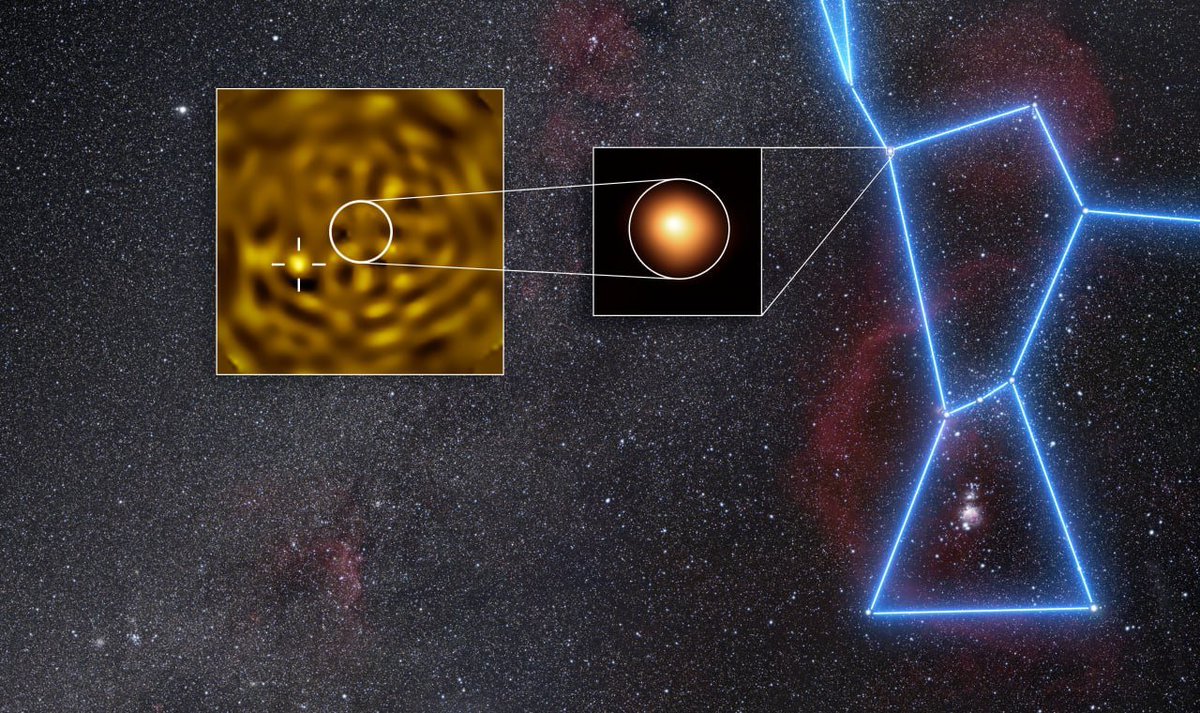
Astronomers have obtained compelling evidence of a companion star to Betelgeuse—one of the most famous and brightest red supergiants in the night sky. The discovery, presented in the journal *Astronomy & Astrophysics*, marks the culmination of a search spanning nearly a century.
An international team of researchers used the European Southern Observatory’s (ESO) Very Large Telescope (VLT) to directly detect the suspected companion star, designated Betelgeuse B. Observations were conducted in December 2024, at a time when calculations indicated the companion would be at its maximum separation from Betelgeuse, making it easiest to spot.
Imaging was performed using SPHERE, a high-contrast instrument originally designed to search for exoplanets. It yielded the sharpest image of the companion to date. Although astronomers had previously reported a possible direct detection of the companion using the Gemini North telescope, these new observations have significantly strengthened the evidence that Betelgeuse is part of a binary star system.
The data also revealed that the companion is considerably more massive than previously thought. While its mass was once estimated to be close to that of the Sun, scientists now place it at 2–3 solar masses. The study's authors note that it is particularly surprising that such a bright and relatively massive object has only now been detected, despite centuries of observations of Betelgeuse.
This discovery is significant for the study of red supergiant evolution. Betelgeuse is considered one of the nearest stars destined to end its life in a supernova explosion. Astronomers must now determine how the presence of a companion might influence this process.
To conclusively confirm the discovery, scientists plan to observe the system again in about a year, when the companion will be on the opposite side of Betelgeuse. However, researchers note that there is now virtually no doubt about the existence of the companion star.
🌙
Webb’s fourth year in images 📸
From the dance of dwarf galaxies to a protostar in its dusty disc, here are just a few of the images captured by Webb over the last year!
Don’t miss #SpaceSparks 30 👇
🆕 Two independent teams using Webb and ground-based data from ESO have discovered a new exoplanet! 🕵️♂️
Beta Pictoris d is the third planet to be found orbiting the young star Beta Pictoris. It is only 2.4 times more massive than Jupiter, making it one of the lightest ever imaged from the ground.
Read more: https://t.co/phYnLOmamR
📷 ESO /B. Sutlieff, M. Bonse et al.
Stars light up the sky, moms light up our lives.
Warm Mother’s Day wishes from ZWO & Seestar to all incredible mothers!
Thank you for being our brightest guiding star always. ✨
Credit: Yeal
#HappyMothersDay#ZWO#Seestar
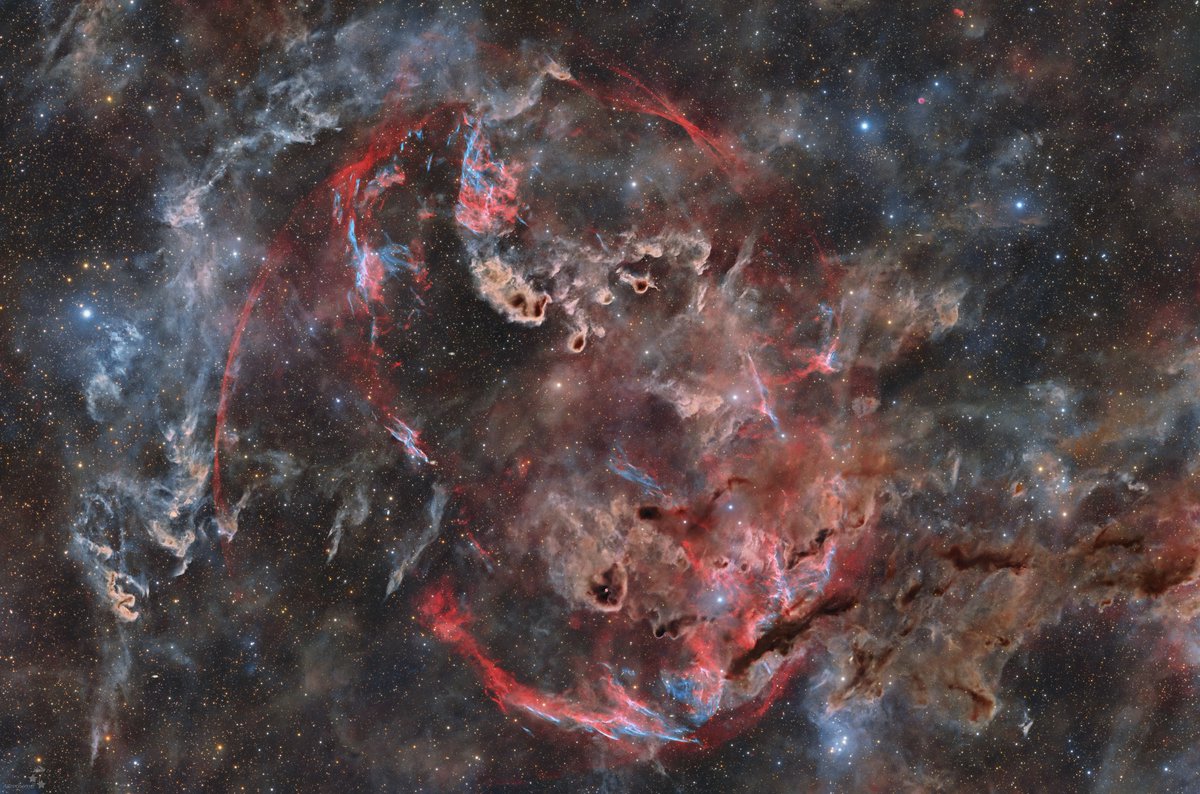
3 months. 90+ hours. One incredible supernova remnant.
This ambitious project by Mateusz Wiśniewski captures the faint and enormous SNR G156.2+5.7 using over 90 hours of HaOIIILRGB data collected across three months under Bortle 4 skies in Poland.
ZWO ASI2600MM Pro
#ZWO
I used the SPIRIT 3 telescope (0.32-m f/8 Corrected Dall-Kirkham+CCD, Clear filter) at the @ICRAR's Mardella Observatory (MPC code E29) to remotely observe the #ArtemisII Orion spacecraft and the ICPS upper stage at approximately 20:30 on April 2, 2026.
I'm delighted that my article on the mysterious recurrent nova M31N 2017-01e has been selected as the cover story for the Chinese popular science journal Amateur Astronomer.