In the 1990s, Canadian ecologist Suzanne Simard made a groundbreaking discovery that challenged everything we thought we knew about how forests work. While studying managed forests in British Columbia, she noticed something puzzling: when birch trees were removed to promote the growth of valuable Douglas firs, the firs did not flourish as expected, they actually struggled and grew more slowly.
Determined to understand why, Simard traced the movement of nutrients using radioactive carbon isotopes. What she found was astonishing. Trees were actively sharing resources through vast underground fungal networks known as mycorrhizae. These delicate, thread-like fungi connect the roots of different trees across the forest floor, forming a complex web that allows the exchange of carbon, water, nutrients, and even chemical signals, sometimes between entirely different species.
She discovered that older, larger trees often serve as central "hubs" or "mother trees," supporting younger saplings by redistributing vital resources and helping the entire ecosystem remain resilient. When these key trees are removed, the underground network weakens, and the health of the remaining forest declines.
Simard’s research overturned the traditional Darwinian view of forests as battlegrounds of ruthless competition. Instead, she revealed a far more sophisticated reality: forests operate as highly cooperative systems where trees communicate, support one another, and even warn neighboring trees about threats like drought, disease, or insect attacks.
What appears to the human eye as a silent, still forest is, in truth, a vibrant, interconnected living network, built not on isolation and rivalry, but on deep connection and mutual aid.
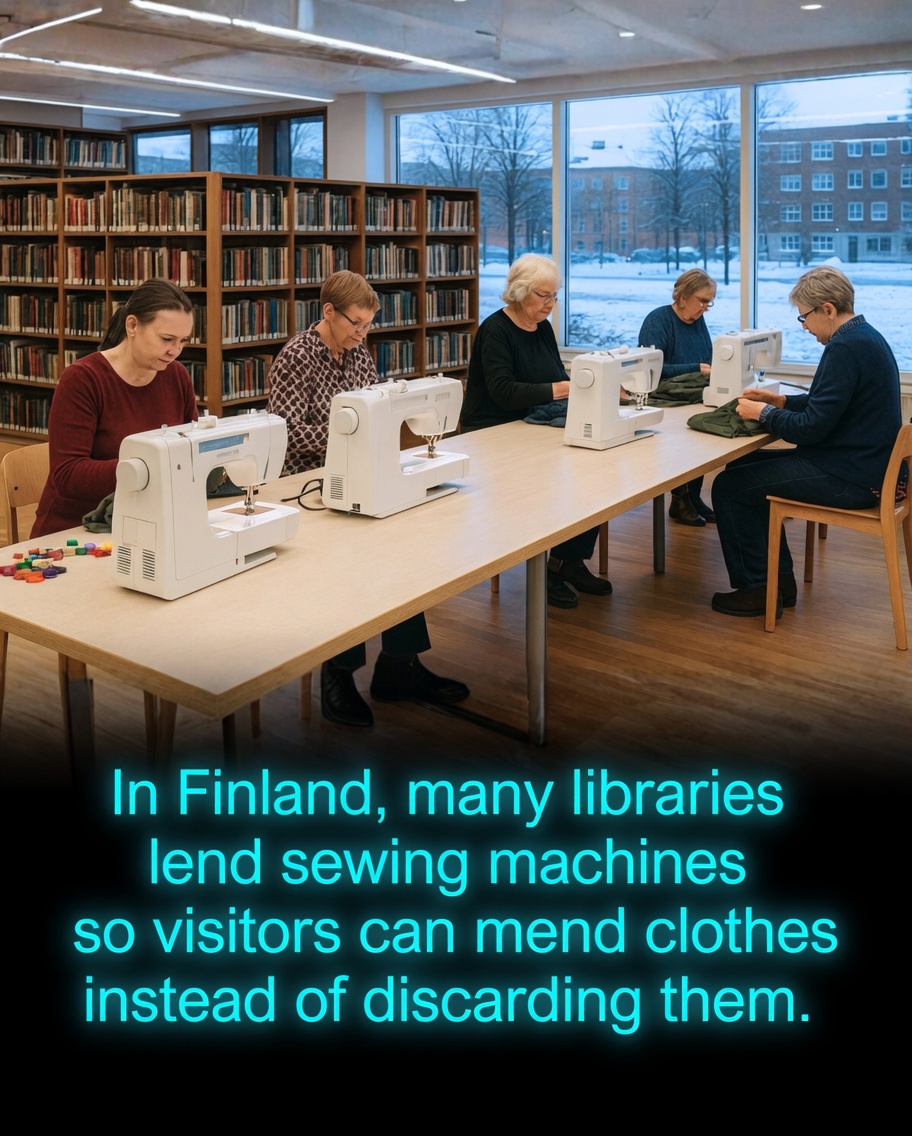
Finnish libraries have evolved far beyond traditional book lending, becoming vibrant community hubs that offer a wide range of practical services.
Many public libraries across Finland now lend sewing machines, 3D printers, and other tools to the public at no cost. Helsinki’s iconic Central Library Oodi, for example, provides access to over 100,000 books alongside sewing machines, recording studios, and digital fabrication equipment.
These services are fully funded by municipalities and protected by law, ensuring everyone, regardless of income, can use them. The initiative reflects Finland’s strong values of equality and sustainability. By lending sewing machines, libraries encourage people to repair their clothes instead of throwing them away, helping to reduce waste and promote a circular economy.
This innovative model highlights how Finnish libraries are redefining themselves as modern centers of community support, creativity, and lifelong learning.
Luxembourg is the world’s first nation to offer free public transport for all, tackling traffic and climate change in one bold move.
Luxembourg has pioneered a bold new era in urban mobility by becoming the first nation on Earth to eliminate fares across its entire public transport network. This groundbreaking policy covers every bus, tram, and train route nationwide, offering free rides to residents, cross-border commuters, and visitors alike.
Financed through general taxation rather than ticket sales, the initiative was designed to tackle the country's severe traffic congestion—once among the worst in Europe per capita—and to sharply cut carbon emissions from road transport. By removing the cost and hassle of tickets, Luxembourg effectively turned public transit into a basic public service, as essential and accessible as clean water or electricity.
The impact has been profound and measurable. Ridership surged as people left their cars behind, leading to noticeably less road traffic, shorter commute times, and a meaningful drop in urban air pollution. While first-class rail options remain a paid upgrade for those wanting extra comfort, the standard second-class system is now truly seamless: hop on, hop off, no barriers.
Luxembourg's experiment has demonstrated that removing financial obstacles can drive a genuine shift toward sustainable travel habits. It has also served as an inspiring model for other countries and cities grappling with sprawl, gridlock, and climate goals. In an age when radical solutions are needed to address the mobility-climate crisis, Luxembourg proves that treating public transport as a universal right is not only feasible—it can be genuinely transformative.
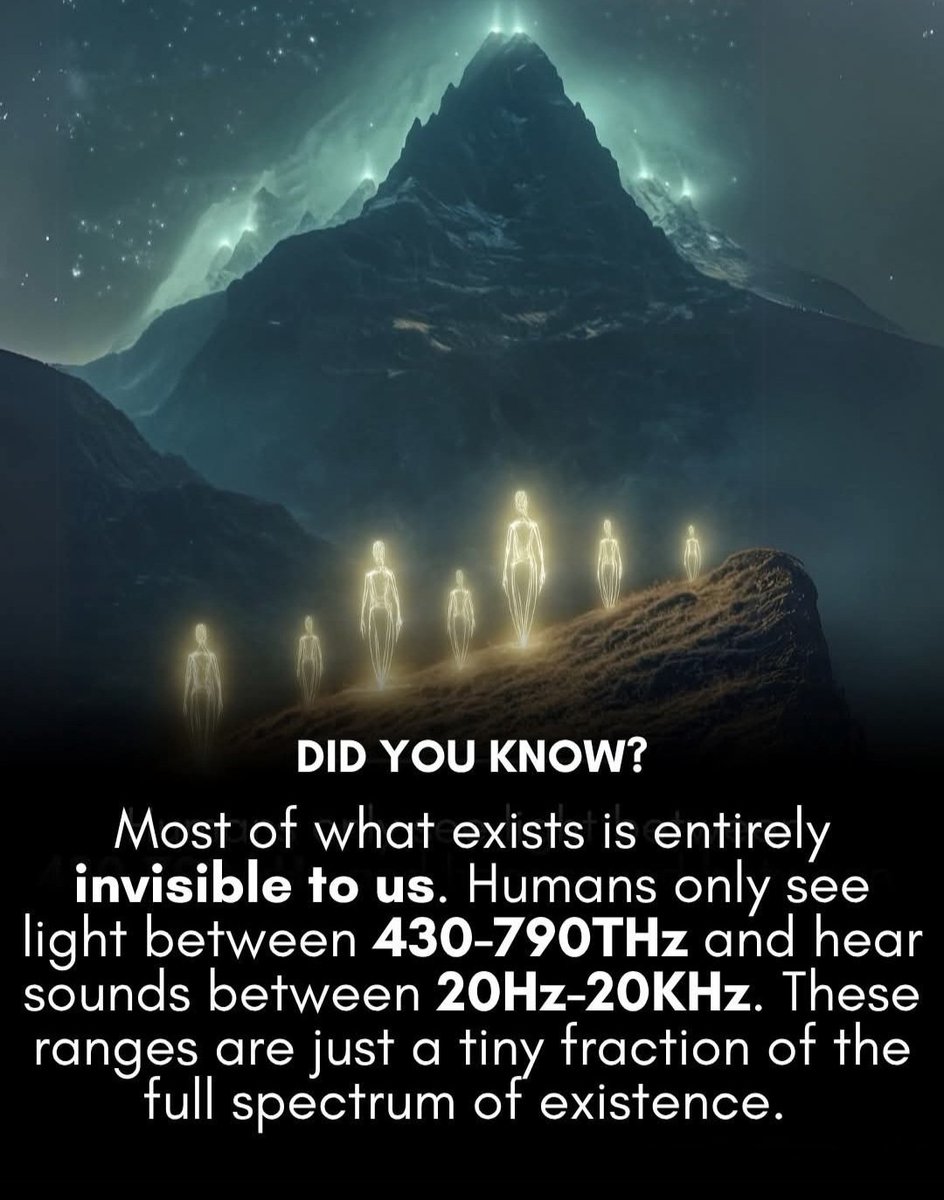
🚨 95% of the universe — of physical reality — is entirely invisible to us.
Scientific estimates suggest that 95% of the cosmos—comprising dark matter and dark energy—remains entirely undetectable without specialized instruments.
But that's not all.
Even within our own environment, much of reality escapes us: our eyes can only detect a narrow band of visible light, and our ears are tuned to a limited range of sound frequencies. Yet, beyond those bounds lies a universe filled with ultraviolet rays, radio waves, and ultrasonic signals that shape our world in subtle but powerful ways.
From deep-sea whale calls to neutrinos streaming through our bodies unnoticed, modern science is only beginning to uncover the vast unseen forces at play.
Tools like infrared cameras and particle detectors help bridge this sensory divide, but the question remains: how much of reality are we still blind to? As our understanding deepens, the invisible universe challenges our perception of what’s real—and how much more there is to discover.
EPIC 4-DAY EQUESTRIAN FOOD + WINE FEST: The Adelaide Equestrian Festival brings the Oceania Championships to the Park Lands this April, with four days of five-star competition, family fun and horses galloping through the heart of the CBD. >> https://t.co/VJWozVyYBJ
🌟 Read daily news on our free iPhone app: https://t.co/SAO6UtYpTh
🌟 Read daily news on our free Android app: https://t.co/9JzDM7ksN8
🌟 Subscribe to our daily eNewsletter to get these articles & more delivered to your inbox: https://t.co/xZxFfSxZBE
A coffee shop in Singapore invented the "Sweet Little Rain."
This coffee or tea is served with a puff of cotton candy.
The steam from the coffee rises to dissolve the cotton candy, and the puff begins to "rain" onto the coffee cup.