Since Tinubu entered Aso Rock, the Nigerian Army has NEVER RESCUED anybody, like they claim
EVERYBODY PAID RANSOM FOR THEIR FREEDOM, EVERY SINGLE TIME.
@mc_lively_ You are responding to claimants of Lagos who don't know where they actually come from.
The ones whose parents also came by night buses believe they own the land.
When Tinubu is done, a lot of these guys will change their last names.
When the government wants to work, it will work
A government that can build this in 24 months can also build a 1004 complex of one and two-room apartments in Abuja, and destroy the high cost of rent and win elections
The same way the government used solar to power itself out of darkness, but left you in band A
Notice how corruption did not affect these projects
You, who are writing a draft to attack this post, tell me what the government has done for you personally
@FinPlanKaluAja1 There's no judge in Nigeria that's given such a duplex in the heart of the capital city of Nigeria, that will ever give good judgements.
It's up to Nigerians to take back their country from wicked corrupt judges.
@asemota So funny.
But aside from this Big Chief, if this is his hustle, people back home may be hoping for their brother to send in funds.
You will see some family members living off his struggle.
No be everybody wey japa dey see money like that.
Family at home needs to chill at times.
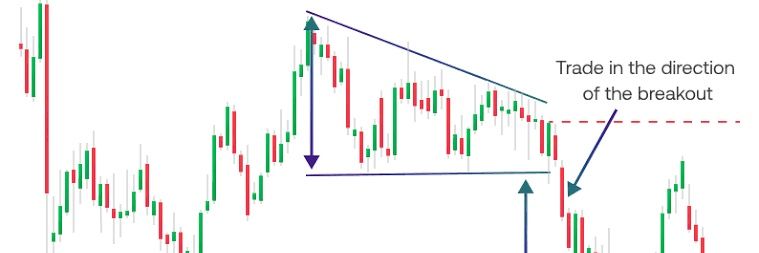
If you’ve never taken a prop account to payout stage, then this post is for you. ‼️
I’ve put together a list of the personal rules that have helped me keep my funded accounts and make consistent payouts for over a year in this post.
I’ve traded prop funded accounts for years and one thing I’ve learned is that staying funded has very little to do with finding the perfect setup because every trader gets good entries from time to time.
The difference however, is what happens when you’re wrong. That gap is what drains accounts so I created a list of my rules that you can easily copy to keep your accounts.
Here are the risk rules I follow before placing a trade. 👇
-: I decide how much I’m willing to lose before I enter a trade and that number doesn’t change once I’m in.
Some setups look so good that you’re tempted to size up halfway through. Don’t.
Good risk management only works when the rules are set before emotions get involved.
-: I don’t increase risk after a loss.
A losing trade doesn’t make the next setup more likely to work and the market doesn’t care that you’re trying to recover what you just lost.
Some of the biggest drawdowns I’ve seen started with someone trying to make back one loss in a single trade, forgetting that the market has no limits on what it can take from you.
-: My stop loss goes where the trade idea is wrong.
If price reaches that level, then the reason I entered the trade is no longer valid. I’ve learned that taking the loss is usually cheaper than trying to give a bad trade more room to work.
-: I only risk an amount that allows me to think clearly.
The easiest way to know you’re risking too much is when the trade starts affecting your behaviour. You’re checking charts every few minutes, watching every candle and looking for reasons to interfere with a plan that was perfectly fine before you entered, that discomfort is simply your body telling you that you’re doing too much. 1% is okay.
-: I don't judge trades by whether they win or lose.
Some of my best trades have been losses and some of my worst trades have been winners. A good trade is one where I followed my plan from entry to exit, regardless of the outcome.
Risk management isn't the most exciting part of trading.
It's also one of the biggest differences between traders who survive long enough to become profitable and traders who keep starting over.
Here’s the updated version of just that closing section:
The market will still be here next week. Make sure you are too, because it is easier to get another entry than it is to get another capital.
Remember to apply and not just bookmark.
Follow me, @Starr_gael, and turn on post notifications to stay updated and be the first to see whenever I make a post.
You’ll find trade documentaries, breakdowns, insights, results and my personal thoughts on my WhatsApp. Click the link below to connect.👇
https://t.co/HOc1mv5KrZ
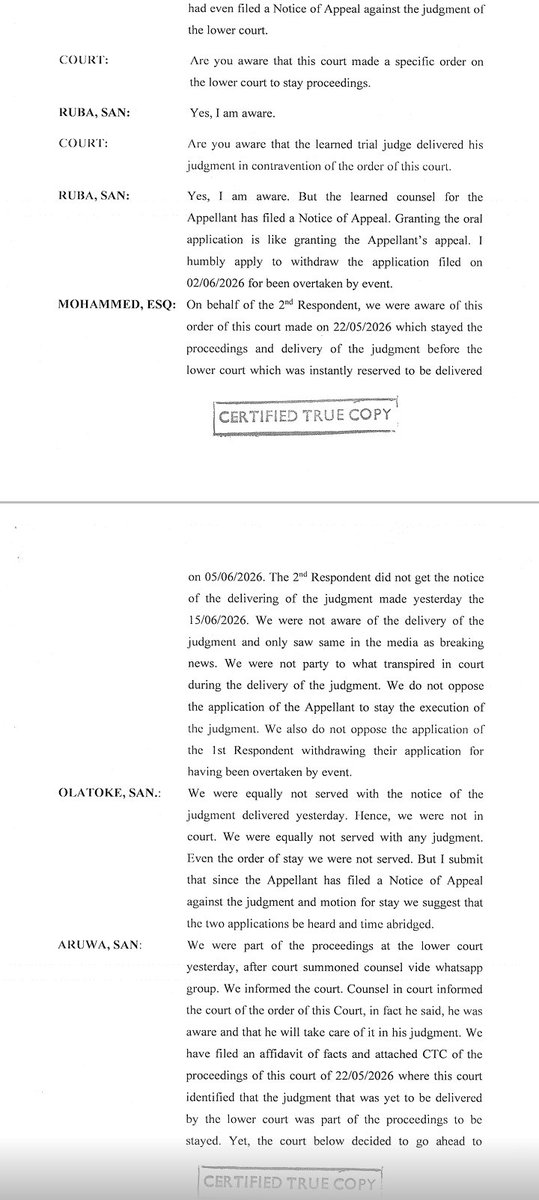
The Record of Proceedings of @NGCourtofAppeal reveal the egregiousness of the willfulness of Peter Lifu - who claims to be a judge of @FederalHigh - in their full majesty. They leave no room for speculation.
Peter Lifu is worse than a #RunsJudge. @njcNig can choose to allow him to hide under the cloak of his political godfathers. The damage is already inestimable.
Sometimes, I look at the career trajectory of Peter Obi and I begin to have pity on myself. 😭
$22 million annual profit at 28.
A dollar millionaire at 30.
Owned a house in the UK at 30.
A bank chairman at 34.
A governor at 44.
Now, I understand why people fall over themselves just to hear him speak.
Accountable Borrowing: The South Africa Example.
I have consistently maintained that borrowing, in itself, is not a bad thing. Every nation borrows. The critical issue is not the act of borrowing, but what the borrowed funds are used for and whether citizens can clearly see and measure the impact of such borrowing in their daily lives.
There is a lot to learn in the open and transparent manner in which South Africa handled its recently secured a $1 billion loan from the New Development Bank, with a clearly defined purpose. Publicly announcing the targeted purpose of the loan for all to know and monitor, upgrading water supply systems, modernising sanitation infrastructure, improving electricity distribution, and strengthening waste management services across eight major metropolitan cities, including Johannesburg, Cape Town, and Durban.
This is indeed what accountable borrowing should look like; the purpose is clear, the projects are identifiable, and the expected benefits to citizens are measurable. Such investments directly improve living conditions, enhance productivity, and stimulate economic growth.
In Nigeria, however, the opposite is the case: public debt has risen dramatically under the current administration, and its deployment is shrouded in secrecy from the people who will indeed pay back the loan. Today, our total public debt has increased from about ₦87 trillion in 2023 to nearly ₦200 trillion.
Yet, despite this unprecedented accumulation of debt, Nigerians are often left without a clear and detailed account of how these borrowings are being deployed to improve critical sectors such as education, healthcare, power, security, and infrastructure.
Borrowing must never become an end in itself. Every loan obtained in the name of the Nigerian people must be tied to specific, productive investments capable of generating economic value, creating jobs, reducing poverty, and improving the welfare of citizens.
Good governance demands transparency and accountability. The government must be able to clearly explain what was borrowed, where it was invested, and what measurable outcomes have been achieved. The ordinary Nigerian should be able to see and feel the benefits of every debt incurred on their behalf.
At a time when millions of Nigerians are struggling with rising costs of living, unemployment, insecurity, and declining purchasing power, fiscal discipline and prudent management of public resources are no longer optional; they are imperative.
Every borrowing decision should answer one simple question: How does this improve the life of the ordinary Nigerian? If that question cannot be convincingly answered, then we risk merely transferring today's burdens to future generations.
A New Nigeria is POssible. - PO
BRICS bank approves $1 billion lifeline for South Africa’s struggling cities | Business Insider Africa https://t.co/VN0C0Xo8zp
For some, it clicked after 10 years. For others, 1 year. Some in just 6 months.
The timeline is different, but the destination is the same.
Stay consistent. Your turn might be closer than you think.Stop comparing timelines. Keep showing up.