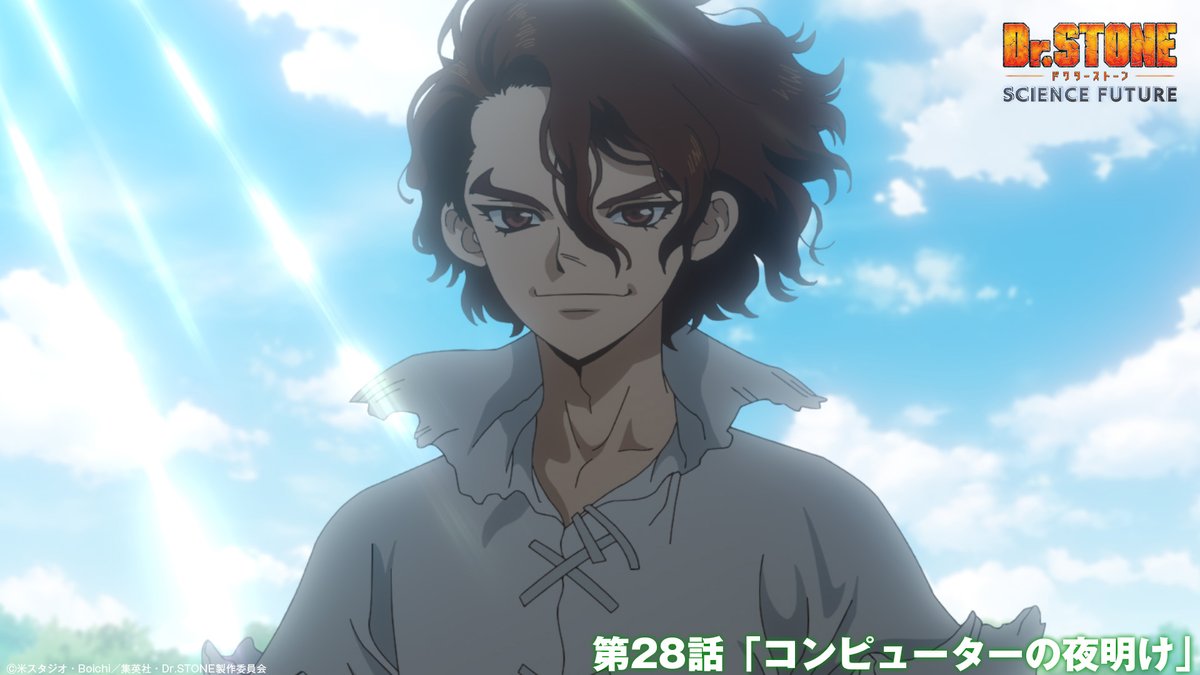
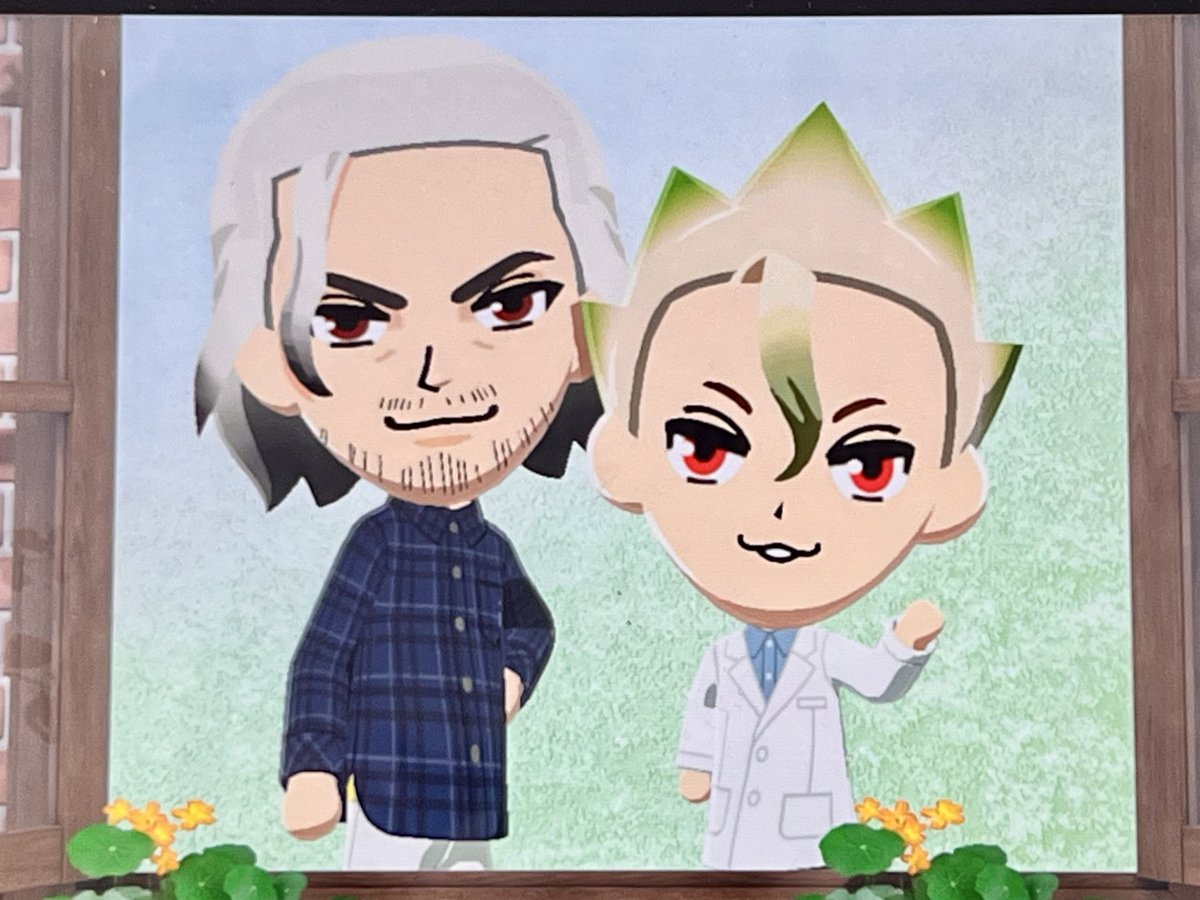
#DrSTONE最終回#DrSTONE
"The Meaning Behind My Final Dr. STONE Illustration"
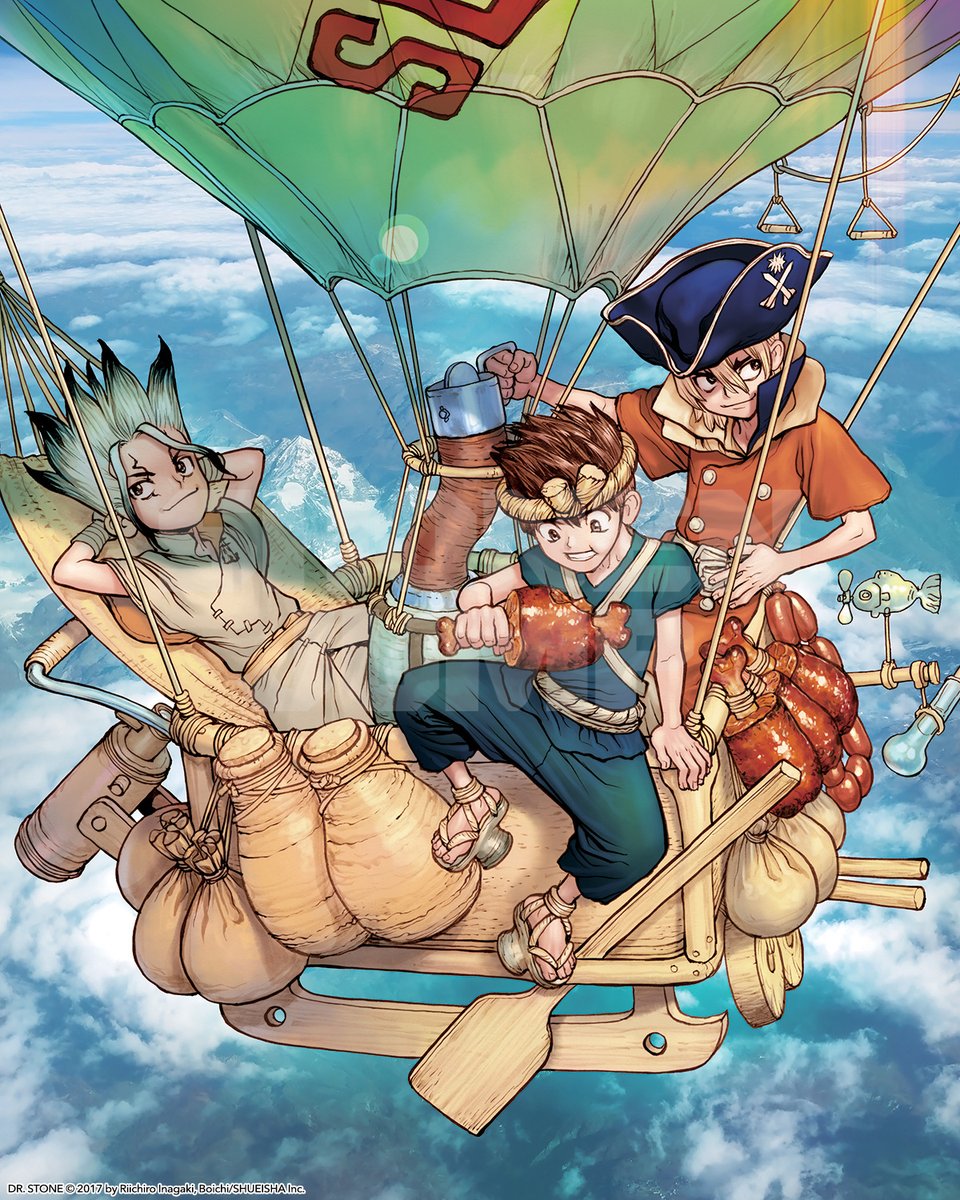
The illustration released yesterday for the final episode of the Dr. STONE anime is, as of this moment, the last Dr. STONE illustration I have drawn.
There are several thoughts and feelings contained within this single image.
One of them is this:
"If Dr. STONE had continued serialization, this is probably what it would look like today."
When drawing it, I wanted to express the idea that Dr. STONE should always continue to evolve—to become better, more dynamic, and more representative of the spirit of Shonen Jump.
That was a belief I carried throughout the series, and I wanted to include that feeling in my final illustration as well.
Another important decision involved Kohaku.
When drawing Kohaku, I intentionally used photographs of a cosplayer as reference.
Through this, I wanted to express my gratitude to all cosplayers who have loved and supported Dr. STONE more passionately than anyone else over the years.
That is why I deliberately chose to work from a cosplay reference.
I contacted the model directly and told her:
"I used your cosplay and photographs as reference for this illustration, and I would like to compensate you for it."
However, she kindly declined any payment.
Instead, she shared a message that deeply moved me:
"We are connected through mutual respect."
After hearing those words, I felt that rather than simply paying a modeling fee, it would be more meaningful to share this story when the illustration was finally released.
So today, I would like to say:
Thank you to everyone in Japan and around the world who has cosplayed Dr. STONE.
Your passion, creativity, and love for the series have meant a great deal to me.
This is one of the meanings contained within the final illustration created for the anime.
Thank you all.
In 2016, I received an email from an aspiring manga artist in Morocco.
It began like this:
“I want to become a mangaka, but there is no manga publishing industry in Morocco.”
Many people around the world love manga and read it, but when you look globally, there are many countries where manga is simply not published at all.
In some places, there is not even a publishing system(including publishing, translation, and distribution) in place.
Even where books exist, the infrastructure for printing, distribution, and bookstores is often lacking, making it very difficult for a true industry to develop.
Telling manga fans in those countries, “Your country has a relatively high GDP per capita, so you should buy manga,” is meaningless if there is no actual way for them to buy it.
That is something I find deeply painful.
Why is it that the manga industry has not been able to properly serve those regions?
Even in countries where publishing exists, manga books are often too expensive.
The price of a single tankōbon book is $ 15 to $ 20, which is high even in the United States, especially when today’s digital entertainment offers so many alternatives at much lower prices.
So, this is why I believe the future of manga is clearly not limited to print publishing, but must include digital services—manga that can be enjoyed in a reasonably accessible and affordable way.
If such systems are established globally, I believe the manga industry could grow dramatically.
In North America alone, a tenfold expansion would not be unrealistic.
Even countries without any publishing tradition could develop sustainable manga industries.
Once official digital services exist in each country, they can generate tax revenue, and governments can more seriously address piracy.
At that point, creators and aspiring manga artists can also demand proper enforcement and protection.
Most importantly, it would create opportunities for local aspiring manga artists.
And those opportunities would, in turn, strengthen the global industry as a whole.
When a country’s manga ecosystem develops properly, it becomes a cultural export industry.
From a government perspective, piracy then becomes something that can and should be actively addressed.
The first people to pay for legitimate manga services will, in many cases, be the very readers who once relied on piracy. They are not enemies of the industry—they are its earliest supporters in waiting.
Pirated manga readers are not our opponents.
They are our future audience.
They are proof that demand already exists.
In late 1990s Korea, manga piracy was widespread, and attitudes were often very hostile toward paid content.
Many believed that paying for manga was unnecessary, or even that the industry itself should not exist.
At the time, Steve and I did not fully understand this.
We were wrong in many ways.
But later, when proper legal services were introduced in Korea, readers were more than willing to support them. They paid for content gladly, and the Korean webtoon industry grew stronger, eventually becoming a major source of IP for film and television.
We learned, through experience, that the joy of not paying cannot compare to the deeper satisfaction of supporting and sustaining the culture you love.
Piracy users were never the enemy.
They were simply manga fans.
And all manga fans, in the end, are on the same side.
Through our mistakes, Steve and I came to understand this more clearly.
What needs to be done is simple: build proper digital manga services.
Ensure fair pricing.
And most importantly, help each country develop its own manga ecosystem.
Because only then can a truly global manga industry exist.
And only then can the works we create truly reach the world.
To be continued...
Hola España 🇪🇸
Big news for our Spanish community! We're expanding our presence with the launch of a new accounts:
X - @ASW_official_Es
IG - @arcsystemworksespanol
Follow them for exclusive content in Spanish & feel free to tag someone from the community who needs to know 🫶
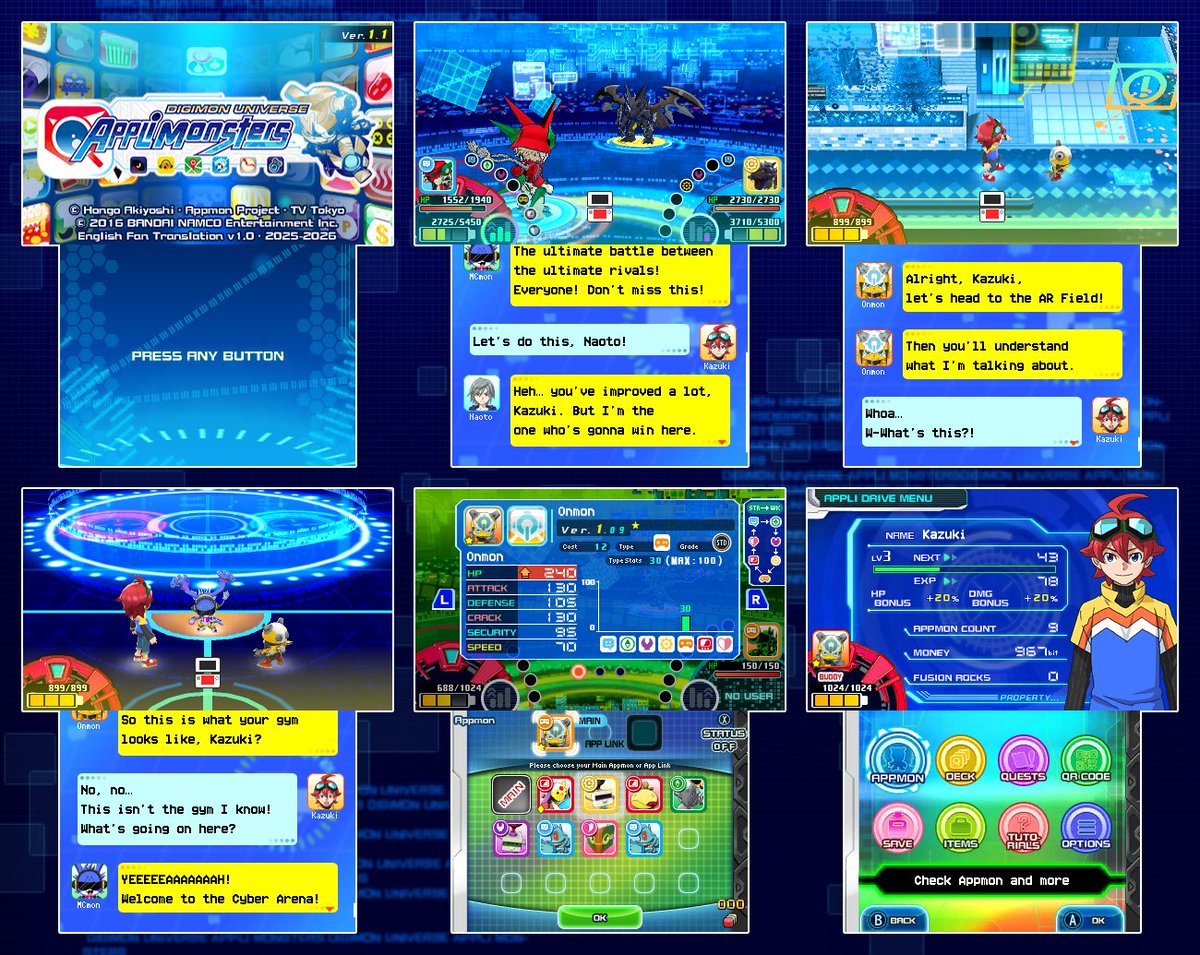
The English fan translation of Digimon Universe: Appli Monsters (3DS) is finally out!
You'll find the patch download, patching instructions and additional information here: https://t.co/E0E1YpBJuy.
Spread the word and enjoy the game!
#Appmon#Digimon#アプモン#デジモン
I'd like to share a very important update about the future of the Library of Ohara. I'd appreciate if you could give it a read if you have the time (TL;DR summary at the end):
I'll try to keep this as brief as I can, but unfortunately The Library of Ohara is at a very real risk of having to shut down in the future.
For starters, on the good side, I'd like to say real quick that my health over the past few months has been slowly recovering. I have a long way to go but I'm slowly improving and getting better. I still have a long way to go as I'm still suffering a lot from symptoms, but I'm trying to take it slowly.
Unfortunately though, this health relapse has made things quite difficult for me recently as the increased medical costs have also taken a hole in my finances, and being able to work less has caused my earnings to plummet considerably too.
The issue is that this comes during a period of time in which views for One Piece videos have been considerably decreasing over the past year or two across the entire platform. This isn't a phenomena limited to just my channel, but one I've discussed with creators of all sizes and places, from creators with over a million subs to creators from places like France or Spain. Other people have made better explanations on the subject, but we largely believe that the YouTube algorhythm is being oversaturated with low quality and AI generated content that has caused a lot of our collective views to decrease over time.
And while I'd like to think I'm not one to obsess over views, this has had a real effect on the earnings of my channel, to the point I've been secretly producing the Library of Ohara at a loss (losing more money than I make just from survival costs alone) for the past couple years. Thanks to the savings I've built up over the time it was profitable, I've been able to get away with losing money so far, but now coupled with the rising costs my health has taken, it's not becoming sustainable anymore.
I don't like having to ask this, but if you are able to help out, I would appreciate if you considered pledging to my Patreon to help keep the Library of Ohara sustainable. Of course, if you yourself are struggling as well, please don't worry, but if you can afford it and would like to help content like mine continue to be made, I'd appreciate if you could help out during this difficult time!
For those who pledge to my Supernova tier or higher ($10 a month), you can get early access to the Interactive One Piece World Map Project. This is a massive project I've been working on for the past 5 years to make a fully interactive map of the world with an incredible level of detail and extensive features to help you learn more about this beautiful world. The map will be available for free as an open resource for the community at some point in the near future, but you can access it right now by pledging to the aforementioned tier! Link to Patreon can be found in my Twitter bio!
I'm really sorry about having to ask help like this, but I would like to keep betting on making high quality content and special projects like this one rather than start creating low quality entertainment like YouTube now increasingly demands. And again, even if you can't help, just being there for me this whole time has been an incredible honor. Thank you for being there with me on this journey and I hope that you can find all the joy in your life as well!
TL;DR: My current health issues and difficulties over YouTube's oversaturation of low quality content have made it difficult for the Library of Ohara to remain sustainable long term. If you are able to help out, I would be very grateful if you could help support my content through Patreon, and you can get access to my Interactive World Map Project early through it! Thank you for all your support!!
Ojalá una psyop tan evidente como presentar la paternidad de forma deseable en un videojuego fuera a solucionar el problema
Todos los indicadores que pueden estudiarse muestran que el problema no es la voluntad de tener hijos, sino la falta de acceso a medios materiales y sociales para que hacerlo sea viable
No hablo solo en el sentido amplio de la pobreza. Todo Occidente, y en especial sociedades como la japonesa, tienen un problema en relación con el concepto del coste de oportunidad en el trabajo
Tener un hijo requiere tiempo, cuidados, cambiar prioridades, reorganizar el entorno en el que vives y, en definitiva, no centrarte únicamente en producir y consumir. Sociedades como la japonesa, aunque esto puede aplicarse a casi cualquier lugar del mundo, han convertido a sus ciudadanos en máquinas disociadas de la vida colectiva y social, despojándolos de cualquier horizonte más allá del trabajo y el ocio. El objetivo es ascender en el empleo para ganar más dinero, lo cual resulta contradictorio con tener un hijo, ya que eso exige reducir tu productividad durante años para poder cuidarlo. Tener un hijo es la antítesis de este modo de vida, que cancela la capacidad de ascender econ��micamente y suspende el ocio de forma temporal
Ni siquiera Hungría, destinando un 5 % de su PIB, ha conseguido volver a niveles de 2,2 hijos por mujer para mantener la población. El motivo no es solo la carencia económica, ni la falta de guarderías —que también—, sino un modelo que ha convertido al ser humano en una máquina de producir y consumir, donde tareas más complejas como la paternidad, que requieren esfuerzo sostenido en el tiempo, apoyo colectivo y comprensión por parte de las empresas, prácticamente no tienen cabida
Si tienes un hijo, eres temporalmente menos productivo. Tienes que centrarte en algo que no es darle esa atención a la empresa y, al mismo tiempo, renunciar en parte al ocio común, que en la mayoría de los casos es una de las pocas formas de disfrutar y evadirse de ese ciclo de trabajo. Esto, sumado a que la crianza colectiva, algo común en las sociedades humanas desde hace miles de años, se ha convertido en un proceso individualizado y mercantilizado en lugar de cooperativo, explica que no existan incentivos reales de ningún tipo
La solución pasa por volver a una organización más cooperativa y por luchar contra la imagen del ser humano como maquinaria. La paternidad es de las cosas más humanas que existen; mientras nuestras sociedades nos traten como máquinas, no tendremos ni los incentivos ni las herramientas para poder tener hijos
Si bien creo que juegos como este pueden despertar el deseo de tener hijos, ese deseo se va a convertir en frustración muy rápidamente cuando el proceso romantizado de “cuidar” se convierta en tener que organizar el trabajo, la familia, los cuidados y la propia supervivencia al mismo tiempo
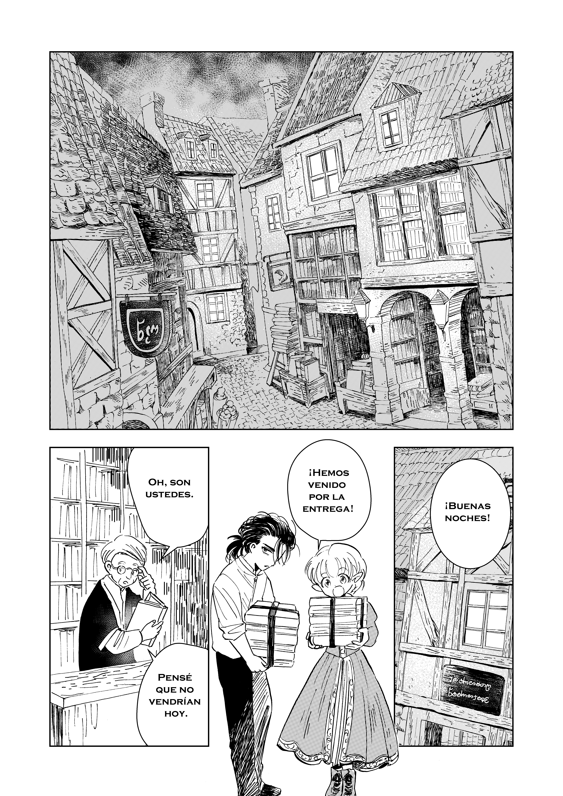
¡Hola a todos! Soy editor de manga en Japón. 🇯🇵📖
Trabajando con autores de todo el mundo, he sentido en carne propia no solo la inmensa pasión de Latinoamérica por el manga, sino también la frustración de no poder leer muchas obras en su propio idioma.
Por eso, con el deseo de que puedan disfrutar de más historias, ¡estoy planeando mostrarles en español uno de los mangas que edito! ✨
La versión en español del primer capítulo (con una traducción sencilla) estará lista esta misma semana. ¡Por favor, espérenlo con ganas!
¡Es una historia conmovedora sobre una joven elfa que se convierte en encuadernadora! 🧝♀️📚
/
#DragonBallXenoverse2 Collaboration Celebration!
Joint Social Media Campaign Begins
\
Super Saiyan God Vegeta (Ultra Supervillain) and others will show up in DOKKAN BATTLE!
If this post and related posts reach 20K reposts & likes worldwide,
you will get #dokkanbattle in-game rewards too!
Period: Until 4/26 18:59 PST (sched.)
#DrSTONE Behind Story – 02
#Senku#Taiju#Yuzuriha#Taiju Was the Protagonist.
While working on Dr. STONE, there are a few things I clearly remember as truly astonishing.
One is the genius of Inagaki-sensei and the first editor.
The other is something I see as symbolic of what it means to work at Weekly Shōnen Jump.
And at the beginning, the protagonist was Taiju, not Senku.
After reading the storyboard for the first chapter, I asked who the main character was, and I was told, “Taiju is the protagonist.”
Senku, at that time, was the intelligent supporting character.
So I decided to reverse the typical “Jump” stereotype in the character design.
I gave Senku—the genius—a strong, hero-like hairstyle, while Taiju, as the protagonist, was designed more in my own style rather than a typical Jump hero: a relatively ordinary hairstyle, but with a muscular build.
Because Taiju was the protagonist, I focused the emotional beats and close-up direction on him.
At least in the first chapter , both the story and the direction were clearly followed on Taiju.
However, after Z=3, the protagonist shifted to Senku.
The direction of the story also changed.
And yet, all of it unfolded so naturally, as if it had been planned from the very beginning.
The “change” itself is impressive—but what’s even more remarkable is how it feels premeditated.
To me, this is the very essence of Inagaki-sensei’s genius, and what I would call the “something wonderful is happening” moment required to work at Weekly Shōnen Jump.
My journey into Weekly Shōnen Jump began with this sense of awe—at how things are done there, and at Inagaki-sensei’s boundless genius and relentless effort.
https://t.co/6HqdDCw1kn
First Character Designs
At this stage, Senku clearly had the presence of a supporting character.
https://t.co/6vNRQsRkNN
In my mind, the greatest heroine in Weekly Shōnen Jump was Ai from Video Girl Ai, so I gave Yuzuriha a spiral-shaped hairband as a homage to that work.
However, this element was not yet present in the very first design.
https://t.co/4vsICsQfSv
https://t.co/yCTaa3nNpf
First Concept Illustrations for the Jump Serialization Meeting. (Taiju is the first one I designed.)
https://t.co/XgAg9hzjQq
Boichi Version Dr. STONE Storyboards
Some scenes and depictions differ from the work.
At this stage, remnants of human civilization and building ruins were still depicted.
Finally, for those aiming to break into Weekly Shōnen Jump, there’s something I must say.
What you need to prepare for serialization—designs, storyboards, manuscripts—varies from case to case.
It depends on whether you are an aspiring manga artist, a rookie, or a veteran, as well as your style and career.
In the case of Dr. STONE, since Inagaki-sensei was already a creator with a 20-million-copy hit in Weekly Shōnen Jump, I only had to prepare a relatively small amount.
Now, even though I’ve also become a creator with over 20 million copies sold, I find that I need to prepare far more than I did back then just to submit to a meeting.
I’m not sure why—perhaps it’s simply due to my own limitations.
In any case, for those who wish to challenge Jump, please take the Dr. STONE example shared here as just one reference.
Above all, I believe it’s important to faithfully follow the guidance of your editor.


![fabrebatalla18's tweet photo. [AnimeMania] Fushigi Yugi (Fushigi Yūgi) (Fushigi Yuugi) (ふしぎ遊戯) [CAT-ESP-JAP]
https://t.co/nHeNRS8aq9 https://t.co/EAneMTf6Zr](https://pbs.twimg.com/media/HL_JLtIXoAExb4h.png)







![fabrebatalla18's tweet photo. [AnimeMania] Fushigi Yugi (Fushigi Yūgi) (Fushigi Yuugi) (ふしぎ遊戯) [CAT-ESP-JAP]
https://t.co/nHeNRS8aq9 https://t.co/EAneMTf6Zr](https://pbs.twimg.com/media/HL_JMYYWYAEjlea.jpg)