#Somalia, once described as a failed state, has now moved beyond that classification and has become a state in total collapse. Following the downfall of Siad Barre’s military regime, the country’s trajectory initially reflected a familiar historical pattern: the overthrow of a dictatorship through armed resistance, popular uprising, and the expectation that a new political order would emerge from the struggle.
However, the circumstances surrounding Somalia’s subsequent collapse are particularly striking. Unlike many countries emerging from dictatorship and civil conflict, Somalia has received extensive support from the international community, including global institutions, individual states, military assistance, and billions of dollars in financial aid over nearly four decades. This support has been intended to restore stability, rebuild national institutions, establish effective governance, and create a viable, self-sustaining state.
Unfortunately, despite this unprecedented level of international assistance, the intended objectives has end in a total disaster and collapse. Rather than translating financial and military support into sustainable institutions, national cohesion, and lasting stability, international intervention has failed to reverse the country’s downward trajectory. Consequently, Somalia can no longer be adequately described as merely a failed state; it has become a country experiencing total state collapse.
#Somaliland
Two years of Irro’s administration: Despite significant challenges—including limited resources, global inflation caused by regional conflicts and instability, domestic grievances, and public concerns about the qualifications and competence of some cabinet members—Somaliland continues to demonstrate remarkable resilience.
What is particularly encouraging, however, is the optimism of its people and their determination to remain hopeful even in difficult circumstances. Their confidence reflects a deep-rooted belief in their country’s future and an enduring commitment to its national aspirations.
Israel’s recognition of Somaliland has provided an additional and important reason for renewed hope, strengthening the belief that the country’s longstanding aspirations for international recognition may be moving closer to reality.
Although much remains to be done in governance, economic development, and international diplomacy, #Somaliland’s greatest strength may ultimately lie in the determination of its people to remain hopeful, united, and forward-looking despite the challenges they face.
#Somaliland
Somalilanders embraced the recognition of their country. They took to the streets, celebrating day and night in an extraordinary display of national pride and jubilation. However, there is a profound disconnect between the Irro administration and the people of #Somaliland. Despite the public’s overwhelming enthusiasm for recognition, growing concerns about the government’s conduct have created an increasingly troubling divide between the administration and the people.
Whether these concerns and doubts are justified or not, they have not emerged without reason. Rather, they stem from a series of incidents and mounting questions surrounding the government’s conduct, particularly with regard to accountability, transparency, and respect for fundamental freedoms.
Among the most troubling developments are the recent attack on a prominent businessman and the incident involving an individual who, while in Hargeisa, confidently declared his candidacy for president of Somalia. Such incidents have raised serious questions.
Another concern is the restrictions on press freedom, and the imprisonment of journalists. These developments are particularly alarming in a country that has long taken pride in its democratic achievements, independent media, and respect for freedom of expression. Such actions risk undermining the very democratic values that Somaliland has worked so hard to establish.
#Somaliland
President Irro is facing a growing erosion of public confidence and support, reflecting a widening gap between public expectations and his administration’s performance. However, the possibility of restoring public trust remains if he recognizes the urgency of the situation and undertakes a clear course correction. This requires clearly defining his priorities, communicating them with honesty and transparency, and aligning government actions with the concerns and aspirations of the #Somaliland people. The critical question is whether Irro is prepared to acknowledge the shortcomings of his administration and make the necessary adjustments to regain public confidence before the loss of trust of the people deeply worsens.
#Somaliland
Somalilanders are urging President Irro to replace his cabinet with more experienced, competent, and qualified officials, hoping that a new team would make the government more effective, responsive, and accountable. While this may seem like a reasonable proposal, it overlooks a fundamental reality: changing the cabinet would not necessarily change the government’s directions and priorities.
Both the current ministers and any new appointees would be expected to follow the president’s leadership, policy priorities, and political objectives. Ultimately, the direction of the government rests with the president, not simply with the individuals appointed to his cabinet. As long as the president’s policies and goals remain unchanged, replacing ministers is unlikely to produce any fundamental shift in governance or national strategy.
Therefore, the expectation that a new cabinet alone would bring meaningful change may be more wishful thinking than a realistic solution. Without a change in the president’s priorities, policies, and approach to governance, a reshuffled cabinet would likely continue along the same path as its predecessor.
#Somaliland
Somaliland’s Sovereignty Is Being Surrendered One Institution at a Time
Somalia is steadily extending its control over Somaliland, seemingly with the tacit blessing of President Irro’s administration. What makes this development particularly alarming is the apparent covert nature of the process: #Somaliland’s authority is being eroded gradually, institution by institution.
Travel and aviation are under the control of the failed state of Somalia. Somaliland’s higher education system is being integrated into Somalia’s education framework, while Somaliland’s faculty members are reportedly participating and engaging with the Ministry of Higher Education in Somalia: Meanwhile, Somalia financial institutions are operating in #Somaliland openly and with blessing of this administration.
Asking the Irro administration to resolve the E-Visa and #Somaliland aviation crises is like asking it to resolve a problem in which it is itself a participant.
“Nin dawee la leeyahay dambi uu badh leeyahay” AUN abwaan Gaariye
It is a fact that questions were raised about the commitment of the then-opposition party, #Waddani, now the ruling party, to believe in Somaliland’s sovereignty. What is truly shocking—and perhaps most troubling—is that nearly two years into its administration, Somalilanders are still asking the very same question. One would have expected these concerns to have been put to rest by now. Instead, their persistence raises serious questions about the government’s commitment to protecting the nation’s sovereignty.
#Somaliland
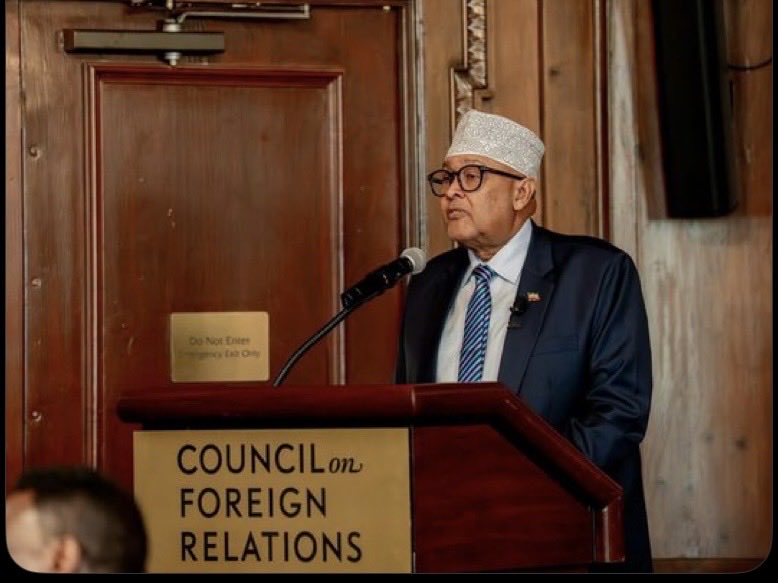
President Irro’s visit to Washington raised some concerns.
#Somaliland must intensify its pursuit of international recognition with greater commitment, preparation, and strategic focus consistently.
Another clear lesson is the need for smaller and qualified individuals with clearly defined roles. Large delegations staying for prolonged periods can waste valuable public resources and time without necessarily producing greater diplomatic results.
The Washington visit should therefore be viewed as a learning experience to ensure that every future mission is focused, cost-effective, and designed to advance its recognition efforts.
#Somaliland
The Takeaway from President Irro’s Visit to the United States:
Short of securing formal U.S. recognition, President @Abdirahmanirro’s Washington visit should be viewed as a significant diplomatic and political success for #Somaliland.
The importance of the visit goes beyond whether recognition was announced during the trip. On the other hand the timing was not necessarily on Somaliland’s side, given the global tensions and ongoing wars in the Middle East, which have understandably drawn much of the world’s political and media attention toward those conflicts. Nevertheless, President Irro succeeded in taking Somaliland’s recognition campaign directly into the heart of American political and policy circles—engaging members of Congress, executive-branch institutions, policy organizations and influential voices in Washington.
Most importantly, the visit elevated Somaliland’s political profile in Washington. The question of Somaliland’s status, strategic importance and recognition is increasingly part of a broader American conversation about the Horn of Africa, the Red Sea, maritime security, trade and strategic competition.
Recognition was not achieved from US but the political groundwork for recognition was strengthened.
Irro went to Washington seeking recognition. He returned having expanded access, raised awareness, strengthened political engagement and placed Somaliland’s case before a much wider American audience.
In diplomacy, not every victory arrives as a signed agreement. Sometimes the victory is moving an issue from the margins toward the center of the political conversation.
By that measure, the Washington visit was an important step forward for Somaliland’s international recognition campaign.
House Bills supporting Somaliland’s access to global finance, including SWIFT network would strengthen its global commercial integration. Meanwhile recognition efforts in Congress led by Senator Ted Cruz and strategic partners is going well in Washington.
#Somaliland
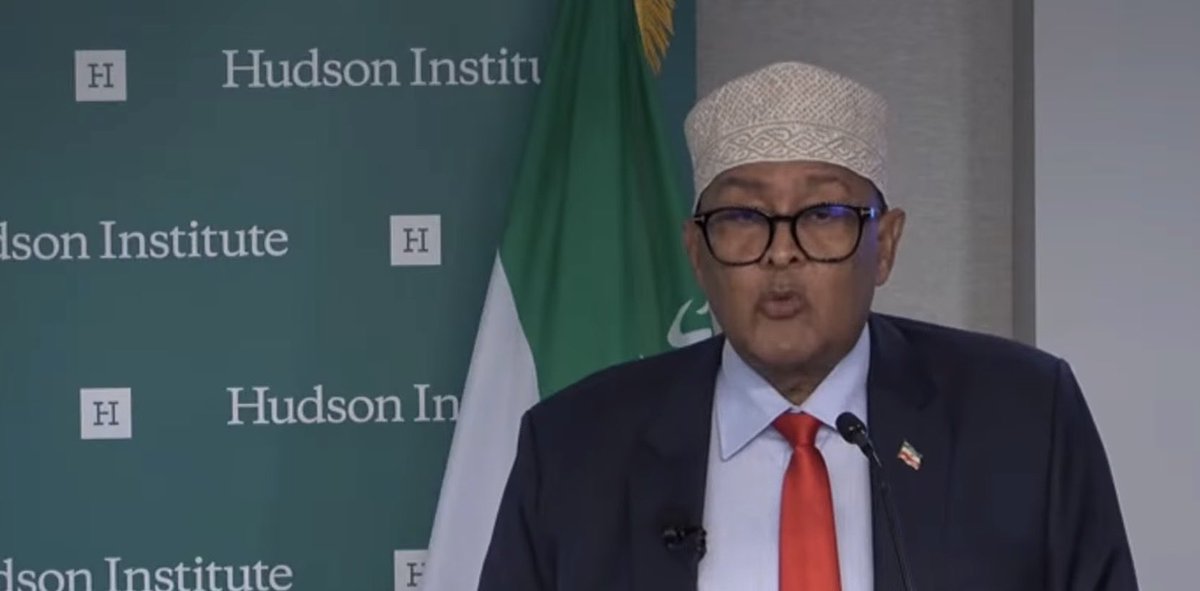
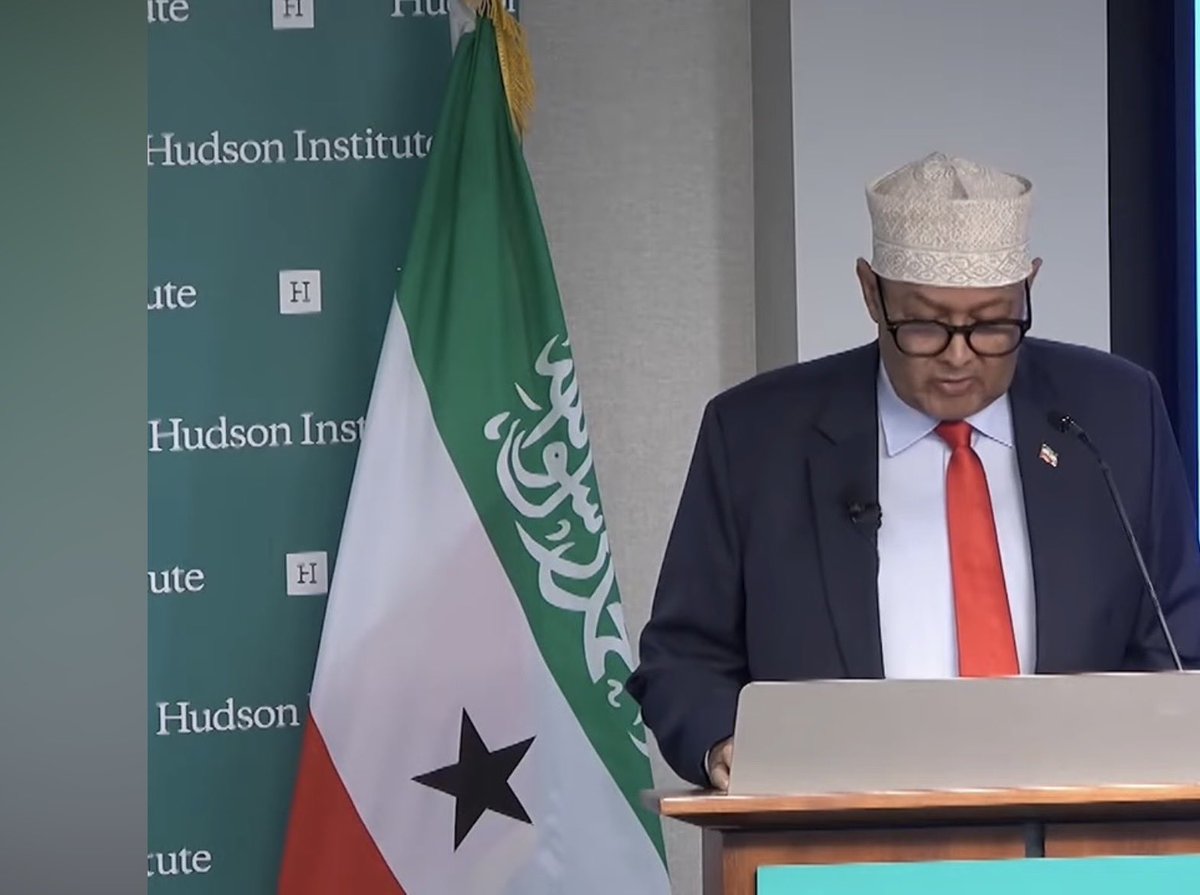
After a well-prepared speech at the Hudson institute followed by an interview that was less than perfect, the Somaliland issue certainly was not lost in Washington. Somaliland continues to have a strong support from US government including both chambers in Congress
#Somaliland
President Cirro is expected to meet with President Donald Trump, senior U.S. government officials and members of Congress.He is also expected to attend the 81st Session of the #UN General Assembly which opens on September 8, 2026. #Somaliland
The President of Somaliland Cabdiraxman Cirro has arrived in the United States today, marking what would be a historic milestone—the first visit to America by a #Somaliland president representing a recognized Somaliland Republic.
Mogadishu’s Turmoil and Washington’s Somaliland Reassessment
The recent U.S. State Department fact-finding report examining opportunities for greater cooperation with Somaliland may prove to be more than a routine diplomatic exercise. By evaluating both the prospects and the obstacles to a closer relationship, Washington appears to be acknowledging a political reality that has existed for more than three decades: Somaliland has maintained its own institutions, security structures, and democratic processes, largely independent of the instability that continues to plague southern Somalia.
The report signals a gradual shift away from the rigid adherence to the long-standing “One Somalia” policy. While formal recognition remains a matter for political deliberation, the discussion itself reflects a growing understanding in Washington that American interests in the Horn of Africa may be better served by engaging #Somaliland on its own merits.
That perception was reinforced by the visit of a US delegation which traveled to Somaliland to discuss expanding cooperation and strengthening bilateral ties. Although the recognition debate remains ongoing, such engagement suggests that policymakers are increasingly willing to explore new frameworks for partnership.
The timing of the visit is particularly striking. As American officials were meeting with Somaliland authorities, Mogadishu was once again gripped by political unrest and armed confrontation. Reports indicate that tensions between the administration of President Hassan Sheikh Mohamud and opposition groups—centered on constitutional disputes, allegations of government overreach, and broader struggles over political power—have escalated into violence.
The latest clashes are not merely another isolated security incident. They underscore the deeply volatile nature of the situation in Mogadishu, where recurring political crises can rapidly evolve into armed conflict, resulting in casualties, civilian displacement, and further erosion of public confidence in state institutions. The instability also raises difficult questions about the continued viability of policies that treat Somalia as a single, cohesive political entity.
For U.S. policymakers, the contrast could hardly be clearer. On one side stands Somaliland, which has spent decades building relative stability and functioning institutions. On the other is a federal government in Mogadishu that continues to face persistent internal divisions and periodic outbreaks of violence.
As Mogadishu’s volatility once again captures international attention, Washington may increasingly conclude that its strategic interests are better served by engaging realities on the ground rather than preserving assumptions that have failed to produce lasting stability.
#Somaliland
This is response to the congressional request and directive below. It’s not new US policy but simply to identify areas of Cooperation and that is what the report is about-identify potential areas of improved relationship and cooperation with Somaliland.
In House Report 119-217, the section on United States–Somaliland engagement is brief but politically significant. The report states:
“The Committee directs the Secretary of State to submit a report, not later than 120 days after enactment of this Act, to the appropriate congressional committees on potential areas for improved United States engagement with Somaliland, including in security, diplomacy, trade, and development.”
#Somaliland