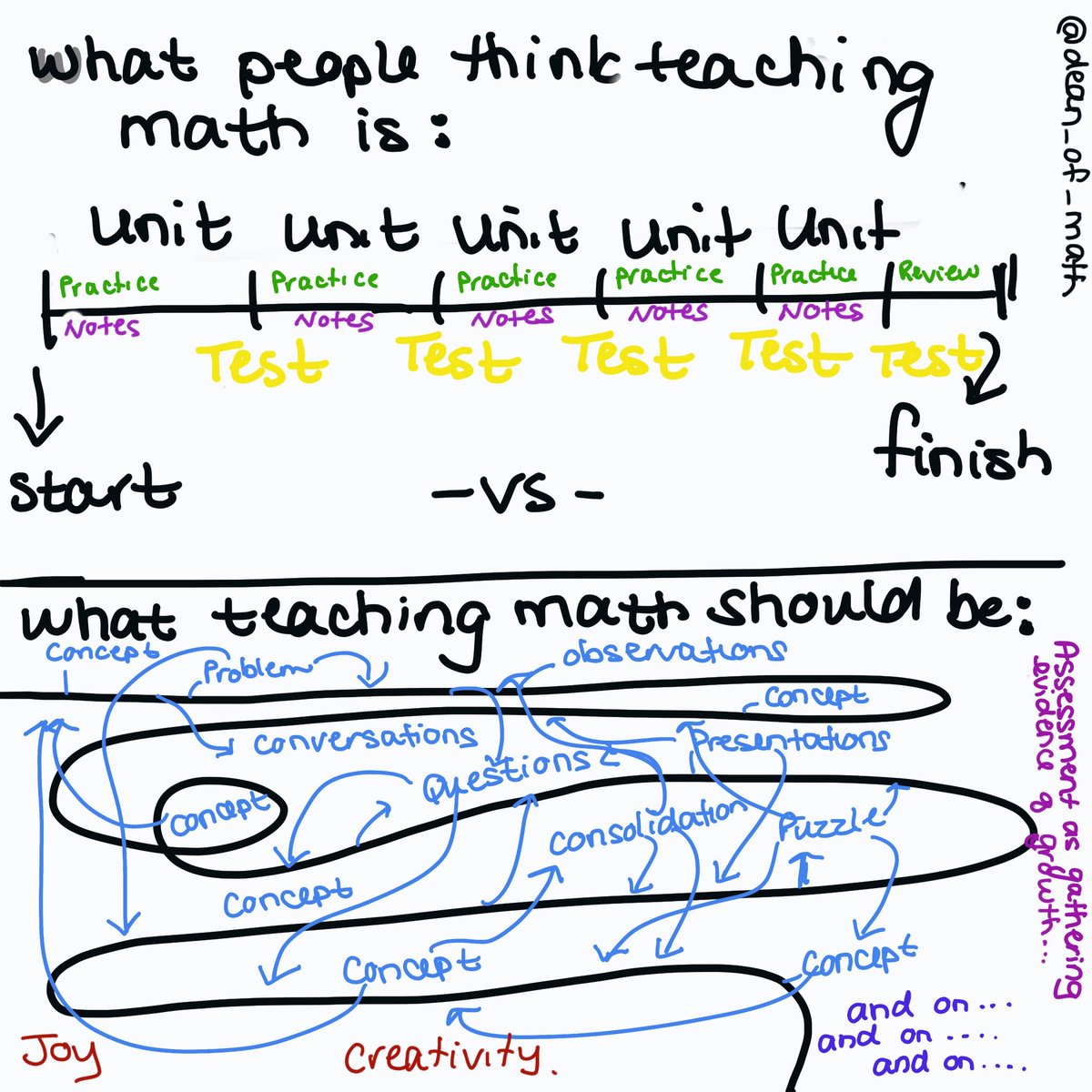
I worry that mathematics is too often taught as if it’s bad-tasting medicine that students just have to take, rather than teaching it with the purpose of showing off its beauty and elegance, and feeling joy when engaging in it.
The Ontario curriculum makes a point in describing this as a goal in mathematics learning.
How incredible would it be if we approached the teaching and learning of math like this?
https://t.co/bxPxEwA28I
@wheeler_laura I transferred schools to one closer by, so I have a big mix - SPH3U, SNC1W, CHV2O/GLC2O, and this school does not do destreamed MPM2D, so I have both MFM2P and MPM2D separately!
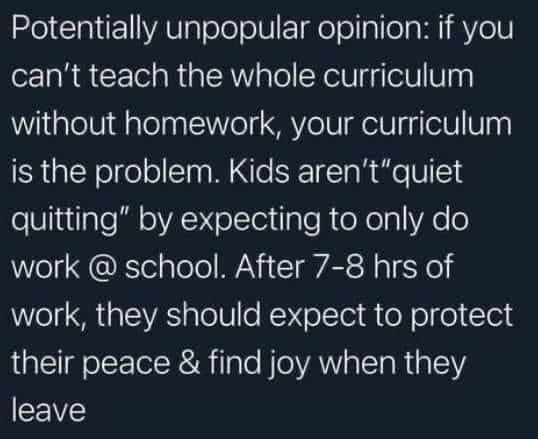
Like everything in life, “practice makes perfect”, but practice should not be mandatory. Students have various goals they are trying to achieve at any given time, and they should not be penalized for having hobbies, part time jobs, and/or responsibilities outside of school.
It is with a saddened heart that the Generals organization express condolences for the passing of former left-winger, Pat Montgomery as well as Andrieana Montgomery.
We send our prayers for healing to all those affected.
#GensNation
@CPerentesis I am so happy for you, Cherry!! 😊 I wish you the happiest retirement filled with everyone and everything you love ❤️ selfishly I will miss your visits & our WebEx chats! Lol 🥲
I find it unproductive to mischaracterize a practice to advance another.
Many teachers that use group work on whiteboards (which is supported by collaborative cognitive load theory) do provide more instruction when needed.
The discourse needs to advance beyond this level.
So many kids graduate from high school thinking that learning is an unpleasant experience.
They're excited to be done with it. They don't ever want to have to do it again.
This is a tragedy.
@Dre174Dre@readswithravi That’s like saying in the 90s we couldn’t go back in time and get cigarettes out of schools, restaurants, etc. “We live in a world where people are addicted to cigarettes - you can’t take them out of society!”
Yes, we can.
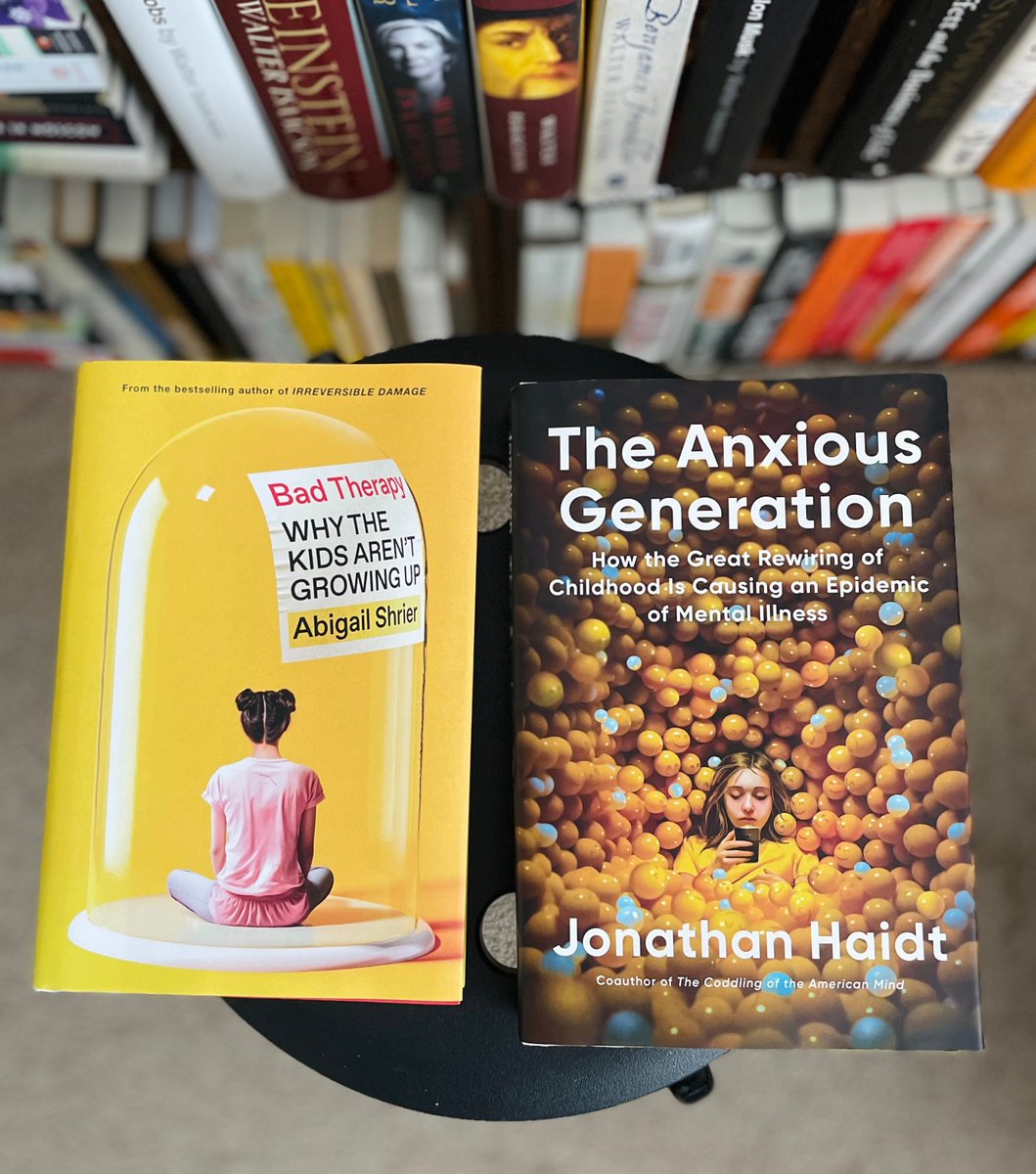
Every parent and teacher should be required to read these two books.
I think these two important and essential books should be at the top of every bestseller list. I highly recommend them to everyone.
One lesson from both the books:
In Japan, teachers introduce a new mathematical concept by presenting an unfamiliar problem to students to grapple with on their own. Most of the students answer the new problem incorrectly, but the teacher guides the discussion to generate conversation about students’ mathematical thinking. Eventually, the teacher guides students in their thinking to uncover a solution, which is ultimately proposed by students, rather than the teacher #iteachmath https://t.co/2bTbTRaMD1
Years ago, I was teaching a group of first graders how to solve addition problems by taking jumps on number lines I had printed out and laminated for them. After a series of problems like 4 + 3 and 3 + 4, and 1 + 8 and 8 + 1, one of the kids said “Does that always happen?”
“Does what always happen?” I said.
“Do you always get to the same place when you switch the numbers?”
“Try it,” I said, and they did.
“It works for 7 + 3 and 3 + 7!” one said.
“It works for 2 + 4 and 4 + 2!” another chimed in.
“It works for 9 + 5 and 5 + 9!”
This was the first day of adding, and these first graders had already discovered the commutative property of addition.
But do we really need them to jump to this higher level concept so quickly?
Yes. Here's why:
Students need to see right away that math contains 𝘱𝘢𝘵𝘵𝘦𝘳𝘯𝘴, and that it's not just an assortment of disconnected facts to be learned. Pattern recognition is at the heart of mathematical learning, of course (or all learning for that matter), and discovering these particular patterns can be a big first step toward discovering that math is understandable.
Students also need to see that math contains 𝘴𝘩𝘰𝘳𝘵𝘤𝘶𝘵𝘴; if you know what 5 + 7 is, you know what 7 + 5 is too. There are 100 basic addition facts to learn - the commutative property “shortcut” for addition can cut that number almost in half. Student conclusion: “Maybe learning math will be easier than I thought!”
They also need to see that math involves 𝘥𝘪𝘴𝘤𝘰𝘷𝘦𝘳𝘪𝘦𝘴. We have to 𝘴��𝘦𝘦𝘳 them toward these discoveries, of course (experiments must be specific and controlled to be useful), but that doesn’t make them any less real. Putting students in a position to discover something for themselves still results in them 𝘥𝘪𝘴𝘤𝘰𝘷𝘦𝘳𝘪𝘯𝘨 𝘵𝘩𝘦 𝘵𝘩𝘪𝘯𝘨 𝘧𝘰𝘳 𝘵𝘩𝘦𝘮𝘴𝘦𝘭𝘷𝘦𝘴 - and discovering the thing for themselves can make all the difference. 𝘌𝘱𝘪𝘴𝘰𝘥𝘪𝘤 𝘮𝘦𝘮𝘰𝘳𝘪𝘦𝘴 (memories of what we’ve experienced) can be far more powerful and longer-lasting than 𝘴𝘦𝘮𝘢𝘯𝘵𝘪𝘤 𝘮𝘦𝘮𝘰𝘳𝘪𝘦𝘴 (memories of facts). And students learn the facts with this strategy anyway! And the discoveries are fun!
Math is understandable, filled with shortcuts, and loaded with discoveries - pretty good takeaways for the first day of adding!