Starting Wednesday, 9/6, all students will walk through a weapons detection system. There will be ONE STUDENT ENTRY. All students will need to enter the building through DOOR 6 located next to the library on the Hamilton Ave. side. The building will open at 7 a.m.
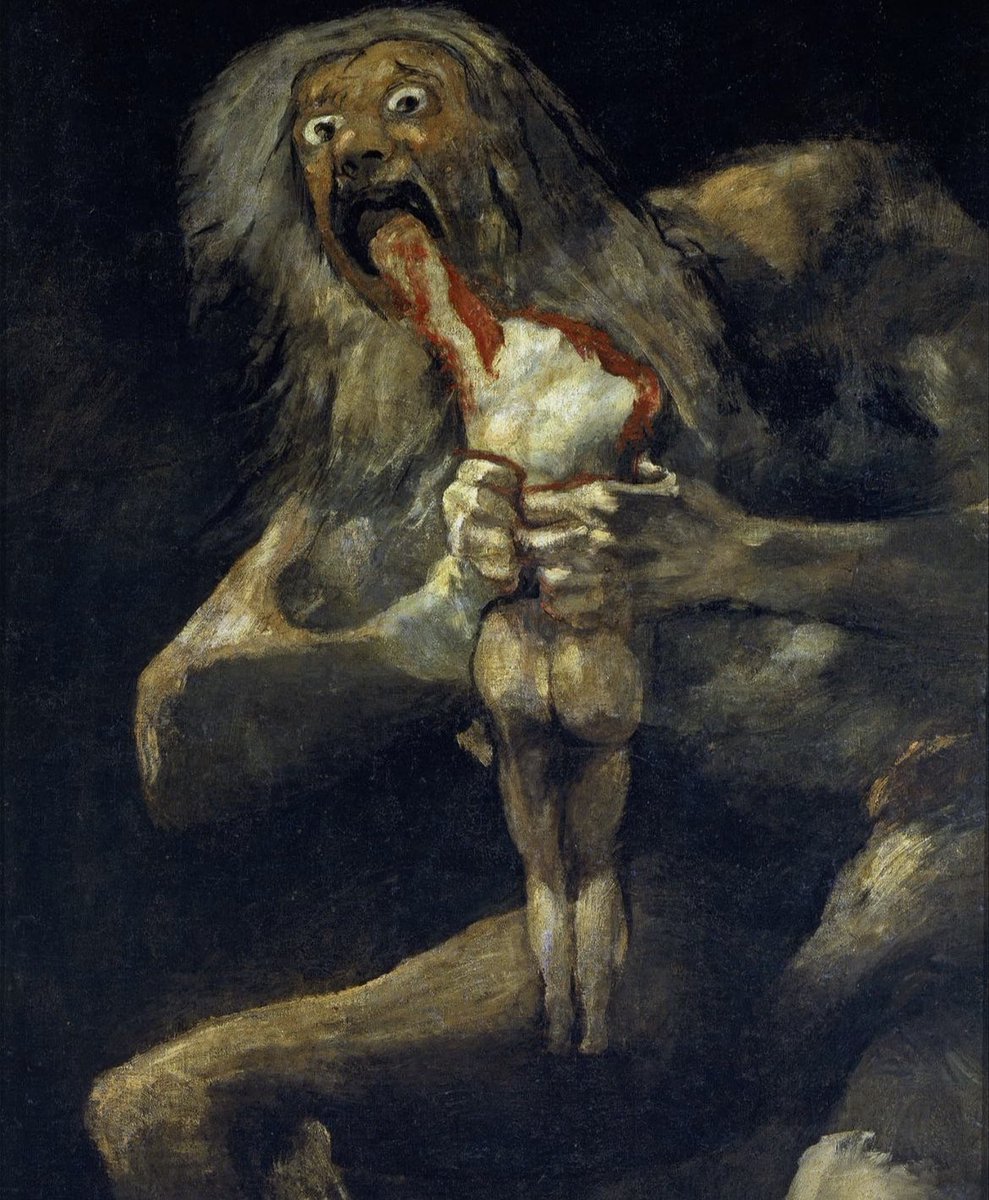
"Saturn Devouring His Son" by Francisco Goya.
This painting was one of 14 oil pieces (known as his Black Paintings) that Goya painted directly onto the walls of his farmhouse outside Madrid between 1819 and 1823. He was in his 70s at the time and had survived a few serious illnesses (one of which left him deaf in one ear) while grappling with his own mortality. Goya also suffered from depression and trauma from the horrors of war that he had witnessed at the hands of Napoleon and the Spanish monarchy.
Moreover, the Enlightenment era in Spain that Goya had cherished during his childhood and youth had been replaced by an absolute monarchy that rejected the Spanish Constitution of 1812, which was one of the most progressive at the time.
All these factors contributed to Goya's Black Paintings, which were never meant for public display. The title, "Saturn Devouring His Son," was given much later due to its resemblance to Roman mythology. However, for all we know, Goya could have just been depicting a larger person eating a smaller person as a way to portray his bleak outlook on the future of humankind.
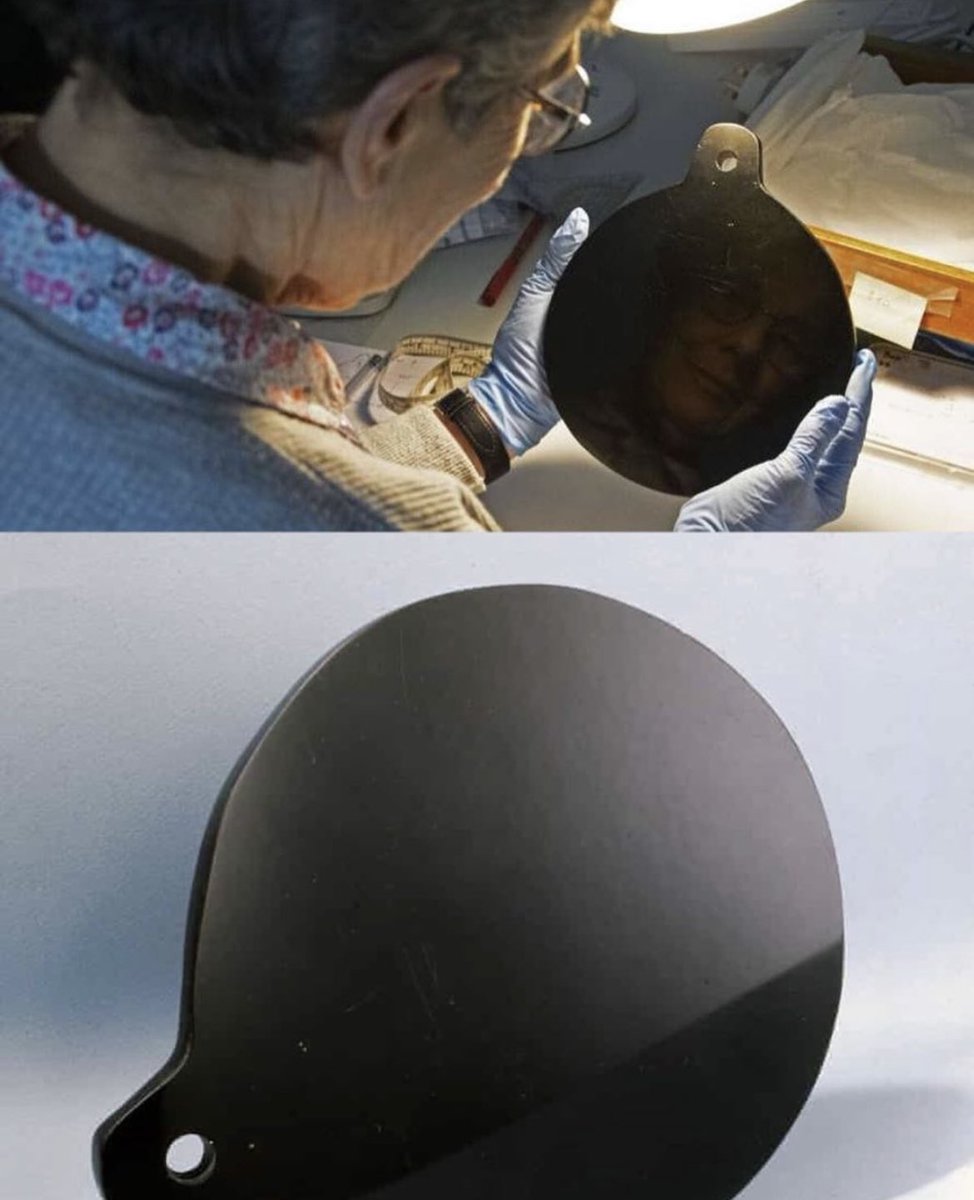
Recent research revealed that this obsidian mirror was used by Queen Elizabeth I's famed political advisor and occultist, John Dee, to 'speak' with angels. It has been determined that the mirror has Aztec origins. Crafted in Mexico over 500 years ago, it most likely ended up in Europe as part of the expeditions led by Hernan Cortes. Currently, the mirror is on display at the British Museum.
John Dee had a diverse range of interests, including astronomy, astrology, alchemy, and mathematics. He served as an advisor to Queen Elizabeth I from the beginning of her reign in 1558 until the 1570s. Dee was also a strong advocate for overseas exploration and the establishment of colonies. Later in his life, he became involved in divination and the occult, seeking to communicate with angels through the use of scryers—individuals who can divine the future—using artifacts such as mirrors and crystals.
Scholars have determined that Dee's mirror, along with another mirror, originated in Pachucha, located just northeast of Mexico City. The third mirror and the slab came from Ucareo, approximately 150 miles west. Both regions were under Aztec control during the early 16th century.
The Aztecs regarded obsidian as a protective material with medicinal properties, viewing its reflective surface as a shield against evil spirits. This volcanic glass was also associated with death, the underworld, and the capturing of a person's image and soul.
Following the invasion of the Aztec capital of Tenochtitlán by forces commanded by Hernán Cortés in 1521, treasures, including obsidian mirrors, were swiftly shipped back to Europe.
So Dear to My Heart (1949) was one of Walt's most cherished and personal films. Walt said: “So Dear was especially close to me. Why, that’s the life my brother and I grew up with as kids out in Missouri.” Learn more about this film in our newest article: https://t.co/1Rq8U41vf2
A short-fused star was hatched on this day in 1934 with the release of Walt Disney’s Silly Symphony “The Wise Little Hen.���
Happy birthday to the duck who’s never wrong but always right, who’d never dream of starting a fight—Donald Duck!
#DonaldDuck #Disney #Disney100