An interesting consequence of productivity gains as a result of newly introduced agentic tooling is that it seems to invert the standard time discount on labor. The typical assumption is that an hour today is worth more than an hour a year from now. But, if the hour a year from now is 10x more productive, the discount flips and the future hour is much more useful. Rationally, one might expect to stop spending the hours of today on work that becomes much cheaper, redirecting that time towards accumulating durable, compounding assets that aren’t subject to the time discount inversion (e.g. capital, trust, mindshare).
Consider Brunelleschi and the Duomo of Florence. If Brunelleschi learned that within the year, a crew of engineers equipped with hydraulic cranes would magically appear, he’d be likely to stop laying bricks. He may spend more time refining the dome’s geometry or thinking about how to best change the dome’s design to accommodate these new tools.
There’s probably two caveats here – firstly (and most obviously), this only applies where productivity is compounding fast enough to flip the discount. Furthermore, this is hard to project–certain spaces may incur this inversion only some N% of the time–and experimenting may not be viable when the penalty of an undershoot or miscalibrated prediction has exponential downside.
Secondly, some games are Red Queen’s Races. Failing to produce in the short-term would foreclose the long-term payoff. Consider Brunelleschi, who’s now competing with the hypothetical, equally-acclaimed renaissance architect Ihcsellenurb. Brunelleschi and Ihcsellenurb are competing for a grant from a wealthy patron who’s unaware of the incoming cranes, instead intending to award the grant based on visible quarterly progress. Brunelleschi might know the cranes are coming, yet still be forced to lay bricks, as without this grant, he’d be unable to pay the crane operators when they arrive.
Seemingly, this model only works when an actor can afford short-term output illegibility in pursuit of a better long-term output. My sense is that the distribution of these actors is barbelled. On one hand, entrenched incumbents with reservoirs of trust and capital are able to absorb quiet quarters (Apple, for instance). On the other hand, small players can afford illegibility simply because nobody cares enough to punish it.
It seems the losers of this game sit in the middle of the barbell; this makes sense, given it’s the only segment where short-term legibility is (1) required and (2) existential. Incumbents and upstarts alike can absorb misses in a way that the squeezed middle can’t. Private markets will see two middle-of-the-barbell companies, where one is externally missing whilst the other seems to just keep winning, and reward the one with the legibly positive result. So, the middle must survive by laying soon-to-be-obsolete bricks, simply to keep up in the Red Queen’s Race
Seems like system of record companies should pivot to high risk things that cannot/should not be accelerated by vibe coding. Bank integrations, payroll, compliance, global merchant integration, etc. (mostly fintech stuff as far as I can see).
These companies also have unique access to industry business data. They can provide benchmarking for your business against their dataset. This helps answer the very valuable question: “What are we doing well, what are we doing poorly”.
i.e. “Your closing rate is in the 95th percentile for your industry, but your deal size is only in the 30th percentile”
Weekly update #36
Unfortunately I will not hit my deadline of December 1st to ship out 3 mk2.5 prototypes. But nonetheless, the workshop is set up, parts continue to arrive in the mail, and the 3D printers are humming along.
I’ve realized that software has taken too much of a precedent lately. The progress in LLMs means I should focus time scaling manufacturing and hardware capability instead of training the robot how to walk.
How far out are we from AI that can one-shot general purpose walking policy? One year? Two years? Maybe this capability exists today with Gemini 3, Opus 4.5, or GPT-5.1-codex-max-ultra-high-super-max-tokens-supreme with the right prompting? Why should I dedicate time to this highly complex task when the AI shoggoth’s are entering their recursive self improvement spiral?
Deferring software is the bet I will make in the short term, let’s see if it pays off.
Getting way better results out of codex by copy pasting relevant context directly into the CLI. Tagging AGENTS,md or other files clearly truncates the results.
Weekly Update #35
Forgive me fellow robotics journeymen, for I have sinned. It has been 2 weeks since my last update… but progress continues!
I’m now fully set up in the old workshop again (grandmas basement), with 2 Prusa Mk3S printers humming along.
I’m stacking boxes and boxes of parts from China, but there’s always something missing. The next few weeks will be a sprint to the finish as I scramble to print 4 chassis and wire them up. I’m hopeful I can hit my Dec 1st deadline to ship 4 robots, but it’ll be a close one!
@yacineMTB They baited me back into it with free Claude Max for a month. This had the unintended consequence of highlighting how much better codex is at the moment.
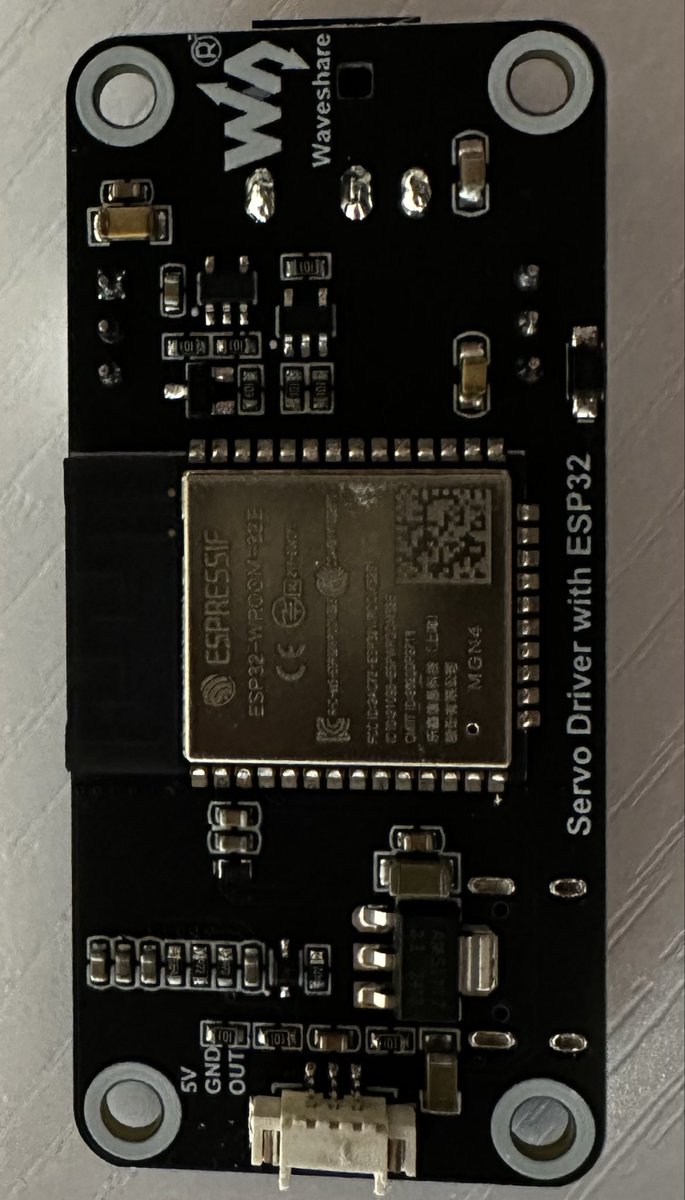
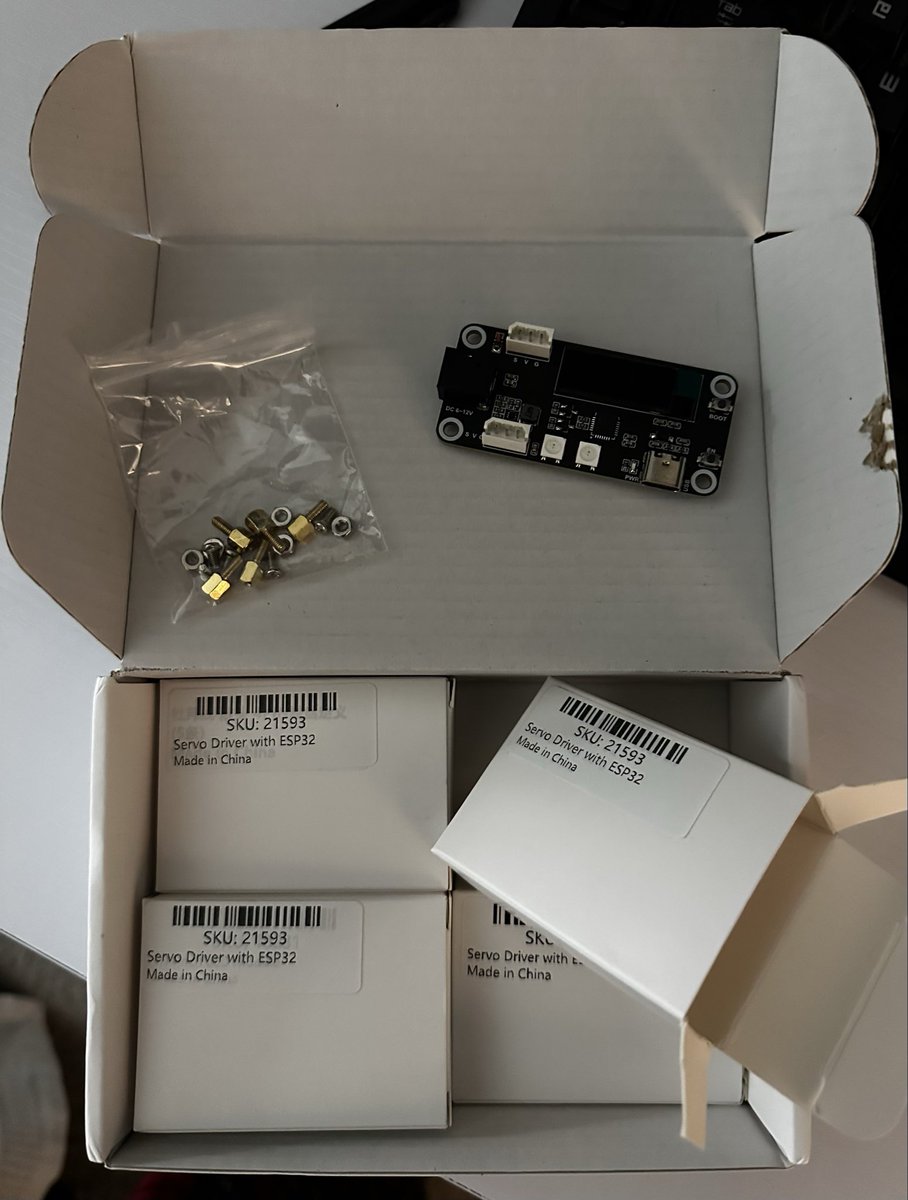
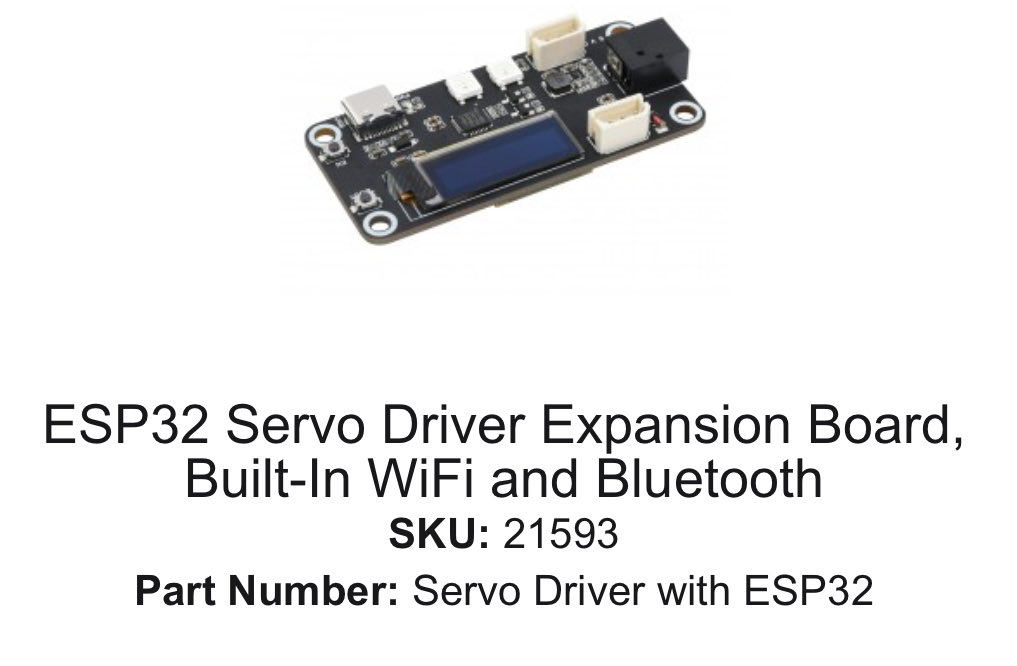
ESP32 servo controllers have arrived!
This edge computer sits down stream of the raspberry pi, acting as an intermediary with the servos.
It also has a screen that we can display helpful information with; such as battery state and local ip address.
Funny enough, this chip is one of the reasons we had to update the battery. It requires 12V which is more than a 3S battery can output sustainably. So now we have 4S battery cells on the way!
Weekly Update #34
Acquired a Prusa Mk3S+ from Facebook marketplace for around $250. This one appears to have been well maintained. These same units cost me something like $1200 (CAD) when I bought them a few years back. My current one has been a reliable workhorse for many years. Excellent value.
The raspberryPis have arrived, as did solder seal wire connectors.
I’m thinking this will provide more sturdy and professional wire connections on the new builds.
Im hoping to get both printers set up some time this week. Im hyped because the new printer came with a USB camera and a Pi. So, I’m certainly going to try and get and get both printers networked to an octopi instance with a webcam live feed.
Weekly Update #33
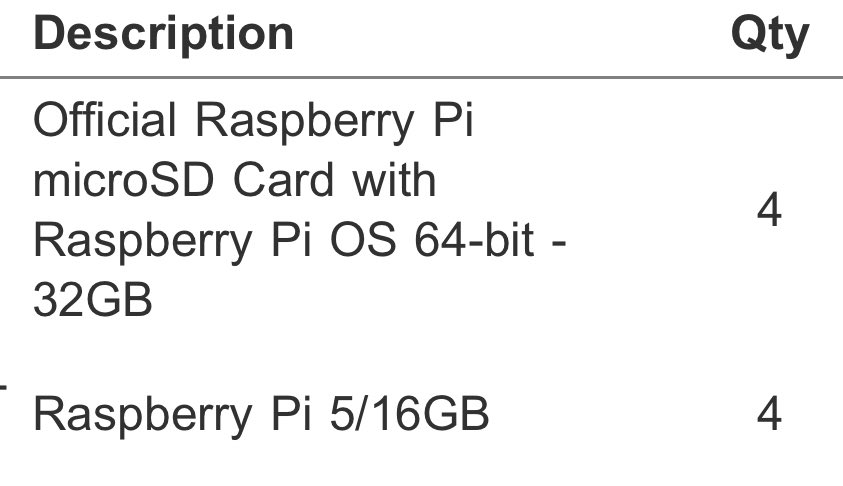
Trying to save up enough money to order more parts. Just pulled the trigger on four of the Raspberry Pi 5.
And I’m kicking myself now. I’m realizing that I bought the top specced 16GB Raspberry Pi card ($173), when I could have bought the 4GB version for less than half the price ($85)
*Priced in $CAD
At the end of the day, isn't the only difference how far out one agent can see?
We as humans have far more context: we have a massive context window equal to our lifespan.
Maybe a better way to frame the threshold is: The level at which the agent can reliably see the forest from the trees?