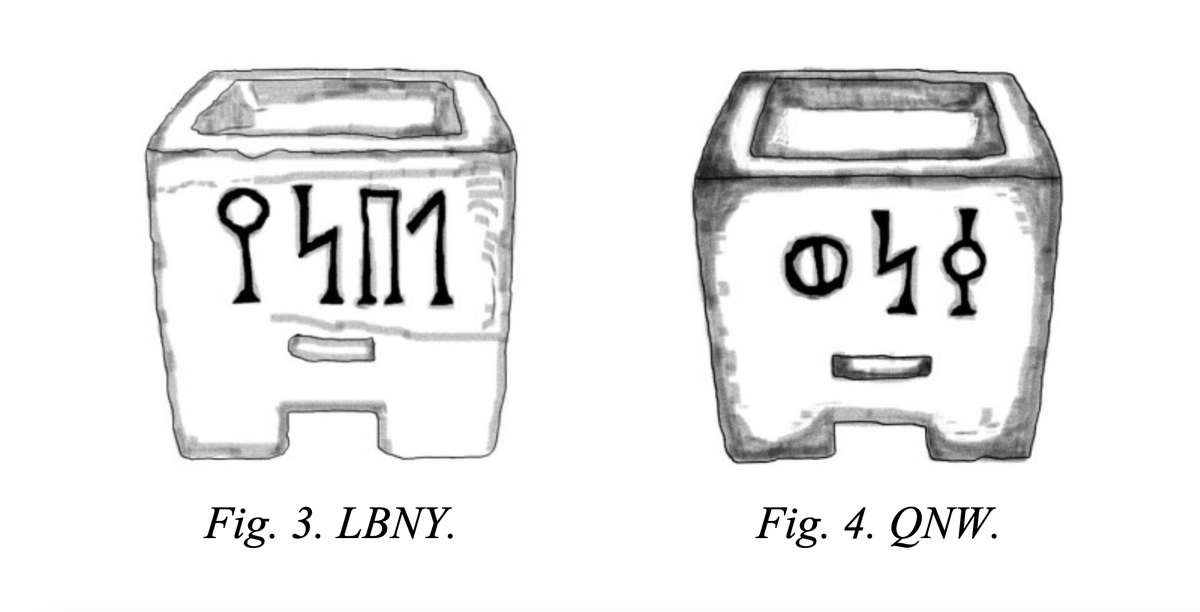
‘What use to me’, God asks, ‘is frankincense (לבונה) from Sheba or sweet cane (קנה הטוב) from afar?’ (Jer. 6.20).
Below, by way of illustration, is a cuboid incense burner from the Yemen (Sheba), inscribed with a particular aromatic on each side. (LBNY is לבונה, QNW קנה.)
Recently got the chance to speak on the "Exegetically Speaking" Podcast of Wheaton College / Lanier Theological Library. Here are some of my thoughts on the Hebrew of Nahum 1:
https://t.co/u4MZkZYWg4
@perurealfonso@alfarojoshua3 Growing up in Germany, "Bibelforscher" was a term typically used for JW. Biblical Studies is not really a discipline in the German academy anyways. Exegetes are Theologians.
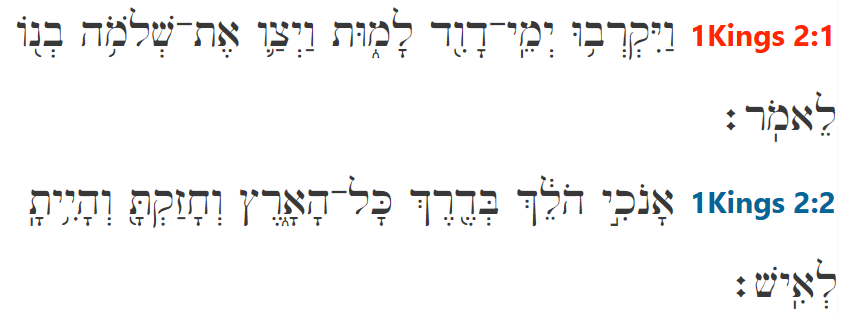
Why does the Book of Kings begin with David's old age and advancing death (1:1; 2:1)? I would assume that this is so because it wants to purposefully connect the story of David's line to God's promise regarding his "seed" once his "days are filled" (2 Sam 7:12-16).
#Joseph's refusal of Potiphar's wife stands as a wonderful moral high point, and serves as an example to all of us, surrounded as we are by temptation.
Those wonderful words...
she said: 'lie with me!' BUT HE REFUSED!
I only spotted today that the accents mark this victory, too
The more I study the Book of Kings, the more I am convinced that this work is at its heart an exegesis of God's promise to David in 2 Sam 7:1-17 in light of the catastrophe of the Exile. It wrestles with the truth of God's Word as circumstances seem to deny its trustworthiness.
Second shocker of the day: Nadav Na'aman believes in a *historical* Moses. One that lead a tribal group from the South into Transjordan. Almost like the guy from the Bible!
@CaioPeres18@JamesBejon Now that we are on it, I was also wondering. I might be misreading him but it seems to me his entire analysis hinges on his interpretation of v.1 which leaves wide room for disagreement. Am I wrong?
Currently researching the historical geography of Numbers 32 in relation to the Mesha Inscription. Throughout the Hebrew Bible, Dhibon appears to be a town name. Mesha seems to refer to it as a tribe and/or a region.
@JamesBejon That is really helpful, thank you! It is interesting that Mesha seems to refer to that as Qirhoh which the Israelite texts call the town of Dhibon. However, "Qirhoh" is far from understood as a toponym.
"Providence, unerring providence, governs all events. And grace, unchangeable grace, is faithful to its purpose. May we live by faith on both."
Augustus Toplady
After finishing "Remaking the World" by @AJWTheology recently, I was so moved by the Toplady qoute which concludes the book that I inscribed it on the first page of my calendar. It is the message that I need and I think it is also the message that you need.
Many scholars have wondered how to translate line 12 of the Mesha inscription with its often assumed reference to David. I also wondered. So here's my approach from parallels in Old Sabaic. Hopefully it helps!
https://t.co/Y6rEOZdVrl