One in eight cancers are caused by infections, a new study finds. And there’s an easy way to protect yourself against most of them: get vaccinated.
https://t.co/8hn3OWn0PM
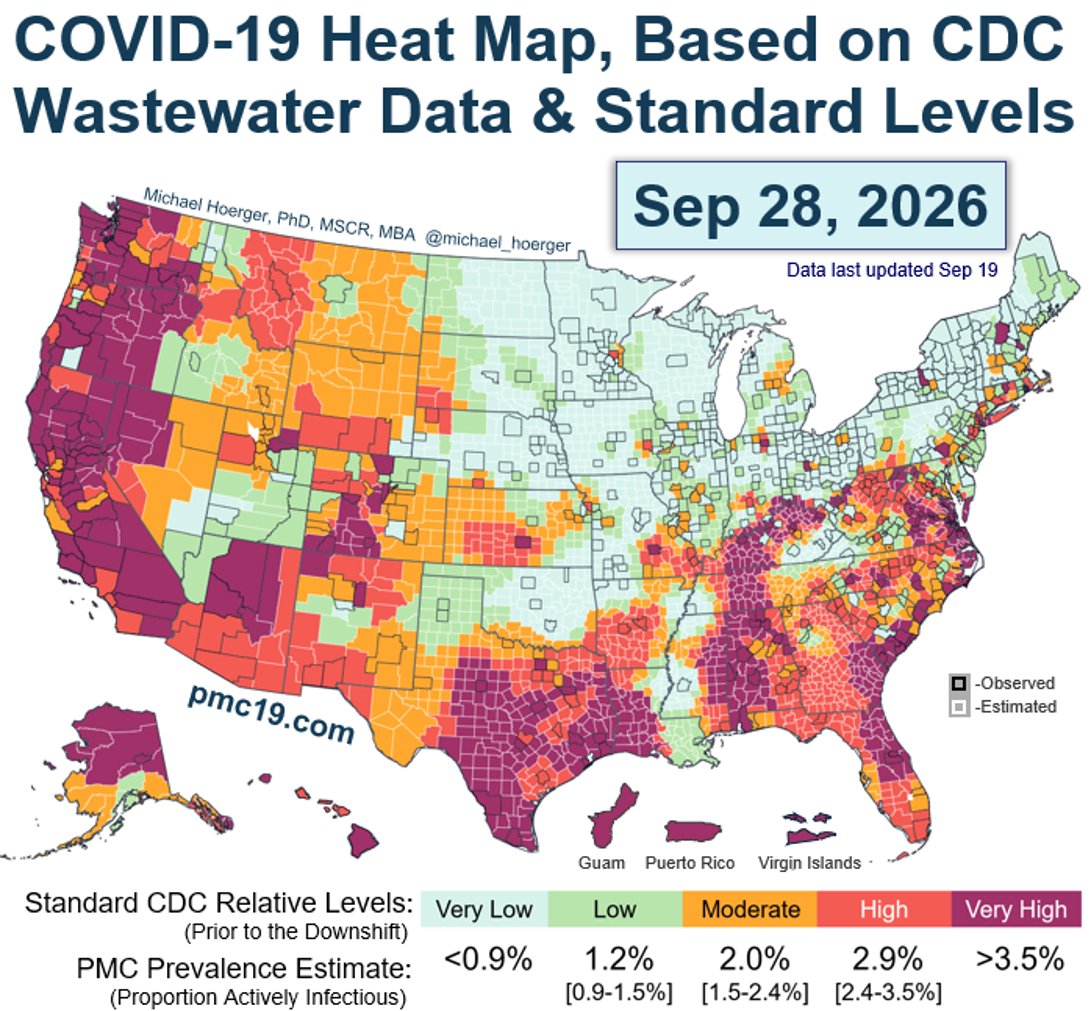
PMC COVlD Update, Sep 28, 2026 (US):
🔸We're in a 13th COVlD wave.
🔸40 states and territories continue to have COVlD outbreaks, stable from last week.
🔸Levels likely peaked between Sep 7-13 at a PMC-estimated 580,000 new daily infections, though there are data quality issues noted below.
Use layered COVlD safety:
🔹Get boosted ASAP, especially if high transmission nearby. Novavax has a lower side effect profile than other boosters and comparable effectiveness.
🔹Mask up with a well-fitting N95 respirator.
🔹Improve air hygiene: Open windows, flip the HVAC from auto to on, shut off the car's recirculation 'feature,' add air purifiers, and / or use air quality monitors.
🔹Test daily when sick, exposed, or gathering, and stay home when sick.
🔹Monitor your blood pressure to reduce the risk of surprise post-acute cardiovascular sequelae.
🔹Spread accurate information by sending dashboard screenshots to family, checking the public health credentials and experience of information sources, and avoiding sharing 'miracle' interventions.
Details:
The US has at least 40 states and territories with COVlD outbreaks, the same number reported last week. These include Alabama, Alaska, Arizona, Arkansas, California, Colorado, Connecticut, Florida, Georgia, Guam, Hawaii, Indiana, Iowa, Kansas, Kentucky, Massachusetts, Minnesota, Mississippi, Missouri, Montana, Nebraska, Nevada, New Hampshire, New Jersey, New Mexico, New York, North Carolina, Ohio, Oregon, Pennsylvania, Puerto Rico, Rhode Island, South Carolina, Texas, the U.S. Virgin Islands, Utah, Virginia, Washington, West Virginia, and Wyoming.
There are likely outbreaks in additional states. The summary statistic of 40 only includes counties with observed data, rather than estimated data. For example, Idaho, Louisiana, Maryland, and Tennessee likely have outbreaks, but monitoring is poor.
Nuance:
Note that while PMC uses forecasting to estimate national statistics through Sep 28 and beyond, the state-level data do not, meaning they are now 9 days old. If the national forecast is correct, levels peaked between Sept 7-13, closely aligned with our prior forecasts. This would mean that levels are declining more so than depicted in the map. Levels often decline slowly, suggesting the need for ongoing precautions. Additionally, Biobot and 200 CDC sites are offline this week, and both have experienced major retroactive corrections of late, so the national forecast has more uncertainty than usual. For example, we could see the peak adjusted upward or a double peak. It is unclear how quickly reporting will resume at the offline sites.
Links:
🔗PMC home page: https://t.co/6AJ0wYGtTa
🔗Interactive map (best on a computer): https://t.co/iBvYAoL2TK
🔗Technical Appendix: https://t.co/goEQBWwf4J
🔗Recent NBC News Coverage: https://t.co/h1YftdnVl6
🔗Recent Detroit Free Press Coverage: https://t.co/hsXPSfTV3i
Our first microtesla magnetic therapy trial in #LongCOVID is through peer review and out in the world!
As a reminder, this was a triple-blind, placebo-controlled trial of a novel intervention - microtesla magnetic therapy - in 30 ppl with LC
https://t.co/FW1FPgdfuo
1/
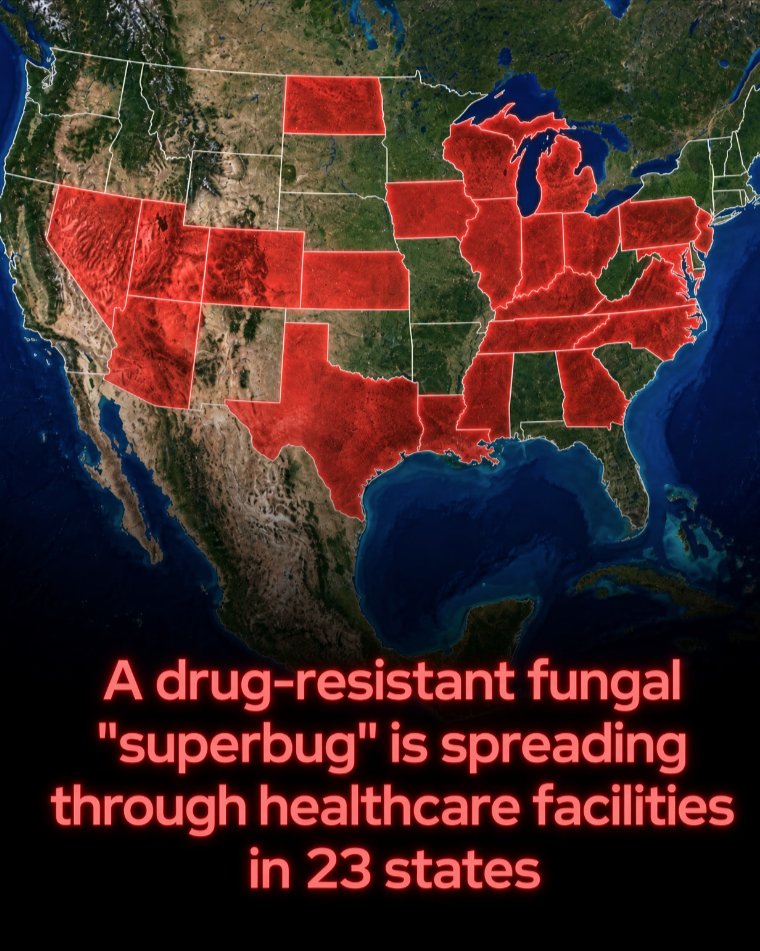
A multidrug-resistant yeast is spreading in 23 states.
Candida auris is a yeast that can cause severe, sometimes fatal infections, especially in patients who are already seriously ill.
CDC screening data recorded 3,130 cases across 23 states. Those were screening detections of people carrying the fungus, rather than a count of active infections. The figure also does not cover every state where Candida auris has been found.
Carrying the fungus without symptoms is called colonization. It can stay on a patient’s skin or other body sites for a long time, spreading onto bedrails, furniture and shared medical equipment. From there, it can reach other patients.
People needing complex medical care are especially at risk. Catheters and breathing or feeding tubes can give the fungus routes into the body. Healthy people generally face a low risk of becoming ill.
Drug resistance makes some infections hard to treat. Most can still be treated with antifungal medicines called echinocandins, but some strains resist all three major antifungal drug classes.
A positive screening result alone does not mean someone needs medication. The CDC recommends treating clinical infections, not colonization without signs or symptoms of infection.
However, both infected and colonized patients need proper infection-control precautions. Healthcare facilities can cut transmission through screening, hand hygiene, protective clothing and disinfectants that work against Candida auris. Shared equipment needs careful cleaning between patients.
Patients can remain colonized even after an infection has been treated, making communication between facilities essential.
Patients and families should follow staff precautions, clean their hands and tell healthcare providers about previous positive Candida auris tests.
#Pans#Panda .
This person and his team do amazing work with children. I'm sure their techniques work for adults also. They have 3 locations in 3 different states and are opening a 4th one, he is the real deal!
https://t.co/H3jPiheCQ8
Stop feeding squirrels corn.
Squirrels need at least as much calcium as phosphorus in their diet, ideally about twice as much. Corn is the reverse. So are peanuts and sunflower seeds.
When a squirrel lives on them, its body starts pulling calcium out of its own bones to keep its blood chemistry stable. That's metabolic bone disease: soft bones, fractures, seizures, paralysis. It's one of the most common problems in squirrels raised on nuts, seeds and corn.
A handful now and then won't hurt a wild squirrel. The damage comes when the feeder becomes the main thing it eats, especially for young squirrels growing up next to one.
Corn has a second problem. Grain sold for wildlife isn't held to the same safety rules as food for people or livestock, and it can carry aflatoxin, a liver-damaging toxin made by mold. In one Texas test, 44% of bagged deer corn was over the level considered safe for humans.
Squirrels aren't the ones most at risk from that. Birds are. Turkeys showed liver damage within two weeks at low doses, and quail and doves eat moldy grain as readily as clean. Everything that visits your corn pile is eating it too.
If you want to feed squirrels, plant an oak or a hickory. What keeps their bones strong is a varied wild diet.
*Please note that COVID protections were prominent at the event. Germicidal far-UVC lights loaned to PolyBio via the OSLUV project were installed across the event space. LEVOIT Smart Air HEPA filters were also placed throughout the entire room. All guests were asked to take a COVID rapid antigen test and confirm negative status before the event. COVID tests and N95 masks were also available at the door to the venue.
Read more about the OSLUV project: https://t.co/wIyznWA5vd
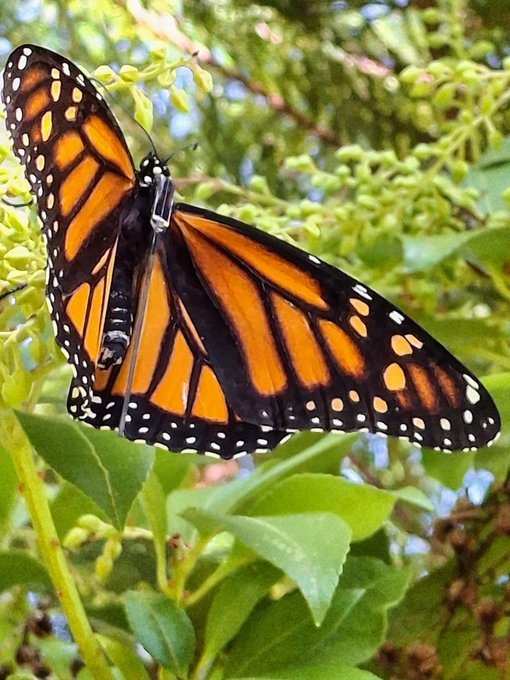
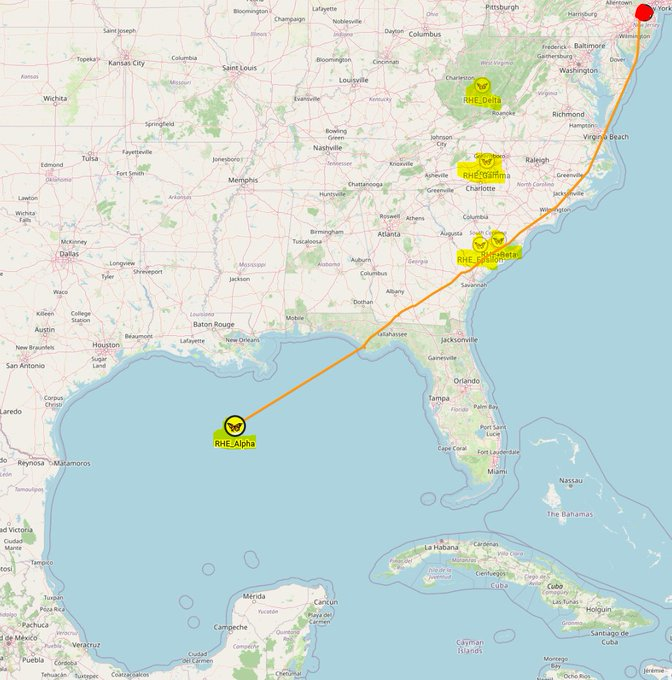
One of the Monarch butterflies I radio-tagged on Sep 11-13 flew an astonishing 539 km today, due southwest, straight across the Gulf of Mexico (alias Gulf of America), covering half the distance between St. Joseph's Peninsula on the Gulf coast of Florida and the coast of Mexico.
• I will not make you wait to know the correct answer as this is a matter of life and death. This 2-sec mistake can turn a tiny fish bone into a life-threatening emergency, and most people do it wrong.
• Correct answer is B) Drink water or cough gently
• If you feel a sharp bone pricking in your throat, do not try home tricks. Go to ER / ENT immediately. A sharp bone can pierce your food pipe. While you are heading for help, if you can breathe and speak:
• Sip a little water and give a gentle cough. If it is small and loose, it may come out on its own. Do not force.
• Never do this:
A) Large piece of dry bread - pushes the sharp bone deeper and can tear the wall.
C) Whole banana - same pushing risk, can cause perforation.
D) Finger down throat - causes vomiting, choking, and pushes bone further.
• Go to ER fast if you have severe pain, drooling, cannot swallow saliva, blood, chest pain, fever, breathing difficulty, or voice change. Do not eat anything else on the way.
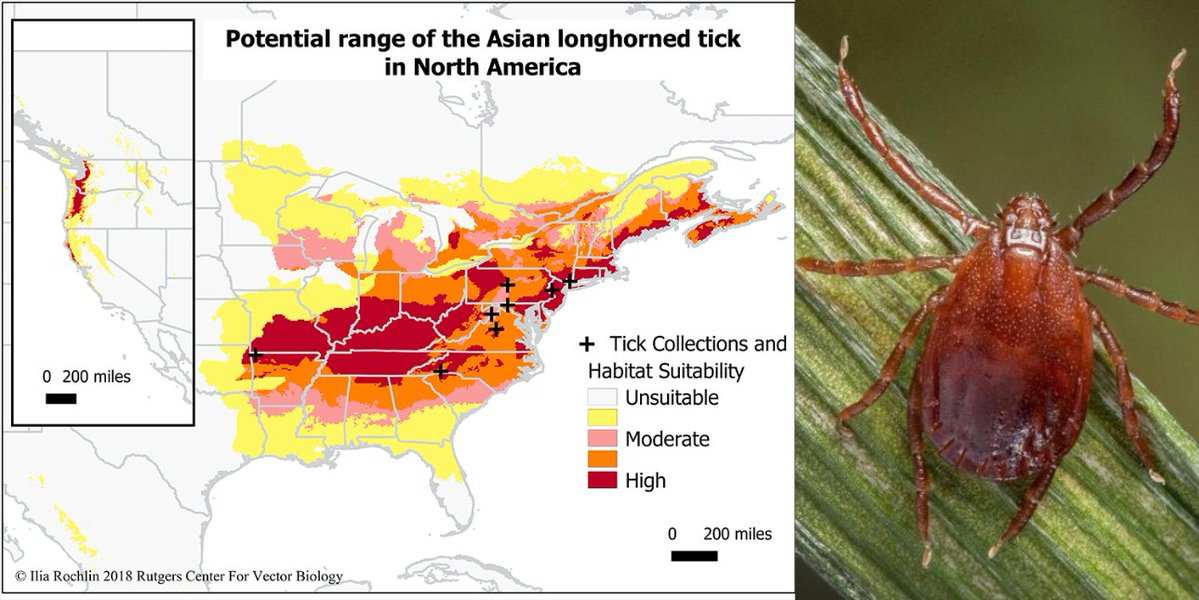
Scientists just discovered a new virus carried by a tick that's already living in more than two dozen US states. The virus hasn't been found here yet, but the tick has.
It's called the Asian longhorned tick. Females lay 1,000 to 2,000 eggs without ever mating, so one tick hitching a ride can start a whole new population. A male tick has never been found in the US.
It was first confirmed in New Jersey in 2017, probably arriving years earlier on an imported animal or a traveler. Now it's in 24 states from New York to Alabama and west to Missouri.
On livestock, it shows up by the thousands. Cattle have died from the blood loss, and it spreads a parasite that causes deadly anemia in cows.
It's less interested in people than our native ticks, and it hasn't been shown to make anyone sick in the US. But in Asia, it carries Dabie bandavirus, which kills up to 30% of the people it infects.
It's smaller than a sesame seed, so do the basics. Use repellent. Stay in the middle of the trail. Check yourself, your kids and your dog after you come inside. Keep your pets on tick prevention, which works on this tick too.
And if you find a tiny brown tick you can't identify, drop it in rubbing alcohol and send it to your state extension office. They'll want to have a look at it.
Hi to all our @CoRESinai followers. One of our team members who helps me run the AMAs is managing a family emergency and we unfortunately need to cancel today. I am so sorry for the inconvenience and we will reconvene at 9am EST on Tuesday. Thank you all for your understanding.
Breaking: Steve and Judy Pagliuca and Governor Maura Healey Accelerate Major Effort to Deliver Treatments for Long COVID $15 million raised by a coalition of donors to advance diagnostics and clinical trials for Long COVID; with the infrastructure expanding into chronic Lyme disease
1/