a compressed x-ray of Kenya’s entire political economy, and it tells multiple deep, uncomfortable truths if you’re willing to read between the lines.
🧅 Layer 1: Safaricom’s Domination – The Digital Monolith
•Sh819B market cap puts it >5× larger than the next contender (Equity Bank).
•It’s not just a telecom company — it’s the unofficial Central Bank of retail Kenya, via M-Pesa.
•Safaricom’s size reflects the outsized importance of mobile money, not productivity or innovation per se.
•What it tells us:
Kenya’s most valuable asset is a payments toll booth.
Not a manufacturer. Not a logistics company. Not an energy or agricultural innovator.
⸻
🧅 Layer 2: Banks Rule Everything Around Me (B.R.E.A.M.)
•Of the top 7, 6 are banks.
All dependent on interest income, government securities, and consumer overdrafts.
•Their large market caps don’t reflect innovation — they reflect their position in the debt cycle:
Government borrows. Banks buy bonds. Citizens pay taxes.
Rinse. Repeat.
•Their dominance is a symptom of:
•A low-innovation economy
•Lack of capital markets depth
•A government that crowds out private borrowing
⸻
🧅 Layer 3: Vanishing Private Enterprise
•Where are Kenya’s great private manufacturing or tech firms?
•EABL (Sh137B) is legacy colonial capital, now mostly Diageo-owned. It’s liquor + brand inertia.
•No new industrial giant. No energy innovator. No vertically integrated agro-exporter.
Absence speaks volumes.
Kenya’s capital markets don’t reward enterprise — they reward gatekeeping and government dependence.
⸻
🧅 Layer 4: Market Cap ≠ Real Economy
This list does not reflect real economic pain:
•KES has lost 50%+ vs USD in 5 years.
•SMEs are being crushed by taxes, levies, and lack of credit.
•Inflation-adjusted wages are falling.
•These companies look “valuable” — but only in KES terms, which are melting.
A Sh819B company in 2025 might be worth less in USD than it was at Sh500B in 2020.
🧅 Layer 6: The Structural Lie of Diversification
•On paper, Kenya has multiple “sectors” in the NSE.
•In reality, it’s banks + Safaricom + everyone else bleeding.
•When the same players dominate the index for a decade, it signals capital is not being recycled into innovation — it’s being hoarded.
Kenya isn’t diversifying. It’s entrenching rentier incumbents.
⸻
🧅 Layer 7: Global Investors Already Know This
•Foreign capital outflows from NSE have accelerated.
•Institutional investors prefer to buy Safaricom and FX out — not hold long-term KES risk.
•That’s why Safaricom trades like a bond and why no Kenyan unicorn gets NSE-listed.
The market itself doesn’t believe in its own future — it’s arbitraging currency erosion.
⸻
�� Bottom Line:
Kenya’s capital markets are top-heavy, rent-seeking, and fiat-constrained.
If you are bored you can always:
- Build your own operating system
- Build your own game engine
- Build your database
- Build your compiler
- Build your virtual machine
- Build your web server
League of Legends gave 3 unknown writers $250M to make them a Netflix series.
Everyone called them crazy.
6 years later, Arcane is one of the highest rated shows in history, with a 100% rating on Rotten Tomatoes.
Here's the game-changing psychology they used:
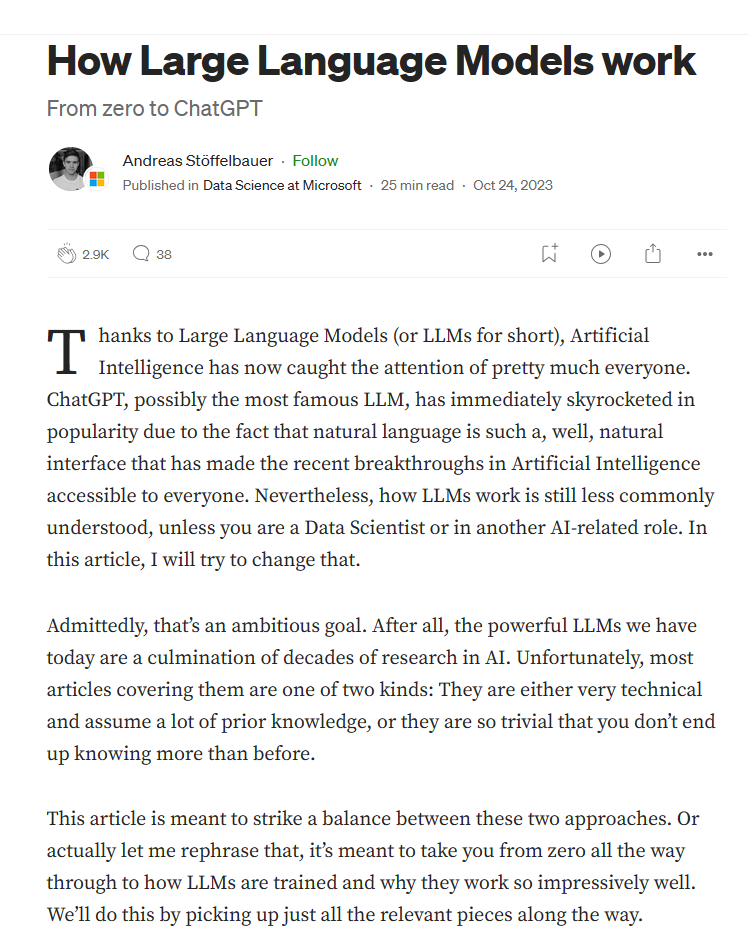
I am 🤯amazed by his writing skill
-such a really great article for beginners
-soon articles like this will come, love his passion for writing
-great article to understand LLM's
Nvidia just released a $249 computer that will change AI forever.
It's called the Jetson Nano - a tiny device that can run AI models locally.
This means AI can run without connecting to the cloud.
And it's about to spark the biggest tech battle of our time: