New faculty position in ...
Climate Change Solutions
at @NatureAtCal
https://t.co/Kjzk7cWLjN
nature-based climate solutions; ecosystem function and biodiversity; social and ecological determinants of risk and resilience
[1/2]
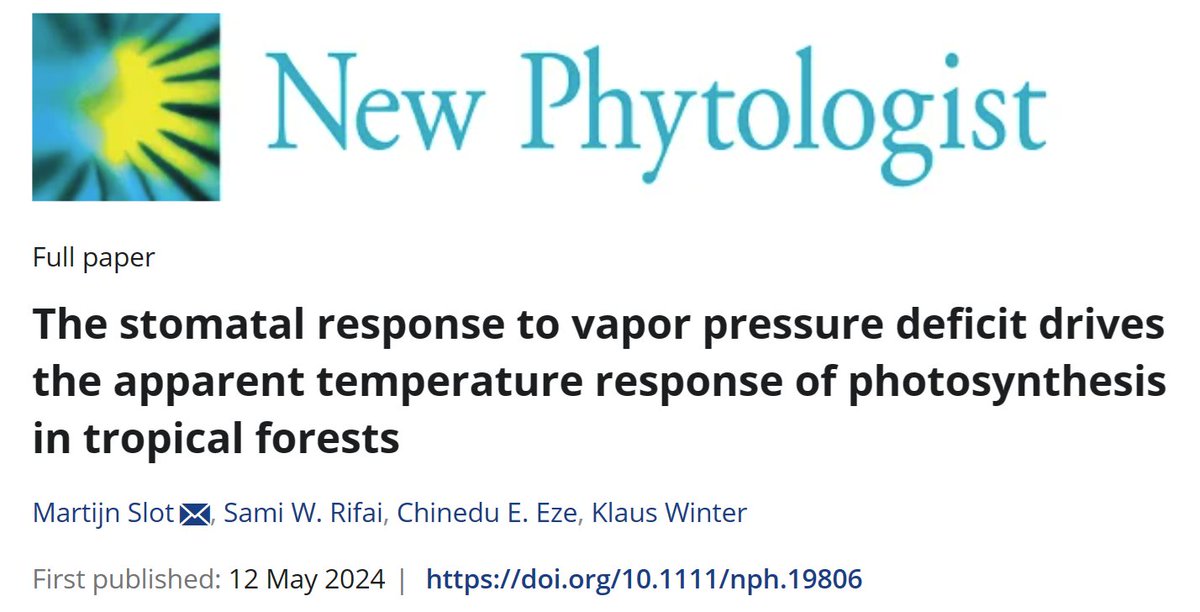
New paper @NewPhyt, with @Sami_Rifai, @Nedunsk15 & Klaus Winter.
"The stomatal response to vapor pressure deficit drives the apparent temperature response of photosynthesis in tropical forests"
https://t.co/TLeRKKgjja
(1/5)
🔥 New study unveils the first tree-ring based fire history in Bhutan Himalaya! Discover how Bhutan's 1969 Forest Act and climate dynamics like El Niño have shaped fire regimes over the last century. #FireEcology#ClimateResearch
https://t.co/asfIzmxXN5
Venezuela is now ice-free! 🥵
First American country to lose all its glaciers! 🧊📈
2 ha Humboldt Gl. (here 2024 | 2008) is now static and was downgraded from glacier to ice field
Next countries on the list: Indonesia, Mexico & Slovenia
https://t.co/cIPwUMMBUN
@extremetemps
How much do plants rely on groundwater? And how does the effect of groundwater compare to a more well-known factor on plant growth, such as aridity?
Check out our preprint below to find out more!
@PierreGentine@SISeneviratne@LJiangong@SteniBocker
https://t.co/ZMMPs5s0eI
...yesterday we set up the scanning routine for TSWIFT (Tower Spectrometer on Wheels Investigating Frequent Timesereis) at Tonzi Ranch @BerkeleyBiomet
looking at the seasonal timing of carbon assimilation, accumulation and allocation @UCDavisPlants@MukundPR
We are seeking 3 post docs starting in fall 2024 relating to:
1. Oak forest growth and sustainability
2. Wildland fire effects on tree growth and wood properties
3. Fire regime modeling and mapping:
More details at: https://t.co/ELMjOjvl3O.
I'm extremely thrilled to see the first paper of my PhD published in Progress in Physical Geography. This review paper aims to highlight the state of the art and future directions of tree-ring hydrological research in the Himalaya https://t.co/sZpFPLsA79
#TreeRing#Himalaya#PhD
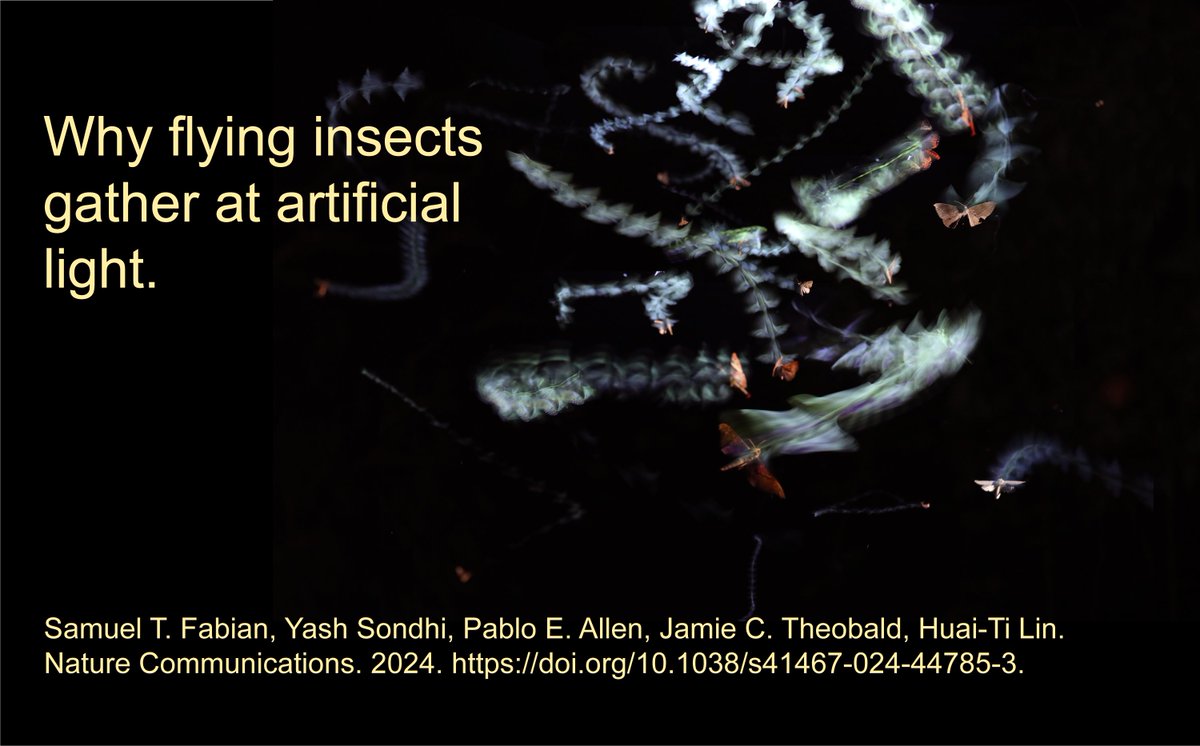
NEW PAPER: Ever wondered why insects fly in all sorts of crazy patterns around lights at night? So did we! We set about recording flying insects to work out what's going on. I'll summarise what we found in this 🧵. Spoiler: We don't think they confuse lights with the moon.
'By comparing two firn cores taken in 2018 and 2020 at a high altitude Alpine site (Corbassière glacier, CH), we demonstrate that this glacier is now irrevocably lost as an archive for reconstructing major atmospheric aerosol components'
#LostArchives
https://t.co/CUNKqcUjmz
Food for thought or fighting words? Down with PFTs for explaining spatial var in fluxes: Cranko Page, J., Abramowitz, G., De Kauwe, M. G., & Pitman, A. J. (2024). Are plant functional types fit for purpose? Geophysical Research Letters, 51, e2023GL104962. https://t.co/2UL8Rw2jPR
En @MexFlux estamos trabajando para crear una base de datos de flujos de CO2 desde el suelo a la atmósfera (MexFlux-S) en México.
In MexFlux we are working to create a soil CO2 efflux database across Mexico.
🌍Join our session at #EGU24 on soil-plant-atmosphere interactions, focusing on water status. We welcome submissions in empirical research🌱, modelling💻, or remote sensing🛰️
🚨deadline is Jan 10: https://t.co/GEk4dFEelg
@Novick_Lab @JessicaSGuo@MukundPR@celiamrd@PSInet_RCN
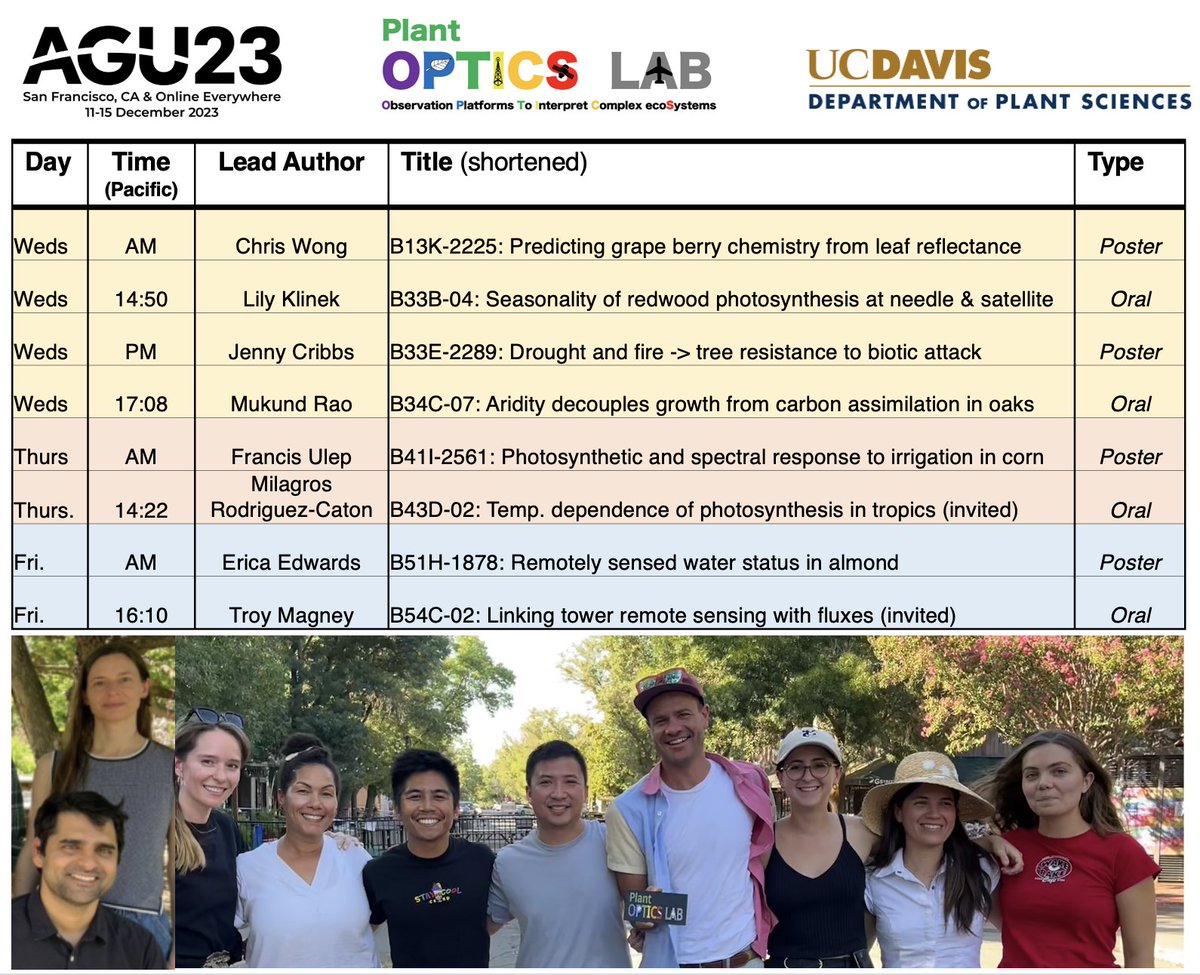
Looking forward to #AGU23! Come find these great scientists and humans from the Plant Optics Lab
@UCDavisPlants
Scientific Program link to our stuff: https://t.co/GO4QDm3GxV