Keep an eye on Vistra Energy from here 👀
It's now below the price Nancy Pelosi originally bought up to $1M back on January 14th, 2025
Price of $VST when Pelosi bought: $170
Price of $VST today: $163
I'm a neurodivergent health research advisor with a PhD.
Here are 14 life-changing ND accommodations that are stupid-simple but way too underused:
1. Listen to fast music during tasks you want to finish quickly (shopping, cleaning, getting ready, walking to the gym). Your body follows rhythm faster than your mind follows intention.
$NOK Insider Buying Update 🚨
Chief of Staff Victoria Hanrahan just bought 44,682 shares at ~$15.81 average ($706K).
→ This is her first disclosed purchase.
→ Follows Owczarek’s (Chief Development Officer) ~$1M buy last week.
→ Over $3M in insider purchases in May alone, even after the stock is already up +127% YTD.
Insiders know what lies ahead for their Optical, IP and AI-RAN business - and are putting their own skin in the game.
You do not own enough $NOK.
$NOK is ~15% of my portfolio and I don't think it's enough. Adding more tomorrow.
https://t.co/pB4WtQYMRe
Dudes are tweaking on Leopold's semi short.
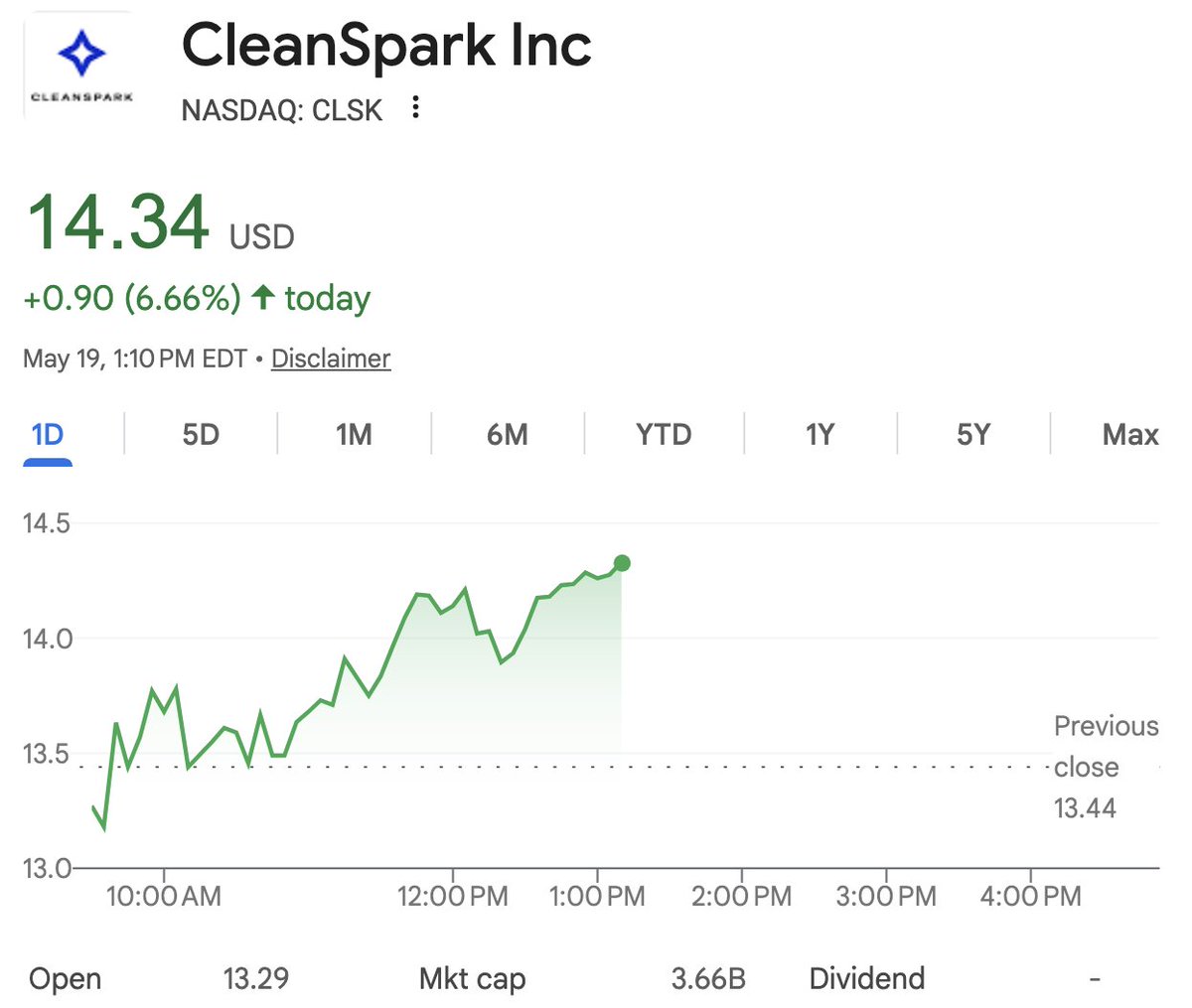
But I'm looking at how he 7.5x'd his position in neocloud $CLSK that still hasn't landed a hyperscaler.
$CLSK is the only Neocloud where Leopold increased the portfolio weighting. Every other miner / neocloud got diluted as a % of book this quarter.
The stock is mooning 6.7% today while the markets are bloody murder.
A few notes on $CLSK.
It's a Bitcoin miner with 1.8 GW of contracted power pivoting hard into AI compute. 585 MW of ERCOT approved capacity in Texas. $1.2B in liquidity. Hashrate up 18% YoY.
The catalyst: a pending hyperscaler lease at Sandersville GA. It's a 250 MW site plus 122 adjacent acres of energized land. $APLD's $7.5B / 15-year deal at Delta Forge is a comp.
CEO on the Q2 call (May 11): "We accelerated our digital infrastructure evolution across four key areas: land and power development, with ERCOT approval of 300 MW..."
In the April operational update, management said they're "making meaningful headway toward securing our first hyperscale customer."
The Street is bulled up. Maxim $22, Cowen $26, KBW $16, Needham $18. 12 Buy, 0 Sell.
Leopold averaged in around $8.50 in Q1. We're at $14 today. He's already up 65% and the lease hasn't even been signed.
And let's not forget how he previously sized into $APLD and $HUT before hyperscaler ink.
@KawzInvests are working on the deepest neocloud comparison report available to retail in a forthcoming Substack.
Leopold knows something. Let's piece it together?
In 2025, Leopold Aschenbrenner delivered some incredible winners:
1. $BE — Bloom Energy (+1,422.85%)
2. $CRWV — CoreWeave (+166.67%)
3. $INTC — Intel (+365.83%)
4. $LITE — Lumentum Holdings (+1,331.49%)
5. $CORZ — Core Scientific (+135.95%)
6. $IREN — IREN Limited (+583.57%)
7. $APLD — Applied Digital (+629.58%)
8. $SNDK — SanDisk (+3,130.75%)
9. $CIFR — Cipher Mining (+449.35%)
Now in 2026, he is giving you this list 👇
- $TE — T1 Energy at $6.8
- $HIVE — HIVE Digital
- $RIOT — Riot Platforms at $22.6
- $APLD — Applied Digital at $36.6
- $IREN — IREN Limited at $47.7
- $BTDR — Bitdeer Technologies at $3.3
- $KEEL — Keel Holdings at $4.2
- $CLSK — CleanSpark at $14.6
- $SHAZ — Sharon AI at $52.4
- $PUMP — ProPetro at $17.8
- $PSIX — Power Solutions at $36.3
- $WYFI — WhiteFiber at $25.5
- $CORZ — Core Scientific at $22.9
Some of these companies have the potential to deliver 5x to 50x returns. The upside in many of these names is massive.
Bookmark this for research, focus on the companies that offer the best opportunities, and invest wisely.
Not financial advice. Do your own research.
Jane Street is paying $650,000/Year for quants. They built this 13 page PDF themselves covering every math concept from scratch to crack their interview. And they put it out for free.
Bookmark & study this, then read the article below before someone takes it down.
AI Semiconductor Endgame 2026 (Part 1)
New Token Economics Computing Paradigm Shifts from GPU Compute to HBM
This article starts from the essence of GPU architectural evolution to address a question the market has long worried about:
Why must each GPU's HBM memory demand grow exponentially, and why won't this exponential growth in HBM demand stall?
It then derives the first principle of token economics under the current architecture: token throughput = HBM size × HBM BW (bandwidth)
It also discusses why the GPU ceiling is determined by HBM's two dimensions of progress.
The topic of HBM cyclicality has long been controversial. Optimists argue that AI-driven demand is much greater than before, but the market mainstream still believes that previous up-cycles also saw 20%+ annual demand growth — so what's different this time? AI doesn't change the fact that HBM, like traditional DRAM, has commodity attributes. Once capacity expansion at the demand peak meets a downturn, history will repeat itself. We can take the perspective of compute-chip architecture, start from first principles, and unpack and reason through this question:
why this time is genuinely different.
———————————————————————————————
History: The Era of CPU Compute
For a very long time, we lived in the era of CPU-dominated compute. The CPU's top-level KPI was performance — running faster — and so each generation of CPUs deployed every method imaginable to push benchmark scores higher. First it was rising clock frequencies, then it was architectural evolution: superscalar designs, and so on.
During this period, why didn't DDR need to advance technologically at high speed? DDR3 to DDR5 took a full 15 years.
Because in this era, DDR's role was purely auxiliary — and only weakly so. By industry experience, even doubling DDR speed would generally only raise CPU performance by less than 20%.
Why did improvements in DDR bandwidth and speed matter so little? Two reasons:
1. CPUs designed all kinds of architectural tricks to hide DDR latency — superscalar designs, wider issue widths, massive ROBs and register renaming to extract parallelism and hide latency, L1 caches, L2 caches — all of which weakened the demand for DDR bandwidth and speed.
2. CPU workloads don't have particularly demanding bandwidth requirements. For most everyday workloads — say, opening a webpage — DDR bandwidth is severely overprovisioned. Even cloud workloads often look the same.
In other words, in the CPU era, DDR bandwidth and speed didn't really matter. There was virtually no difference between DDR4 and DDR5 except in a handful of games — and even the JEDEC standard advanced slowly.
On top of that, only a small portion of any given app needs to permanently sit in DDR. Whatever is needed can be paged in from the hard drive on demand. App size grew slowly, and so DDR capacity demand grew slowly as well.
That's why, over the past decade, the average PC went from 7–8GB of DDR to about 23GB — only 3× growth in ten years.
This slow upgrade pace directly affected revenue. Capacity-based pricing was the main way of making money; speed improvements were just a technological upgrade that raised the unit price of capacity. With both of these dimensions advancing slowly, growth could only come from increases in PC/phone unit volumes.
So along both dimensions — bandwidth/speed and capacity — DRAM was always a “nice-to-have” appendage to the chip industry. The marginal utility of DDR upgrades was very low, and almost completely disconnected from the CPU era's top-level KPI.
———————————————————————————————
The Paradigm Shift: GenAI's Top-Level KPI
When we entered the era of GenAI large models, the computing paradigm shifted, and the top-level KPI changed fundamentally.
By the time GPUs evolved into AI inference engines, the top-level KPI was no longer compute alone (TOPS/FLOPS), as it had been for CPUs — it became the cost of a token. Specifically: overall token throughput per unit cost / per unit power.
A close second is token throughput speed — because in the agent era, many tasks have become serial, and token output speed has become a critical bottleneck for user experience.
This is exactly why Jensen invented the concept of the AI factory: to produce the most tokens at the lowest cost, while pushing token throughput speed as high as possible.
In the AI training era, Jensen's economics were TCO (Total Cost of Ownership): the more GPUs you buy, the more you save.
In the inference era, Jensen's token economics flip the logic:
AI inference has very healthy gross margins, so the logic now becomes: the NVIDIA GPU is the GPU that produces the cheapest token in the world, so the more you buy, the more you earn.
The top-level KPI has become a Pareto frontier: along the two dimensions of token throughput and token speed, optimize as far as possible.
Each generation of NVIDIA's token factory is essentially pushing the entire Pareto frontier up and to the right. This is the most important KPI of the AI inference era.
———————————————————————————————
From Token Throughput to HBM: The Core Logic Chain
Below is the most important logical chain of this article: how to start from the exponential growth of token throughput and derive that the ceiling bottleneck lies in the exponential growth of HBM size and HBM speed.
In the era of single-GPU inference with single-thread batch size = 1, token throughput had only one dimension: HBM bandwidth speed. Higher bandwidth = higher token throughput.
But once we entered the NVL72 era, inference is no longer single-GPU. It is a system-level token factory composed of 72 GPUs + 36 CPUs, designed to fully saturate HBM bandwidth and compute simultaneously, in pursuit of the ultimate token throughput.
Token throughput growth depends on two things: the number of requests batched simultaneously × the average token speed per request.
That is: batch size × token speed.
Take Rubin NVL72 as an example. At an average token speed of 100 tokens/s, processing 1,920 simultaneous requests yields a token throughput of 192,000 tokens/s. A Rubin NVL72 draws roughly 120kW (0.12MW), so per MW it can handle 1.6M tokens/s.
So we need to find ways to push both parameters up: batch size and average token speed. Their product is our top-level KPI — token throughput.
Parameter 1: Batch growth — bottleneck is HBM size
Every request in the batch carries its own KV cache, which has to live in HBM, with sizes ranging from a few GB to tens of GB. Because hot KV cache must be read at high frequency and high speed at any moment, it must reside in HBM. For a model with, say, 80 layers, every token generation step requires reading the KV cache 80 times from HBM.
As batch size grows, hot KV cache grows linearly.
And because the hot KV cache for every request in the batch must sit in HBM, HBM size must grow linearly with batch size.
Like an airport shuttle bus: the gate wants to move passengers to the plane as fast as possible. If HBM size is small, the shuttle is small, so you have to make extra trips.
Conclusion: batch size growth bottlenecks on HBM size growth.
Parameter 2: Average token speed per request — bottleneck is HBM bandwidth
The decode-phase speed of a large model bottlenecks on HBM bandwidth, because every token generated requires reading the activated weights and KV cache many times over.
The emergence of LPUs has, in cases where batch size isn't very large, moved the activated weights portion onto SRAM — but every generated token still requires many reads of the KV cache from HBM. The higher the HBM bandwidth, the faster each token is generated, in essentially linear correspondence.
Like the airport shuttle bus: HBM bandwidth is like the width of the door — wider doors mean passengers board faster.
The rest of the GPU's configuration is essentially adapted to support batch growth and to keep token compute speed in step with HBM growth. In some cases the GPU even spends excess compute to recover effective bandwidth (e.g., bandwidth compression techniques).
—-------
To return to the shuttle bus analogy:
• Shuttle bus cabin size = HBM Size (capacity): determines how many passengers can fit at once (i.e., how many requests' KV caches can sit in HBM simultaneously). Bigger cabin = more passengers (higher batch size) per trip. If the bus is too small, moving 100 people takes two trips — and total throughput suffers.
• Shuttle bus door width = HBM Bandwidth: determines how fast passengers get on and off. A wide door, and everyone piles on at once (decode/token generation is fast). A narrow door, and even with a giant cabin, people queue up and most of the time is spent boarding.
• Passenger throughput = cabin size × door-width-determined boarding speed.
—-------
At this point, we've logically derived the first principle of token-economics hardware demand:
Token throughput = HBM size × HBM Bandwidth
The top-level KPI of the AI inference era is highly dependent on progress along both HBM dimensions.
If we want to maintain 2× token throughput growth per generation, that means each generation of single GPU must grow HBM size × HBM BW speed by 2×!
This is the first time in history that HBM memory size can influence the top-level KPI — token throughput.
To validate this thesis, we can put NVIDIA's token throughput from A100 to Rubin Ultra on the same chart as HBM size × HBM BW speed.
What you find is that the two curves track each other startlingly closely on log axes.
HBM size × speed actually grows even faster than token throughput — which makes sense, because HBM defines the ceiling, and in practice utilization of that ceiling is very hard to push to 100%. Even if HBM size × HBM speed grew by 1,000×, with the supporting compute and architecture, it would be very hard to wring out the full 1,000× of headroom.
This curve isn't a coincidence — it's the necessary solution of system optimization.
throughput = batch × speed. This is the unavoidable first principle of token factory economics.
—-------
What about software? Won't software optimization reduce bandwidth demand? Reduce HBM demand?
This is an independent dimension from hardware. It's like asking: if software on a CPU runs faster after optimization, does that mean the CPU doesn't need to advance for ten years? After all, software is faster now.
If that were the case, would CPU vendors still make money? For a CPU vendor to survive, there's only one path: in standardized benchmarks, ignoring software optimization, every new CPU generation must score higher — otherwise it doesn't sell.
GPUs are exactly the same. How well software is optimized, and the requirement that the GPU's own token-throughput KPI must improve dramatically every year, are two separate things.
As long as token demand keeps growing, the pursuit of higher token throughput will not stop — and so neither will the pursuit of higher HBM size × HBM speed.
If HBM size and HBM speed were to slow down, Jensen would personally fly to the Big Three and pressure them to accelerate, because that ishis GPU ceiling. If the ceiling stops rising, can his GPU still sell?
Of course, NVIDIA also needs to wrack its brains to extract performance beyond the HBM ceiling through heterogeneous architectural angles. The LPU is a great example — it improved the Pareto frontier substantially from a different angle (the right-hand high-token-speed portion).
—--------------------
HBM memory has now bid farewell to that old era of drifting with the tide. On this one-way road paved by exponential demand, it has, in something close to a destined fashion, walked onto the central stage of the industry's epic.
When the inference paradigm's first principles evolve to this point, as long as Jensen still wants to sell GPUs, HBM must double — and it must double every generation. This is endogenous pressure from the supply side. It has nothing to do with AI demand, nothing to do with macro cycles, and nothing to do with the moods of the hyperscalers.
The only remaining question is this:
When demand has been physically locked into exponential growth, will the three players on the supply side — like they have for the past thirty years — once again drag themselves back into the mire of the cycle by their own hands?
$IREN - Complete A-Z investment case
In this post I’ll cover why I expect this hyper-growth stock to crack $150 over the next 18 months—representing a gain of 1150% from its current price of $12 📈
I went ‘All-In’ this stock, and for good reason….
🧵
This sentence by Dostoyevsky hits so hard.
“You sensed that you should be following a different path, a more ambitious one, you felt that you were destined for other things but you had no idea how to achieve them and in your misery you began to hate everything around you.”
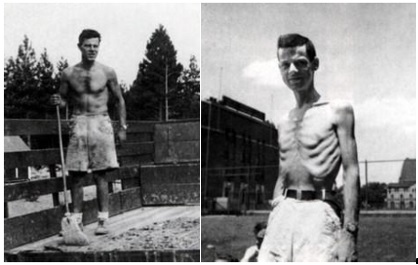
The craziest study ever - The Minnesota Starvation Experiment
32 young men were put on a 40% calorie-restricted diet for 6 months, while staying physically very active
They lost 25% of their body weight by the end of it
Here's what this study contributed to longevity research
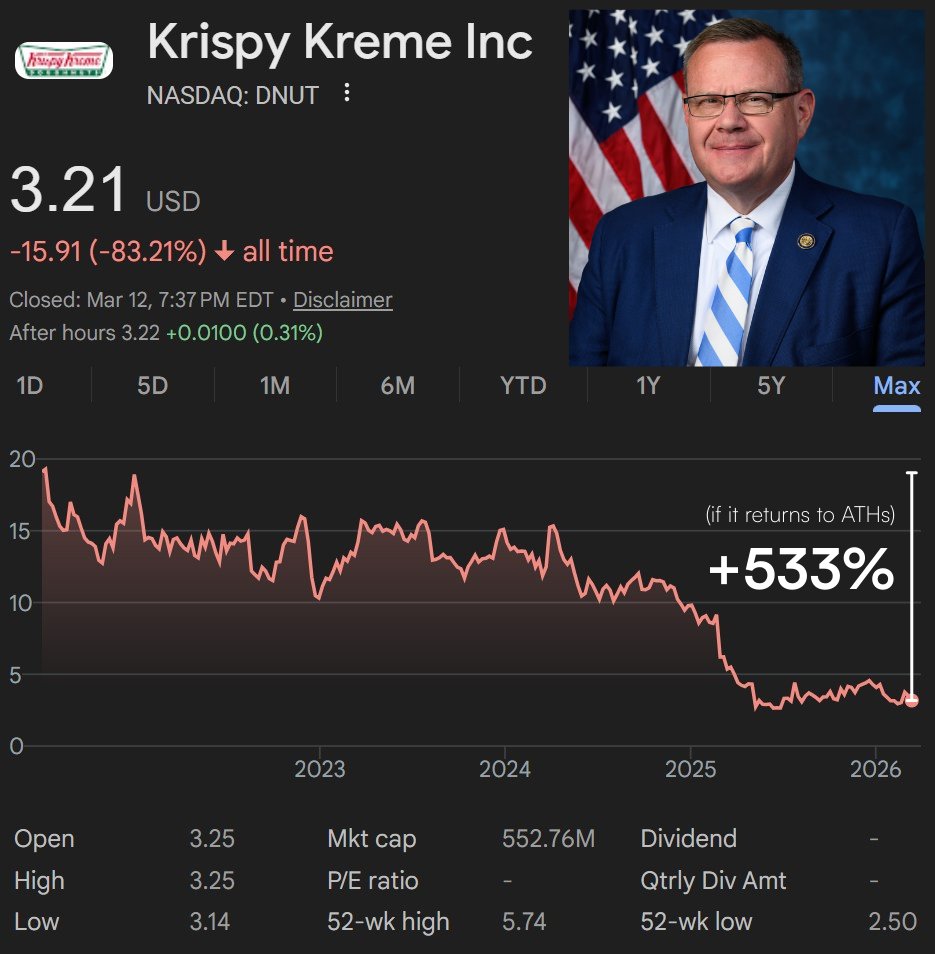
Just a friendly reminder that Rep. Tim Moore purchased $DNUT earlier this year
Krispy Kreme is a $552M market cap company
Back in 2021, the stock traded around $19
Today, it's sitting near $3
+533% (if it returns to it's ATH)
🚨 Big news, @claudeai just got a huge update today and I'm very happy to show it to you in shipper. Now, Claude Code Opus 4.6 can self-build a full company for you.
We just launched Shipper 2.0, a package for Claude to:
→ Build web/mobile apps, but also Chrome extensions
→ Code, design, monetize, launch, and maintain
→ Do email marketing for you
→ Keep on building new features
Claude can do all that from a <10 word prompt for as low as $0.12/app... And it takes minutes, not months.
Simply go to Shipper, then ask Claude to "build a language learning platform" or "build a saas that charges $39/mo"!
To celebrate the launch, we're giving away free credits randomly to people who retweet and comment "SHIPPER' :)