MultiPark is a translational programme ranging from experimental pre-clinical research to studies on the life situation of patients with #neurodegeneration.
Important Update from MultiPark!
We want to inform you that MultiPark will no longer be active at X. You can continue to follow our latest research, news, and updates on LinkedIn 👉 https://t.co/Q9dUn35Fn9
Thank you for your support, and we look forward to staying in touch!
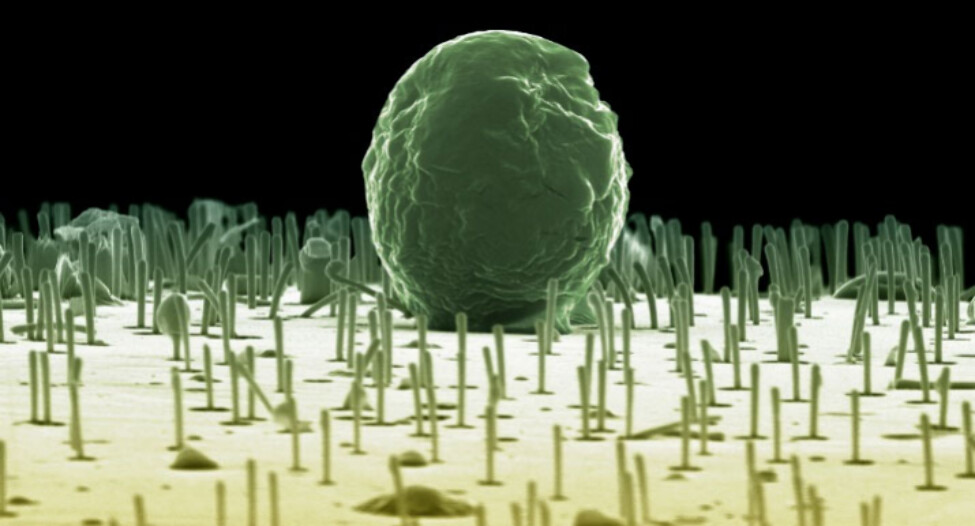
PEDOT is going one-dimensional! Lithography-free conductive polymer nanowires were interfaced with both algae and human blood stem cells paving the way for 1D organic bioelectronics. @lunduniversity@nanolund@MultiparkL@HjortsX@OlssonRoger
https://t.co/e75mhg8dgj
"In this study we identify the glymphatic system as a new mechanism contributing to the well-established link between cardiovascular pathologies and neurodegeneration" says Marios Kritsilis, lead author of the project.
Read more about their findings 👉 https://t.co/yNAGu3nhc2
The glymphatic system, specialized in clearing waste from the brain, is linked to various neurodegenerative diseases. However, the impact of heart failure on the glymphatic system's function remains poorly understood.
This work highlights both the potential and the challenges of using DTI in glymphatic research, paving the way for improved techniques to study brain health.
Read more about their findings here 👉 https://t.co/Z0PRqY7Swa
Lead author: Charalampos Georgiopoulos
The glymphatic system, a specialized waste-clearing network in the brain, plays a role similar to the lymphatic system in the rest of the body. Changes in this crucial system have been linked to neurodegenerative diseases such as Parkinson's and Alzheimer's.
However, a known limitation of DTI arises when nerve fibers cross—an issue affecting about 90% of the brain's white matter. In their study, the researchers demonstrated how fiber crossing impacts DTI measurements of the perivascular space and the assessment of glymphatic flow.
Happy and honoured to have been awarded a STIAS: Stellenbosch Institute for Advanced Study fellowship for 2025!
Look forward to spend the autumn in South Africa 🇿🇦!
https://t.co/IVAIjLVM87
@lunduniversity@MultiparkL@Lund_Stem@medfak_LU@Ottossonlab
Recent research highlights corticotropin-releasing hormone (CRH) as a promising biomarker candidate for PS. @OskarHansson9 and collaborators investigated this link, read about their results here 👉 https://t.co/jNi6m5z1jR
Lead authors: @atulkumar1301 and Bárbara Fernandes Gomes
Biomarkers have transformed Alzheimer's disease diagnosis, and a similar breakthrough is needed for Parkinson's disease and related disorders, known as Parkinsonian syndromes (PS).
The episode I've been most excited about is here. I had the honor to chat with Prof. Bart de Strooper, one of the most brilliant minds researching Alzheimer's today. What an absolute masterclass it was. Listen to it, you won't regret it. @MultiparkL
https://t.co/Ki9W6gdnjn
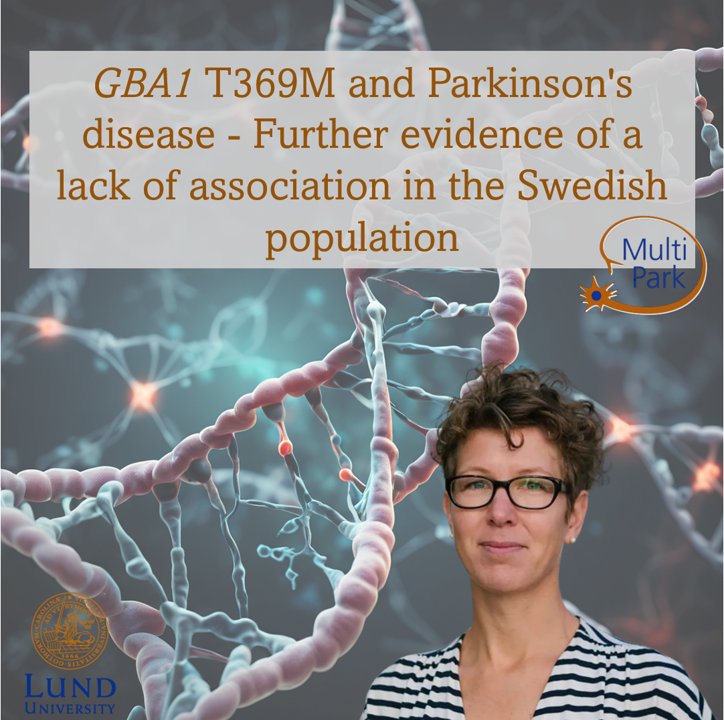
Genetic risk factors can vary between populations. The T369M variant in the GBA1 gene has been linked to an 80% increased risk of Parkinson's disease. However, recent findings suggest this association might not apply to the Swedish population.