Klaviyo will not fix a weak customer journey.
It can send the emails, trigger the flows and segment customers.
But if your product page, checkout, tracking or customer data are weak, your flows will be weak too.
Better emails start with a better buying journey.
Sometimes the problem isn’t the storefront.
It’s the backend behind it.
Slow APIs. Broken order flows. Inventory issues. Messy customer data. Manual admin work.
These problems quietly slow growth.
E-commerce works better when frontend and backend work together.
A higher conversion rate can make an e-commerce business weaker.
If conversion rises but AOV, LTV or margins fall, the business can still lose money.
CRO is not about getting more people to buy.
It is about creating more profitable customers.
Most A/B tests fail before they start.
Not because the test is built badly. Because the question is bad.
Before testing, define:
• The problem
• The hypothesis
• The metric that should move
• What could affect the result
Good tests start with good business questions.
Your conversion rate is not just a design problem.
Before changing colors or layouts, check:
• Product page clarity
• Mobile UX
• Checkout friction
• Speed
• Trust
• Analytics
• Recovery flows
A prettier store can still leak sales.
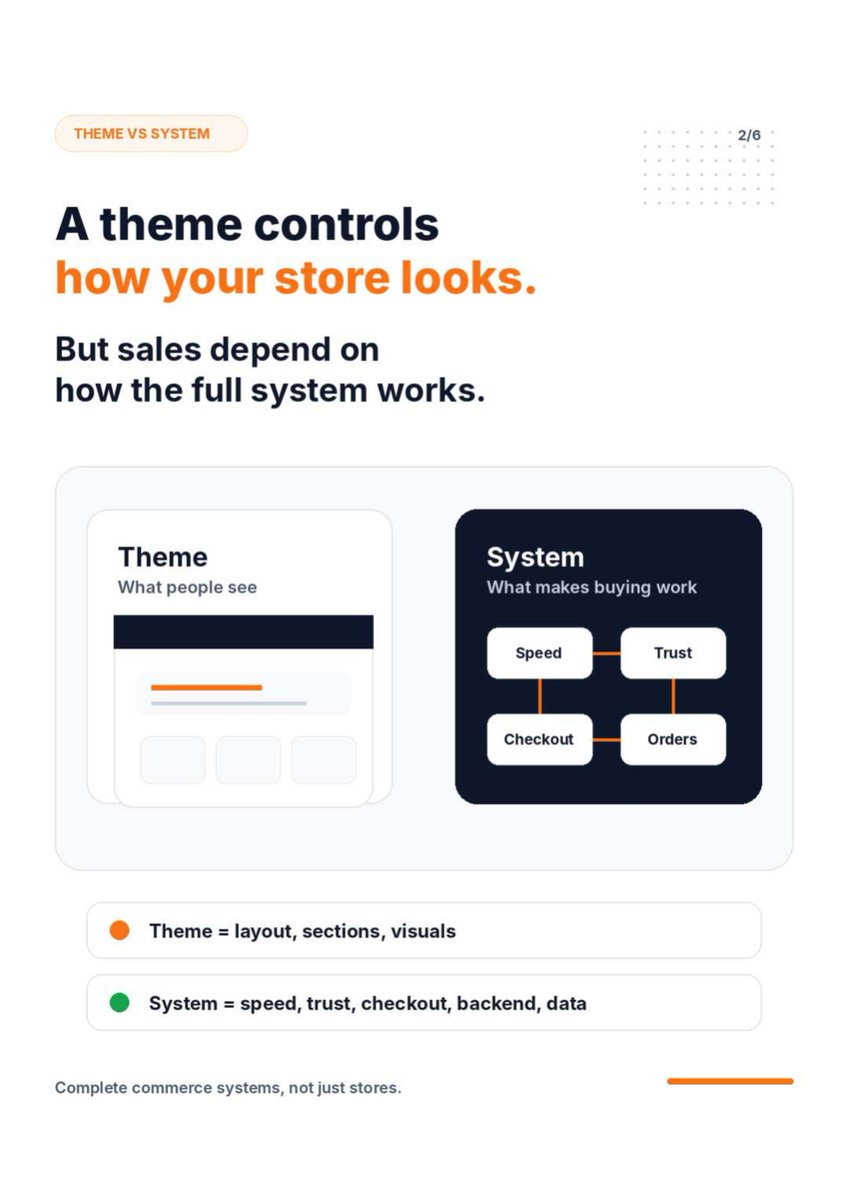
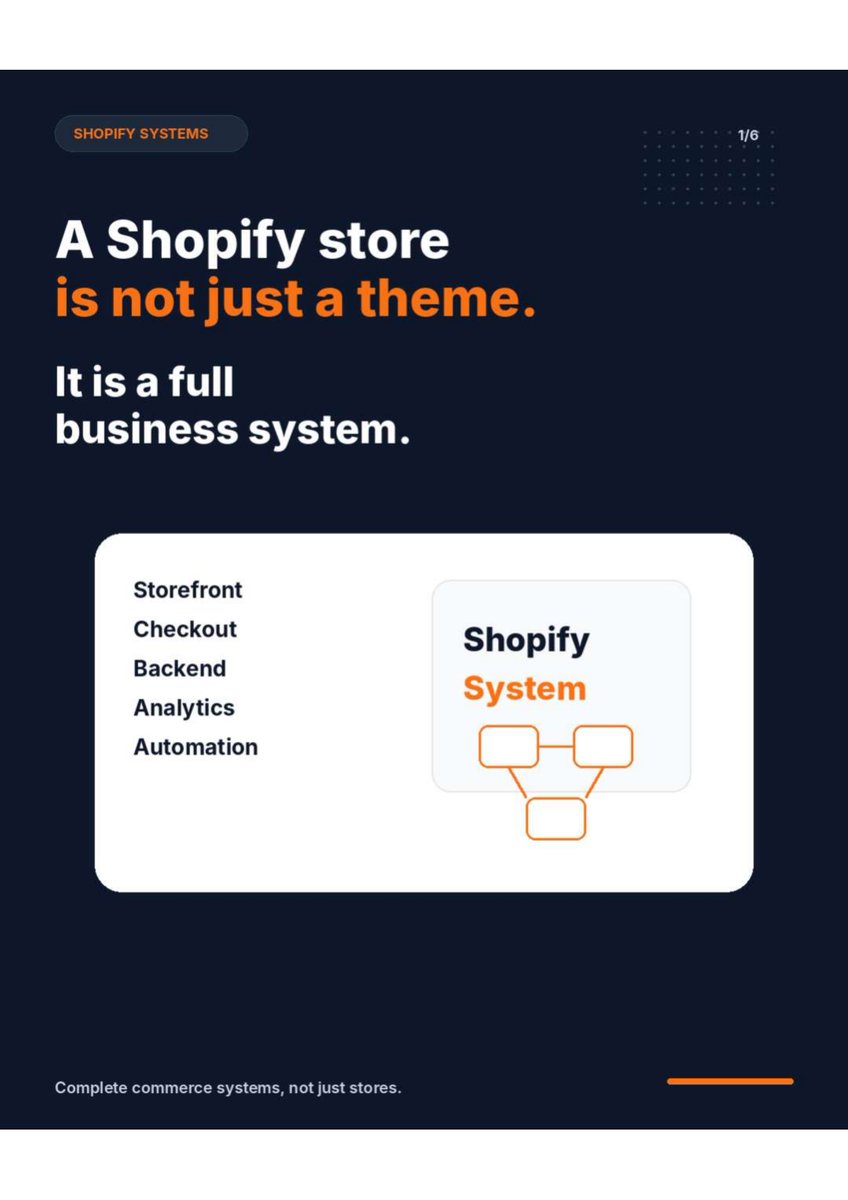
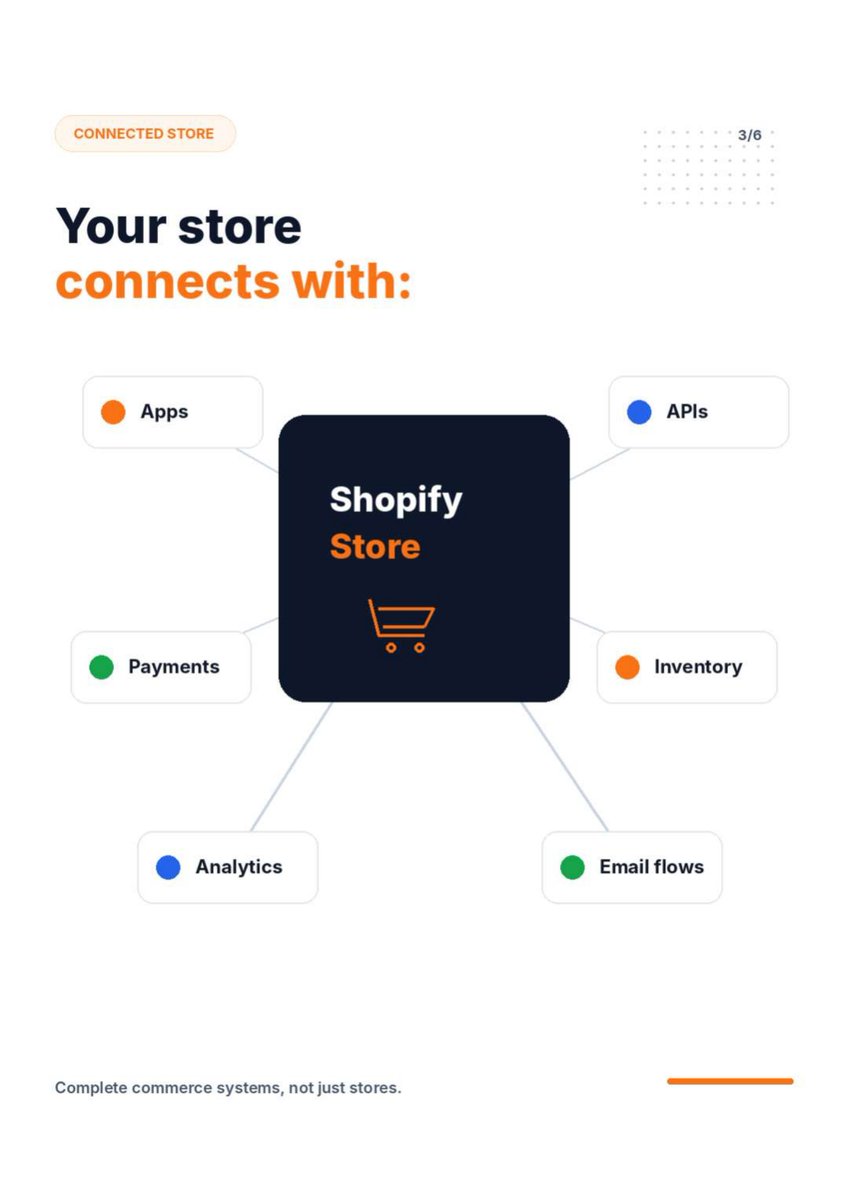
A Shopify store is not just a theme.
It is a system connecting storefront, checkout, apps, inventory, email, analytics and backend.
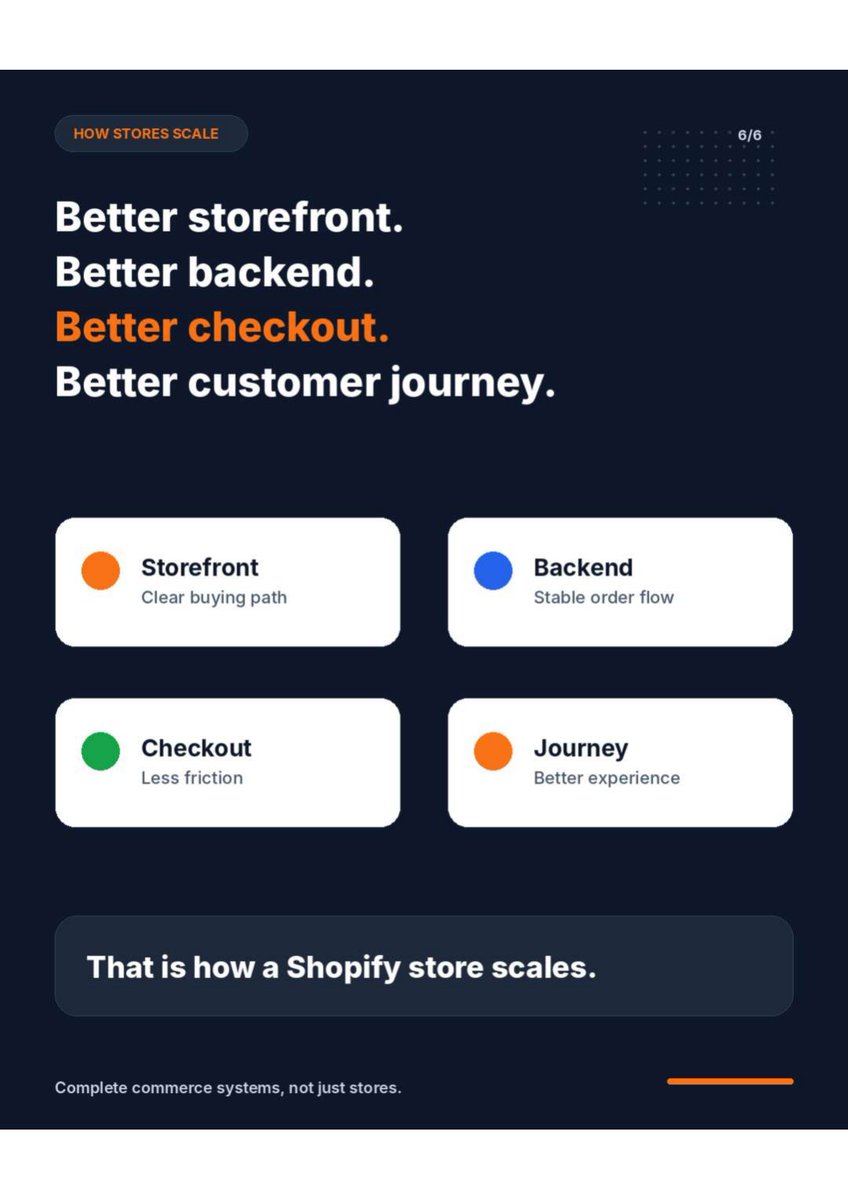
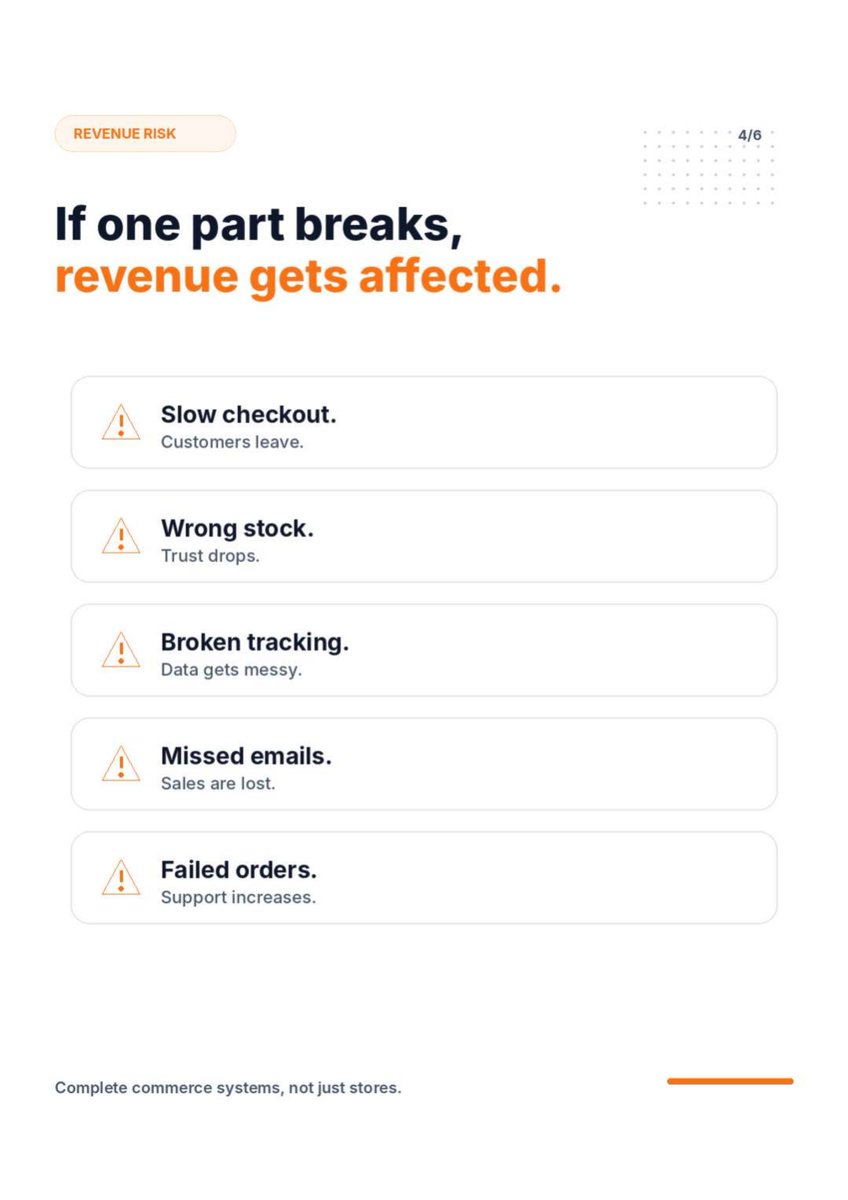
If one part breaks, sales feel it.
That is why Shopify needs full-stack thinking, not just design changes.
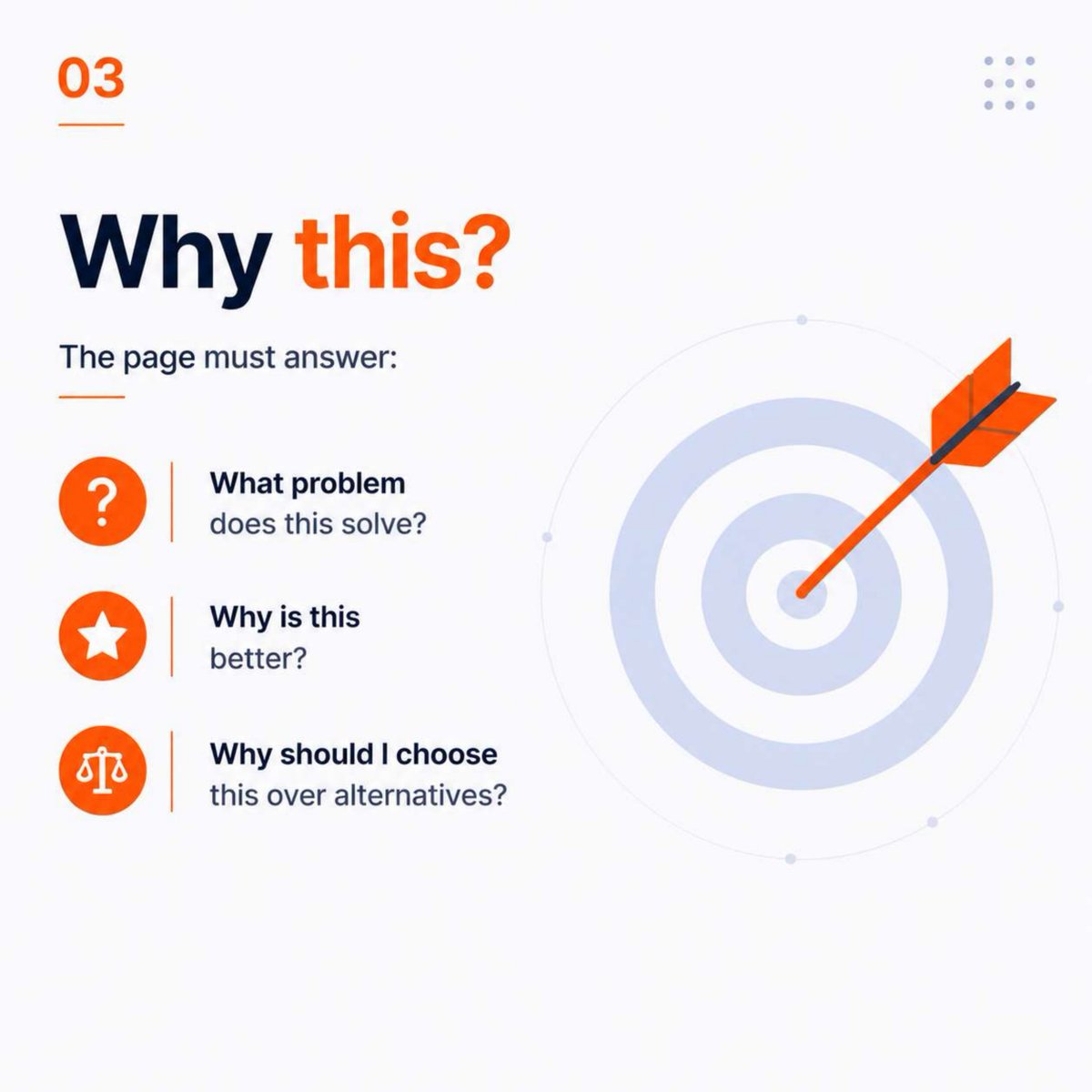
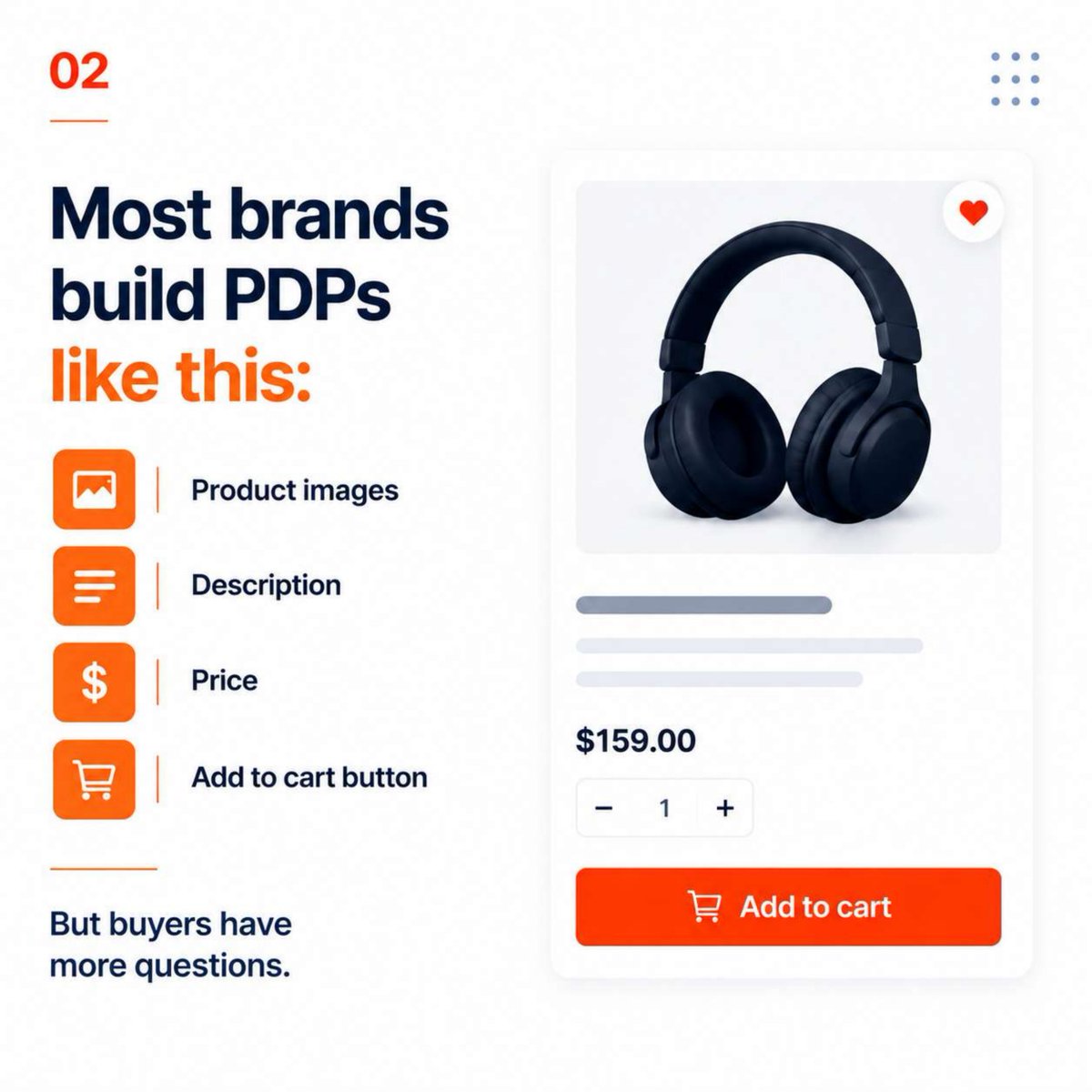
Most brands optimize product pages for products, not decisions.
Buyers ask:
• Why trust this?
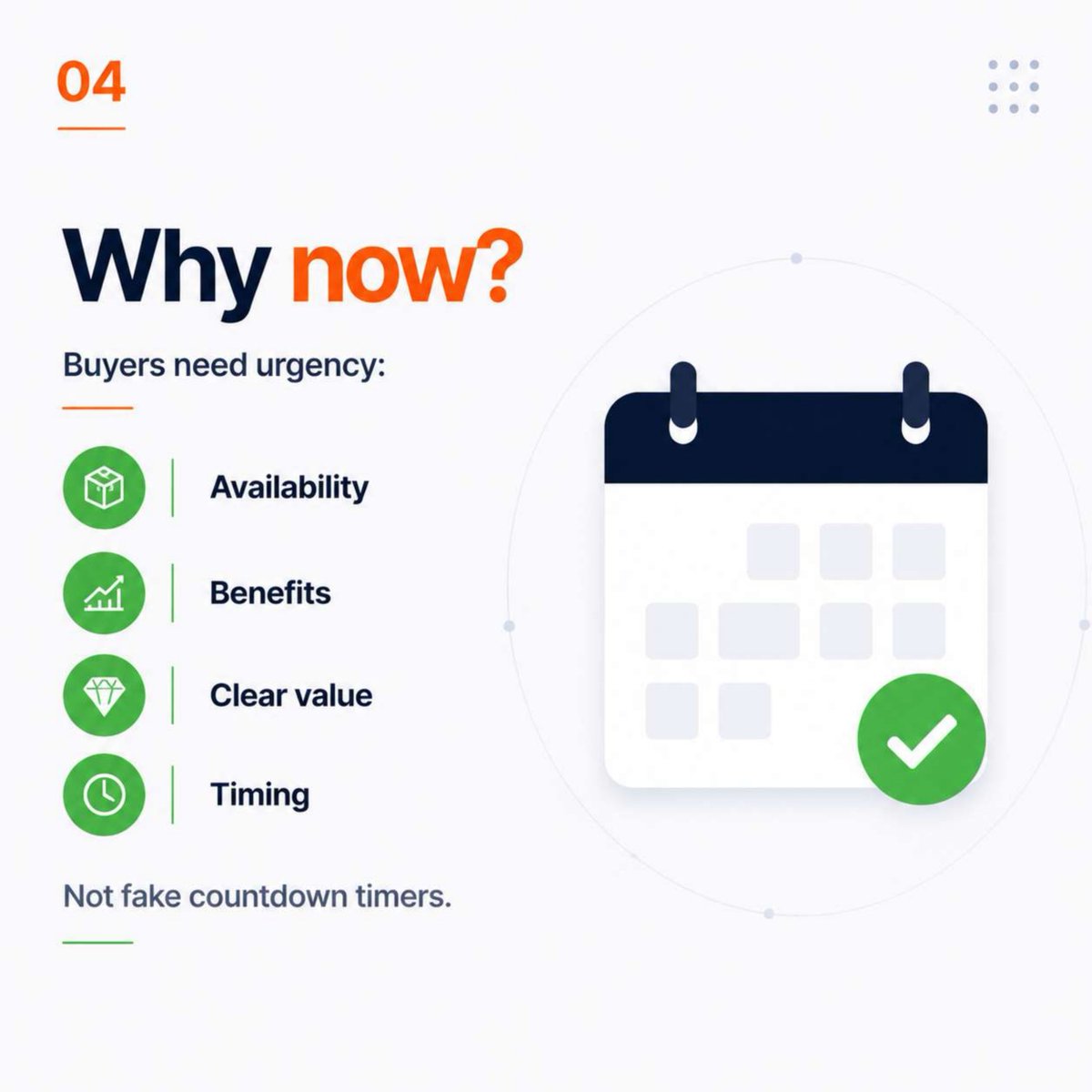
• Why buy now?
• Why this price?
• What happens after purchase?
Good PDPs answer these questions before doubt becomes a lost sale.
They build buying confidence.
If I joined an e-commerce project today, I wouldn’t start with design.
I’d first find where the store is leaking sales:
• Analytics
• Speed
• Product page
• Checkout
• Email flows
• Backend
• Tracking
Design matters. But first, fix what affects revenue.
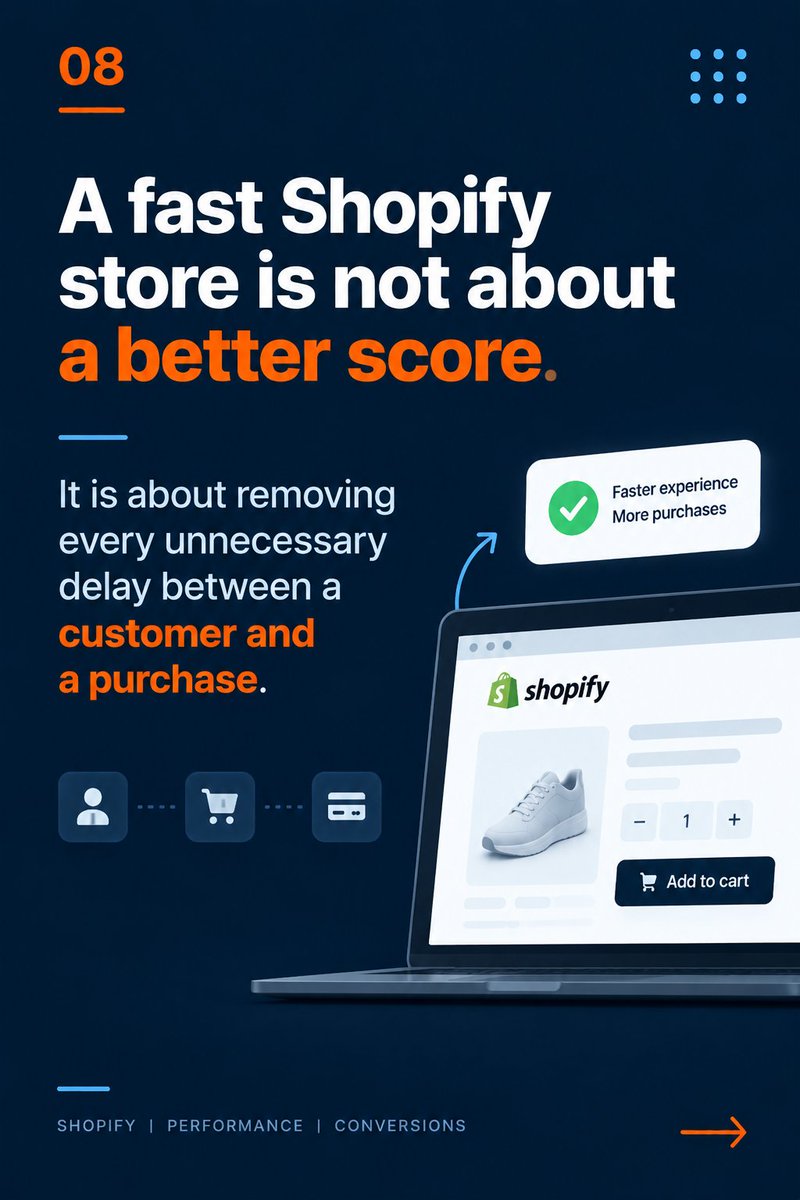
Store speed is not just a technical score.
It affects trust, buying experience, and conversion.
A slow store does not just load slowly.
It creates friction at every step between the customer and the purchase.
Your conversion problem isn’t always a marketing problem.
Traffic can be good and the store can still lose the sale.
Check the buying journey:
• Product page
• Speed
• Mobile UX
• Cart & checkout
• Trust
• Offer
More traffic won’t fix a broken journey.
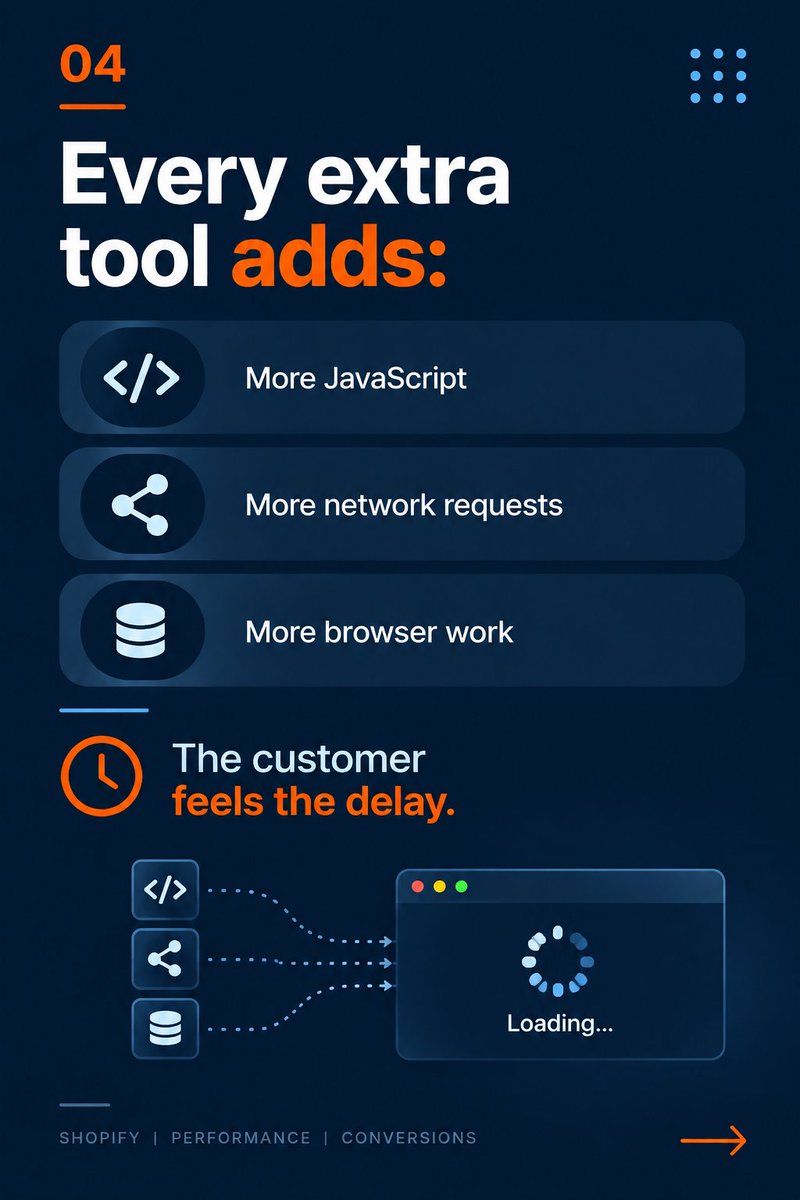
When I review Shopify performance, I check:
• Unused app scripts
• Third-party JavaScript
• Image loading
• API calls
• Rendering behavior
• Core Web Vitals
• Mobile performance
The goal is not just a better score.
It is less friction b/w the customer and the purchase.
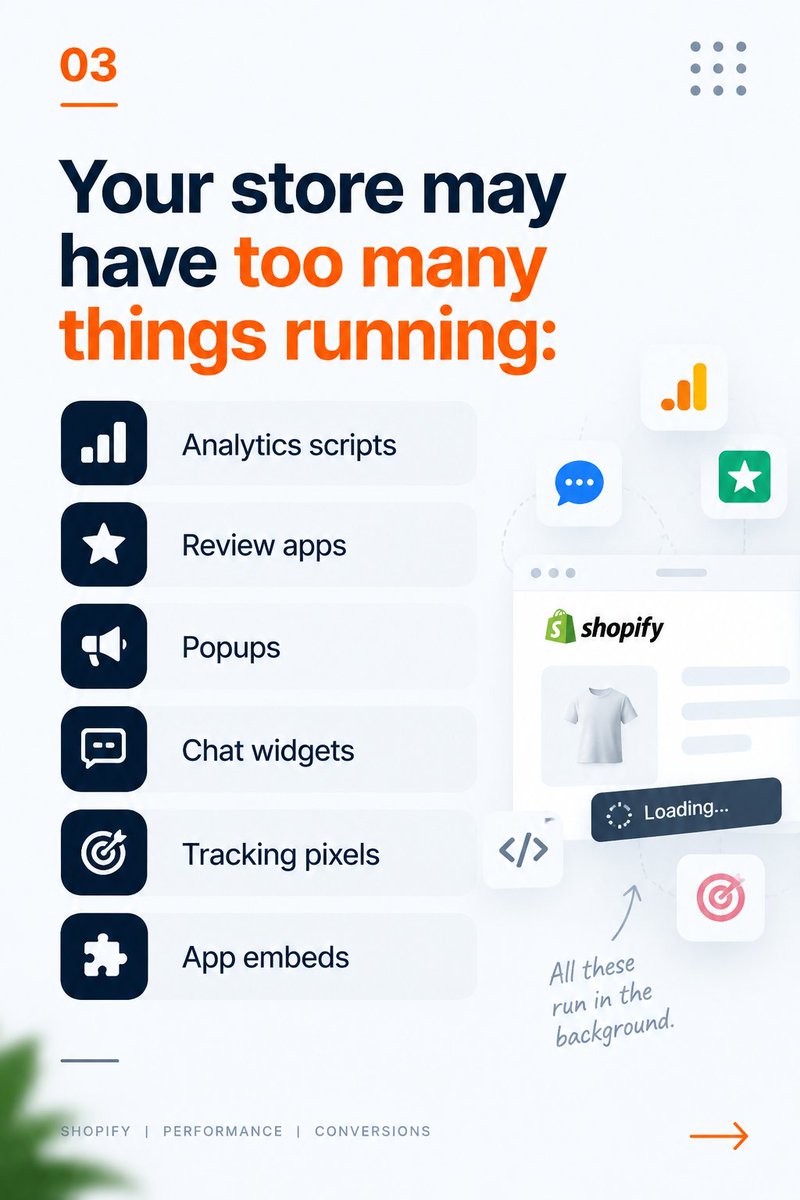
Your Shopify theme may not be the reason your store feels slow.
The real problem is often everything running around it:
• App scripts
• Third-party JavaScript
• Tracking
• API calls
• Poor loading behavior
Speed is part of the buying experience.
#shopify#ecommerce
@LinkedInHelp I'm having trouble logging in to my LinkedIn account. After resetting my password, I’m getting an “unexpected error.” I’ve tried different devices and networks. Can you help me resolve this? #LinkedInSupport
Shopify in 2025 changed under the hood.
OS 2.0 is standard.
JSON templates replaced legacy themes.
Metafields are core.
Checkout scripts are gone.
Shopify is no longer just “easy ecommerce”.
Easy to start.
Hard to scale.
#Shopify#Ecommerce#WebDev