Calling all community college students! Are you passionate about using #STEM to solve real-world problems? Don't miss the opportunity to participate in the Community College Innovation Challenge, led by @Comm_College and @NSF.
Deadline is 4/2/24. https://t.co/9fzlNcrxcj
#CCIC
As we continue our exploration of the basic science behind AI, we now turn our attention to Natural Language Processing (NLP), the detective work of AI that deciphers the language of humans.
Imagine a skilled detective working on a complex case. They sift through clues, interpret evidence, and piece together the story behind the crime. They need to understand not just the facts, but the context, the motives, and the hidden meanings behind the evidence. This is a complex task, requiring a keen eye for detail and a deep understanding of human behavior.
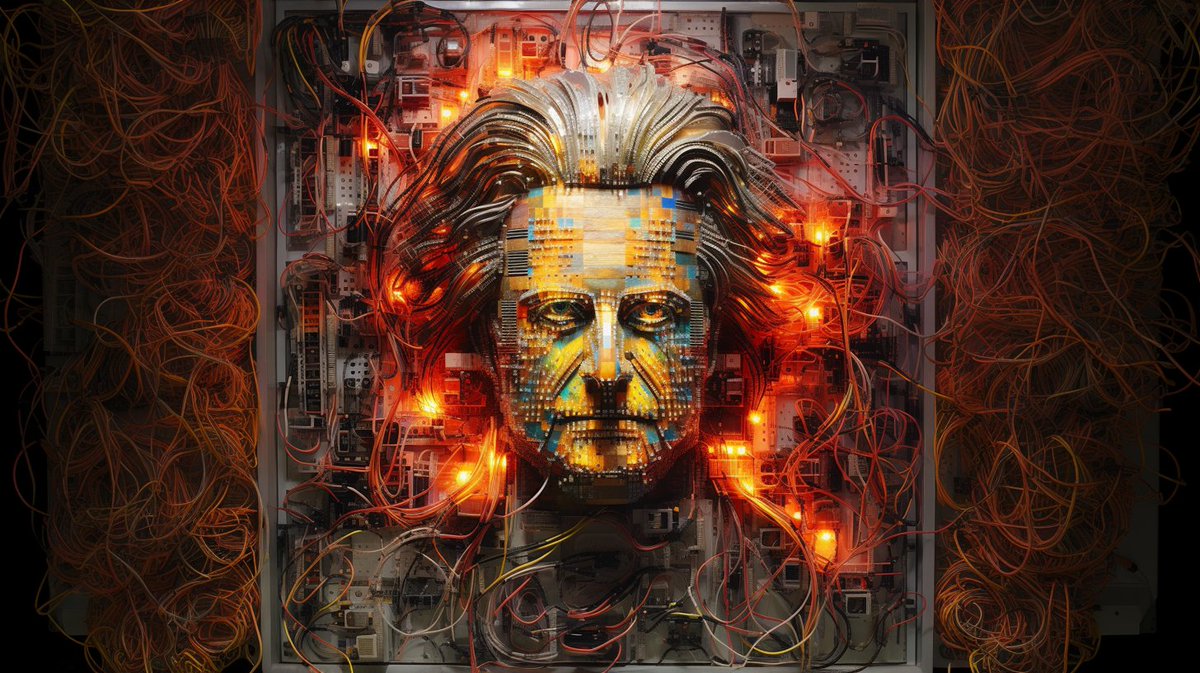
Natural Language Processing in AI works in a similar way. It's the field of AI that focuses on the interaction between computers and humans using natural language. The ultimate objective of NLP is to read, decipher, understand, and make sense of human language in a valuable way. It's like the detective, but for machines, sifting through the 'clues' of human language to understand the story we're trying to tell.
The concept of Natural Language Processing is rooted in linguistics, computer science, and cognitive psychology. It involves several tasks like machine translation (translating one language to another), sentiment analysis (understanding the sentiment behind the text), and text generation (creating new, meaningful text).
Today, Natural Language Processing is the skilled detective behind many of the AI technologies we use every day, from voice assistants to text generators. But like any skilled detective, it's the result of careful study and understanding - a process that began with the basic sciences of linguistics, computer science, and cognitive psychology.
Stay tuned as we continue to explore the fascinating world of AI and the basic science that makes it https://t.co/QKBVYgnl3J we delve deeper into the basic sciences that make this possible, stay tuned for our next installment on Stochastic Gradient Descent (SGD) and Backpropagation.
And check out these previous posts exploring the Basic Science Behind AI
Introducing the Basic Science Behind AI: https://t.co/xvy8IAGlrK
Machine Learning Symphony: https://t.co/qlEfSs0yor
Neural Networks River: https://t.co/Y15s8OxYFB
Deep Learning Skyscraper: https://t.co/hD4AnkwViX
Transformer Model Master Chef: https://t.co/XnlvKVqIhN
Training and Fine-Tuning a Masterpiece: https://t.co/eAn8qFiMXP
The Basic Science Behind AI: SGD and Backpropagation, the tuning mechanisms that refine the learning process.
Imagine a musician tuning a piano. They can't adjust all the strings at once, so they start with one, strike it, listen to the tone, and adjust the tension.
They repeat this process, making small adjustments until the note sounds just right. This is similar to Stochastic Gradient Descent (SGD) - it's an iterative method for optimizing a 'function' or 'performance' with suitable properties.
But what if a string goes out of tune? The musician needs a way to correct it.
This is where Backpropagation comes in. It's a method used in artificial neural networks to calculate the 'gradient' or 'adjustment' that is needed in the calculation of the weights to be used in the network.
It's like the musician's ear, guiding them back to the perfect pitch when they stray.
SGD and Backpropagation are rooted in calculus and statistics. They are key methods used in training deep learning models, guiding the learning process and helping the models to improve their performance over time.
Today, SGD and Backpropagation are the musician's ear and tuning key behind many of the AI technologies we use every day, from image and facial recognition systems to financial market analysis.
But like any beautiful symphony, they are the result of careful tuning and adjustment - a process that began with the basic sciences of calculus and statistics.
Machine learning is a symphony of sciences, with algorithms as the sheet music and data as the musicians.
The computer, our audience, learns from this performance, a concept inspired by cognitive psychology.
It's a grand orchestra of AI, rooted in the foundational notes of mathematics, computer science, and psychology.
#MachineLearning #AI
The Basic Science Behind AI: Neural Networks.
Like rivers, they start small, grow, interconnect, and power today's AI wonders. It all began with the basic sciences of neuroscience, mathematics, and computer science. Check out the feed for more posts about the basic science behind AI.
Next stop: Deep Learning!
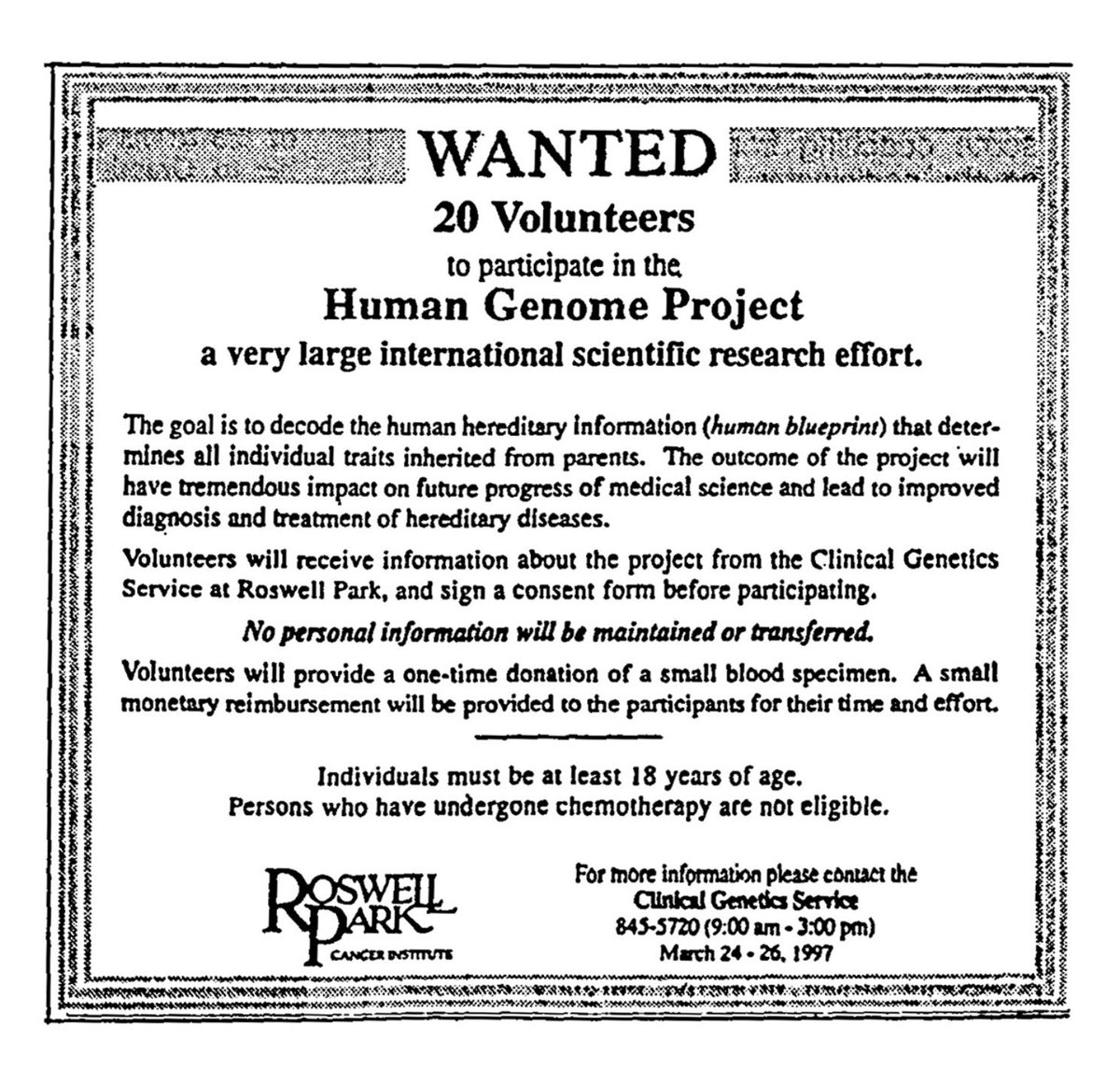
October 1, 1990: The day we began decoding life's blueprint.
The Human Genome Project, led by visionaries Craig Venter and Francis Collins revolutionized genetics and medicine. Let's take a moment to appreciate a monumental milestone in the world of science.
https://t.co/XGqLEDNvT3
The Higgs field is like air to us, invisible but essential.
It's why particles have mass and why we exist.
On this day in 2013, Englert and Higgs were awarded the Nobel Prize for this universe-altering discovery.
🔌 1827: The year Georg Simon Ohm defined electrical science.
Ohm's Law is more than an equation; it's a stepping stone to quantum mechanics and renewable energy.
Its principles touch bioengineering, chemistry, and even economics.
💡 #BigMomentsInScience
To understand Deep Learning in relation to AI, imagine a skyscraper, each layer processes different features from the available data, adding depth and complexity to the machine's understanding.
From voice recognition to autonomous vehicles, Deep Learning shapes our daily tech. But remember, it's rooted in the basic sciences of neuroscience and mathematics.
Introducing the Master Chef in the #AI world: the Transformer Model.
Just as a chef knows exactly when to add a particular ingredient and how much to use to enhance the flavors while maintaining a balanced dish, Transformer Models use an 'attention' mechanism to weigh the importance of words in a sentence.
Developed in the mid-2010s by researchers like @GeoffreyHinton and organizations like @OpenAI, this architecture revolutionized how #artificialintelligence systems process information.
Today, they are the linchpin in technologies ranging from voice assistants to text generators. As we delve deeper into the basic sciences that make this possible, stay tuned for our next installment on Training and Fine-Tuning.
And check out these previous posts exploring the Basic Science Behind AI
- Introducing the Basic Science Behind AI: https://t.co/xvy8IAGlrK
- Machine Learning Symphony: https://t.co/qlEfSs0yor
- Neural Networks River: https://t.co/Y15s8OxYFB
- Deep Learning Skyscraper: https://t.co/hD4AnkwViX
When Wilhelm Conrad Röntgen captured the first X-ray, #OnThisDay, November 8, 1895, he wasn't seeking to discover a new form of radiation; in fact, he was experimenting with cathode rays, which were known to cause fluorescence of certain materials.
This glow indicated the presence of a new type of ray, capable of penetrating the tube's opaque covering. Through his investigations, he found that these unknown rays could pass through most substances, casting shadows of solid objects onto photographic plates.
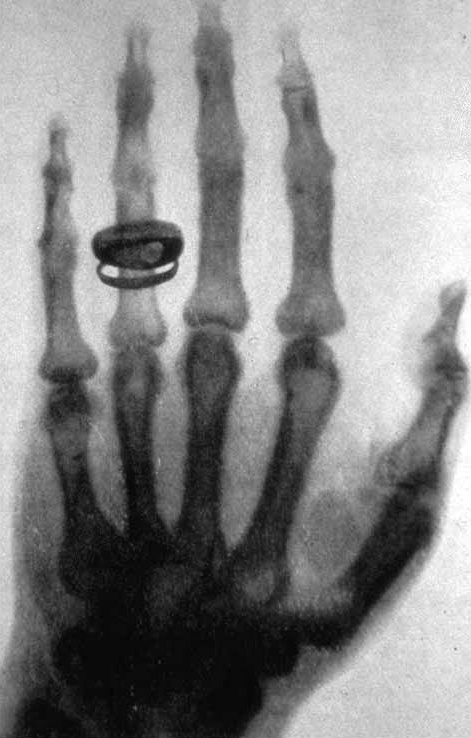
He took the first X-ray photographs, including an iconic image of his wife's hand, showing her bones and wedding ring in stark contrast against the shadow of her flesh.
In medicine, the immediate implication of Röntgen's discovery was the ability to see inside the body without surgery.
This non-invasive diagnostic tool has saved countless lives and continues to be a crucial component of medical https://t.co/vzC6gqCldj physics, X-rays became a powerful tool for studying the atomic structure of materials, leading to the development of X-ray crystallography, which has been instrumental in determining the structure of a vast number of substances, including proteins and DNA.
This knowledge has had far-reaching implications, including the development of new drugs and materials. Röntgen's #BigMomentInBasicScience embodies the essence of fundamental research and its long-term benefits.
His curiosity illuminated a path from basic science to breakthroughs that shape our health and understanding of life.
As we continue our exploration of The Basic Science Behind AI, we turn our attention to Training and Fine-Tuning, the process that shapes the capabilities of AI.
Imagine a sculptor with a rough block of stone, which the sculptor gradually shapes into form. In this initial training phase, the sculptor removes large chunks of stone to reveal the basic shape.
The sculptor now begins the fine-tuning process, chiseling away at the stone to reveal the intricate details. This is akin to the fine-tuning phase in AI, where the model is further trained on specific tasks, refining its abilities to perform those tasks effectively.
The concept of Training and Fine-Tuning is rooted in computer science and statistics. Researchers developed methods to train AI models on large datasets and then fine-tune them for specific tasks.
This process of training and fine-tuning has been key to the success of AI models like GPT, enabling them to generate remarkably human-like text.
Stay tuned as we continue to explore the Basic Science Behind AI when we turn a keen eye toward Natural Language Processing and the basic science that makes it possible.
And check out these previous posts exploring the Basic Science Behind AI...
- Introducing the Basic Science Behind AI: https://t.co/xvy8IAGlrK
- Machine Learning Symphony: https://t.co/qlEfSs0yor
- Neural Networks River: https://t.co/Y15s8OxYFB
- Deep Learning Skyscraper: https://t.co/hD4AnkwViX
- Transformer Model Master Chef https://t.co/XnlvKVqIhN
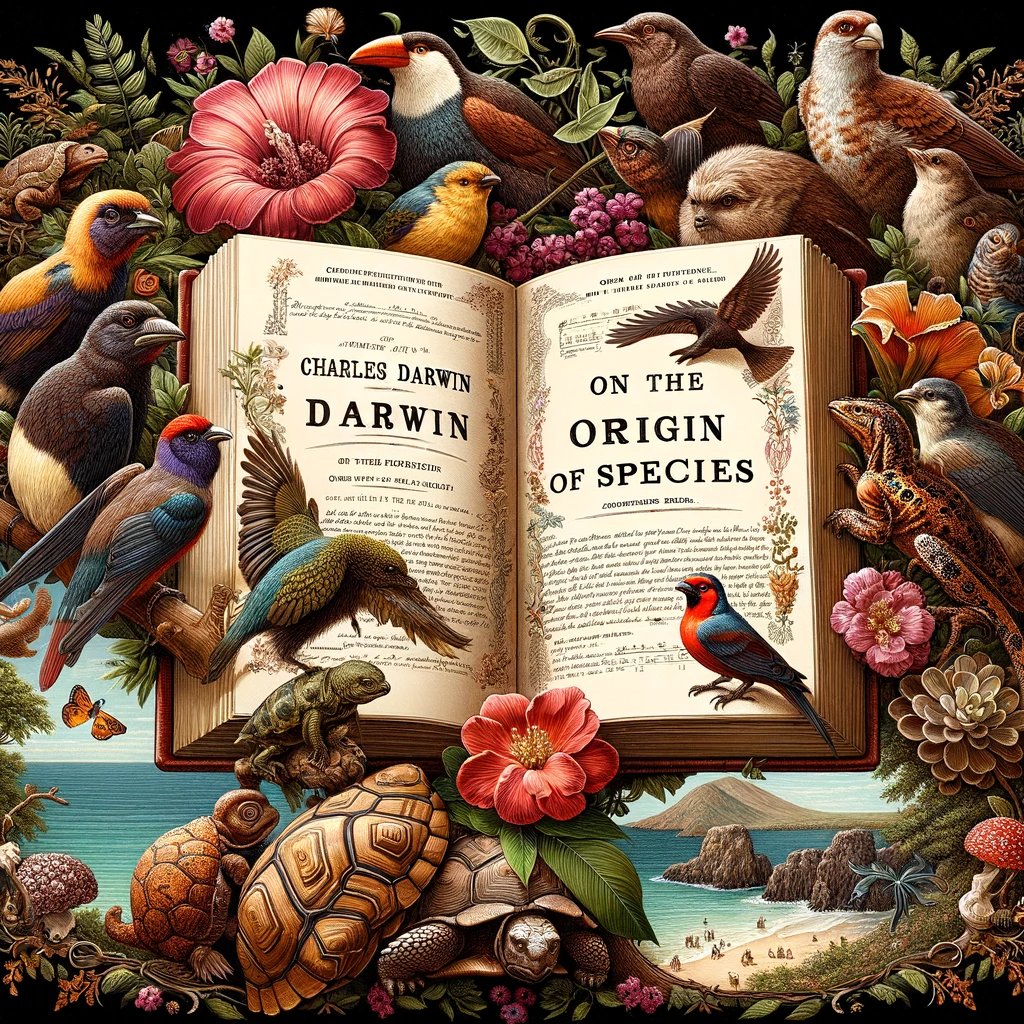
The publication of Charles Darwin's "On the Origin of Species" on November 24, 1859, marks a pivotal moment in the history of science.
Darwin's book introduced the theory of evolution by natural selection, fundamentally changing our understanding of the natural world.
At the time, the dominant view in society and science was creationism, which held that species were created in their current form by a divine being. This theory, therefore, sparked significant controversy and debate, challenging longstanding religious and scientific beliefs.
Darwin's theory provided a unifying framework for understanding biological diversity and the processes that drive it. It laid the foundation for the field of evolutionary biology and influenced a wide range of scientific disciplines.
Darwin's work was driven by curiosity and a desire to understand the natural world, not by the goal of creating immediate practical applications. This pure inquiry is a hallmark of basic science, which seeks to expand knowledge and understanding as its primary objective.
Beyond biology, this new knowledge had profound implications for our understanding of humanity's place in nature and influenced numerous fields, including psychology, philosophy, and sociology.
Let's celebrate this major achievement in basic science research! #OnThisDay #BigMomentsInBasicScience
What makes great farmland?
It's all about sunshine, dirt, and water! 🌞🌱💧
While investing in farmland, we're essentially buying great climates, quality soils, and access and rights to water.
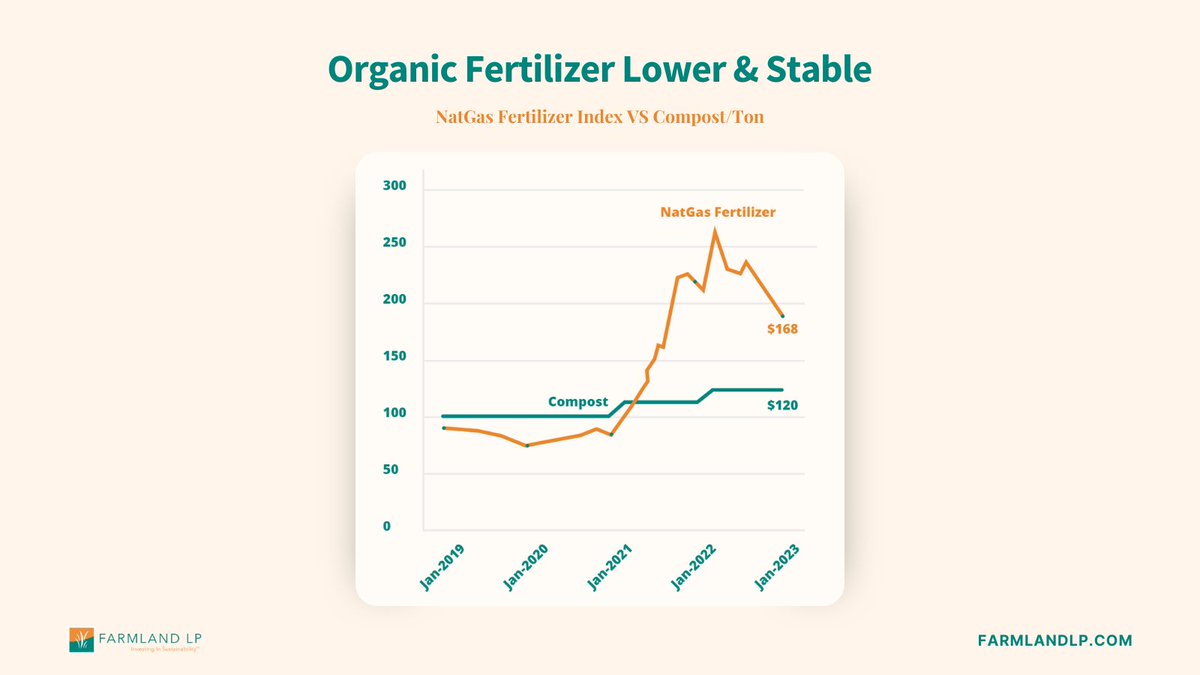
Organic farming outshines conventional crops with 50-100% higher prices and cost stability.
When natural gas derived fertilizer costs tripled, organic fertilizer costs rose just $20 a ton.
Stable costs, higher revenues - that's the organic advantage.
Water rights are crucial in agriculture.
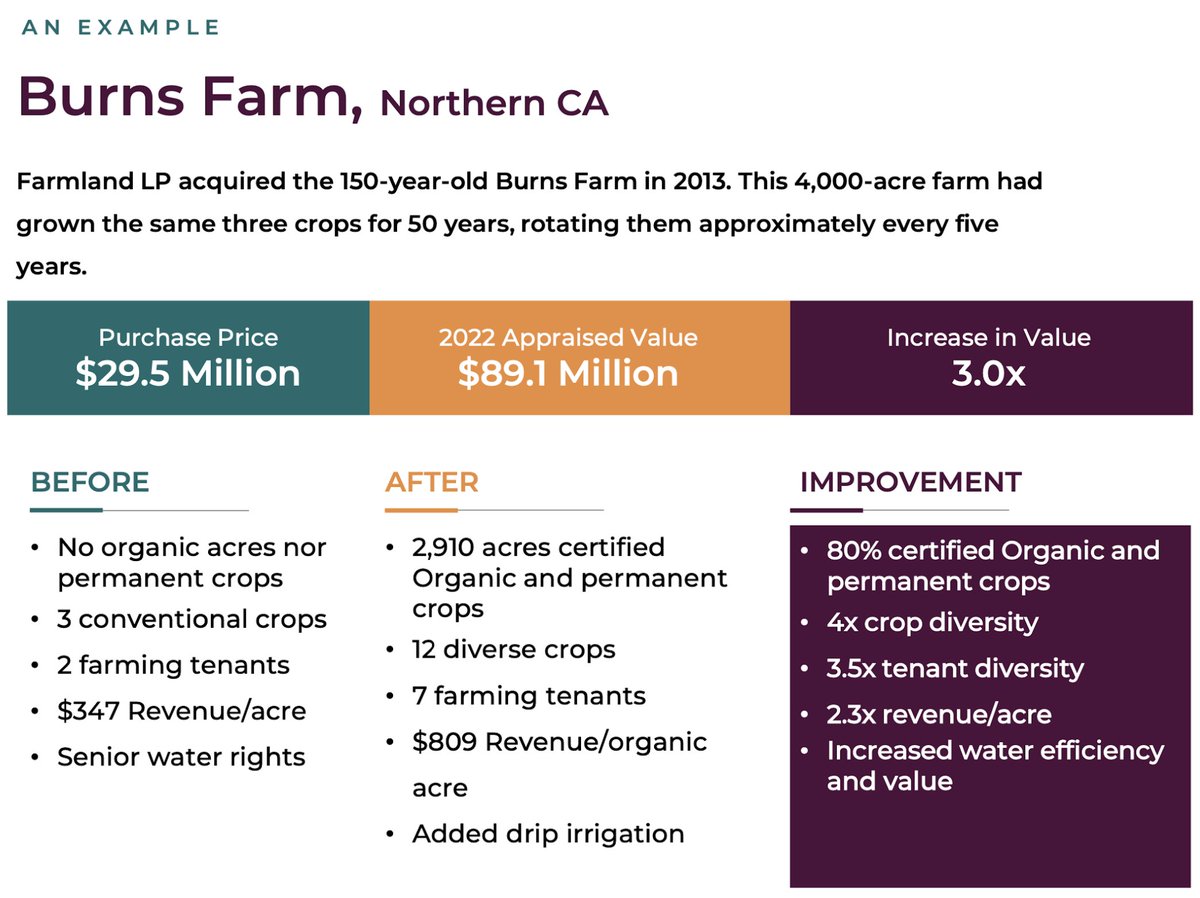
Our 4,000-acre Burns Farm, located 55 miles east of San Francisco, has some of California's oldest water rights.
This stability allows us to diversify crops and has been instrumental in driving increased revenue per acre.
Witness how Farmland LP's 🫐 Burns Ranch Blueberries, guided by Frank Savage, made a stellar shift from conventional to organic.
Result? 📈 Revenue doubled.
Full Story 🔗 https://t.co/HKwJ6q0JGX