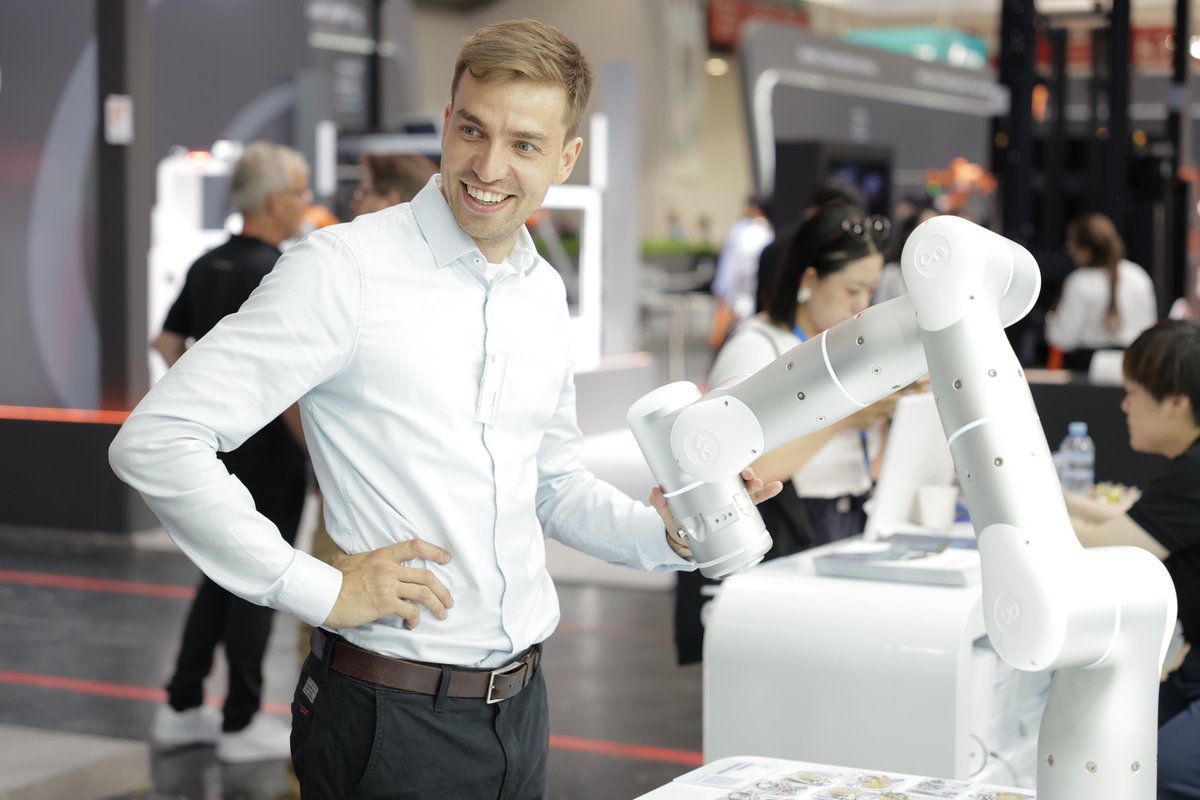
Something extraordinary is coming to ICRA 2026… 👀
Something that can feel a single touch or seven.✋
Something that’s inherently safe. 🛡️
Something that incorporates 720-degree joint rotation. 🔄
We can’t say what it is yet.
Come find out at ICRA! 🚀
📍 Booth: 130, Hall B
A few random notes from claude coding quite a bit last few weeks.
Coding workflow. Given the latest lift in LLM coding capability, like many others I rapidly went from about 80% manual+autocomplete coding and 20% agents in November to 80% agent coding and 20% edits+touchups in December. i.e. I really am mostly programming in English now, a bit sheepishly telling the LLM what code to write... in words. It hurts the ego a bit but the power to operate over software in large "code actions" is just too net useful, especially once you adapt to it, configure it, learn to use it, and wrap your head around what it can and cannot do. This is easily the biggest change to my basic coding workflow in ~2 decades of programming and it happened over the course of a few weeks. I'd expect something similar to be happening to well into double digit percent of engineers out there, while the awareness of it in the general population feels well into low single digit percent.
IDEs/agent swarms/fallability. Both the "no need for IDE anymore" hype and the "agent swarm" hype is imo too much for right now. The models definitely still make mistakes and if you have any code you actually care about I would watch them like a hawk, in a nice large IDE on the side. The mistakes have changed a lot - they are not simple syntax errors anymore, they are subtle conceptual errors that a slightly sloppy, hasty junior dev might do. The most common category is that the models make wrong assumptions on your behalf and just run along with them without checking. They also don't manage their confusion, they don't seek clarifications, they don't surface inconsistencies, they don't present tradeoffs, they don't push back when they should, and they are still a little too sycophantic. Things get better in plan mode, but there is some need for a lightweight inline plan mode. They also really like to overcomplicate code and APIs, they bloat abstractions, they don't clean up dead code after themselves, etc. They will implement an inefficient, bloated, brittle construction over 1000 lines of code and it's up to you to be like "umm couldn't you just do this instead?" and they will be like "of course!" and immediately cut it down to 100 lines. They still sometimes change/remove comments and code they don't like or don't sufficiently understand as side effects, even if it is orthogonal to the task at hand. All of this happens despite a few simple attempts to fix it via instructions in CLAUDE . md. Despite all these issues, it is still a net huge improvement and it's very difficult to imagine going back to manual coding. TLDR everyone has their developing flow, my current is a small few CC sessions on the left in ghostty windows/tabs and an IDE on the right for viewing the code + manual edits.
Tenacity. It's so interesting to watch an agent relentlessly work at something. They never get tired, they never get demoralized, they just keep going and trying things where a person would have given up long ago to fight another day. It's a "feel the AGI" moment to watch it struggle with something for a long time just to come out victorious 30 minutes later. You realize that stamina is a core bottleneck to work and that with LLMs in hand it has been dramatically increased.
Speedups. It's not clear how to measure the "speedup" of LLM assistance. Certainly I feel net way faster at what I was going to do, but the main effect is that I do a lot more than I was going to do because 1) I can code up all kinds of things that just wouldn't have been worth coding before and 2) I can approach code that I couldn't work on before because of knowledge/skill issue. So certainly it's speedup, but it's possibly a lot more an expansion.
Leverage. LLMs are exceptionally good at looping until they meet specific goals and this is where most of the "feel the AGI" magic is to be found. Don't tell it what to do, give it success criteria and watch it go. Get it to write tests first and then pass them. Put it in the loop with a browser MCP. Write the naive algorithm that is very likely correct first, then ask it to optimize it while preserving correctness. Change your approach from imperative to declarative to get the agents looping longer and gain leverage.
Fun. I didn't anticipate that with agents programming feels *more* fun because a lot of the fill in the blanks drudgery is removed and what remains is the creative part. I also feel less blocked/stuck (which is not fun) and I experience a lot more courage because there's almost always a way to work hand in hand with it to make some positive progress. I have seen the opposite sentiment from other people too; LLM coding will split up engineers based on those who primarily liked coding and those who primarily liked building.
Atrophy. I've already noticed that I am slowly starting to atrophy my ability to write code manually. Generation (writing code) and discrimination (reading code) are different capabilities in the brain. Largely due to all the little mostly syntactic details involved in programming, you can review code just fine even if you struggle to write it.
Slopacolypse. I am bracing for 2026 as the year of the slopacolypse across all of github, substack, arxiv, X/instagram, and generally all digital media. We're also going to see a lot more AI hype productivity theater (is that even possible?), on the side of actual, real improvements.
Questions. A few of the questions on my mind:
- What happens to the "10X engineer" - the ratio of productivity between the mean and the max engineer? It's quite possible that this grows *a lot*.
- Armed with LLMs, do generalists increasingly outperform specialists? LLMs are a lot better at fill in the blanks (the micro) than grand strategy (the macro).
- What does LLM coding feel like in the future? Is it like playing StarCraft? Playing Factorio? Playing music?
- How much of society is bottlenecked by digital knowledge work?
TLDR Where does this leave us? LLM agent capabilities (Claude & Codex especially) have crossed some kind of threshold of coherence around December 2025 and caused a phase shift in software engineering and closely related. The intelligence part suddenly feels quite a bit ahead of all the rest of it - integrations (tools, knowledge), the necessity for new organizational workflows, processes, diffusion more generally. 2026 is going to be a high energy year as the industry metabolizes the new capability.
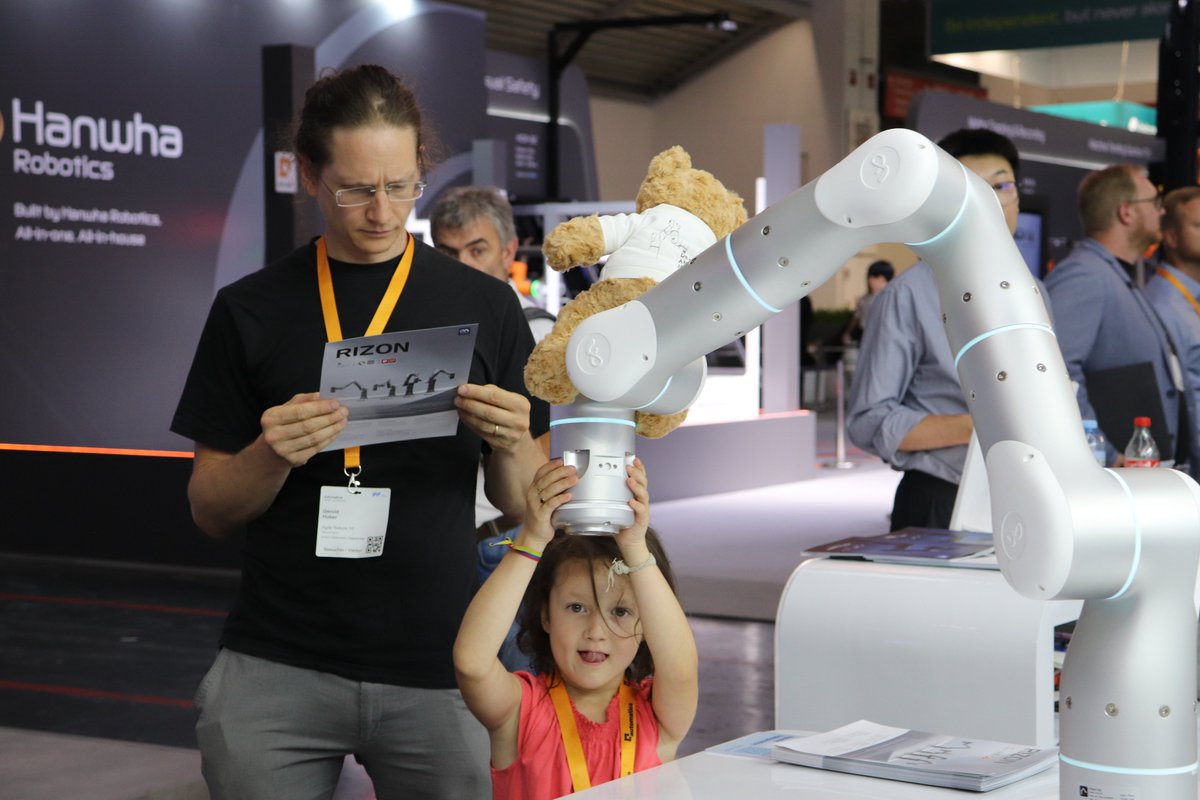
📢 Official Release – Flexiv ROS 2 Jazzy Support!
Exciting news for Flexiv developers! The initial release of Flexiv ROS 2 Jazzy v1.8 is here, making prototyping and experimentation with Flexiv robots faster and smoother than ever.
⬇️
[https://t.co/ugrLicedol]
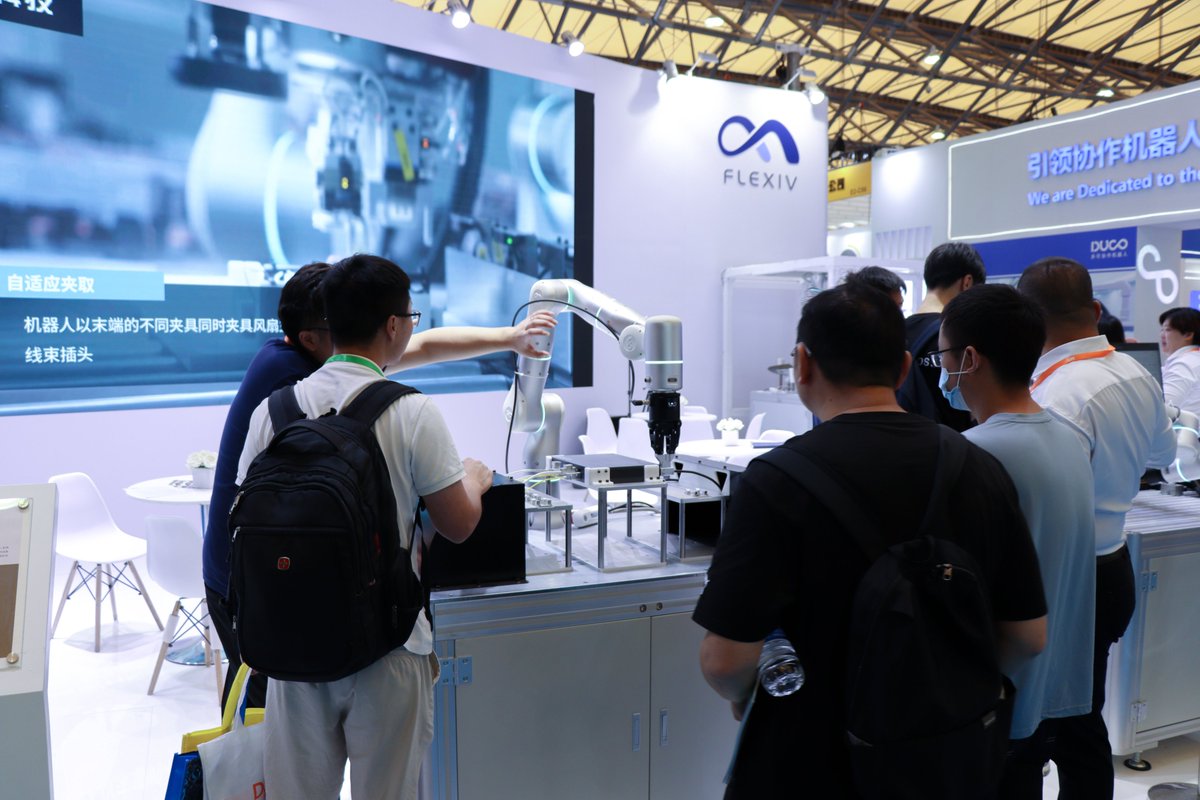
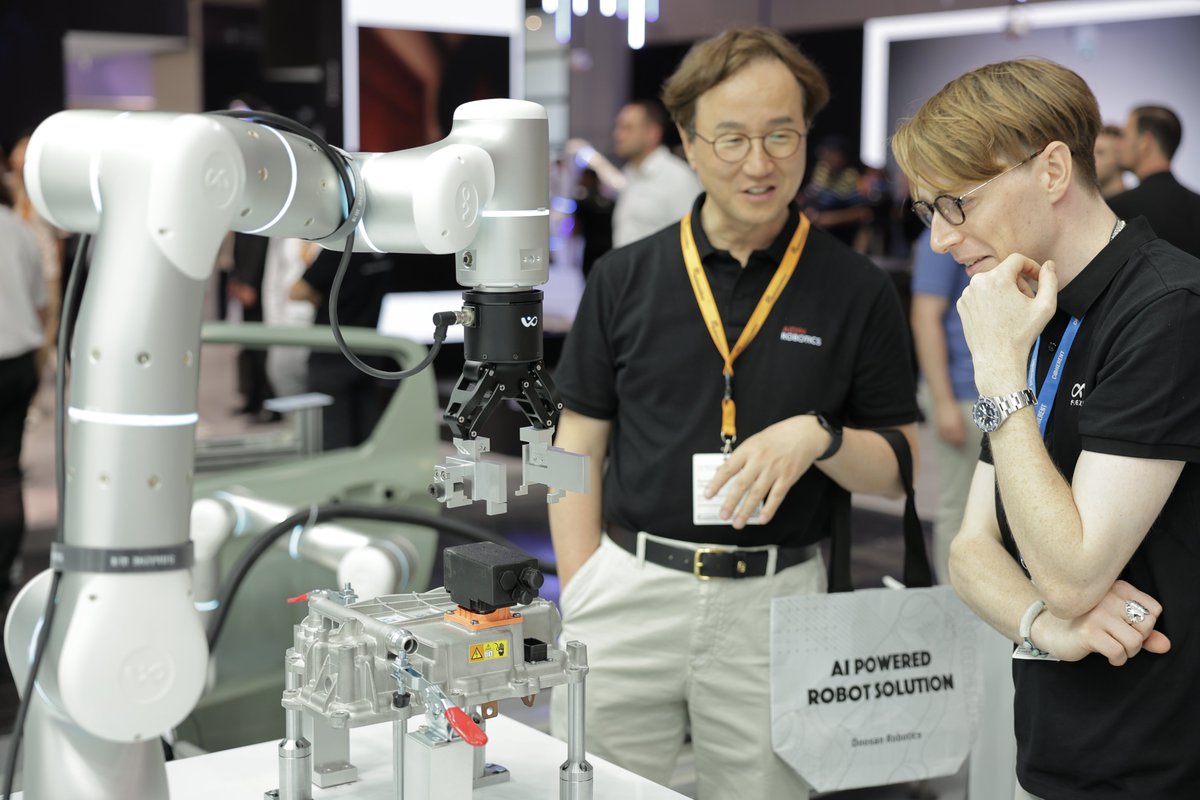
Last week, Team Flexiv made its mark at one of the world’s top automation trade fairs.
Thank you to everyone who visited and explored what’s next in automation with us.
This wasn’t just one small step into the European market for Flexiv, it was a giant leap for robotics!
Today we're excited to share a glimpse of what we're building at Generalist. As a first step towards our mission of making general-purpose robots a reality, we're pushing the frontiers of what end-to-end AI models can achieve in the real world.
Here's a preview of our early results in autonomous general-purpose dexterous capabilities – fast, reactive, smooth, precise, bi-manual coordinated sensorimotor control.
Exciting news!🎉Flexiv is heading to Europe’s best #robotics and #automation trade fair @automaticafair! Team Flexiv and our latest adaptive #technology & demos can’t wait to meet you at booth B4-510 from June 24th to 27th. See u there! 😎 #automatica2025
🚀 #Flexiv is heading to #METALTECH 2025!
Get ready to experience adaptive #robotics in action!
Discover how Flexiv’s #AI empowered #adaptiverobots are redefining #manufacturing efficiency, precision, and intelligence! Don't miss it — see you in Kuala Lumpur!
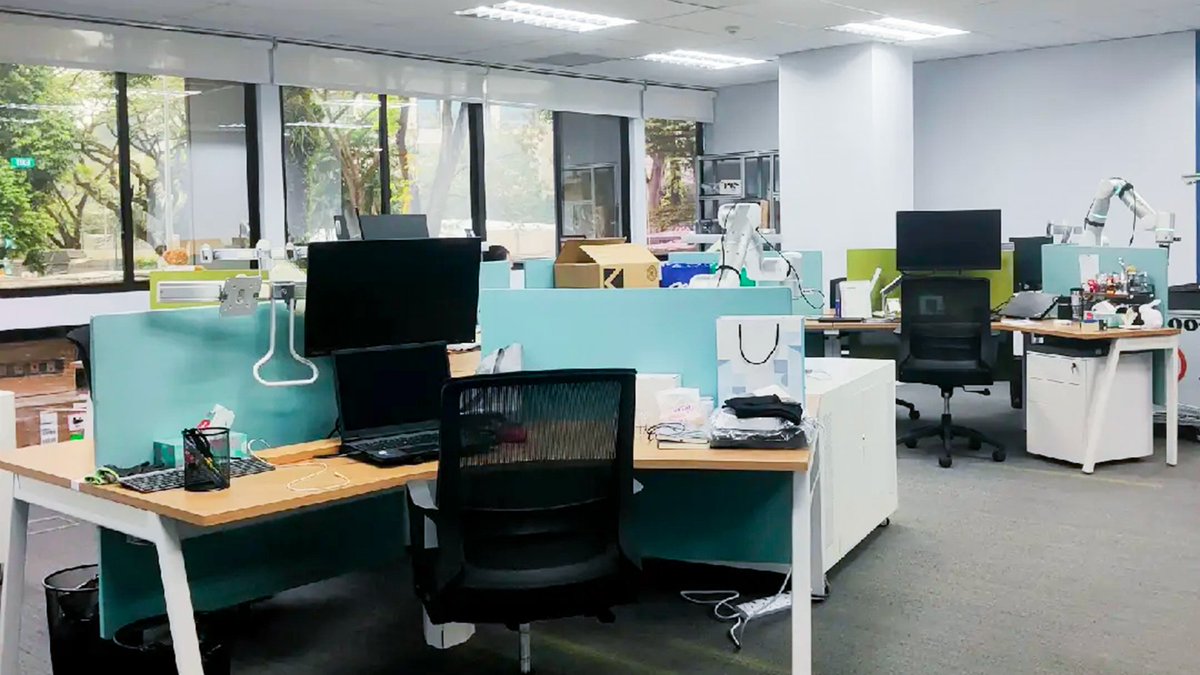
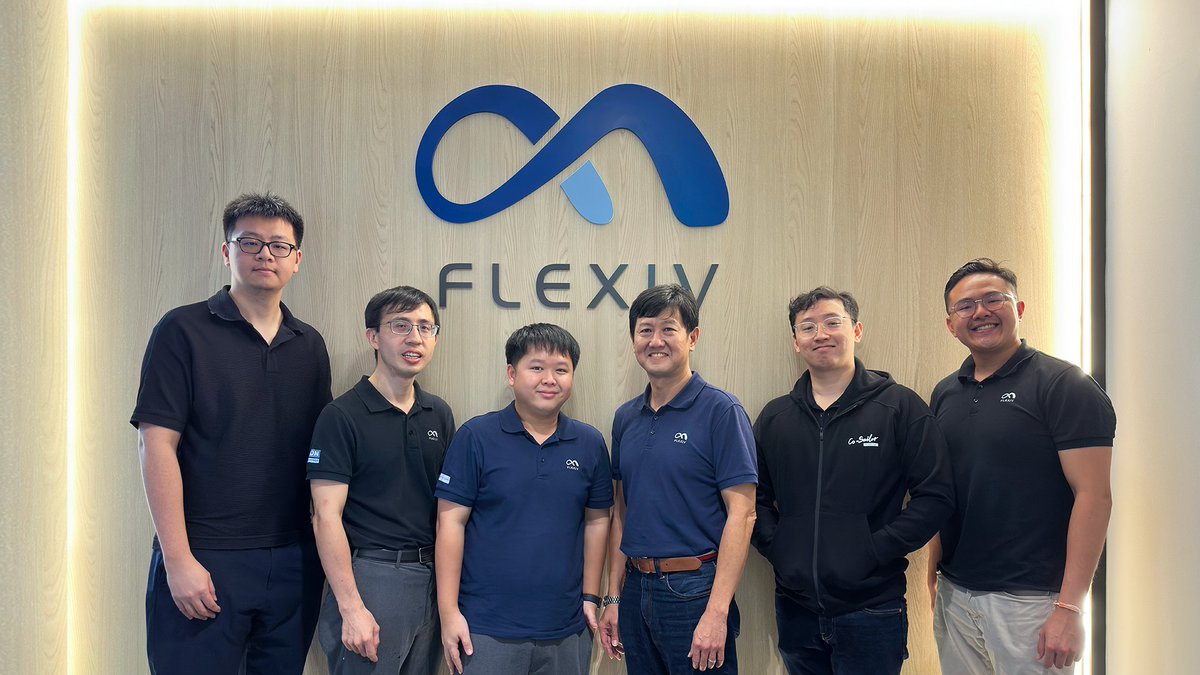
🌟Guess what? Flexiv #Singapore has just moved to a bigger and better office! Whether you're a client, partner, or a friend of the company, you're always welcome to pop in for a visit.���Find them at: 73 Science Park Drive, #02-06/07 Cintech I, Singapore 118254
Join us for a glimpse into the excitement at ICRA 2024 in Yokohama, Japan. Flexiv showcased cutting-edge adaptive robotics technology and its applications, alongside joint demo displays with BlackBerry QNX and scholars from Stanford University. Check out the video! #Flexiv#ICRA
Another successful year of showcasing Flexiv Robotics' adaptive robotic technologies at ATX West!🎉
Missed the action? Don't worry. Check out our exclusive wrap-up video
Interested in any one of the demos? Contact us👉https://t.co/iWno3Wj97q
ITAP has wrapped up, and we're grateful for your support! Thank you to all who visited our booth, and connected with us. 🙌
Don't miss the highlights in our video! Feel free to reach out for more discussions or inquiries. 🤝
Get in touch: https://t.co/kAtOtn7Bqn
#Flexiv#ITAP
🎉Flexiv is thrilled to announce that we will be attending #ITAP from 18-20th Oct. Our team will be showcasing our latest polishing and assembly demos at Hall 2 Booth 2C23. 🙌See you there!
Register here: https://t.co/3qXdbWD0jf
#Flexiv#ITAP2023#AdaptiveRobots#SingaporeExpo
Flexiv's Rizon adaptive robot captivated audiences when it performed in 'The Electrified Show' held by the Science Centre Singapore. Click on the link to discover more about this amazing collaboration!#robot#robotics#technology#adaptiverobots#scienceiscool#STEM
One of the most exciting moments this year is coming! Flexiv will present at #Automate 2023, the largest showcase of automation in North America, in Detroit from May 22 to 25. Welcome to visit #Flexiv at booth #4418 and communicate with our experts!
#automation#robot
To celebrate #WorldCocktailDay🍸, we put our own spin on the classic margarita. Want to make a margarita like ours? You will need Tequila, Triple Sec, Maple Syrup, fresh Lemons, Himalayan salt, ice, and most importantly, two #Rizon 4 #adaptive robots. Cheers everyone!
Today we're releasing the Segment Anything Model (SAM) — a step toward the first foundation model for image segmentation.
SAM is capable of one-click segmentation of any object from any photo or video + zero-shot transfer to other segmentation tasks ➡️ https://t.co/qYUoePrWVi


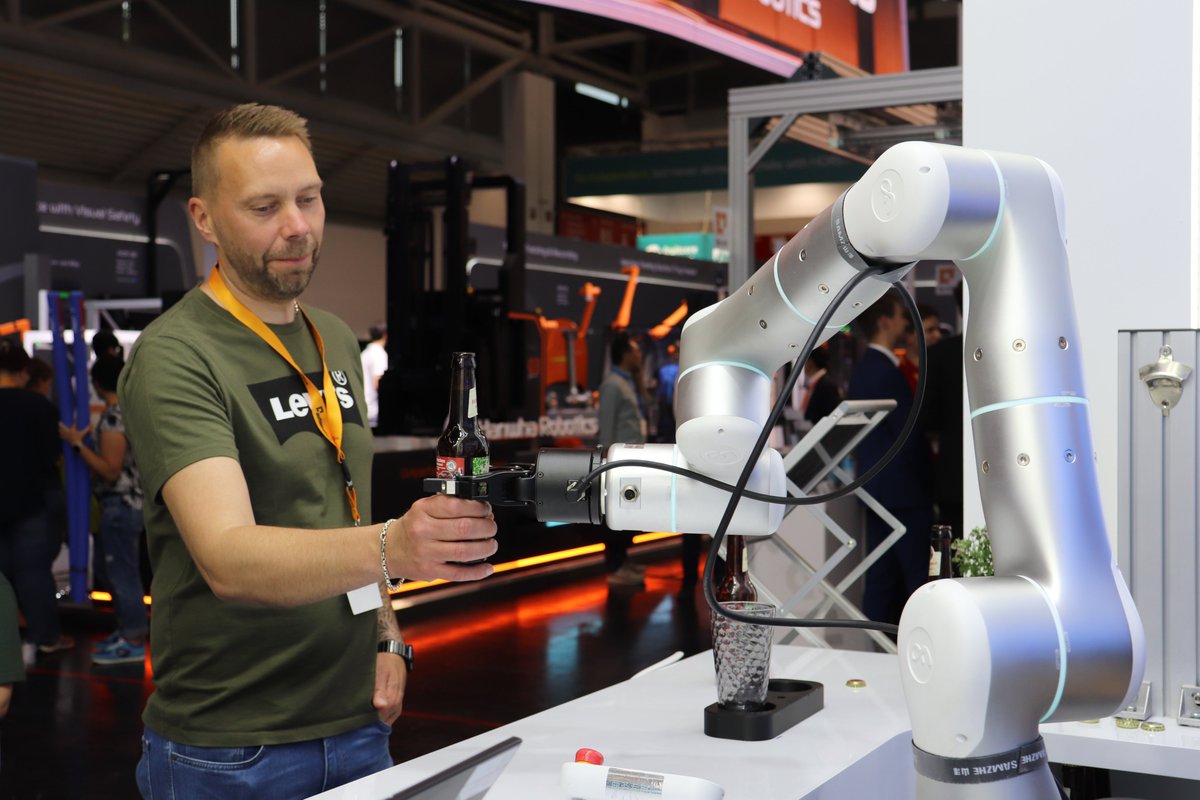

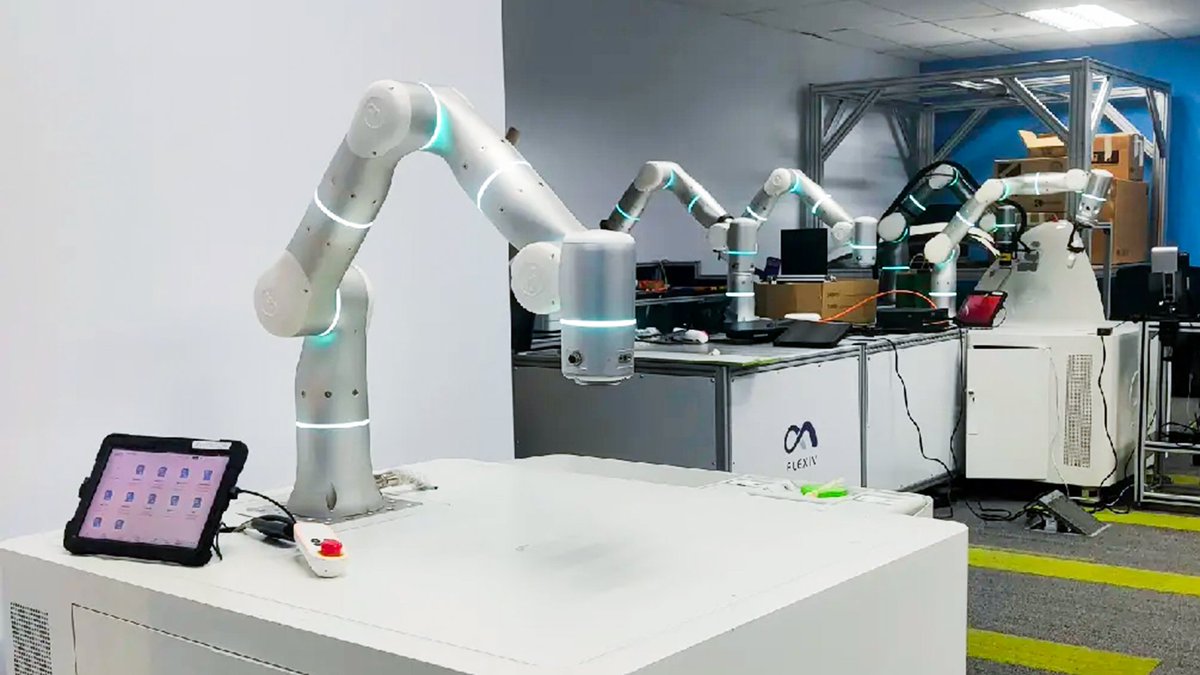


![FlexivRobotics's tweet photo. 📢 Official Release – Flexiv ROS 2 Jazzy Support!
Exciting news for Flexiv developers! The initial release of Flexiv ROS 2 Jazzy v1.8 is here, making prototyping and experimentation with Flexiv robots faster and smoother than ever.
⬇️
[https://t.co/ugrLicedol] https://t.co/bTZqHm2WMF](https://pbs.twimg.com/media/G6BvmLHbMAEAoWT.jpg)