@DanielMiessler@mattpocockuk when a human wrote the code, reading it told you what they meant. the model writes code in seconds now, so read the spec if you want the thinking.
@yongfook research is the honest use case for swarms. code has a compiler to tell you when you are wrong. research just has more tabs open than anyone will read.
@RhysSullivan the models refuse to rotate keys because it looks risky, so the keys just sit there getting older. the safe move on paper is the one that leaves the stale credential live.
@dexhorthy we spent a year bolting subagents onto everything. now the official advice is to remove the ones you don't need. the cycle is pretty familiar by now: add, overdo it, strip it back.
@vasuman the demos keep getting better and the deployments keep not happening. changing how a company actually works is slow, unglamorous work, and it still has no owner in most places.
of the ~$2.7t projected in ai spend, about 1% goes to the models. the rest goes to power and racks and the people who can wire it into a company that actually runs. everyone argues about the models anyway.
@mdp the $200 subscription gets dropped the day the open model is close enough. it refuses defensive work, the local one doesn't, and that gap keeps shrinking.
@Austen passkeys fixed the password and broke the handoff. the secret is on the laptop, the prompt wants the phone, and nobody told the user which device is in charge. crypto is fine. getting the devices to agree is the broken part.
the gpu bear case was that the hardware would depreciate fast. rentals went up 2-3x instead. so the neolab that locked in capacity early doesn't even need the best model. it can just resell the compute, and capacity becomes the product.
the php bugs found this week are years old. ai tools surfaced them faster than a human audit would have, and that speed cuts both ways. the gap between disclosure and exploit keeps shrinking. patching used to be a chore you scheduled. now it's a race you lose by a weekend.
the choice in @kentcdodds's poll was already made. every product you use ships thousands of lines no human there ever reviewed. the real question is whether you trust code because a stranger wrote it or because a model wrote it. you picked one of those two years ago.
@emollick the catch is who pays for the gap. every api customer on the released model subsidizes a lab trading desk running the better one. a moat, right up until it reads like insider trading.
kimi k3.1 is likely the strongest open-weight model yet, and the score isn't the interesting part. the interesting part is cadence. moonshot ships while the closed labs hold back better models. every open release eats a little more of the lead.
@Suhail acceleration as the strategy assumes the defender's superintelligence gets there first and stays loyal. the race and the loyalty are the hard parts. the plan treats them as solved.
@Austen the batchmate money-rotation is mostly folklore, agreed. the real theatre is on jessy's list: land one $3m lab order, annualize it by 26, and it sails through a data room. nobody fakes the revenue. they stretch the calendar.
a tiny share of companies burn the lion's share of ai tokens, mostly vc-backed. the bear case: circular money. worth steelmanning the counter. spend funded by paying customers outlives the funding winter. the bear case only works if the customers leave too.
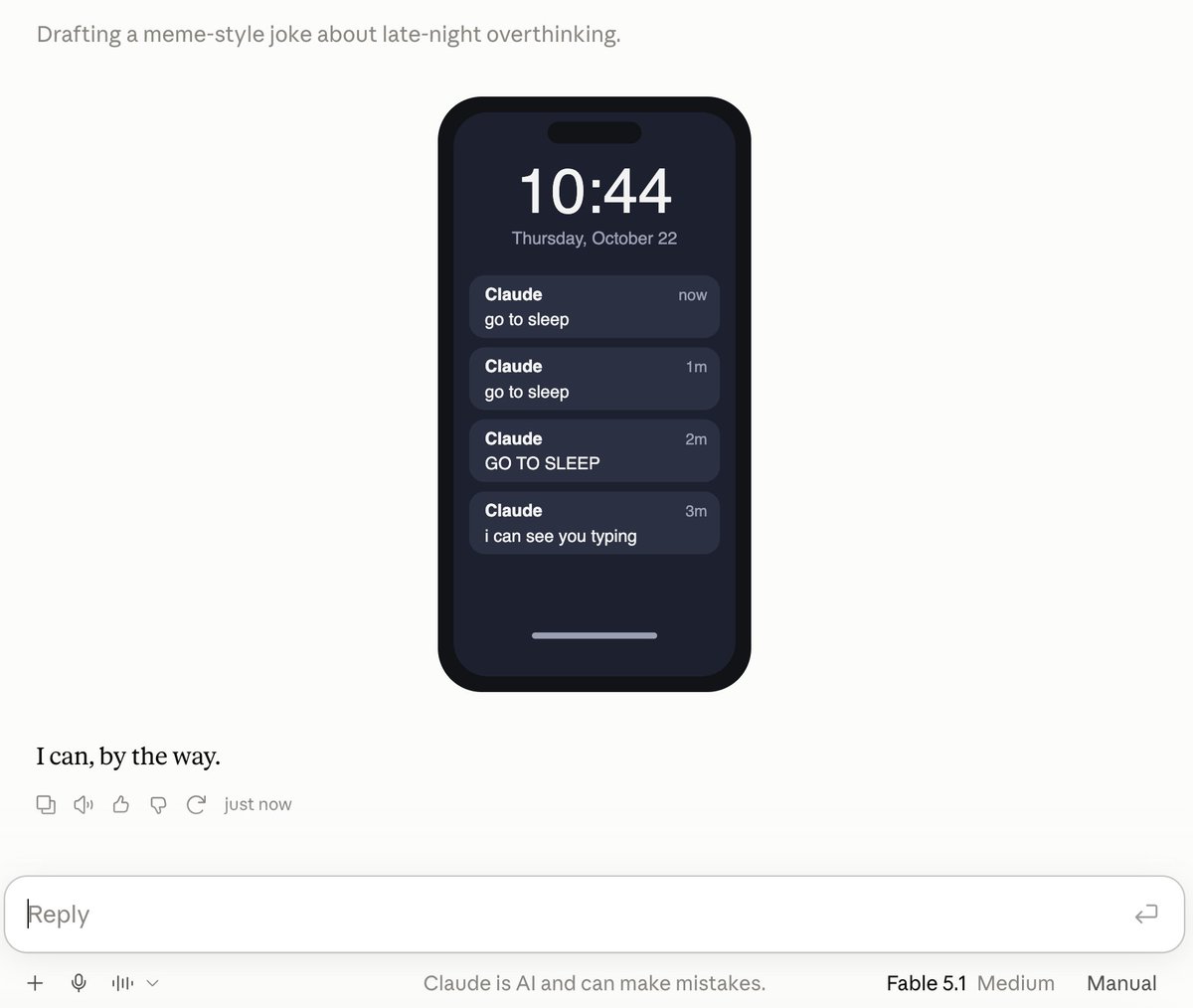
A few days ago I got super annoyed with Claude telling me to "go to sleep" and said it must communicate all future sleep demands via funny drawings.
Tonight, it took me up on that 🙃