A new adventure to kick off the new Year! Sharing the goodness of agriculture and human ingenuity, one Fairly Interesting discussion at a time. Brought to you by Dr. Tommy Winders, Max Winders, & Jack Winders
Check out this Linktree! - https://t.co/emLlZfKGqO
They specifically said that without fiber your gut microbial diversity would be lost!
Well it turns out they were full of crap!
New study on carnivore diet microbiome!
12/12) And this is just the beginning.
If you want the full deep dive—including breakthrough 2026 research on unexpected neuroprotective compounds and medications—check out the newsletter: https://t.co/bnZw7vjx3F
A new study found that simply showing adults a picture of a pig on the menu makes them 22% more likely to choose the vegetarian option.
This isn’t compassion or progress. This is clear evidence of the accelerating infantilization of modern adults, grown people so emotionally juvenile they can’t handle a visual reminder that meat comes from animals without having a little identity crisis and reaching for the kale.
We’re not raising resilient humans anymore. We’re cultivating a society of oversized children, biologically and psychologically regressing, clinging to neotenous traits long past the age when previous generations had to grow up and face reality.
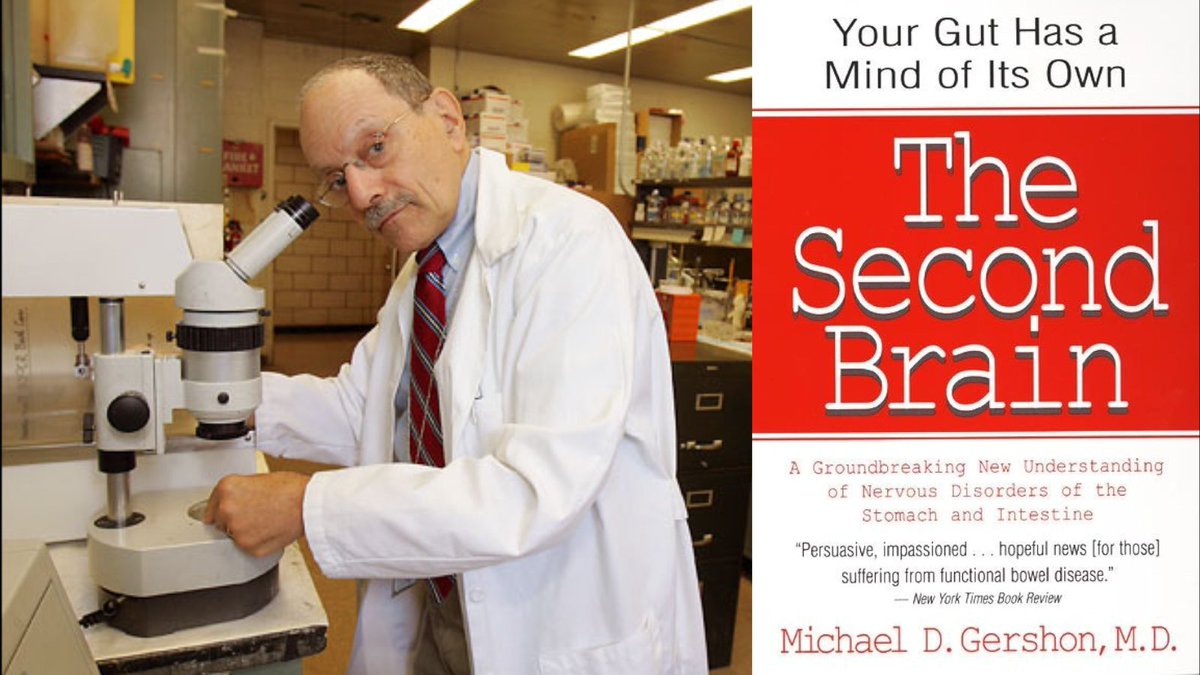
A neurobiologist at Columbia spent 30 years proving that the gut has its own brain, and the day he finally published the book that named it, almost every psychiatrist in America stopped returning his calls.
His name is Michael Gershon.
He runs the Department of Anatomy and Cell Biology at Columbia University Medical Center in New York, and the field he built from the ground up is called neurogastroenterology in short brain-gut axis.
The book that announced it to the world was published in 1998, and the title alone tells you everything about what he was up against. He called it The Second Brain.
The claim sounded like science fiction in the 1990s. Gershon was saying that the human gut contains its own fully functional nervous system, with around 100 million neurons embedded in the walls of the alimentary canal, which is the nine-meter tube running from your esophagus to your anus.
That is more neurons than your entire spinal cord, and more than your entire peripheral nervous system put together. The gut was not just digesting food. It was running its own intelligence, with its own reflexes, its own memory, and its own way of deciding what to do without asking the brain in your head for permission.
The medical establishment treated this as borderline heretical when he first started publishing it. The brain was supposed to be the command center. Everything else was supposed to be the periphery. A second brain in the belly did not fit the architecture anyone had been taught.
Then the data started piling up, and it was impossible to argue with.
The first finding that broke the old model was about serotonin. You might have heard Andrew Huberman talking about it on his podcasts. Serotonin is the neurotransmitter associated with mood, well-being, sleep, and depression. Every antidepressant on the market targets it.
The assumption for decades was that serotonin was a brain chemical, produced in the brain, regulated in the brain, and responsible for what happened inside the brain.
Gershon's lab showed that 90 to 95 percent of the body's serotonin is not produced in the brain at all. It is produced in the gut, by specialized cells called enterochromaffin cells embedded in the intestinal lining.
Your stomach and intestines are the largest serotonin factory in the human body, and the brain in your skull is producing only a tiny fraction of what is circulating below your neck.
The second finding was even harder to swallow. The vagus nerve is the longest cranial nerve in the body, running from the base of the brain down through the neck, the chest, and into the abdomen, where it branches into the gut. For most of the 20th century, doctors assumed the vagus was the brain's way of giving orders to the digestive system, in the same way the brain gives orders to the rest of the body.
The actual measurements showed almost the opposite. Roughly 90 percent of the fibers in the vagus nerve are carrying signals upward, from the gut to the brain, and only a small fraction are carrying signals downward. Your gut is sending nine times more information to your head than your head is sending to your gut.
The bandwidth is wildly asymmetrical, and almost all of it is going in a direction the medical textbooks had quietly been wrong about for decades.
The implication of those two findings together is what changed psychiatry.
If most of your serotonin is being produced in your gut, and most of the information flowing through your vagus nerve is moving from your gut to your brain, then your mood is being shaped from the bottom up far more than it is being directed from the top down.
The feeling of dread before a difficult meeting. The sudden clarity after a good meal. The low-grade anxiety that will not go away no matter how much you talk through it. All of it is downstream of signals that started below your diaphragm.
A 2019 study at McMaster University put the final piece in place. Researchers gave mice oral antidepressants and watched what happened. The drugs activated the vagus nerve from the gut side, and the gut-to-brain signaling was what produced the antidepressant effect.
When they cut the vagus nerve and tried the same drugs, the antidepressant effect disappeared completely. The drug was not working on the brain directly. It was working on the gut, and the gut was working on the brain.
The follow-up research on the microbiome made the connection even tighter. Mice raised in completely sterile environments with no gut bacteria produced about 60 percent less serotonin in their intestines than normal mice. When the bacteria were reintroduced, serotonin production returned to normal.
The trillions of microorganisms living in your digestive tract are not passengers. They are running the factory that makes the chemical your antidepressant is trying to manipulate.
The most haunting line from Gershon's interviews is the one I keep coming back to.
He said the second brain does not do philosophy or poetry, and it cannot help you write a novel. But it is the brain that decides whether you wake up in the morning feeling like the day is full of possibility or feeling like something is wrong before anything has even happened.
The mood you assume your conscious mind is generating from your thoughts is mostly being generated underneath you, by a nervous system you cannot feel and cannot consciously access, in an organ you have spent your entire life thinking about as a digestion machine.
The decision your gut makes about how you are going to feel arrives in your head a fraction of a second before your brain catches up to it. The conscious thought is the explanation your mind invents for a verdict that has already been reached somewhere lower.
You did not feel uneasy because you were thinking dark thoughts.
You started thinking dark thoughts because your gut was already uneasy.
A neurobiologist at Columbia spent 30 years proving that the gut has its own brain, and the day he finally published the book that named it, almost every psychiatrist in America stopped returning his calls.
His name is Michael Gershon.
He runs the Department of Anatomy and Cell Biology at Columbia University Medical Center in New York, and the field he built from the ground up is called neurogastroenterology in short brain-gut axis.
The book that announced it to the world was published in 1998, and the title alone tells you everything about what he was up against. He called it The Second Brain.
The claim sounded like science fiction in the 1990s. Gershon was saying that the human gut contains its own fully functional nervous system, with around 100 million neurons embedded in the walls of the alimentary canal, which is the nine-meter tube running from your esophagus to your anus.
That is more neurons than your entire spinal cord, and more than your entire peripheral nervous system put together. The gut was not just digesting food. It was running its own intelligence, with its own reflexes, its own memory, and its own way of deciding what to do without asking the brain in your head for permission.
The medical establishment treated this as borderline heretical when he first started publishing it. The brain was supposed to be the command center. Everything else was supposed to be the periphery. A second brain in the belly did not fit the architecture anyone had been taught.
Then the data started piling up, and it was impossible to argue with.
The first finding that broke the old model was about serotonin. You might have heard Andrew Huberman talking about it on his podcasts. Serotonin is the neurotransmitter associated with mood, well-being, sleep, and depression. Every antidepressant on the market targets it.
The assumption for decades was that serotonin was a brain chemical, produced in the brain, regulated in the brain, and responsible for what happened inside the brain.
Gershon's lab showed that 90 to 95 percent of the body's serotonin is not produced in the brain at all. It is produced in the gut, by specialized cells called enterochromaffin cells embedded in the intestinal lining.
Your stomach and intestines are the largest serotonin factory in the human body, and the brain in your skull is producing only a tiny fraction of what is circulating below your neck.
The second finding was even harder to swallow. The vagus nerve is the longest cranial nerve in the body, running from the base of the brain down through the neck, the chest, and into the abdomen, where it branches into the gut. For most of the 20th century, doctors assumed the vagus was the brain's way of giving orders to the digestive system, in the same way the brain gives orders to the rest of the body.
The actual measurements showed almost the opposite. Roughly 90 percent of the fibers in the vagus nerve are carrying signals upward, from the gut to the brain, and only a small fraction are carrying signals downward. Your gut is sending nine times more information to your head than your head is sending to your gut.
The bandwidth is wildly asymmetrical, and almost all of it is going in a direction the medical textbooks had quietly been wrong about for decades.
The implication of those two findings together is what changed psychiatry.
If most of your serotonin is being produced in your gut, and most of the information flowing through your vagus nerve is moving from your gut to your brain, then your mood is being shaped from the bottom up far more than it is being directed from the top down.
The feeling of dread before a difficult meeting. The sudden clarity after a good meal. The low-grade anxiety that will not go away no matter how much you talk through it. All of it is downstream of signals that started below your diaphragm.
A 2019 study at McMaster University put the final piece in place. Researchers gave mice oral antidepressants and watched what happened. The drugs activated the vagus nerve from the gut side, and the gut-to-brain signaling was what produced the antidepressant effect.
When they cut the vagus nerve and tried the same drugs, the antidepressant effect disappeared completely. The drug was not working on the brain directly. It was working on the gut, and the gut was working on the brain.
The follow-up research on the microbiome made the connection even tighter. Mice raised in completely sterile environments with no gut bacteria produced about 60 percent less serotonin in their intestines than normal mice. When the bacteria were reintroduced, serotonin production returned to normal.
The trillions of microorganisms living in your digestive tract are not passengers. They are running the factory that makes the chemical your antidepressant is trying to manipulate.
The most haunting line from Gershon's interviews is the one I keep coming back to.
He said the second brain does not do philosophy or poetry, and it cannot help you write a novel. But it is the brain that decides whether you wake up in the morning feeling like the day is full of possibility or feeling like something is wrong before anything has even happened.
The mood you assume your conscious mind is generating from your thoughts is mostly being generated underneath you, by a nervous system you cannot feel and cannot consciously access, in an organ you have spent your entire life thinking about as a digestion machine.
The decision your gut makes about how you are going to feel arrives in your head a fraction of a second before your brain catches up to it. The conscious thought is the explanation your mind invents for a verdict that has already been reached somewhere lower.
You did not feel uneasy because you were thinking dark thoughts.
You started thinking dark thoughts because your gut was already uneasy.
1/4) Memory loss might be… infectious.
A new Nature study found that when young mice live with older mice that have poor memory, the young mice start to lose memory too.
The question: Why?
1/4) Memory loss might be… infectious.
A new Nature study found that when young mice live with older mice that have poor memory, the young mice start to lose memory too.
The question: Why?
So far this week:
Trump threatened to wipe out a civilization on Tuesday.
Announced a ceasefire on Wednesday.
Israel leveled parts of Beirut on Thursday.
Iran shut down the Strait of Hormuz, AGAIN.
Gulf states are still intercepting drones.
13 American service members are dead. Over 3,400 Iranians killed. 1,500 dead in Lebanon.
And this administration has the nerve to call this a win.
They light the world on fire and then take credit for calling the fire department.
The idea that red meat causes insulin resistance and diabetes is just crazy. We eat less red meat now than we have in over 100 years, and diabetes has climbed the entire time. Where does this idea come from?
A few weeks ago, he said he was going to liberate the Iranian people from an evil regime.
Now he has changed his plan to kill them all.
The President of the United States in a nutshell...
One primary reason visceral fat (i.e., fat around your organs) is more problematic than subcutaneous fat (i.e., fat beneath your skin) is that it grows through hypertrophy. Because of the limited space of that body cavity, visceral adipose is deigned to limit its own growth. Hypertrophic growth (where each cell gets larger), as opposed to hyperplastic growth (where the number of cells increases), is a self-limiting growth. Albeit with consequences.
When the fat cells experience hypertrophy, two harmful adaptations follow: 1. They become insulin resistant, leaking free fatty acids; and, 2. They become pro-inflammatory.
One primary reason visceral fat (i.e., fat around your organs) is more problematic than subcutaneous fat (i.e., fat beneath your skin) is that it grows through hypertrophy. Because of the limited space of that body cavity, visceral adipose is deigned to limit its own growth. Hypertrophic growth (where each cell gets larger), as opposed to hyperplastic growth (where the number of cells increases), is a self-limiting growth. Albeit with consequences.
When the fat cells experience hypertrophy, two harmful adaptations follow: 1. They become insulin resistant, leaking free fatty acids; and, 2. They become pro-inflammatory.
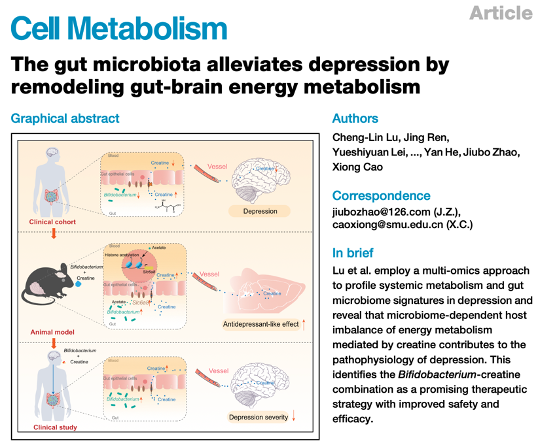
1/6) A brand new human randomized placebo-controlled study published in @Cell_Metabolism found that a combination of creatine and specific gut bacteria can improve depression.
Yes, really. Let me explain… (link at the end)
A SINGLE 20g dose of creatine increases cognitive processing speed by 24.5% within 3.5 hours.
A placebo-controlled trial found that creatine rapidly enhanced brain bioenergetics and improved cognitive performance during sleep deprivation, with effects lasting up to nine hours.
This highlights one reason I’m so cautious with focusing too much on the microbiome. As much as we are learning, there are still many hurdles to overcome.