MyKey is a PQC Isomorphic Key Retainer (IKR) designed for LE/ gov't seizure and forfeiture assets as well as institutional treasury and tokenized RWA keys.
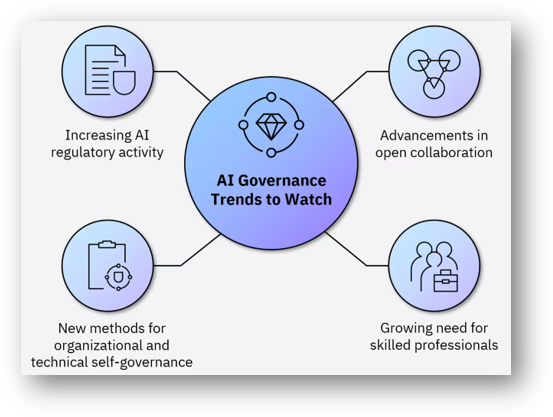
Following up on the session I conducted on Aug 27th (last week) titled "AI Model Audit Trails & Data Tracing" for MyCPE ONE (https://t.co/NY5sfUcf5N), is a session titled "AI Governance & Compliance" on Sep 10th. These live sessions are recorded, so they are available for later viewing.
The key topics and learning objectives in this next session are:
• Introduction to AI Models and Enterprise Governance
• AI Models Risk Management and Regulatory Compliance
• AI Models Audit and Lifecycle Governance
• Practical Application and Future Trends in AI Governance
• Design an AI model framework aligned with global compliance standards
• AI Risk Management and Regulatory Compliance
• Evaluating AI Models for Fairness and Ethical Implications
• Create audit checklists for AI Model Lifecycle Governance
Discussions about AI often revolve around deep fakes and AI fraud by the investigative community is always going to be a losing battle if there is a lack of knowledge of how to audit AI models and trace the data sources being used by the model.
AI model audits and data tracing are critical components in investigating deepfake and fraud schemes. While fraudsters increasingly use AI models to create convincing fraudulent material, investigators can use AI, data analytics, and provenance tracing to detect, trace, and respond to these sophisticated crimes.
By analyzing the characteristics of a deepfake or fraudulent document, investigators can trace it back to the specific AI tool used to create it. While tools can be modified, analyzing the "digital fingerprint" of the generated content can provide valuable leads, such as identifying the type of AI model (e.g., GANs).
While I do not yet have a session scheduled for the use of these audits and data tracing in investigation, perhaps there could be on in the future. However, the basics of auditing, tracing, and governance are the precursors to getting to the next level. It's not all about using AI models for detecting fraud, let's be proactive by identifying the fraudulent models before the fraud is committed. But there is a use-case for AI models that help find the fraud as well.
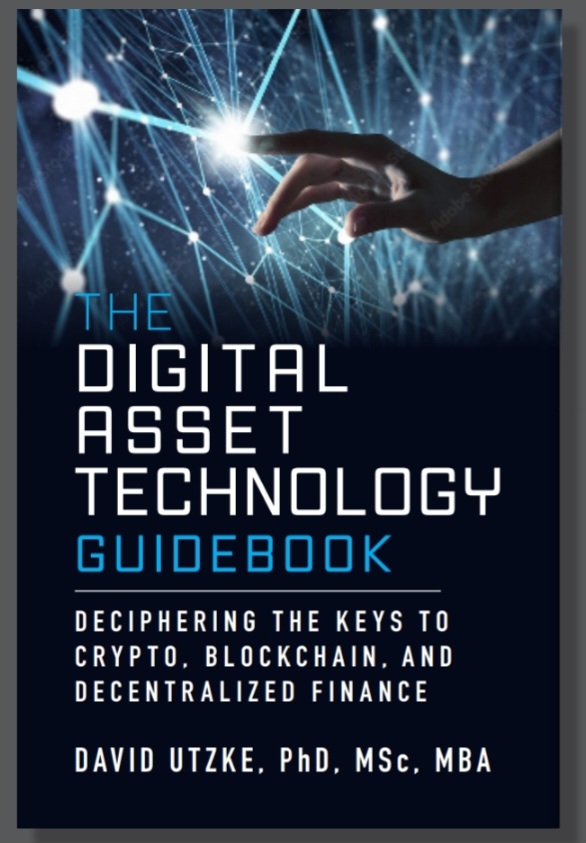
Excited to share that my upcoming book is part of @barnesandnoble's Pre-Order Sale! B&N Members get 25% OFF all pre-orders September 3rd through the 5th.
Not a member? Join for FREE in seconds with just your email at https://t.co/o928IGVsP6.
I'm looking forward to you reading "The Digital Asset Technology Guidebook: Deciphering the Keys to crypto, blockchain, and decentralized finance" - secure your copy now and save! #BNPreorder [https://t.co/pIKFCtNlhh]
My new book "The Digital Asset Technology Guidebook" is currently in pre-sale.
Great news!
🎉 Excited to share that my upcoming book is part of @barnesandnoble's Pre-Order Sale! B&N Members get 25% OFF all pre-orders July 8-11. Not a member? Join for FREE in seconds with just your email at https://t.co/o928IGVsP6.
"The Digital Asset Technology Guidebook" - secure your copy now and save! #BNPreorder
https://t.co/pIKFCtNlhh
Join us!
36th Annual ACFE Global Fraud Conference 2025 - Nashville, TN. https://t.co/DwSkZKuPAx
I'm honored to again be asked to speak at the ACFE Global Fraud Conference in Nashville this year. I'm also looking forward to sharing about my work as a DLT architectural engineering covering a nearly decade long research project following the PvP KOL degen casino model memetoken development environment, and the use of ZK technology in casino-like projects to obfuscate transaction data. PvP KOL degen casino culture has been infiltrating the DLT L2 development stack for years. In a way, the NFT collectibles were the beginning, and the PFPs collections can be seen as a prelude to memetokens. Memetokens are an abstraction of what NFT collectibles provided for the PvP KOL degen casino community. I will focus on the Solana and Ethereum enterprise platforms which has captured a large portion of the PvP KOL degen casino developer community.
Much of what I will discuss at the conference is covered in more detail in my new book, which is currently available as presale
Top BTC Block Validators Get Sued - Over the pas several hours there are a number of articles being circulated about the patent violation lawsuit against Marathon Digital and Core Scientific - two corporate Bitcoin network validation pools (colloquially referred to as miners). These two pooled BTC block validators are #1 and #2, respectively, based on hashrate.
What is missing is a historical and technical perspective that is important. The patent lawsuit by Malikie Innovations, a firm that acquired tens of thousands of patents from BlackBerry in 2023, is claiming that it owns Elliptic Curve Cryptography (ECC) employed by the Bitcoin L1 mainnet.
The ECC protocol was introduced in 1985 when Neal Koblitz and Victor Miller independently proposed using elliptic curves as the basis for a cryptographic system. Koblitz and Miller suggested using the mathematics of elliptic curves to create a new cryptosystem based on the Diffie-Hellman key exchange protocol. And ECC provides an alternative method for public-key cryptography, offering strong security with relatively smaller key sizes compared to algorithms like RSA.
This patent suit may be confusing for some because, while validators are part of the L1 mainnet architecture, they don't directly use ECC to validate blocks. However, it is necessary to manage internal transactions and communicate securely with other validators.
ECC is primarily used by the Bitcoin L1 mainnet architecture for asymmetric key generation, and those keys are used to cryptographically secure transactions between users with the assistance of the digital signature algorithm (DSA) component. Which leads to some confusion around the basis of the patent violation.
I have been contacted by several contacts within government and the private sector about the link between Malikie Innovations and the Bitcoin payment network block validation pools. The connection is a specific ECC algorithm (secp256k1) developed from the broader ECC protocol introduced in 1985 (i.e., a protocol is a set of rules, while an algorithm is a deployed version of code).
Certicom (now part of Blackberry) held patents on ECC-based key exchange validation and digital signatures. Founded in 1985, the same year Elliptic Curve Cryptography (ECC) was invented, Certicom was acquired by BlackBerry in 2009. In 2023, Malikie acquired a suite of 32,000 ‘non-core’ patents from BlackBerry in a deal supposedly worth up to $900 million.
Certicom did not patent the specific secp256k1 curve itself, but the trove of patents relates to a fundamental component of secp256k1 ECC used by the Bitcoin payment network, specifically patents on techniques like the Gallant-Lambert-Vanstone (GLV) optimization used in secp256k1.
The GLV method is an optimization technique used to speed up scalar multiplication on secp256k1 ECC as a fundamental operation used extensively by the Bitcoin payment network for signing transactions and other cryptographic operations.
While Malikie considers block validators to be the best target with deep pockets and the role they play in the Bitcoin's payment network architecture as easily identifiable and easy to draft a lawsuit around. Another route would be to challenge the assumption that the Bitcoin network is decentralized - an argument I make in my new book "The Digital Asset Technology Guidebook" currently in presale. Although it would not be an IP suit, this was the thrust of the much-publicized Tulip Trading case, which alleged that Bitcoin’s centralized development and extensively controlled by the validators and developers through the foundation mean that its developers owe users legal duties to act in their best interests.
Dr David Utzke, PhD, MSc, MBA, CFE, CFI, CDFE
CEO/CTO MyKey Technologies






![MyKey_Tech's tweet photo. Excited to share that my upcoming book is part of @barnesandnoble's Pre-Order Sale! B&N Members get 25% OFF all pre-orders September 3rd through the 5th.
Not a member? Join for FREE in seconds with just your email at https://t.co/o928IGVsP6.
I'm looking forward to you reading "The Digital Asset Technology Guidebook: Deciphering the Keys to crypto, blockchain, and decentralized finance" - secure your copy now and save! #BNPreorder [https://t.co/pIKFCtNlhh]](https://pbs.twimg.com/media/Gz78NXebkAAj5dg.jpg)