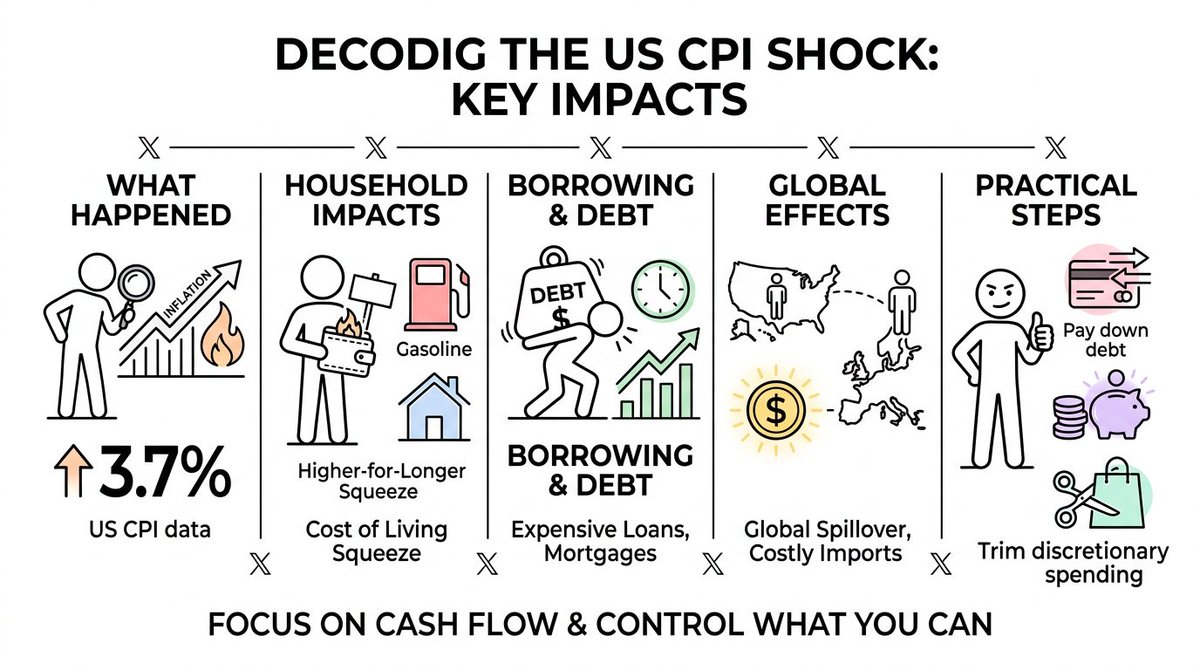
The latest US CPI data came in hotter than expected at 3.7%.
If you're wondering what this means for your wallet in the US or Europe, here is the real talk. (1/5)
True financial health isn't about having the flashiest balance sheet.
It’s asking: Is this expense buying me freedom, or just approval?
Shift your money from a status symbol to a life-enhancer.
Which one is yours - Tool or Yardstick?
In "The Art of Spending Money," Morgan Housel writes a profound truth: money has only two uses—as a tool for a better life, or a yardstick for status.
Most claim they want the former, yet spend a lifetime chasing the latter. (1/4)
A tool buys you independence, time, and peace of mind.
A yardstick buys you temporary applause and permanent stress.
When money becomes a scorecard against your neighbors, you've already lost the game, no matter your net worth. (3/4)
@Nicho_Jnr The habit I wish I'd learned earlier is separating my self-worth from my spending. Saying 'no' to things I don't care about just to fit in is much cheaper than trying to fix debt later.
I’ve learned a simple truth: wealth isn't built by waiting for a perfect moment, but by honoring the power of small beginnings.
You don't need permission to change your future.
Start with what you have, right where you are. (2/2)
The myth that "investing is only for the rich" keeps middle-class people working for money forever.
Wealth isn't a prerequisite for investing—investing is the prerequisite for wealth.
If you wait to feel "rich," inflation will eat your savings first. (1/2)
5/ How to protect your wallet right now:
🔘 Tighten your monthly budget
🔘 Avoid taking on new variable-rate debt
🔘 Build a cash buffer for uncertainties
Which of these price hikes are you noticing the most right now? Let's discuss.
Middle East Conflict & Your Wallet:
1/ Middle East conflicts aren't just geopolitics; they hit your pocket directly.
The region is a global energy artery.
When tensions rise, crude oil prices spike, and local pump prices inevitably follow.
Fasten your seatbelts.
4/ Inflation risks return when energy and goods stay expensive.
Central banks may hold off on cutting interest rates, meaning your mortgage or loan payments might not drop as fast as you hoped.
Higher costs for longer.