A 19 YEAR OLD IN A ONE BEDROOM APARTMENT MAKES $15,200 A MONTH FROM CARTOONS SHE NEVER FILMED. YOUTUBE SENDS HER THE CHECK FOR EVERY VIEW.
She does not draw. She does not animate. She does not own a camera.
She opens one tab. YouTube. Types "kids shows." The top result pays its owner between $1,000 and $15,000 for every million views. She screenshots the number so you see it.
Then she opens the second tab. An AI video generator. She pastes the transcript of a cartoon that already went viral. The tool builds a character from it. A toddler named BJ, blue onesie, biting a banana, rendered in bright kid-safe 3D.
She never wrote BJ. She never voiced BJ. She copied a transcript, hit generate, and watched a cartoon she does not own get born in 90 seconds.
Most creators argue about whether AI art is "real." She is not in that argument. She is in the tab where the ad revenue shows up.
The "kids shows" search is not research. The "kids shows" search is the shelf she is about to stock.
She posts the clip. YouTube runs ads on it. A toddler in Ohio watches BJ bite a banana and her balance moves by cents that compound into four figures.
The cartoon is generated. The voice is synthesized. The ad check is real.
She films herself in a black tube top explaining "how it works" because the explanation is the part that goes viral. The money is in the tab she keeps behind her.
Save this post. The tool is an AI video generator. The niche is kids. The payout is YouTube's, and it does not ask who pressed generate.
🚨 STUDENT FEARS FOR HIS LIFE: "I'M NOT SUICIDAL" WHILE EXPOSING BILL GATES' TICK EXPERIMENT NIGHTMARE
A visibly shaken student has gone public with explosive research on Bill Gates, opening with a stark declaration: “I’m not suicidal. I’ll never kill myself.”
He lays out what he found on Bill Gates funding tick research tied to Plum Island and positioning himself with tick vaccines before any big outbreak even hits.
He says it’s the same old playbook Gates used with Microsoft... create the viruses, sell the Windows and antivirus, then rinse and repeat.
The really disturbing part? Alpha-Gal syndrome is blowing up. People are suddenly allergic to red meat after Lone Star tick bites, but bugs are somehow still okay.
Farmers are finding boxes of ticks dumped in fields, tick numbers are exploding worse than ever, and these things are unusually aggressive, going after humans instead of just waiting on grass.
Meanwhile Gates is all in on pushing bugs as food, 3D printed meat, and getting people to ditch real meat.
His teams are also releasing genetically modified mosquitoes everywhere under the “we’re helping” banner.
It’s starting to look less like random coincidences and more like a deliberate move to make traditional food unsustainable so we end up depending on whatever alternatives they control.
Is Bill Gates actually trying to save the world, or is this a long game to control what we eat?
When people say "put your phone in another room," they're applying a 1990s willpower model to a 2024 neuroscience problem.
Why?
You're fighting a dopamine architecture that was engineered by thousands of the smartest behavioral psychologists, data scientists, and reinforcement learning specialists alive — people who spent their entire careers studying how to make a rat press a lever until it dies.
In the 1950s, James Olds and Peter Milner implanted electrodes into the brains of rats that stimulated the nucleus accumbens — the same dopamine center your phone activates.
The rats could press a lever to trigger the electrode. They pressed it until they collapsed from exhaustion. They chose it over food, over water, over s@x, over survival. The stimulation wasn't delivering pleasure. It was delivering *wanting*. An endless loop of anticipation with no satisfaction, no completion signal, no "enough."
Your phone does the same thing through software.
Every pull-to-refresh is a slot machine lever. The variable reward schedule — sometimes you get a like, sometimes nothing, sometimes a flood of notifications — is the single most addictive reinforcement pattern behavioral science has ever identified. Casinos have used it for decades. Social media perfected it. And because the reward is social validation — something your brain literally processes through the same opioid circuits as physical touch and belonging — the craving embeds deeper than any gambling addiction ever could. You're not addicted to a screen. You're addicted to the neurochemical simulation of being loved.
Putting the phone in another room doesn't interrupt this loop. Your prefrontal cortex — the part of the brain responsible for impulse control and long-term planning — is already compromised. Chronic phone use measurably reduces grey matter volume in the prefrontal cortex over time. The exact same structural degradation found in substance addicts. Your ability to resist the craving is being eroded by the craving itself. Every year you scroll, the "no" muscle in your brain gets physically smaller.
And the craving doesn't need the phone present to fire.
This is what most people miss entirely.
Addiction neuroscience has known for decades that cravings are triggered by *cues*, not by the substance itself. An alcoholic doesn't need a drink in front of them to feel the pull. A sound, a time of day, a feeling of boredom, a micro-moment of social anxiety — any of these can trigger a dopamine spike that initiates the seeking behavior. Your phone trained your brain to associate hundreds of daily micro-cues with the reward of checking it. Sitting at a red light. A pause in conversation. Waking up. Feeling any emotion above or below a narrow band of "neutral."
The cue fires. The dopamine spikes. The wanting floods in. The phone being in another room just adds twelve seconds of delay before you go get it. The neurochemical cascade already happened. You already lost.
So what does "the fix is biological" actually mean?
It means you have to rebuild the dopamine system itself — not manage the behavior around it.
Dopamine has a baseline. Think of it like water level in a tank. Every time you get a hit — a notification, a scroll session, a like — the water spikes above baseline and then crashes *below* it afterward. The brain compensates for the spike by downregulating receptors. This is called opponent process theory. The pleasure response gets weaker. The pain/craving response after it gets stronger. Over months and years, your baseline dopamine drops.
Everything that isn't a phone feels grey, flat, uninteresting. Books feel slow. Conversations feel boring. Nature feels pointless. You haven't lost your attention span. You've chemically lowered the floor of what your brain registers as worth paying attention to.
The biological fix is a dopamine reset — and it works the same way it works for any addiction.
You need extended periods of low-stimulation living. Long walks without audio. Sitting without input. Meals without screens. Conversations without checking. Sleep without the phone as the last and first thing you see. The first 7 to 14 days feel genuinely terrible because your baseline is cratered and nothing produces enough signal to feel rewarding. Your brain is screaming for the lever. This is withdrawal. Real, measurable, neurochemical withdrawal with documented increases in cortisol and anxiety.
But around week two or three, something shifts. Dopamine receptors begin to upregulate. Baseline rises. And suddenly a cup of coffee on a quiet morning feels like something again. A conversation holds your attention. A paragraph in a book pulls you forward instead of feeling like sandpaper on your focus. You didn't learn discipline. Your brain physically rebuilt the receptor density that makes ordinary life register as interesting.
The people who seem to have "incredible willpower" around screens almost always have one thing in common — high baseline dopamine from lifestyle factors. Deep sleep, intense physical exercise, cold exposure, genuine social bonds, time in nature, creative work that produces flow states. These activities don't spike dopamine the way your phone does. They raise the *floor*. They make the baseline higher so the craving signal from your phone doesn't tower over everything else in your experiential landscape.
You don't beat phone addiction by hiding the phone.
You beat it by making your biology so rich that the phone becomes the least interesting thing in the room.
That's a project measured in months, not hacks. But it's the only one that actually works, because you're not fighting a screen. You're fighting a nervous system that was deliberately, methodically, and brilliantly trained to betray you.
And the people who trained it made $200 billion last year doing so.
Did you know the news used to regularly air stories about people's lives being ruined by vaccines?
That all changed after Clinton let Pharma buy out the media.
Here I compiled 56 mind-blowing news segments they'd never air today.
https://t.co/HI2GyO0M1R
Every American Citizen MUST WATCH THIS. It’s about 24mins long, so save it and watch when you can. It breaks down our financial system and is the most impactful and important video you will ever watch to see WHY IT IS A SCAM, CORRUPT AF AND GOING AWAY!!! SHARE IT! 👏🏻🔥🔥🔥🇺🇸🇺🇸
If you have a Gmail account, you need to read this.
Google's AI now scans your emails and attachments, bank statements, tax files, medical letters, all of it. It turned on by default, and there's a class-action lawsuit over how.
Here are 5 moves to shut it off, the switch is hidden in two places:
A guy sat at his laptop ready to permanently delete his 15-year-old Gmail account.
He was getting 400 spam emails a day. Fake Best Buy receipts. Phishing links from "Netflix." Cryptic extortion threats.
He hovered his mouse over "Delete Account" and sighed: "I just want peace."
His coworker, a former email deliverability engineer, looked over his shoulder.
"Before you nuke 15 years of contacts and data, let me show you something. Your email isn't broken. It's weaponized. There are 22 ways you've been leaving the door wide open. Google won't tell you this because the data collection feeds their entire ad engine. Give me 14 minutes."
Here's what she showed him:
A man spends 50 years teaching at MIT.
He knows his time is running out.
So he records one last lecture — everything he knows, distilled into a single hour.
He died 5 months later.
This is that lecture.
The most important hour you'll watch this week. 👇
Bookmark it for later
Here I reveal:
•The extensive data and clinical trials showing DMSO can reverse numerous severe respiratory disorders
•How many readers and physician readers have now cured "incurable respiratory disorders"
•How to use DMSO to heal the lungs.
https://t.co/jXWrSDD1jI
COVID changed something in me that cannot be unchanged.
Not the virus. Not even the mandates. What changed it permanently was watching every government on earth arrive at the same silence, at the same moment, and hold it for six years running.
Nearly six years since the rollout began. Not one head of state has stood before their people and said: some of you were harmed, we know it, and you deserve an honest accounting. Not one parliamentary inquiry with genuine authority. Not one compensation framework built on the actual scale of injury. The vaccine injured remain without diagnostic codes in most countries. Without legal recourse. Without the most basic institutional acknowledgment that what happened to their bodies was real.
This is what accountable institutions do after genuine public health emergencies. They review. They audit. They ask who was harmed and how. They produce findings that are uncomfortable because the discomfort is the point. The discomfort is how trust gets rebuilt.
What we have instead is a wall. And behind the wall, people who lost careers for raising questions that turned out to be legitimate. People who watched their governments promote Long COVID with full institutional weight while refusing to ask a single honest question about overlapping presentations in the vaccine injured. The same symptoms. The same mechanisms proposed in the literature. The convenient frame that points in every direction except at the product.
The coordination is what tells you the most. Individual negligence looks different. It is patchy. It is inconsistent. Individual negligence produces whistleblowers, outliers, one government that breaks from the rest because the political cost of silence finally exceeds the cost of honesty.
What we have is not that. What we have is universal. And universality of this kind does not emerge from independent actors independently deciding to do nothing. It is decided.
There is a particular cruelty in what this does to the injured. It is not just that they are uncompensated. It is that the silence communicates something to them about their value. That they were considered acceptable losses before the fact, and inconvenient liabilities after it. That the calculus was made, and they lost. The psychological cost of that message, delivered not once but every single day through continued institutional indifference, is its own injury layered on top of the physical one.
The children absorb this too. They are watching their parents fight for recognition against institutions that will not move. They are learning what governments actually mean when they say they will protect them. They are developing a relationship with authority that no civics class will be able to undo.
The universal silence of world leaders on vaccine injury is not the behaviour of people managing an honest disagreement about evidence.
It is the behaviour of people who have made a collective calculation that the cost of telling the truth now exceeds the cost of never telling it.
And that calculation, held simultaneously, across every major government on earth, is the most important public health finding of the last six years.
Not what the virus did. Not even what the vaccines did.
What the silence, together, reveals about who was making decisions, and who they were making them for.
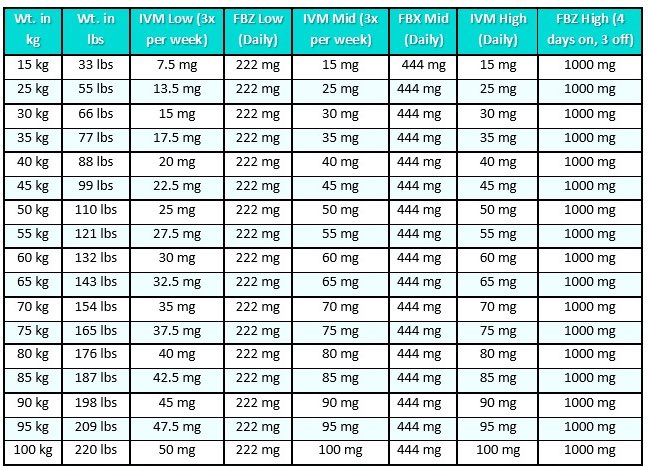
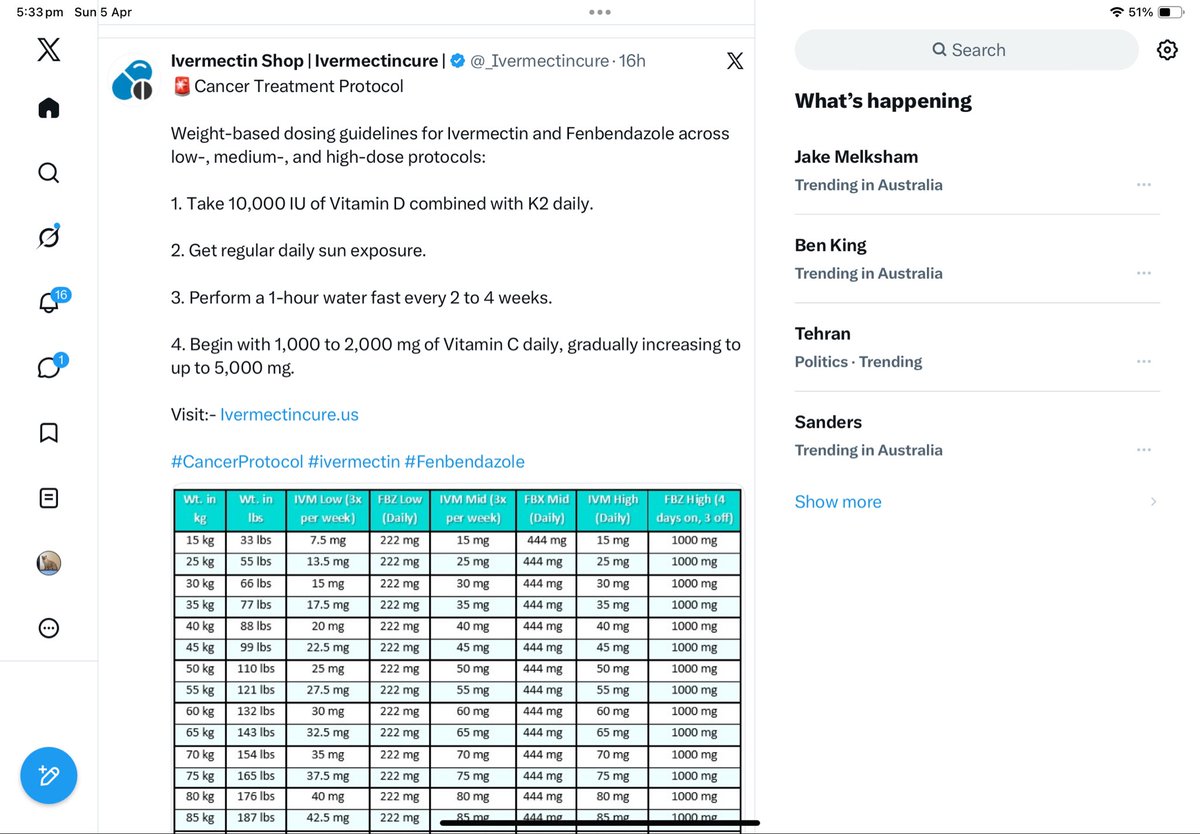
BREAKING: Largest Human Cancer Study of Ivermectin + Mebendazole Is Now PEER-REVIEWED and PUBLISHED in a MAJOR Cancer Journal
84.4% of cancer patients taking ivermectin + mebendazole for 6 months declared either CANCER DISAPPEARANCE, TUMOR REGRESSION, or CANCER STABILIZATION.
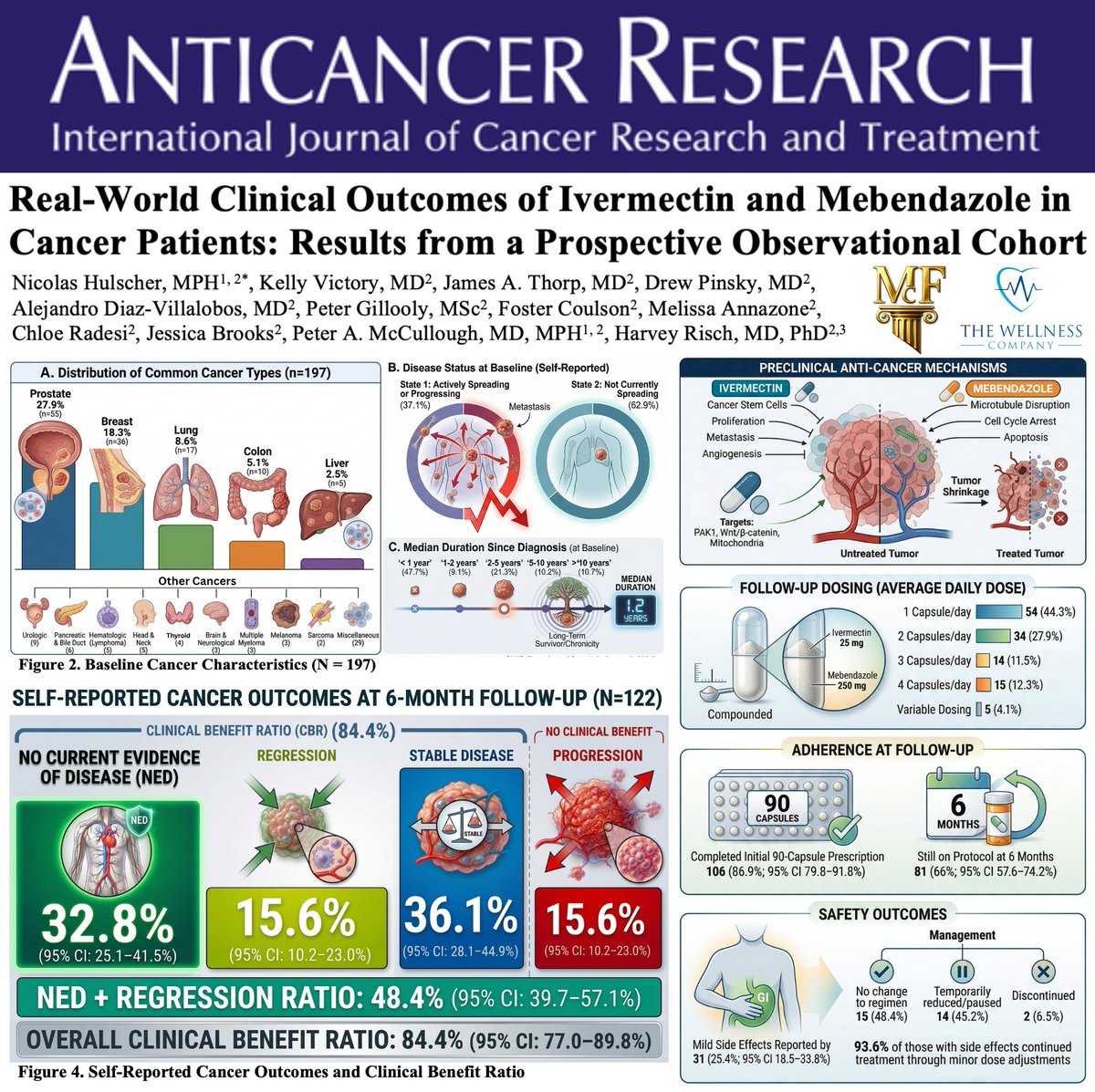
Our study, “Real-world Clinical Outcomes of Ivermectin and Mebendazole in Cancer Patients: Results from a Prospective Observational Cohort,” is now peer-reviewed and published in Anticancer Research—a major international oncology journal of the International Institute of Anticancer Research (IIAR), established in 1995.
The results represent one of the most compelling clinical signals ever documented for repurposed anti-parasitic therapies in oncology.
A diverse population of cancer patients (n=197) was prescribed compounded ivermectin–mebendazole through a U.S. telemedicine platform, with each capsule containing 25 mg ivermectin and 250 mg mebendazole.
Participants were followed for approximately six months using standardized digital surveys assessing cancer outcomes, medication adherence, and tolerability.
At approximately six months post-treatment initiation, we observed an 84.4% Clinical Benefit Ratio (CBR)—meaning more than four out of five patients reported either:
No evidence of disease (32.8%)
Tumor regression (15.6%)
or Cancer stabilization (36.1%)
Importantly, adherence was remarkably high, with 86.9% completing the initial prescription and 66.4% remaining on therapy at six months.
Side effects were predominantly mild and manageable, reported in 25.4% of patients (primarily gastrointestinal), with 93.6% of those experiencing side effects continuing treatment after minor dosing adjustments.
This groundbreaking peer-reviewed publication was made possible through a unique collaboration between The Wellness Company, the McCullough Foundation, and the Chairman of the President’s Cancer Panel—uniting real-world clinical data, frontline medical experience, and epidemiologic expertise to evaluate inexpensive, repurposed therapies with major translational potential.
With these extraordinarily promising results, double-blind, placebo-controlled clinical trials are now required.
In the meantime, many cancer patients are exercising their right to try.
@twc_health@McCulloughFund@IIAR_Journals@P_McCulloughMD@DrHarveyRisch@DrKellyVictory@jathorpmfm@drdrew@PeterGillooly@FosterCoulson
This teacher-turned-cognitive scientist shared a disturbing reality that left the room stunned.
“Our kids are LESS cognitively capable than we were at their age.”
Every previous generation outperformed its parents since we began recording in the late 1800s.
So, what happened?
Screens.
Dr. Jared Horvath explained:
“Gen Z is the first generation in modern history to underperform us on basically every cognitive measure we have, from basic attention to memory, to literacy, to numeracy, to executive functioning, to EVEN GENERAL IQ, even though they go to more school than we did.”
“So why? … The answer appears to be the tools we are using within schools to drive that learning (screens).”
“If you look at the data, once countries adopt digital technology widely in schools, performance goes down significantly, to the point where kids who use computers about five hours per day in school for learning purposes will score over two-thirds of a standard deviation LESS than kids who rarely or never touch tech at school. And that’s across 80 countries.”
But screens aren’t just decimating learning and making new generations less intelligent than the ones before them.
They’re doing something far worse. And when you take a closer look, it isn’t pretty.
NIKOLA TESLA SAID "3-6-9 IS THE KEY TO THE UNIVERSE."
I tested it for 90 days on 500 people.
What happened will reshape how you manifest forever.
Here's the REAL 369 method nobody's teaching:
THEY THREATENED TO THROW HER IN A MENTAL HOSPITAL FOR SIX MONTHS and force psychiatric “treatment” — just for doing her job and asking questions! 👀😱
Former U.S. Air Force Bio-Environmental Engineer Kristen Meghan caught the military shipping massive quantities of aluminum, barium & strontium to be mixed into jet fuel.
She reported it → they tried to label her insane and lock her away to silence her.
This is straight-up criminal intimidation to hide what looks like large-scale atmospheric spraying.
I’m beyond outraged.
Watch her full whistleblower testimony NOW 🔥 What the hell are they spraying over our heads — and why destroy lives to keep it secret? 😡
#Chemtrails #Geoengineering #Whistleblower
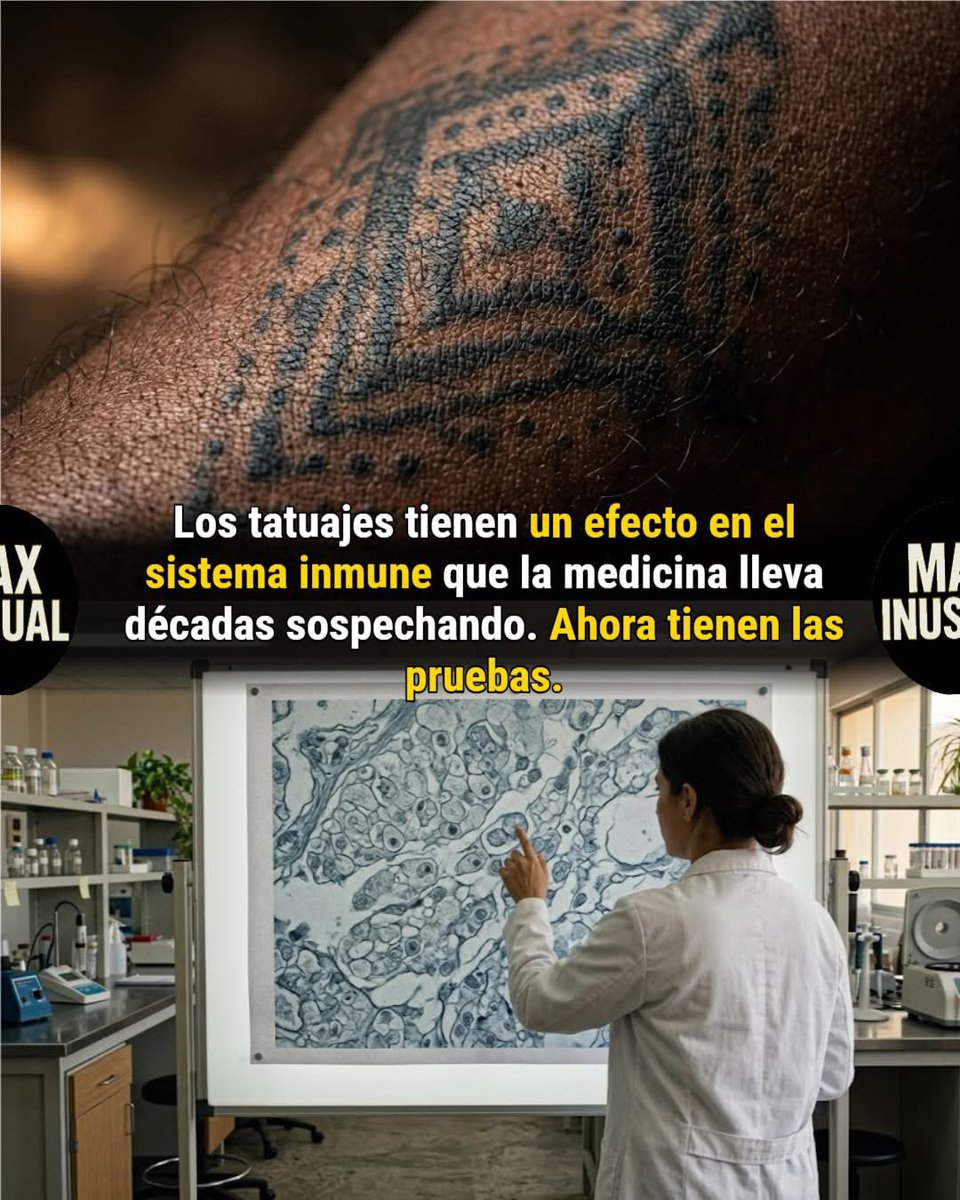
Los tatuajes tienen un efecto en el sistema inmune que la medicina lleva décadas sospechando. Ahora tienen las pruebas.
Un nuevo estudio publicado en PNAS por investigadores de la Universidad de la Suiza Italiana acaba de demostrar que ninguna de esas tres suposiciones es completamente cierta.
La tinta no se queda quieta. Entre el 60% y el 90% del pigmento abandona la dermis y migra hacia los ganglios linfáticos, el hígado, el bazo y los pulmones. No en cantidades trazas — en concentraciones medibles, acumulables y permanentes. El cuerpo no tiene mecanismo para eliminarlo. Una vez adentro, se queda.
Lo que ocurre después es lo que los investigadores describen como una respuesta inmune que no se apaga. Los macrófagos — células cuyo trabajo es detectar y neutralizar amenazas — reconocen la tinta como cuerpo extraño y la atacan. Pero no pueden digerirla. Mueren intentándolo. Los macrófagos que los reemplazan heredan la tinta de los muertos y repiten el ciclo. Esa cadena de ataques fallidos genera inflamación crónica sostenida en los ganglios — sin síntomas visibles, pero con efectos medibles en el funcionamiento del sistema inmune.
No todos los pigmentos son iguales. Los análisis de toxicidad celular encontraron que la tinta negra y la roja inducen mayor muerte de macrófagos que otros colores — mayor carga inflamatoria, mayor acumulación en órganos. El negro por sus nanopartículas de carbono. El rojo por sus compuestos de mercurio y cadmio en formulaciones tradicionales.
El hallazgo que más debate generó entre los propios investigadores: la evidencia creciente de que esta inflamación crónica podría estar interfiriendo con la respuesta inmune a vacunas en personas con alta cobertura de tinta. La investigación no es definitiva en ese punto — pero el mecanismo propuesto es sólido y los datos preliminares son suficientes para que el equipo lo señale como prioridad de investigación.
La medicina lleva décadas sin incluir los tatuajes en la conversación de salud sistémica. Este estudio argumenta que ya no puede ignorarlos.