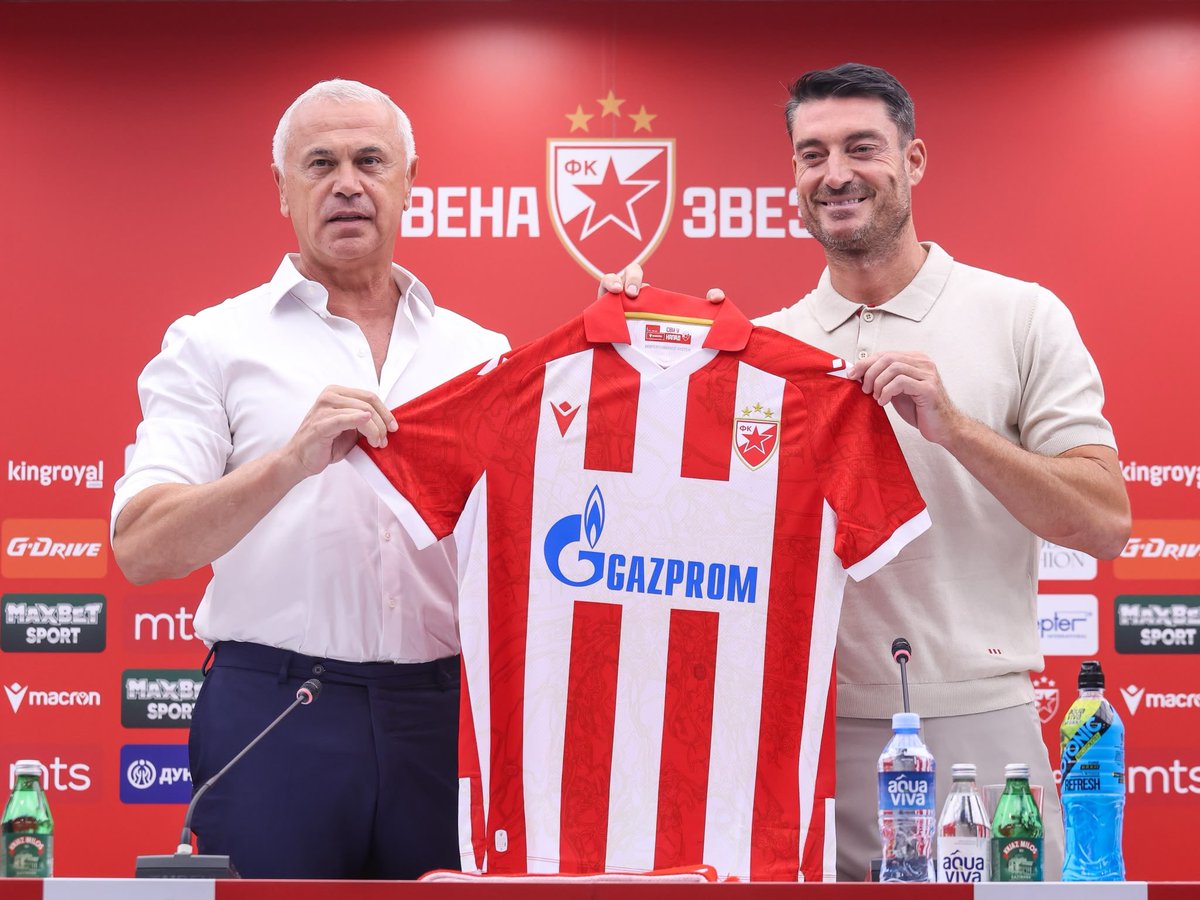
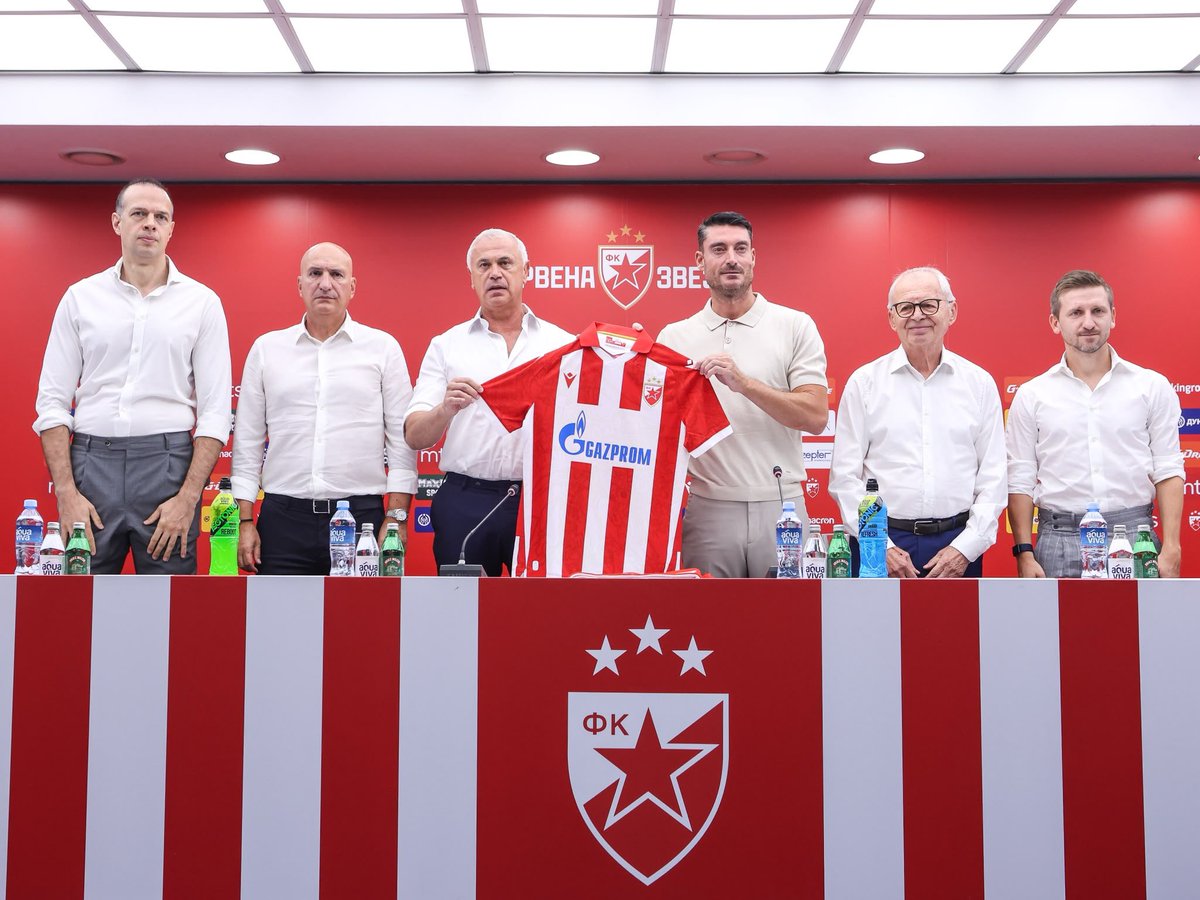
Kim Je-Gon u Crvenoj zvezdi!
Novo poja��anje Crvene zvezde u letnjem prelaznom roku je osamnaestogodišnji vezni fudbaler iz Južne Koreje Kim Je-Gon koji je sa našim klubom potpisao petogodišnji ugovor.
🔴⚪️ #fkcz
ЦРВЕНА ЗВЕЗДА, Crvena Zvezda, Estrella Roja, Red Star…🔴⚪️
Proud to become the coach of such historical club ⭐️ ⭐️ ⭐️
Let’s start the history together 💪🏻🪄
#crvenazvezda#zvezda#fkcz
🚨| 𝐁𝐑𝐄𝐀𝐊𝐈𝐍𝐆: 𝐊𝐈𝐌 𝐘𝐄-𝐆𝐄𝐎𝐍 𝐓𝐎 𝐑𝐄𝐃 𝐒𝐓𝐀𝐑 𝐁𝐄𝐋𝐆𝐑𝐀𝐃𝐄 🇷🇸
Huge news. 💣
Per @holazuni, Kim Ye-geon headed to #fkcz, will be playing 1st team. Serbian champs beat out #SportingCp as well as youth contracts from #FCBarcelona, #mancity. 🤯🫡🇰🇷
#김예건
One of the factors for Kim Ye-geon in playing for #fkcz was not only playing time but also playing STYLE. 👀
Kim favored the possession based style of Zvezda & thought it would suit him well. 🤝
Kim Ye-geon will not play today, plane ticket booked for Belgrade. ✈️🇷🇸
#김예건
I looked at some of the numbers since Terzić arrived in 2014.
• Zvezda brought in €102.7M worth of players during that period.
• The club sold €108.9M worth of players who weren't produced by the club.
That's basically no profit on recruitment. And two outliers, Radonjić (€12M) and Djiga (€12M), account for 22% of that total.
Players simply aren't getting more expensive here on average. And that's before we even talk about salaries.
The Piccini example, plus what we know about Luckassen, Arnautović, Abu Fani and others, points to gross overpayment on wages. Salaries other clubs wouldn't be willing to pay them, and for good reason.
And that's something you need to take into account when looking at the money spent on transfers. It's not just the transfer fee. There are agent fees, signing-on fees and most importantly, salaries.
Then there's the academy.
Players produced by the club brought in €109.5M over the same period. More than the entire non academy sales total.
As I've always said, the academy is the best part of this club. It's the thing keeping the whole operation alive and something they deserve credit for helping improve, but they're still not getting nearly enough value out of it outside of the financial part.
Take away that €110M and add the transfer fees and salaries spent on the squad and Zvezda would be deep in the red.
So we're looking at:
• €115.7M net profit from transfers
• €109.5M generated by academy sales, which is included in that transfer figure
• ~€140M estimated prize money from UEFA competitions
That's a serious financial base to work with, even before accounting for the club's other revenues, such as sponsorships, ticket sales and commercial income.
Of course, this isn't €255M of profit. There are huge costs attached to running a football club: wages, bonuses, agent fees, signing-on fees, transfer amortisation, staff and operating costs, among others.
But that's precisely the point. Even after taking those costs into account, the scale of revenue and transfer income over this period should have provided the foundation for a significantly stronger squad by 2026.
Transfermarkt valuations are instead presented as evidence of progress.
Zvezda's current squad is valued at €116.8M.
• Eraković €7M.
• Elšnik €6M.
• Handel €6M.
All completely detached from reality and there are plenty more examples.
And Vasilije Kostov alone represents represents 21% of that entire valuation.
This is where I think the distinction between paper value and actual sporting value becomes important.
The question then, is straightforward:
€115.7M positive transfer balance + ~€140M in UEFA prize money and the actual product on the pitch still isn't progressing.
Not even good enough to get through the easiest UCL qualifying campaign to date.
Now, I'm not an economist, but can someone who is tell me how these numbers and results would be rated in the corporate world?