Hi fellow #developers and cracked engineers,
I need to validate 1 #softwareproject feasibility
please DM if you have 5 mins to spare.
Will discuss the usecase on zoom/google meet
Stop telling Claude: "build this"
Stop telling Claude: "write code"
Stop telling Claude: "fix this bug"
You're using a staff-level AI like a junior intern.
Claude performs best when you give:
• role
• constraints
• architecture expectations
• output format
• real-world context
Here are 10 production-grade Claude prompts you can copy-paste:
AI SRE as a category might be dead before it even took off
A customer showed me his setup last week. Claude Code connected to SigNoz's API with a handful of SQL scripts and .md files as context. That's it
He types "correlate this timeout with every metric and trace in the stack and figure out what's going on" and Claude just does it. Finds root cause across namespaces and services.
His words: it does 60-70% of what dedicated AI SRE products claim to do
Startups like Resolve AI and Traversal have raised big rounds to build this category. But the hard part was never the AI. It was having clean, queryable observability data in one place.
If your system of record has logs, traces, and metrics in a single datastore, Claude Code with good CLI tooling handles the rest
We're seeing more customers use SigNoz this way and are actively building tooling for it. Skills, MCP servers, better interfaces for AI agents to work with observability data natively
The moat in AI SRE isn't the AI. It's the harness and how you access the data underneath
What does your AI debugging setup look like today?
Why India needs an ‘Inflation Linked Salary Revision Act’, I argue in Parliament.
Between FY18 and FY26, real wages for salaried Indians fell by 16% because pay hike did not keep pace with rising inflation. That is why in Parliament I raised that a mandatory wage indexation formula is the need of the hour.
Government employees get protection through Dearness Allowance and periodic Pay Commissions. But 85% of India’s formal workforce has zero statutory inflation protection. They are at the mercy of employer discretion and their own negotiation power to get a pay hike.
Other economies already protect workers through automatic indexation.
• The US has COLA with automatic revisions
• Germany revises wages every 18–24 months
• Japan follows the annual Shunto system
• Belgium mandates automatic quarterly indexation
India needs statutory inflation protection, a minimum wage increase linked to inflation.
Inflation should not be India’s silent pay cut
I created my LinkedIn 43 weeks ago.
Since then I’ve added $80,000 to my agency pipeline, driven 5 figures this month for SEO Stuff, built 7,600+ connections and logged 1,849,116 impressions.
Here’s my full system. Steal it before they close the loopholes.
And if you want an even more in-depth cheat sheet with engagement group templates, carousel strategy, and DM workflows:
Follow me
Repost this
Comment “X LinkedIn growth guide”
You must do all 3 to get the DM.
Alright, let's start at the top.
Here's what is working best as of right now:
Proof + POV posts are killing it right now.
Basically numbers plus your perspective.
Screenshots, dashboards, Stripe, LemonSqueezy, or client receipts paired with your analysis outperform every other format.
Story-driven authority stuff is also doing great.
Think personal lessons and client stories (even small ones).
Real voice and context stand out in an AI-saturated feed.
Also comment-first growth is super effective right now.
Thoughtful comments are the fastest visibility engine.
15–20 high-value comments daily can rival posting.
The best comments add examples or mini-frameworks, not just agreement.
Conversation depth is also key at the moment.
LinkedIn is prioritizing posts where comments turn into discussions.
Ask real questions, reply with substance, and encourage commenters to engage with each other.
Audience overlap matters a lot too.
Consistent visibility across 2–3 adjacent niches multiplies reach.
Build circles of overlap instead of posting scattershot.
My posting routine:
I post 3 times per day, 7 days per week.
Pausing even 36–48 hours cuts impressions in half.
This happened to me two weeks ago when I was traveling. Pretty frustrating.
Morning: Text post with POV, story, or observation
Afternoon: Carousel, proof post, or annotated screenshot
Evening: Mini-thread, framework, or quick win
Formats performing now:
Carousels
Slide 1 = bold headline tied to a pain point or result
Middle = 3–5 slides of steps, bullets, or annotated visuals
Final = CTA (“Drop guide below if you want the SOP”)
Carousels mixing text + visuals outperform plain-text slides by 30–40%.
Short videos
Under 60 seconds, hook in the first 3 seconds
Subtitles matter (auto-preview drives clicks)
Quick demos and walkthroughs beat polished storytelling
Text posts
Hook = question, claim, or contrarian take
1–2 lines per paragraph for scannability
3–5 bullet takeaways > text walls
End with a question that triggers replies
Proof breakdowns
Share a metric or win
Break it down in 3–4 bullets
Turns results into mini case studies
Conversation-driven posts
Open loops, thought experiments, or contrarian POVs designed to spark multi-layer discussions
What’s flopping right now:
AI filler with no voice
Metrics with no explanation
Walls of text with no whitespace
External links in the body (especially without changing the preview image)
Timing sweet spots:
7–8 AM for text-heavy or thought leadership posts
1–3 PM for maximum impressions
Sunday evening for outsized visibility with less competition
Tuesday and Thursday for CTAs or lead-gen
Engagement strategy:
Comment on 20+ posts daily with depth and context
Like 50+ posts/day, focusing on active commenters in your vertical
Reply to every comment within the first hour to trigger velocity
Repost your best performers every 5–7 days with a new hook
DM 5–10 people daily with personalized value tied to their posts
Right now LinkedIn is boosting repeat engagement and threaded comments.
If the same people return to comment again or if your post sparks layered replies, reach extends 2–3x longer.
Hooks converting at the moment:
“I started this account 43 weeks ago. Here’s the exact revenue it has generated.”
“$10K this month from LinkedIn posts. Here’s the breakdown.”
“This 7-slide carousel booked 3 calls in 24 hours. Slide 1 below.”
“If I had to restart on LinkedIn in 2025, here’s the playbook I’d use.”
“The 3-post-per-day system I use to consistently generate inbound leads.”
Always back hooks with proof.
Screenshots, receipts, or client wins outperform text-only claims every time.
30-day LinkedIn growth checklist:
Post 3x/day
Comment on 20+ posts/day with substance
Like 50+ posts/day
Reply to every comment in the first hour
Repost top performers weekly
DM 5–10 people/day with context-first value
Track impressions, replies, leads, and comment depth weekly
LinkedIn is still the most underpriced attention engine in 2025.
Run this playbook for 30 days.
Screenshot your Day 31 results. Tag me when the inbound starts.
And if you want my cheat sheet with engagement group templates, carousel strategy, and DM workflows:
Follow me
Repost this
Comment “X LinkedIn growth guide”
You must do all 3 for the DM.
Everyone needs a cofounder. That’s why we built the first ai agent that runs your business with you, remembers things, and knows everything about your business.
Cofounder by @intelligenceco can automate, remember, and take actions on your behalf.
🧵(1/n) @VIT_univ
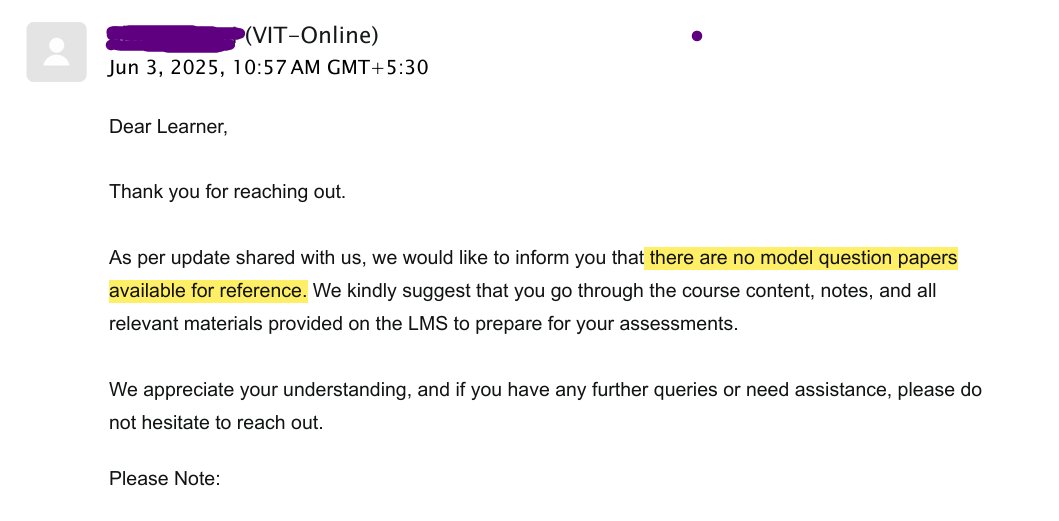
Dear #VITVellore, we request the provision of sample question papers for the 2nd sem #VITonline#mca program. The question paper pattern is crucial for effective preparation, especially for challenging subjects like statistics, AI, data science.. contd...
@krishna_pal_IAS Sir, Seeking your advice and intervention, #Sewer blockage in Model Town Street No. 3B has been unresolved for 2 yrs. Multiple complaints to Municipal Corporation #Abohar have gone unanswered. Please take strict action on resolving this urgent issue