"You cannot put 2 Chaos Muppets together or they'll burn down the building. Chaos Muppets need Order Muppets who GET Chaos Muppets. Nancy, you are my Order Muppet." -- @AndrewJackVO#IAmYourVoiceOverKermit#voiceover
I adore this #MelissaManchester gem. Man, those collabs with Carole Bayer Sager. #MidnightBlue https://t.co/A9m536Kz12 (Fun Fact: Manchester sang back up for Bette Middler.)
With more than 9K structures damaged/destroyed to date by the #LAFires, we are working to identify historic places impacted by this tragedy.
Here's a *partial* list of confirmed losses of historic places. Please visit our website for more + resources 👉 https://t.co/i1Qdx8ZGjS
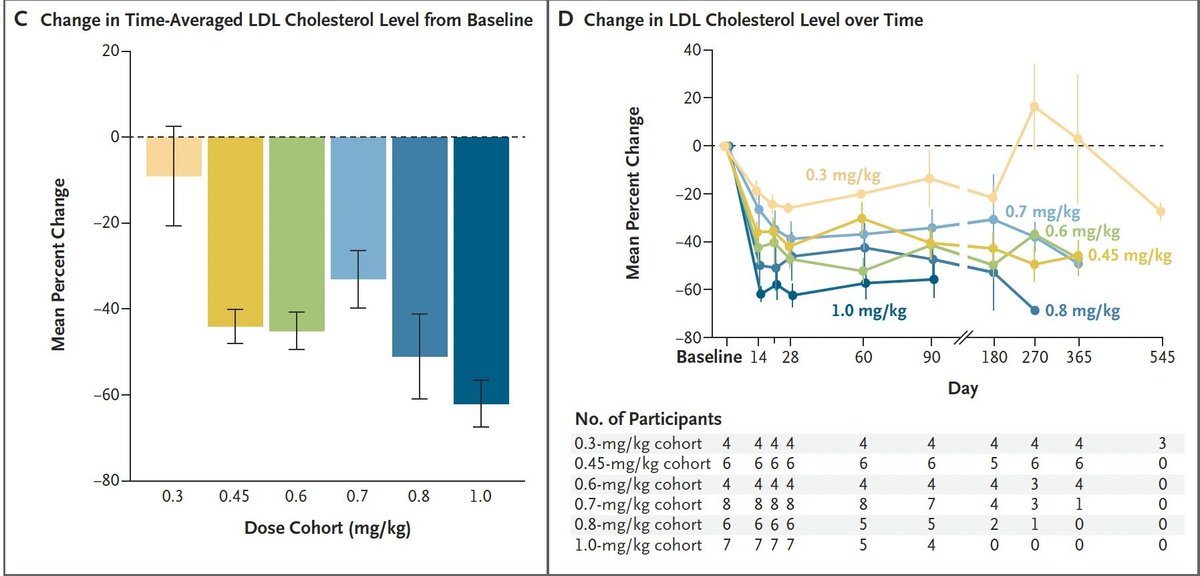
Eli Lilly has done it.
They've gone and made what seems to be a powerful, permanent gene therapy for LDL cholesterol.
That means they'll be able to effectively prevent most heart disease with a single infusion!
For Memorial Day, do yourself a favor and take three minutes of your time to listen to this Civil War letter from Maj. Sullivan Ballou to his wife.
I just started re-watching the Ken Burns series, which debuted in 1990 to a record-breaking audience of 40 million, for the first time since it originally aired.
While I had forgotten all of the specifics of the show over the years, I NEVER forgot this letter or this moment, which closed the first episode.
Burns kept a copy of the letter in his wallet for 25 years.
@TaraBull You can actually skip the rotary and hit the pulses for each number on the "hang up" switch. All the rotary dial does is pulse off and on so many pulses per number. 0 is 10 pulses, 1 is one pulse, and so on.
The Story Behind the One-Take Masterpiece 📺
Did you know one of the most iconic commercials in TV history happened completely by accident?
In 1973, an advertising crew went down to a pier to shoot an ad for Oscar Mayer. They needed a kid, and 4-year-old Andy Lambros volunteered. With a fishing rod in one hand and a bologna sandwich in the other, he started singing.
He didn't just get through it—he absolutely nailed the entire song in one single take.
When Jerry Ringlien (the VP of Marketing) saw the raw footage the next day, he stopped everything and said, "That is the commercial."
They loved Andy's charm so much that they even kept the very end of the raw footage in the final cut—the unscripted moment where he looks at the crew, asks "How's that?", and takes a massive bite of his sandwich.
The Impact:
•It skyrocketed Oscar Mayer sales and cemented the jingle in pop-culture history.
•It put the legendary ad agency J. Walter Thompson "on the map" as an industry titan.
•It launched Andy's career, leading him to star in over 20 more major commercials.
Today, Andy is an accomplished artist, graphic designer, and computer programmer. But it all started on a pier with a sandwich.
Turn the sound UP and watch the magic happen below 👇
#RetroAdvertising #Nostalgia
Tens of thousands of people in Southern California have been told to leave their homes, with officials issuing a dire warning that a chemical tank at an aerospace facility is in "crisis" and will either leak or explode. https://t.co/QWwN3ru6p5
The final CBS Radio newscast that aired at 11pm ET, 8pm PT, tonight, bringing the radio network to a close after 99 years. (Thx, Tom Russo) https://t.co/vtgJ6AdtHw
Woody Allen sobre el antisemitismo hoy 1/2
Woody:
«Saben, siempre pensé que la mayor ventaja de Nueva York era que uno podía ser neurótico y nadie lo notaba. En otras ciudades te mandan al médico si hablas contigo mismo. En Manhattan te ofrecen una columna en una revista por ello.
Ayer salí a comprar salmón. Por cierto, es la única tradición judía estable que ha sobrevivido a Babilonia, Roma y a mis relaciones con mujeres.
Caminaba por Brooklyn pensando en la muerte. No porque sea filósofo. Sino porque ya tengo más de noventa, aunque originalmente había planeado llegar como mucho hasta los setenta.
Y de repente —una multitud frente a una sinagoga. Al principio pensé que allí actuaba un famoso psicoanalista. En Nueva York la gente hace cola durante horas para escuchar por qué su madre tiene la culpa de todo. Aunque los judíos eso ya lo saben sin necesidad de conferencia.
Pero no. Estaban gritando algo sobre “intifada”. ¿Y saben qué me sorprendió más? La cantidad de energía que tiene esa gente. ¿De dónde la sacan? Yo después de subir dos tramos de escaleras ya empiezo a escribir mi testamento. Y ellos listos para una revolución sin haberse tomado ni un café decente.
Un tipo gritaba algo sobre “descolonización”. Dios mío. Cuando yo era joven, “colonización” significaba que la tía Frieda ocupaba nuestro sofá durante tres meses y se negaba a irse. Hoy de repente es una conspiración sionista.
En general, el antisemitismo moderno se ha vuelto demasiado intelectual. Antes simplemente nos odiaban. Sin rodeos. Hoy no.
Hoy alguien con bufanda, que parece que escribe poemas sobre su propia barba, te explica con ayuda de Heidegger y Nietzsche por qué la existencia de los judíos es una forma de agresión y una amenaza para la humanidad.
Y yo estaba allí pensando: antes al menos nos pegaban personas sin título universitario. Hoy los organizadores de pogromos tienen diploma de Columbia University.
Luego una chica a mi lado dijo: “Estamos contra el sionismo, no contra los judíos”. Eso es como si mi exmujer hubiera dicho: “No tengo nada contra ti. Solo estoy contra todo lo que dices, haces, sientes —y especialmente contra acostarme contigo”. El significado es el mismo.
Y entonces alguien gritó: “¡Los sionistas son nazis!”. En ese momento sentí que mi abuela se habría girado en su tumba tan rápido que podría haber abastecido de electricidad parte de Queens.
Mi abuela, por cierto, vivió a auténticos nazis. Se escondió en un sótano en Polonia con un hombre que tosía tan fuerte que los alemanes podrían haberlos encontrado solo por el sonido bronquial.
Y ahora un chico de una universidad de élite, cuyo mayor trauma en la vida es un café frío de Starbucks, me explica qué significa fascismo.
Realmente vivo en tiempos sorprendentes.
Hoy la gente habla como si se hubiera tragado accidentalmente una biblioteca universitaria. Nadie dice ya: “Perdón, soy un idiota”. No. Hoy se dice: “Estoy deconstruyendo el relato dominante”.
Escuchen, yo crecí entre judíos. Nosotros no deconstruimos relatos. Nosotros creamos relatos.
Llegué a casa y encendí la televisión —porque cuando uno tiene ansiedad, la televisión parece una idea excelente. Es como tratar el alcoholismo con un martini con hielo.
Allí Roger Waters volvía a explicar el mundo. Los músicos de rock siempre me dan miedo cuando envejecen y empiezan a hablar como paranoicos que ven conspiraciones al mirar un gato negro.
Luego apareció Kanye West. En mi infancia, los locos al menos parecían locos. Pelo despeinado, abrigo, palomas, conversaciones con cubos de basura. Este tipo simplemente se pone una máscara negra y dice que ama a Hitler. Y ahí entendí: la humanidad ha avanzado mucho —de “nunca más” a “discutamos los matices”.
¿Y los políticos? Los políticos dicen: “La situación es complicada”.
No.
Complicado es explicar a una madre judía por qué su hijo de cuarenta años aún no está casado.
Happy 100th Birthday to David Attenborough…recording this voiceover for one of our living national treasures is still my proudest moment in a BBC recording studio https://t.co/VpYYxylTai
Charles Dickens fought his depression by walking through London at night. One October he set out at 2 in the morning and walked 30 miles, all the way to his country home in Kent. In 1860 he wrote about why it worked. It took psychology another 150 years to catch up.
Dickens called his bad spells "spectres." They came back every time he started a new novel and sometimes hung on for months. His mood would fall apart, his sleep would collapse, and the only thing that pulled him out was walking.
He explained his method in an essay called "Night Walks," published on July 21, 1860 in his weekly magazine All the Year Round. He had tried fighting his insomnia from bed and lost. So he changed the plan. The fix, he wrote, was "getting up directly after lying down, and going out, and coming home tired at sunrise." A worried mind cannot fix itself by worrying more in bed. You have to get up and move.
Most nights he walked 12 to 20 miles. A friend called it "violent walking." Dickens wrote that on these walks his wandering self had "many miles upon miles of streets in which it could, and did, have its own solitary way."
Today, walking is one of the most powerful tools doctors have against depression. In 2012 a team of researchers pulled together eight high-quality studies of walking as a depression treatment. The effect was as strong as the antidepressants doctors actually prescribe.
The biggest test came from Duke University. The SMILE study took 202 adults with serious depression and split them into four groups: supervised exercise, home exercise, the drug Zoloft, or a placebo pill. After 16 weeks, the people who exercised did just as well as the people on Zoloft. A 2024 review of 75 studies covering 8,636 patients confirmed it. Walking should be one of the first things doctors try.
The reason is the thing Dickens stumbled onto in the dark. Depression runs on rumination, the looping bad thoughts that grind people down during the worst stretches. In 2015 Stanford researchers scanned people's brains before and after a 90-minute walk in a quiet park. The walkers had less activity in a part of the brain called the subgenual prefrontal cortex. That spot, deep behind your forehead, is the brain's worry loop. After the walk, the worry loop got quieter. The walkers said they felt less stuck inside their own heads. The brain scans agreed.
A walking body shuts up a noisy mind. The street takes attention, the walking rhythm fills the head, and the dark spells lose their grip. Dickens called the streets his cure because they gave his brain somewhere else to be. The science 150 years later says he had it right. Depression hates a brain that is moving.
@KeriTombazian@Jordan_W_Taylor Like? LOVE!!! We did something similar in Greek and Roman history with a “Sims” city Agra/Forum. This is a marvelous, marvelous idea. LOVE.