Thank you for following us on X!
Starting in 2025, we’re focusing all our energy on two platforms.
Come join the conversation—see you on Facebook and LinkedIn!
Facebook: https://t.co/gZckp08Brt
LinkedIn: https://t.co/F944FemqZ5
Website: https://t.co/YFqwoutrs9
As we wrap up another year, we look back on the progress we’ve made in learning more about RBD.
From our entire team to you, thank you for being a part of our journey. We look forward to an exciting 2025 ahead!
https://t.co/WV3TjNgdpx
New research links REM Sleep Behavior Disorder (RBD) to Parkinson’s. Scientists found neuron subtypes that trigger REM sleep and RBD-like states. Abnormal synuclein in these cells could lead to new treatments.
Read more: https://t.co/rEoiBw874u
🚨 Clonazepam Recall Alert 🚨
The product cartons show incorrect strength info, potentially leading to serious side effects. Many individuals with RBD take clonazepam (brand name Klonopin) to control their symptoms.
RBD Question of the Week❓���💡
⎯
This week, we have Drs. Roneil Malkani from Northwestern University and Ron Postuma from McGill University to answer one of our most pressing RBD questions.
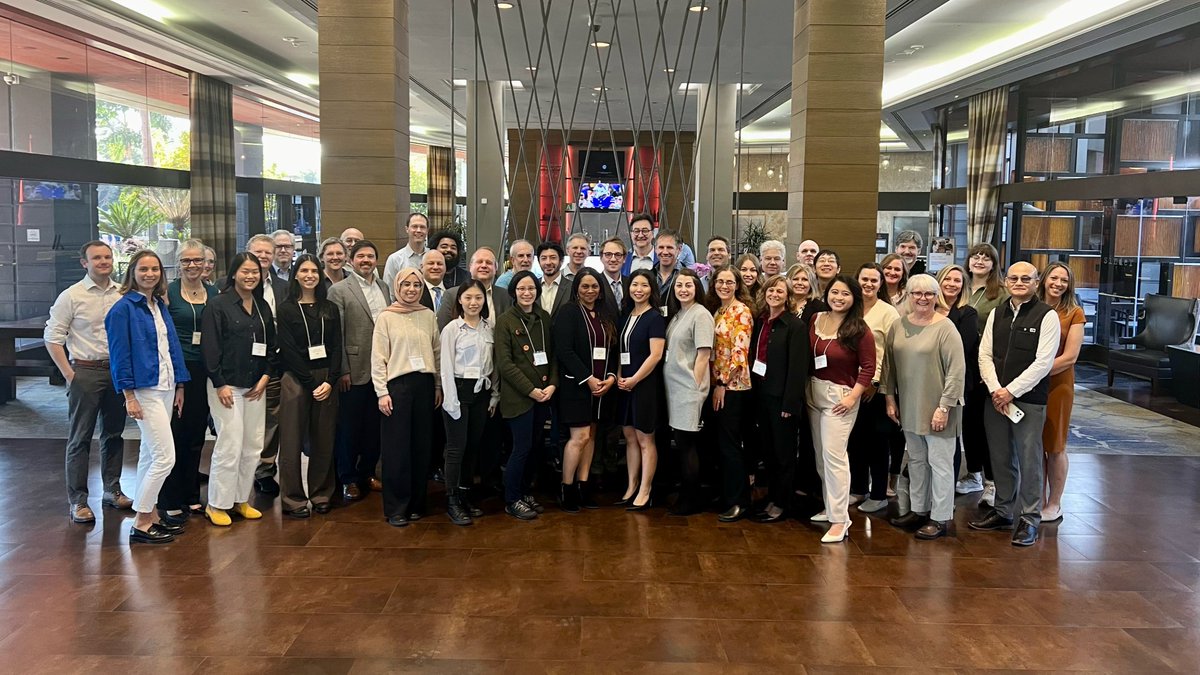
The NAPS Investigator Meeting started today in LA, with updates on data from 527 participants who’ve completed 1134 visits! Huge thanks to our participants for their time and effort in supporting crucial research on neurodegenerative diseases. #NAPS#NeurodegenerativeResearch
A recent study links poor sleep quality to accelerated brain aging. Experts stress that prioritizing good sleep is vital for cognitive health, suggesting that better sleep may reduce the risk of cognitive decline and neurodegenerative diseases.
https://t.co/dpK5Bja5cN
RBD Question of the Week❓💤💡
⎯
This week, we have Drs. Roneil Malkani from Northwestern University and Ron Postuma from McGill University to answer one of our most pressing RBD questions.
Memory loss is common in Alzheimer’s, but other signs like waking at 3 a.m. or daytime sleepiness may signal dementia types like Lewy bodies or Parkinson’s.
Learn more: https://t.co/dw9Q4fWqRF
We're making strides in neurodegenerative disease research! 💡🔬🧠
We just finished our second Industry Roundtable at the Movement Disorders Society Congress, focusing on advancing clinical trials for neuroprotective treatments targeting synucleinopathies.
A Dutch study found no link between long-term benzodiazepine use and dementia in healthy older adults. However, benzodiazepines were tied to reduced brain volume in areas like the hippocampus and amygdala. 🧠📉 Learn more: https://t.co/jYH9jUwKlw
37% of adults tried viral sleep trends in 2024, says @AASMorg. Experts warn trends like "bed rotting" & magnesium drinks can harm health. Stick to proven tips like consistent schedules & consulting a doctor.
💤 Read more: https://t.co/x2HOj0qF6T
Wearable tech may help track non-motor Parkinson’s symptoms like sleep issues linked to REM sleep behavior disorder. NAPS will soon begin a pilot study at select sites.
Read more on recent findings: https://t.co/yIzBjt3M9s
Can a stroke affect sleep? A new study in Neurology found stroke survivors were 50% more likely to sleep excessively or too little compared to those without a stroke history.
Learn more: https://t.co/Feyct9BfAI
RBD Question of the Week❓💤💡
⎯
This week, we have Dr. Carlos Schenck, a physician who first described RBD and a member of the NAPS Scientific Advisory Board, to answer one of our most pressing RBD questions.
A study suggests voice analysis in RBD patients may help detect early Parkinson’s progression. AI monitoring of voice, movement, and walking patterns shows promise but needs further validation.
👂Read the full abstract to learn more: https://t.co/hgOWZA5PoE
@nytimes delves into the rise of sleep optimization, noting the risks of 'orthosomnia'—an excessive focus on perfect sleep that can backfire. While aids like magnesium and gadgets help some, experts emphasize simpler habits.
💤 Learn more: https://t.co/n0mzdtYZQo
RBD Question of the Week❓💤💡
⎯
This week, we have Dr. Carlos Schenck, a physician who first described RBD and a member of the NAPS Scientific Advisory Board, to answer one of our most pressing RBD questions.
A study by Dr. Michael Howell and NAPS team at @UMNews found key differences between RBD triggered by antidepressants (Serotonergic RBD) and idiopathic RBD (iRBD). Follow-up ongoing to assess neurodegenerative risks.
💊 Learn more: https://t.co/V2nWP3xHiM