Good morning Mzansi 🇿🇦
At 15:00 this afternoon, I will be responding to oral questions in the National Assembly.
Oral questions are an important mechanism for accountability, transparency and public oversight in our democracy. They provide Members of Parliament with an opportunity to engage the Executive on matters affecting the basic education sector and the learners we serve.
You can follow the proceedings live via @ParliamentofRSA.
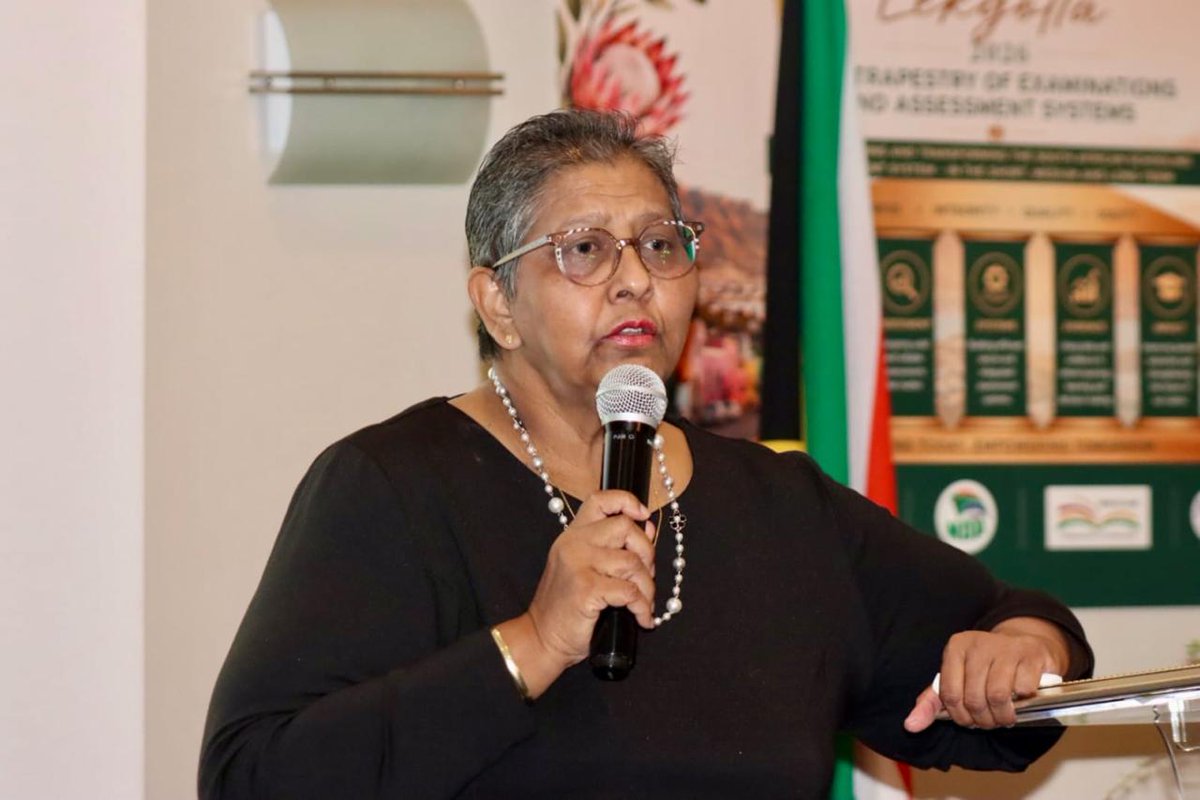
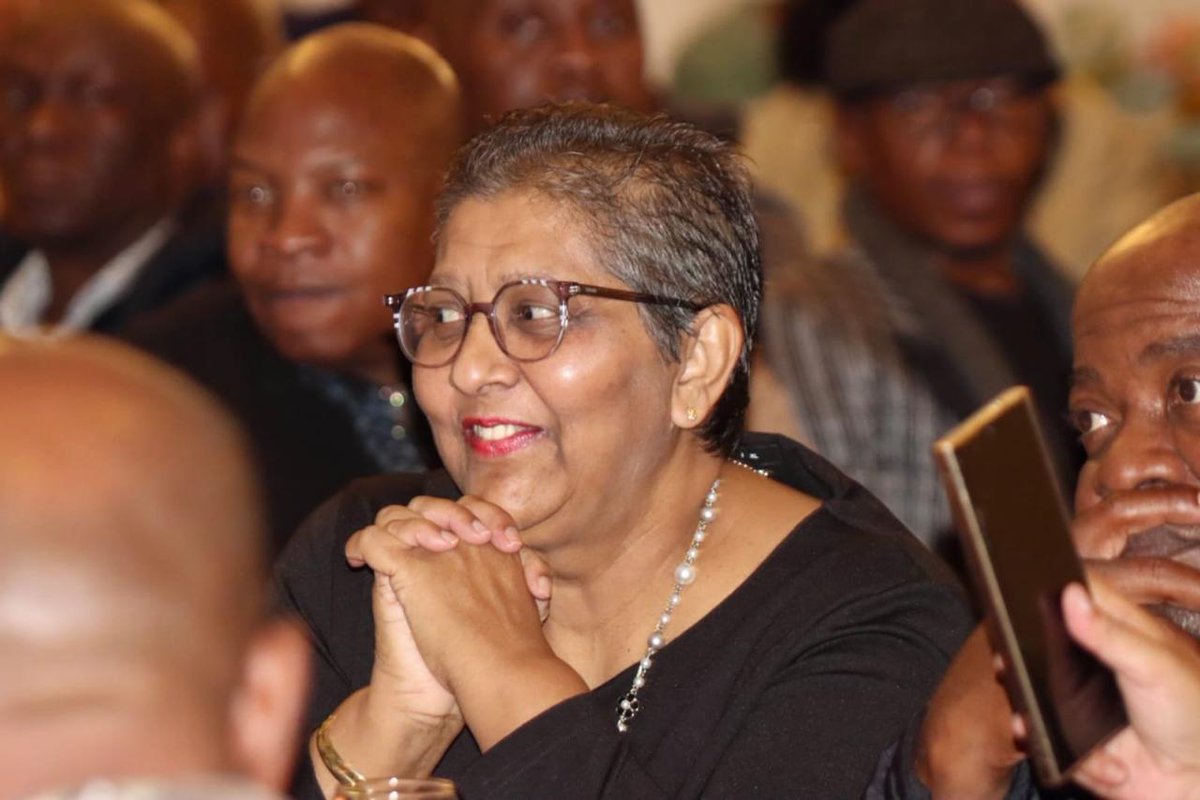
DBE National Examination & Assessment Committee (NEAC), honoured NAPTOSA’s Mrs Hema Hariram's contribution over the years at the 2026 NEAC Lekgotla in Western Cape.
The gap in leadership?
It's Not strategy, but Connection.
Coffee with the Custodian shows how to close the gap.
Grab a copy today & If it connects, please leave a review. https://t.co/2MOHWbq0E1
NAPTOSA presenting input as the CTU ATU at the ELRC strategic planning session 2026/ 2027 and ELRC Annual Performance Plan currently underway in the Western Cape this week. #servewithdignity
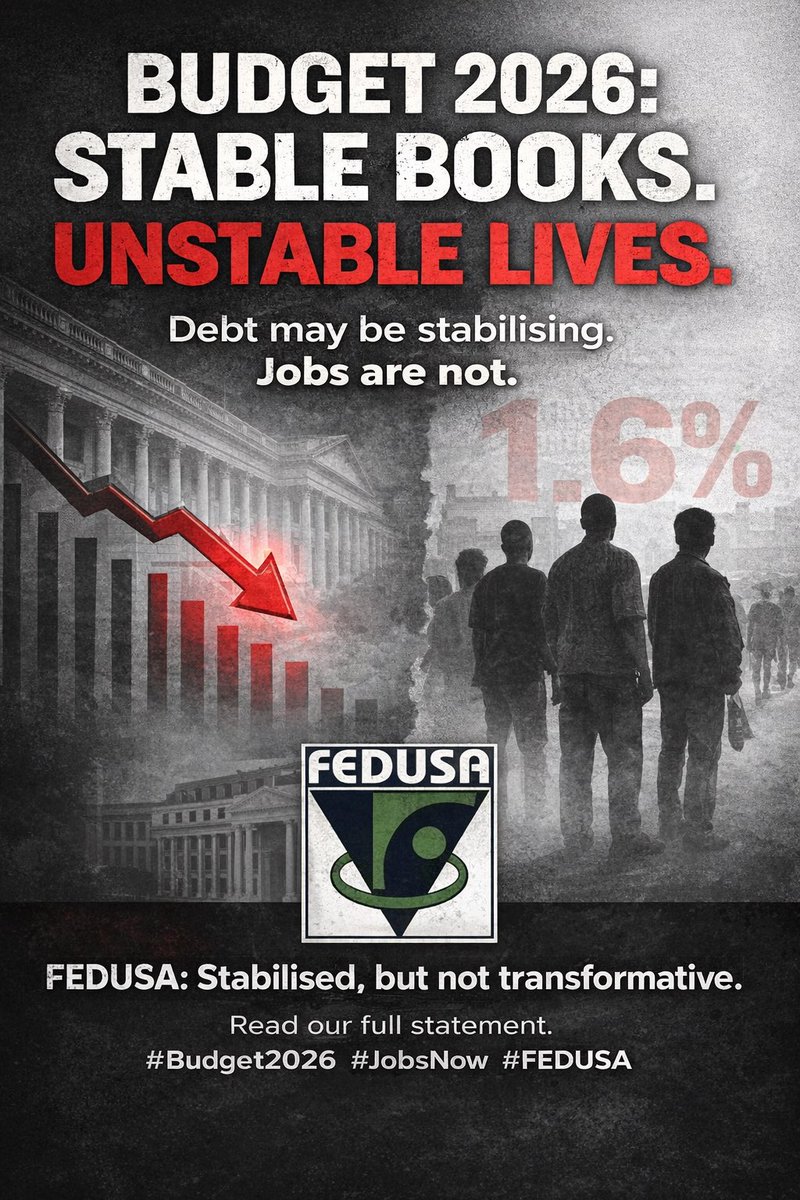
MEDIA STATEMENT: FEDUSA RESPONSE TO THE 2026 NATIONAL BUDGET
25 February 2026
The Federation of Unions of South Africa (FEDUSA) has studied the 2026 National Budget and our assessment is clear: this is a disciplined fiscal consolidation Budget with measured relief for households, meaningful structural reforms in some areas, but insufficient focus on large-scale job creation. It steadies the books, but it does not ignite the economy at the degree and in the manner required to provide relief to millions of South Africans. FEDUSA believes the country does not have a debt crisis but rather, a jobs crisis. The 2026 National Budget stabilises public finances, but it does not confront unemployment with the urgency it demands.
1. Jobs and Economic Growth
The Budget projects economic growth of 1.6 per cent in 2026, rising gradually to 2 per cent by 2028. That is movement, but it is not transformation. At these levels, unemployment will not decline meaningfully. For a country facing structural mass unemployment, jobs should dominate the Budget. Instead, the dominant theme remains debt stabilisation.
Debt is expected to stabilise at 78.9 per cent of GDP in 2025/26 and decline thereafter. That is an achievement. But debt ratios do not create work. Fiscal credibility does not employ young people. Stabilisation must now translate into expansion. FEDUSA supports macroeconomic stability. However, stability without a strong employment drive risks becoming stability for the few, not opportunity for the many.
Government must now accelerate labour-intensive growth in manufacturing, agriculture, infrastructure maintenance, logistics, township economies and public services.
2. Cost of Living and Tax Relief: Necessary Support
Workers are under pressure from high transport costs, rising food prices and weak public services. In this context, withdrawing the R20 billion tax increase is welcome. Inflationary adjustments to personal income tax brackets and medical tax credits provide relief to workers. Adjustments to thresholds and the increase in the VAT registration threshold will assist small businesses and encourage savings.
These are constructive interventions. FEDUSA has consistently argued that economic recovery must not come at the expense of workers’ disposable income.
However, tax relief cannot substitute for employment creation. Without jobs, relief measures remain temporary cushions.
3. Social Protection and the Future of SRD
The allocation of R292.8 billion to social grants in 2026/27 and increases across major grants are necessary and welcomed. With 42% of the population relying on social grants or social relief as a primary income source, protection of these allocations is non-negotiable.
However, the planned discontinuation of the Social Relief of Distress grant from 2027 creates deep uncertainty.
If SRD is to be phased out, a credible and properly funded replacement must already be designed, costed and agreed upon. The review of social security policies and any Basic Income Grant framework must be processed transparently through NEDLAC. Social partners must be part of the redesign because South Africa cannot afford instability in social protection while unemployment remains structurally high.
4. Municipal Collapse and the Water Crisis
For workers and communities, municipal failure is no longer theoretical. It is lived reality. With 63 per cent of municipalities in financial distress, the shift from oversight to active intervention is necessary. The performance-linked reform for metro trading services and the R27.7 billion allocation to support revenue-to-infrastructure reinvestment are steps in the right direction.