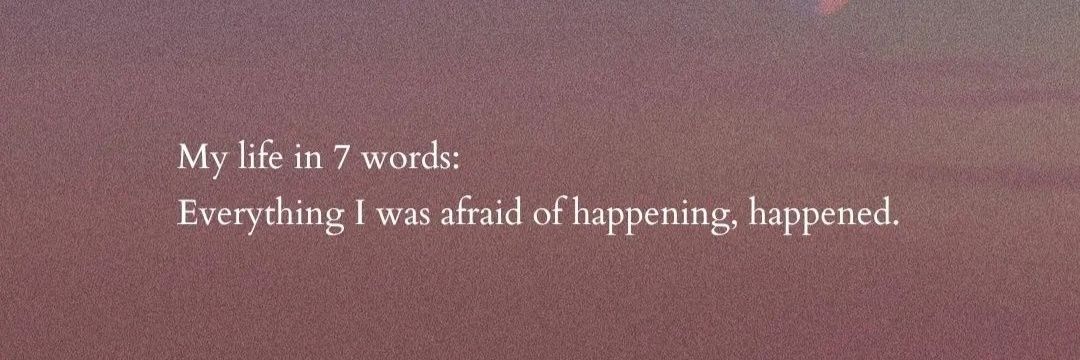
Everything I was afraid of happening, happened. 🌟 💕 Healing was a lonely journey. Let's heal together 🙏🏽 🫂
Author of The Scapegoat Child — Autumn 2026📚
Nobody talks about the angry stage of healing. The rage you feel when you realise how much and how long you were taken advantage of. The absolute disgust you feel towards the narcissist that harmed, misled, took advantage, and abused you!
We're taught not to speak ill of the dead.
But what about the people still living with what the dead did to them?
Listen to this, then tell me: Does death erase accountability?
https://t.co/HDyUIzAjDh
A narcissist seems to live by two rules. If the truth makes them look bad, lie about it. And if the lie gets exposed, blame you for it. They rarely need a third option, because between lying and blaming, they can avoid responsibility for almost anything.
Hi just a quick post to all that follow me. Sorry guys I have not been able to comment or engage as much as I usually do as I'm currently really busy with a work project at the moment. It's taking all my time 😔. I will still be posting but will engage back properly in a few weeks. Keep your comments going and talk to others in the comment section, I'm still reading them 🫂
How Narcissists Create Anxiety Disorders in Their Victims
Narcissistic abuse rarely looks like abuse while it's happening. It looks like confusion. That confusion is the point and over time, it rewires the nervous system into something that mirrors clinical anxiety.
1. Unpredictability trains the body to expect threat.
A narcissist alternates between charm and cruelty with no reliable pattern. The victim's nervous system can't relax because it never knows which version of the person it's about to face. This is textbook conditioning for hypervigilance the same mechanism seen in chronic anxiety disorders.
2. Gaslighting destroys trust in your own perception.
When your read on events is constantly contradicted "that never happened," "you're too sensitive," "you're imagining it" you stop trusting your own judgment. That erosion of internal certainty is one of the fastest routes to generalized anxiety: if you can't trust your own mind, everything feels unsafe.
3. Walking on eggshells becomes a permanent state.
Victims learn to scan constantly for mood shifts, tone changes, and micro-expressions to avoid triggering an outburst. This isn't paranoia it's an accurate adaptation to a genuinely unpredictable environment. But sustained hypervigilance is exhausting, and the body doesn't know how to switch it off even after the danger is gone.
4. Isolation removes the reality checks that would normally interrupt this.
Narcissists often work to cut off a victim's support network, subtly or overtly. Without outside perspectives, there's no one to say "that's not normal" so the anxiety compounds unchallenged.
5. Intermittent reinforcement is addictive and destabilizing.
Just enough affection or approval mixed in with the harm keeps victims hoping the "good version" will return. This unpredictable reward pattern is the same one that drives compulsive behavior in gambling and it keeps the anxious attachment cycle running long after the relationship ends.
The aftermath:
Long after leaving, many survivors are left with symptoms that mirror generalized anxiety disorder or complex PTSD racing thoughts, difficulty trusting their own decisions, a persistent sense of dread with no clear trigger. This isn't a personal flaw. It's a predictable outcome of prolonged exposure to psychological abuse.
Recovery starts with naming what happened not as an excuse for anxiety, but as an explanation for it.
#EverybodymustworkonMentalHealth
If someone truly cares about you, it would break their heart to know they've hurt you. People make mistakes, but when you tell the narcissist they've caused you pain, they respond by gaslighting, deflecting, lying, or manipulating. That's not love; it's ego.
In these moments, they're more focused on avoiding criticism and judgment and protecting the image they have of themselves than on your feelings. Your words threaten the illusions they hold, so they get defensive, interpreting your honesty as an insult. They don't care about how you feel; they're upset because you called them out.
Narcissists do change.......
They change their supply, their stories, their manipulations tactics. They change their masks. But they can NEVER change who they really are! Their illness prevents them from self reflection, which is why they never grow as people. The narcissist thrives off your pain
Narcissists single out people with trauma and abandonment wounds and then emotionally abuse them until they snap. Then they accuse them of madness and play the victim, so others bully and blame them too.
@CristinaSt16508 Exactly and thats why so many people doubt themselves in these situations, because 'they're a professional, surely not.' The short answer is to protect yourself the same way you would with anyone else boundaries, documentation, and not expecting the system to police itself.