Este señor cumplió a cabalidad su objetivo, visibilizar la historia de abuso, sometimiento y revolución del Congo a través de un simple homenaje a héroe africano anticolonialista Patrice Emery Lumumba🙋🏿♂️, tanto así que EEUU le prohibió cobardemente su ingreso al país.
This 1679 “Sabionari” Stradivarius is the only playable guitar by Antonio Stradivari left in this world.🤗
So take just a moment to hear a sound that’s well over 300 years old!👇❤️🔥
"It's a terrible thing to be alone, but it's an even more terrible thing to be with someone and still feel alone. That is the true tragedy of human existence: we are islands shouting at each other across oceans of misunderstanding."
— Virginia Woolf
🚨 BREAKING:
World-famous US rapper Eminem:
"Donald Trump is a narcissist who uses his power to spread hatred and racism, and he could drag America into a nuclear disaster. You're either with him or with me, because it's impossible to be on both sides."
Rose Valland spent nearly four years in a museum office surrounded by German officers who assumed she was harmless, mute, and culturally insignificant. They spoke freely, issued commands, documented plunder, and discussed train routes for stolen masterpieces. They believed she understood none of it. What they didn’t realize was that Valland was quietly fluent in German and meticulous beyond measure. She wrote down everything—artist names, crate numbers, departure dates, warehouse locations—and copied coded catalog lists late at night when no one was watching. She memorized routes when she couldn’t risk paper, then passed information to Resistance contacts who safeguarded each detail as if it were a life.
When Paris was liberated and Nazi art caches were uncovered, her secret notebooks became maps. Because she had listened when listening was dangerous, Rembrandts, Picassos, tapestries, altarpieces, and Jewish family portraits were traced back to owners who had been murdered, displaced, or silenced. Her quiet defiance challenged the myth that espionage belongs to those with guns and uniforms. Valland’s weapon was observation; her battlefield was a gallery desk. She didn’t recover art for glory, but to repair a world torn from families and memory—one shipment, one signature, one whispered detail at a time.
#archaeohistories
En el partido de esta noche entre Congo y Colombia en el Mundial, un hombre congoleño se quedó inmóvil durante los 90 minutos imitando el saludo del líder anticolonial congoleño, Patrice Lumumba.
Lumumba fue descuartizado y disuelto en ácido por EEUU y Bélgica en 1961 por conseguir la independencia del Congo ante el colonialismo y negarse a que los imperialistas siguieran saqueando los recursos de su pais.
Aunque los imperialistas disolvieron su cuerpo, no pudieron borrarlo de la historia, 65 años después, Lumumba sigue presente para millones de personas.
"The best people possess a feeling for beauty, the courage to take risks, the discipline to tell the truth, the capacity for sacrifice. Ironically, their virtues make them vulnerable; they are often wounded, sometimes destroyed."
- Ernest Hemingway
“A dying culture invariably exhibits personal rudeness. Bad manners. Lack of consideration for others in minor matters. A loss of politeness, of gentle manners, is more significant than is a riot.”
-Robert A. Heinlein
James Robison
What Joyce Carol Oates wrote to Elon Musk on Twitter. I am told it rattled him. I love it.
“So curious that such a wealthy man never posts anything that indicates that he enjoys or is even aware of what virtually everyone appreciates – scenes from nature, pet dog or cat, praise for a movie, music, a book (but doubt that he reads); pride in a friend’s or relative’s accomplishment; condolences for someone who has died; pleasure in sports, acclaim for a favorite team; references to history. In fact he seems totally uneducated, uncultured. The poorest persons on Twitter may have access to more beauty & meaning in life than the ‘most wealthy person in the world.’”
In 1969 SAMUEL BECKETT received the 1969 Nobel Prize in Literature.
Concerned about a spike in publicity when Swedish TV called for an interview, Beckett agreed but with the stipulation the interviewer couldn’t ask any questions.
Classic Beckett.
In May of 1965, a 28-year-old teacher walked into a fourth-grade classroom in the Roxbury neighborhood of Boston and did something that would change the course of his life — and eventually, the lives of millions.
His name was Jonathan Kozol. He had graduated from Harvard with highest honors. He had studied at Oxford on a Rhodes Scholarship. He could have chosen almost any path. Instead, he chose a crumbling public school in one of Boston's poorest neighborhoods, where the textbooks were two decades old, the heating system didn't work through winter, and a new student walked out the door — or simply disappeared — almost every single week.
That morning, he read his class of African-American nine-year-olds a poem by Langston Hughes. It was called The Ballad of the Landlord — a poem about a Black tenant standing up to a white landlord over an apartment falling apart at the seams, and what happened to him when he dared to speak up. It was not on the Boston Public Schools' approved reading list.
The next morning, Kozol was handed a dismissal letter.
The official reason: he had read material that wasn't in the approved curriculum, without permission from a superior. There had also been complaints from parents who had heard about the poem.
He had been teaching for seven months.
Another man might have accepted the verdict and walked away. Kozol did the opposite. He sat down and wrote. He documented everything — the broken heaters, the outdated books, the overcrowded rooms, the letter that ended his career over a poem about justice. He called the book Death at an Early Age.
Houghton Mifflin published it in October of 1967. Five months later, it won the National Book Award. Over the following decades, it sold more than two million copies.
But Kozol didn't stop there. He spent the next sixty years going back — back to the classrooms, back to the neighborhoods, back to the families that the system kept failing. He wrote about homeless children sleeping in welfare hotels. He wrote about the staggering gap between what wealthy school districts spent on each child and what poor ones could afford. He wrote about the Bronx, about segregation, about the America that existed just a few miles from the America most people saw.
He turned 89 in September of 2025. He is still writing.
All of it began on a May morning in 1965, when a young teacher decided that nine-year-olds in a cold, underfunded classroom deserved to hear a poem about what it felt like when the world wasn't fair.
He read it to them. And they fired him for it.
He made sure the whole world heard it anyway.
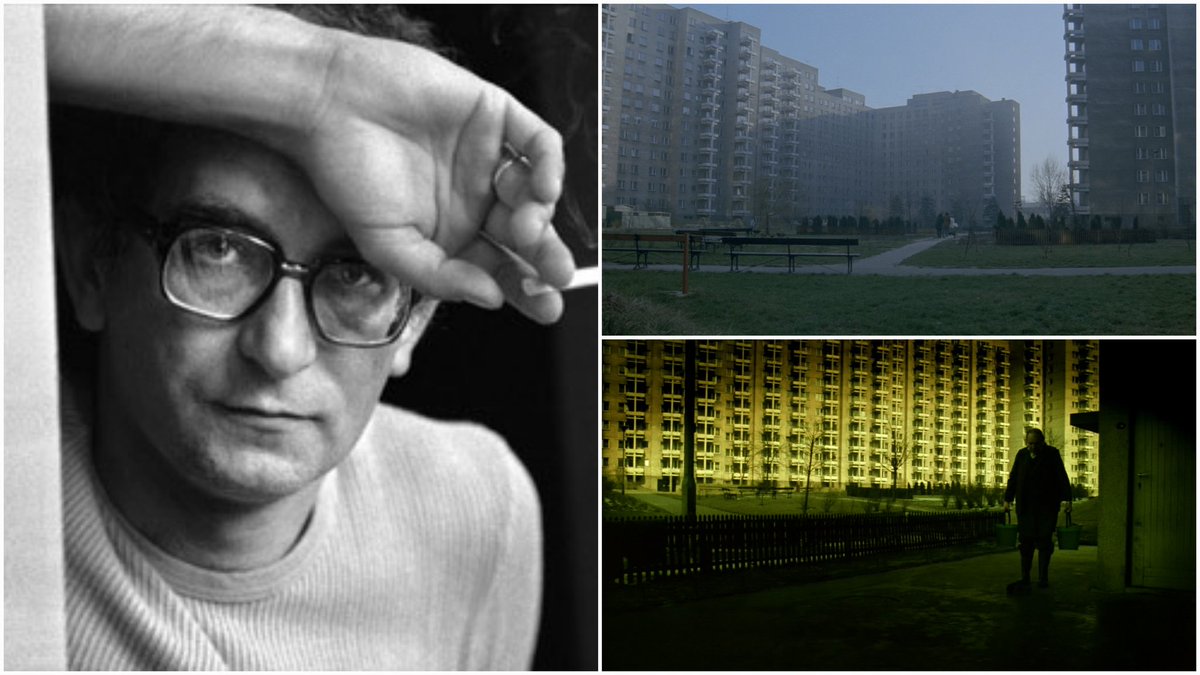
Krzysztof Kieślowski on The Decalogue (1989):
"Decalogue is an attempt to narrate ten stories about ten or twenty individuals, who — caught in a struggle precisely because of these and not other circumstances, circumstances which are fictitious but which could occur in every life — suddenly realize that they're going round and round in circles, that they're not achieving what they want. We've become too egotistic, too much in love with ourselves and our needs, and it's as if everybody else has somehow disappeared into the background. We do a lot for our loved ones — supposedly — but when we look back over our day, we see that although we've done everything for them, we haven't got the strength or time left to take them in our arms, simply to have a kind word for them or say something tender. We haven't got any time left for feelings, and I think that's where the real problem lies. Or time for passion, which is closely tied up with feelings. Our lives slip away, through our fingers.
I believe everybody's life is worthy of scrutiny, has its secrets and dramas. People don't talk about their lives because they're embarrassed. They don't want to open old wounds, or are afraid of appearing old-fashioned and sentimental. So we wanted to begin each film in a way which suggested that the main character had been picked by the camera as if at random. We thought of a huge stadium in which, from among the hundred thousand faces, we'd focus on one in particular. We also had an idea that the camera should pick somebody out from a crowded street and then follow him or her throughout the rest of the film. In the end we decided to locate the action in a large housing estate, with thousands of similar windows framed in the establishing shot. It's the most beautiful housing estate in Warsaw, which is why I chose it. It looks pretty awful so you can imagine what the others are like. The fact that the characters all live on one estate brings them together. Sometimes they meet, and say, 'May I borrow a cup of sugar?'
Basically, my characters behave much as in other films, except that in Decalogue I probably concentrated more on what's going on inside them rather than what's happening on the outside. Before, I often used to deal with the surrounding world, with what's happening all around, how external circumstances and events influence people, and how people eventually influence external events. Now, in my work, I've thrown aside this external world and, more and more frequently, deal with people who come home, lock the door on the inside and remain alone with themselves."
— Kieślowski on Kieślowski, edited by Danusia Stok (Faber & Faber, 1993)
For those reading the book "Never Forget Your Name ...The Children of Auschwitz" by Alwin Meyer if you find yourself wondering how could the Nazis do that when you finish move on to the classic ...
"The Ethnic Cleansing of Palestine" by an Israeli Jew Ilan Pappe for your answer.
Israeli forces, accompanied by Jerusalem Municipality staff, stormed the Greek Orthodox Patriarchate land in Silwan. They expelled the Church's representative, confiscated equipment, uprooted trees, destroyed crops, and fenced off the property.
https://t.co/QiOAbofNdn