Sometimes your eyes need a minute to focus when you wake up. Roman's Wide Field Instrument just woke up for the first time EVER, and scientists have started adjusting its "eyes" so they can focus on the bigger picture.
Check out its first test image below https://t.co/lkv3LFMyMR
@NASARoman As we gear up for its first images, we'll share more here on how Roman and Hubble bring different superpowers to astronomy: https://t.co/TCZAy8Ukk6
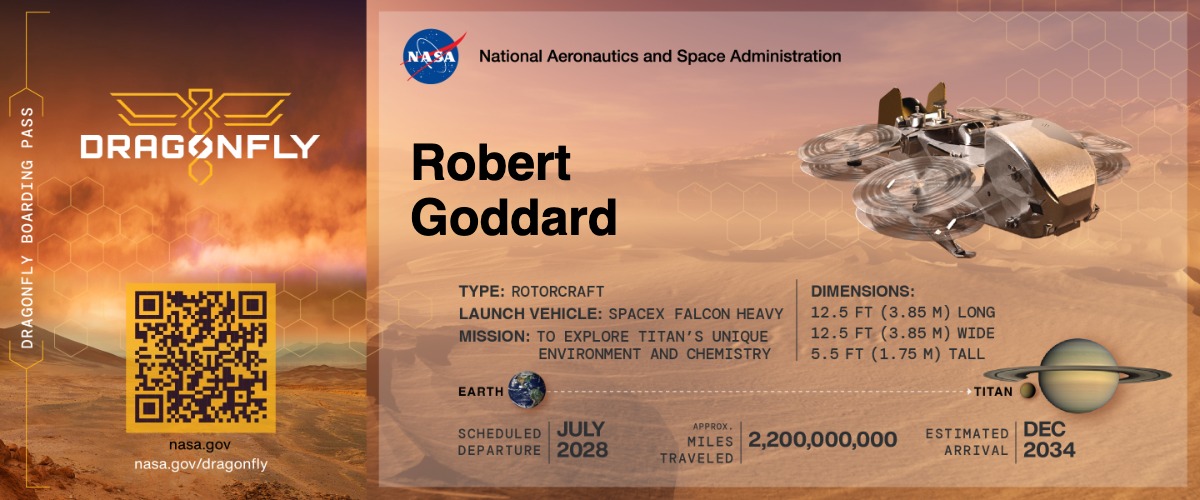
Pack your bags, we're heading to Titan!
Add your name to fly along with Dragonfly, the rotorcraft we're sending to Saturn's largest moon. Download your boarding pass now!
https://t.co/A6v4Fua7st
We know our universe is expanding.
But telescopes like Hubble measure an expansion rate that’s faster than predicted, based on models of the early universe.
Here’s how @NASARoman will join the quest on cracking the case of this “Hubble Tension” ⬇️
When you hear about the eerie side of the universe, it might make you feel a little "’stitious." @NASARoman will help shed light on some of these haunting sights.
Check out some scary space stories to tell in the dark: https://t.co/GJ8zuaxFJu
It's the final countdown 🎶
We're one step closer to Roman's first images! The observatory is now fully functional and the team is performing their final checks and calibrations before starting science observations.
https://t.co/rnLmBsiw5m
Did you catch the @NASARoman launch? 🚀
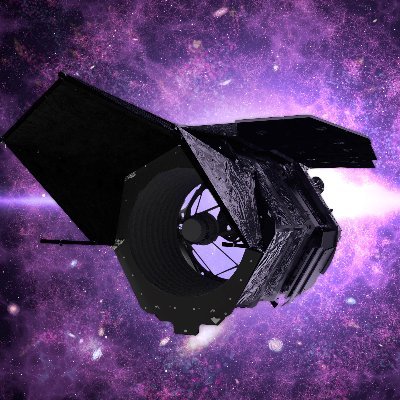
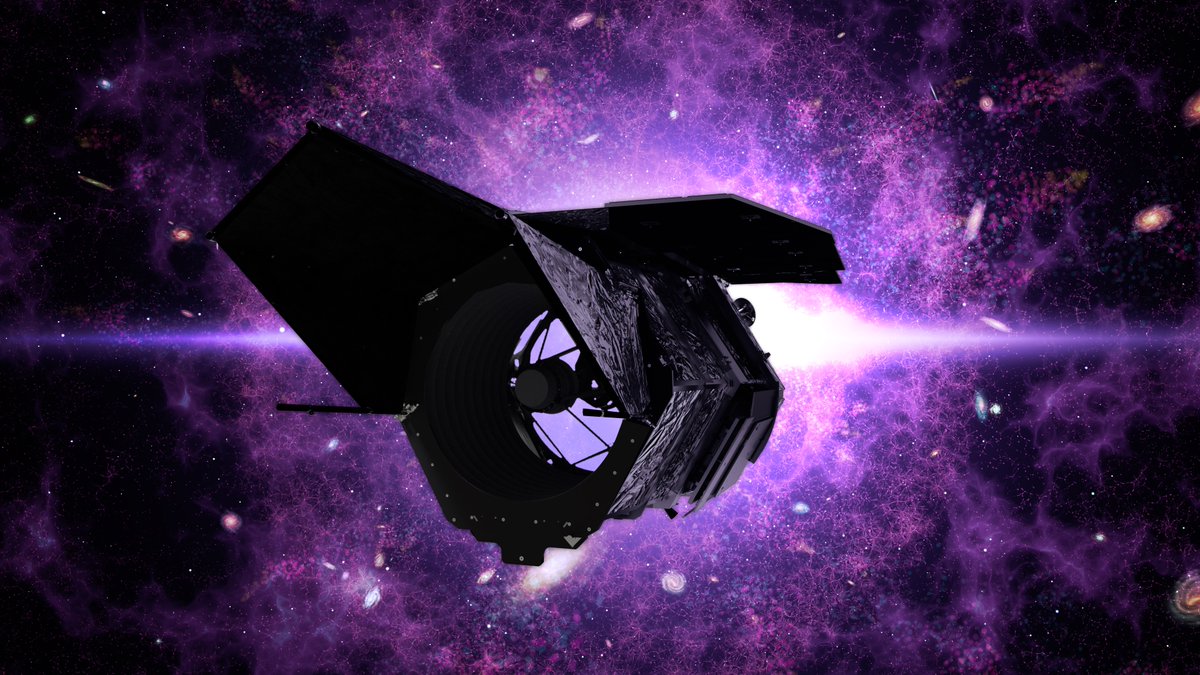
NASA’s newest space telescope is on the way to its home orbit a million miles away, where it’ll capture wide-field, infrared views of the universe!
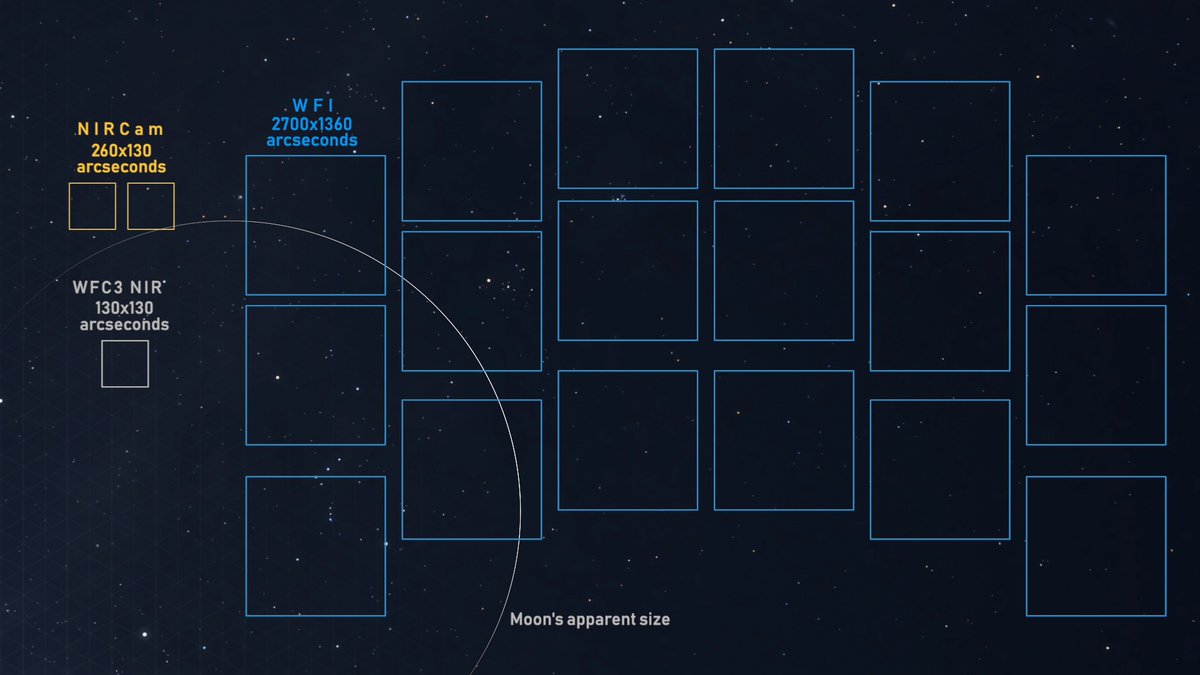
Roman gets the big picture, while Hubble delivers the details. ⬇️
Join NASA’s Night Sky Network on Thursday, Oct. 22, at 5:00 p.m. PT (8:00 p.m. ET) for a livestream all about Roman! Learn about the telescope and how it will unveil the cosmos in ways never before possible. The event will also be recorded. Details: https://t.co/t74qWWo5iy
DYK that you’re moving at about 67,000 miles per hour right now?!
Earth is carrying you on its orbit around the Sun. When Roman launched, it inherited that motion and will undergo a series of maneuvers before its final orbital insertion at L2.
https://t.co/abyyOQyKzV
The Nancy Grace Roman Space Telescope has been named one of TIME's Best Inventions of 2026.
Roman continues its journey in space to its final orbit, completing critical milestones along the way. We expect first images by early 2027.
https://t.co/oy9o44u0cU
Roman’s marathon of testing continues while it zooms toward L2!
The team aligned and focused the telescope’s optics and gave Roman’s primary instrument a meticulous “eye” exam. The results: Roman’s cosmic surveys will be even sharper than expected! 🤩
https://t.co/Yc6vYKaQwp
What's in a wavelength?
Different "types" of light unveil different data about our universe. Hubble detects visible light, along with some near-infrared wavelengths that "cut through" clouds of gas and dust, as seen in this view of the Pillars of Creation ⬇️
A whisper, a hidden force, a secret holding the universe together. Meet dark matter, brought to you soon in even fresher detail by Roman. 🖤
https://t.co/ub44Kwsgqu
Next, the team collected the coronagraph's first test images. The first contained a single star in the Large Magellanic Cloud, and the next one contained many! It's a step toward the coronagraph's ultimate goal: blocking starlight to see faint planets and debris disks around nearby stars.
https://t.co/o9MtTgplIw
2/2
The Roman team has been busy! Last week, they tested out the fine-guidance system, which keeps the observatory locked onto targets. Its current stability is like focusing a laser beam on a U.S. dime from ~150 miles away! They're working to improve this even further.
https://t.co/o9MtTgplIw
1/2
Large file incoming 📡
Ground systems worldwide supporting the Roman Space Telescope have confirmed the ability to receive the 1.4 terabytes
of daily data!
Learn more: https://t.co/Gqt6jmP6x1
@NASARoman One way Roman will investigate dark matter is by tracking how smaller clumps of it warp light from more distant galaxies. These “gravitational lensing” surveys will enable scientists to fill in some gaps in our understanding of dark matter.
Learn more: https://t.co/SEEfrySEw5
How does the universe work? Our @NASARoman is poised to help us answer this question by shedding light on dark matter, the invisible glue that holds the universe together. Dark matter makes up about 27% of the universe, but we still don’t know what it is. ⬇️
Today, NASA announced PRIMA, a new space telescope that will explore long-standing mysteries around the formation of planets, stars, black holes, and even how water on Earth came to be. https://t.co/am7EPkNYof
Adopt a pixel from one of Roman’s first images! Each pixel will represent a unique piece of the cosmos.
Join over 500,000 of our friends that have already claimed theirs:
https://t.co/h0ZUqilhdJ
Hey!
ICYMI It's been almost a month since Roman's launch and the observatory is currently on its way to L2, a million miles from earth.
Stay up to date on the mission here: https://t.co/cyGjI3n6kR