Strong DEFI believer and CRYPTO enthusiast.
I only invest in solid projects with utility and a long term vision (and in some shitcoins too 🤣)
Always DYOR - NFA
We sincerely apologize for the concern and inconvenience this situation may have caused.
Currently, only three accounts can share accurate and official information about #Jasmy and #JANCTION:
@HARA_JasmyCFO / @JanctionMGT_JP / @0xjasmy
Unfortunately, the official @JasmyMGT and @JanctionMGT accounts have been hacked.
For your safety, please do not engage with or click any links from these compromised accounts.
Thank you for your understanding and continued support.
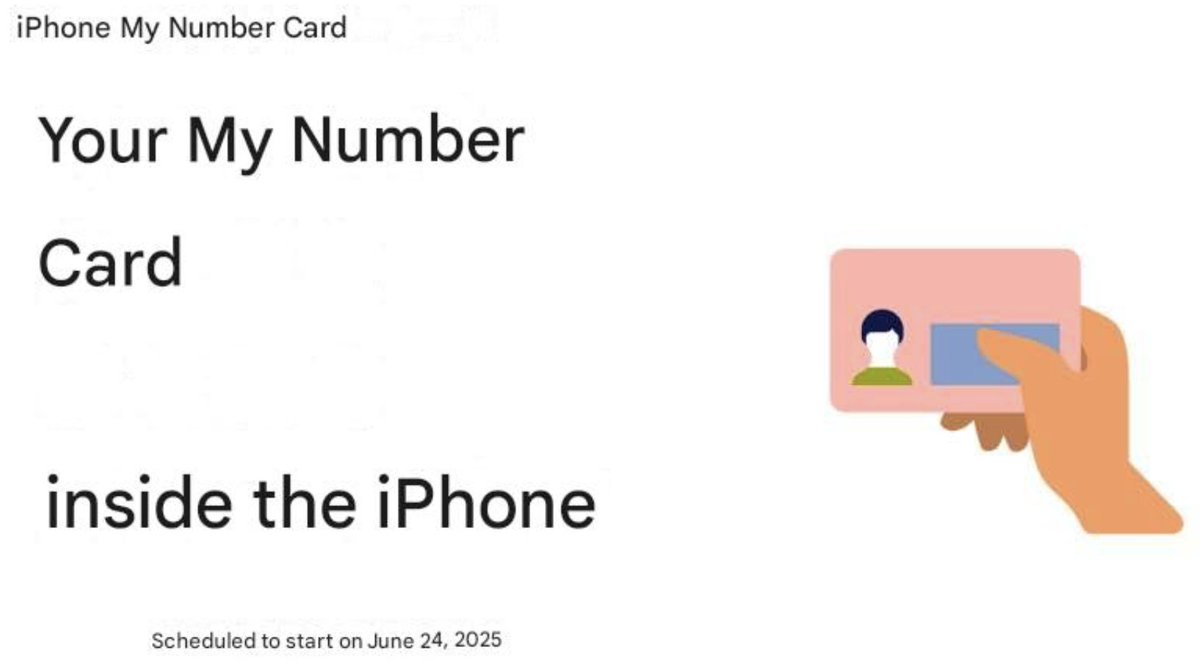
My Number ID Launches in Apple Wallet on June 24 – Powered by JASMY Technology!
Japan’s national digital ID, the My Number Card, is officially coming to the Apple Wallet on June 24, 2025,...
#JASMY#JANCTION
Everything you need to know here:
https://t.co/edHKlWvQdb
#JASMY
Starting June 24, the functions of the My Number card will be available directly on an iPhone. This will make it possible, for example, to obtain documents such as a certificate of residence or a seal registration certificate at convenience stores, without having to use the physical card.
In addition, users will be able to log into the official “Mynaportal” website using only their smartphone, making procedures such as checking medical expenses or moving-related tasks more convenient.
The minister also stated that Android smartphones will also gradually be usable as health insurance cards starting in September. Trials will begin next month at certain medical institutions.
#Jasmy and #Janction are entering a new phase of expansion.
The team aims to make its platform even more accessible, particularly by simplifying the development environment for application creators. A key focus is the introduction of an English interface, clearer documentation, and enhanced technical support. At the same time, #Jasmy is intensifying its international efforts, with particular attention to Southeast Asia. The year 2025 promises stronger communications and several major announcements ahead.
Janction, on its part, has undergone a major transformation.
It is no longer just a side project but now a true decentralized physical infrastructure built on a simple idea: everyone should be able to own and benefit from their own assets, including their data and computing power.
Today, artificial intelligence, image generation, video rendering, and large-scale data processing all heavily rely on a single resource: the GPU. Originally designed for gaming, GPUs have become essential for any task that requires massive parallel processing. Unlike CPUs, GPUs can execute thousands of operations simultaneously, making them ideal for machine learning and AI models.
However, this exponential demand has led to a global shortage. GPU prices are skyrocketing, lead times stretch up to a year, and the market is dominated by a few major players. In Japan and across Asia, the situation is especially strained.
This is where Janction steps in with a disruptive approach.
The idea is to allow any user to share an unused GPU, whether it’s in a gaming PC, a company server, a university lab, or even a cybercafé. In return, the owner gets paid. And to make this process smooth, simple, and secure, Janction relies on Docker technology.
To visualize this, imagine a box containing everything needed to run an application, the code, libraries, and required files. Thanks to Docker, this box can be sent and run on any computer without conflicts or manual setup. This allows Janction to distribute AI or processing tasks across its network seamlessly. Each user receives a container, runs it via their GPU, and is paid automatically through smart contracts deployed on the network.
The system is based on a fixed-rate subleasing model. Even if the GPU isn’t used 24/7, the owner still earns income. This is an ideal solution for schools, creative studios, researchers, or startups that have available resources but variable needs.
Today, over 4,500 GPU nodes are already active in Japan, Hong Kong, and Singapore. The network offers fast block times and 99.9% reliability. The goal is ambitious: reach 100,000 nodes. To achieve this, Janction is targeting six main markets: AI startups, 3D and video studios, streaming platforms, research centers, game developers, and of course, owners of underutilized GPUs.
At the same time, an Ethereum-based JANCTION token is in preparation. It will be used to reserve GPU power, participate in the ecosystem, and unlock additional rewards, including JASMY tokens. This dual-incentive system is designed to encourage the large-scale acquisition, sharing, and use of GPU power. The tokens will be tradable, storable, or reinvestable into hardware to further strengthen the network.
#Janction’s strategy is clear, first, establish strong liquidity on recognized exchanges, then open access to a broad investor base, especially in #Japan, South Korea, and the United States.
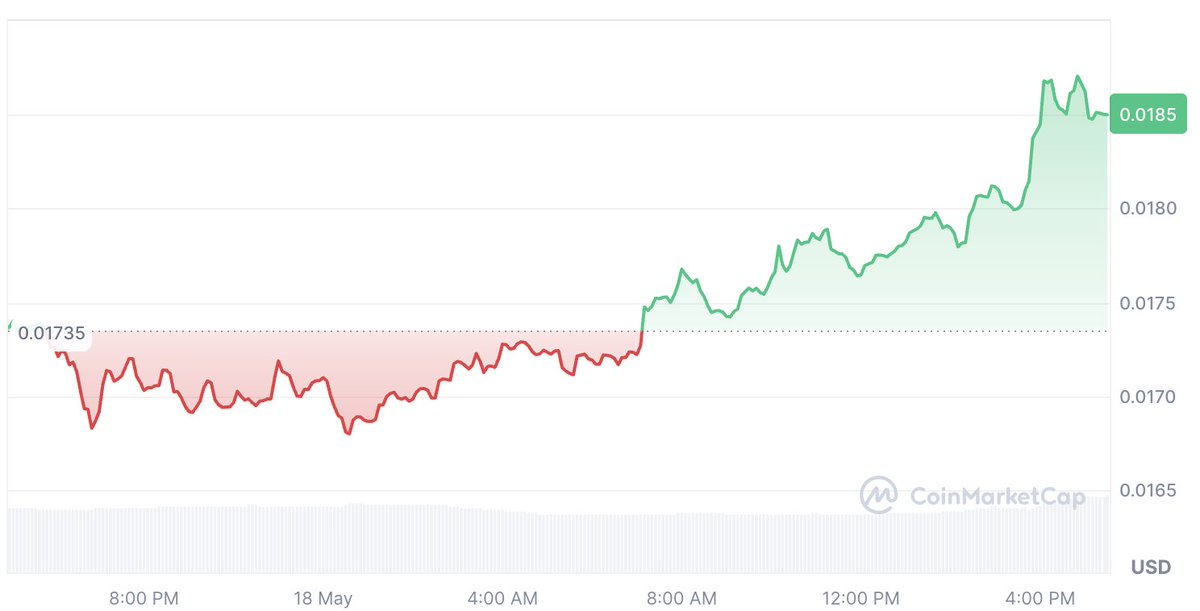
$jasmy When you trade around 0.017 - 0.019 and people start to complain and doesnt think it goes up fast enough.
Then you know its cheap and we are in a good place😊👍
Its loading ,taking a break, building a strong floor and fueling up for next run up.
#jasmy#janction#Sony
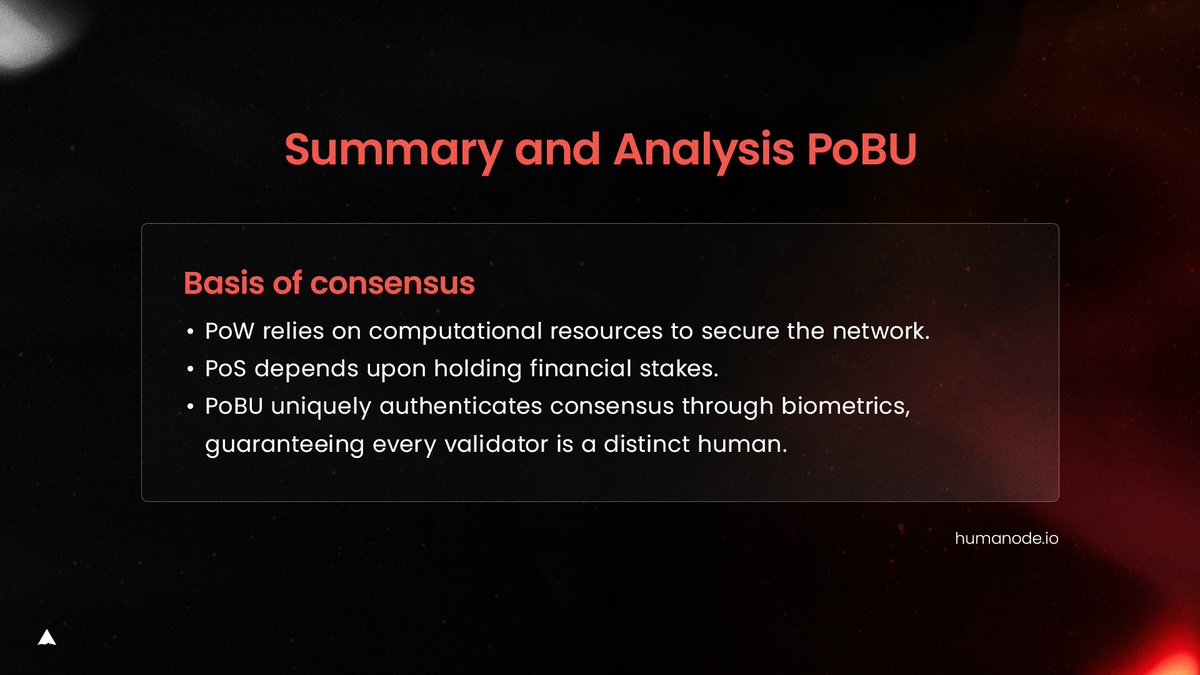
In the thoughts of Satoshi Amagai, CEO of Mofiria, who will collaborate with #JASMY on vein authentication for passwordless authentication and enhanced security through various cryptographic mechanisms.
In the era of artificial intelligence and rapid digital transformation, securing digital identity has become a fundamental challenge. Traditional authentication systems, such as passwords or access cards, are increasingly showing their limits: frequent forgetfulness, unintentional sharing, phishing attacks, data breaches, and high management costs. In this context, biometric authentication emerges as a credible, powerful alternative, especially suited to an interconnected world.
Biometrics, as a method of identification based on unique physical or behavioral characteristics, has a rich technological history. In the 1960s, early experiments focused on fingerprint recognition. The following decades saw major advances: in the 1980s with image processing, in the 1990s with the miniaturization of sensors, and in the 2000s with the commercialization of vein recognition. From the 2010s onward, biometrics became widespread thanks to its integration into smartphones, leading today to a major turning point marked by the convergence of artificial intelligence and biometric technologies.
The operation of biometric authentication relies on two main steps: enrollment and authentication. During enrollment, sensors capture biometric data such as a fingerprint, an iris image, or a vein pattern. This data is then transformed into a digital template, a sort of encoded fingerprint, that is securely stored. This representation is designed to be irreversible: the original image cannot be retrieved from the template, protecting the user’s privacy.
When a user attempts to authenticate, the system captures new biometric data, converts it, and compares it to the stored template. This comparison is performed via complex algorithms capable of tolerating small variations while maintaining a high level of accuracy. This process balances security with ease of use.
However, this does not come without caution. Biometrics, because it relates to physical identity, raises critical questions: what happens in the event of a data breach? Can a biometric template be erased or changed like a password? To address these concerns, Mofiria insists on high security standards, strong encryption of templates, and strict compliance with data protection regulations.
Today, biometric authentication is no longer limited to niche applications. It is integrated into banking services, smartphones, secure buildings, and even e-commerce platforms. And with artificial intelligence, systems are becoming smarter, more accurate, and capable of learning and adapting.
In short, biometric authentication is becoming the cornerstone of modern digital security. It represents not only a technological leap but also a pragmatic response to an increasingly digital society, where each identity must be protected, accessible, and instantly verifiable.
Strong Community Update
@linq_ai
Yesterday the main X of the LinqAI got compromised despite 2FA enabled, and it`s still awaits resolution to this problem from the X support (We know it`s crazy slow), but the community is diehard on this one!
So despite the bad news, chart is holding like a champ! And imo when the X will be brought back, there could be a possible breakout!
NFA just my thinking, as I am a bag holder, and I love this strong community!
Let`s support the team!
$LNQ is only on $ETH! Do not fall for any scams!