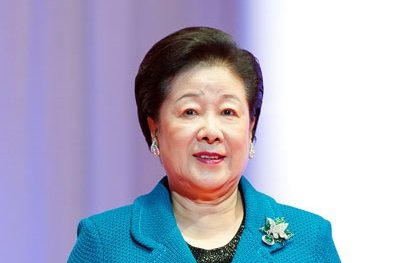
Official Statement of FFWPU North America and FFWPU Europe & the Middle East on the Case of Republic of Korea v. Dr. Hak Ja Han
July 8, 2026 (USA time)
On July 10, prosecutors in South Korea are expected to deliver the government’s final arguments against Dr. Hak Ja Han, the Mother of Peace. It seems inevitable that they will ask for a conviction and seek a lengthy prison sentence for an 83-year-old spiritual leader whose life has been defined by the pursuit of peace, unity, and reconciliation for all humankind.
After mobilizing hundreds of police and investigators, and spending millions of dollars, the prosecutors have failed to show that she ordered, directed, or intended any crime. After months of detention and interrogation, the government’s case rests on innuendo, association, and a maze of technical accusations that obscure more than they prove.
As her life story confirms beyond any legitimate challenge, Mother Han answers to a higher calling. She knows what is in her heart and what she pursues, and even now, she asks us to respond not with bitterness or fear, but with prayer.
This is not the first time our founders, Mother Han and her late husband, Rev. Sun Myung Moon have stood before the powers of this world. Like so many other religious leaders, they have been misunderstood, accused, and persecuted for their faith and commitment to peace.
This moment is larger than one trial. This represents a test of whether people of faith in South Korea can still speak truth to power.
We will keep praying and remain strong. We are confident that the truth will be revealed, and Mother Han's work for lasting peace will not stop. As Dr. Martin Luther King Jr. often said, "The arc of the moral universe is long, but it bends towards justice.”
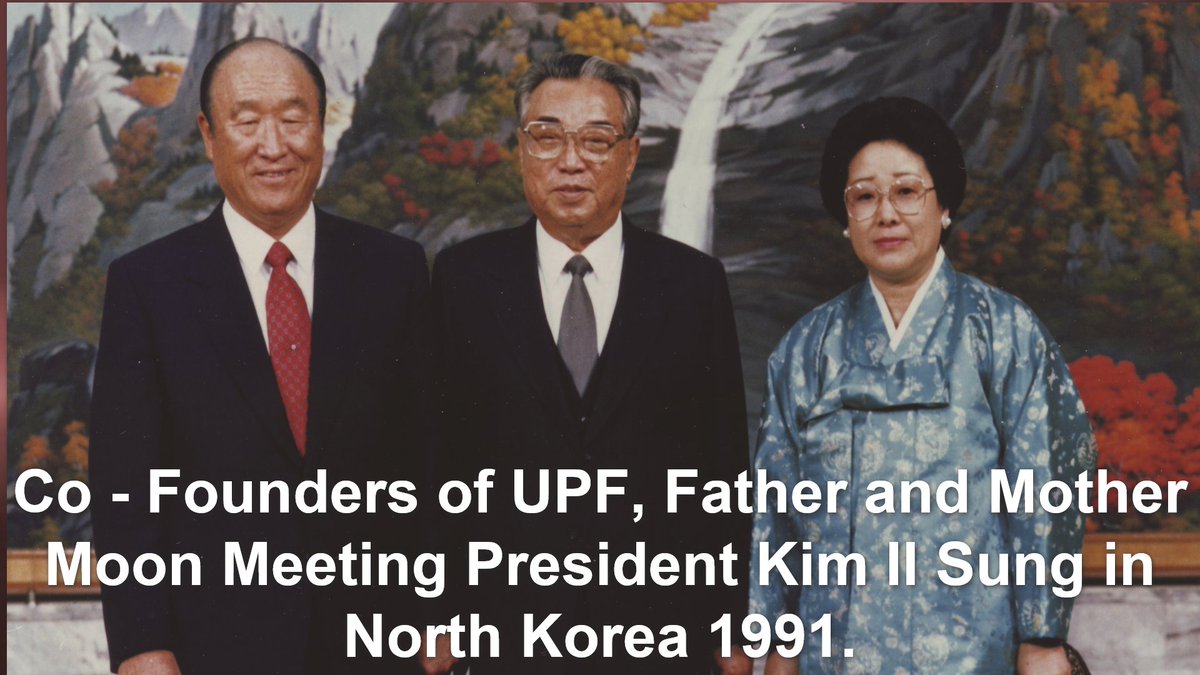
December 1991, historic visit of Rev Dr Sun Myung Moon & Dr Hak Ja Han culminated in a reconciliatory meeting of an anti-communist figure with then communist North Korean leader, President Kim Il Sung, in Pyongyang. https://t.co/V70259Owfg
#UPF#Reconciliation#Peace
Kim Min-soo Warns of Collapsing Democracy as Ballot Shortages Spark Nationwide Outrage.
South Korea’s local elections were intended to reflect the will of the people through a fair and orderly process, yet widespread ballot shortages disrupted voting at multiple polling stations across Seoul, Daegu, and Incheon.
Voters faced long waits, and in some cases were unable to cast ballots at all, turning what should have been a routine democratic exercise into a scene of chaos and frustration.
Kim Min-soo, a Supreme Council member of the People Power Party, described the situation as a direct threat to the integrity of the Republic’s democracy and rule of law.
Beyond partisan lines, these failures raise fundamental questions about the National Election Commission’s preparedness and accountability.
When an institution responsible for managing fair elections cannot ensure basic access to ballots, and when counting proceeds amid restricted observer access and limited media presence, public trust inevitably erodes.
This is not merely a logistical issue but a challenge to the core principles that sustain democratic participation.
In any mature democracy, the right to vote freely and have that vote counted transparently forms the bedrock of legitimacy.
When systemic shortcomings undermine this right, society risks deeper divisions and cynicism toward institutions.
Restoring confidence requires honest examination across all parties and the media.
Do you believe these election management failures are fixable administrative errors, or do they signal a deeper crisis that demands structural reform to protect our democratic system?
Kim Eun-hye Declares Local Election Invalid Amid Widespread Ballot Shortages.
South Korea’s elections are built on the principle that every citizen’s vote must be fairly counted, yet serious logistical failures during this local election cycle have disrupted that process.
In multiple districts, including opposition strongholds, polling stations ran out of ballots, forcing voters to wait for hours or leave without casting their votes.
Kim Eun-hye, Senior Deputy Floor Leader for Policy of the People Power Party, strongly criticizes these incidents as not mere mistakes but a fundamental attack on the integrity of the election.
She argues that such disruptions — especially in key areas — compromise democracy and the rule of law, comparing the pattern to tactics used in authoritarian regimes where voting is suppressed in unfavorable districts.
The failures have sparked widespread public anger and calls for accountability.
This situation is important because free and equal access to the ballot is the foundation of legitimate democratic governance.
When voters are systematically prevented from participating due to preventable shortages, it raises serious questions about the fairness of the entire electoral system and erodes public trust.
Do you think these ballot shortages represent administrative incompetence that can be fixed, or do they point to deeper systemic issues that undermine confidence in Korean democracy?