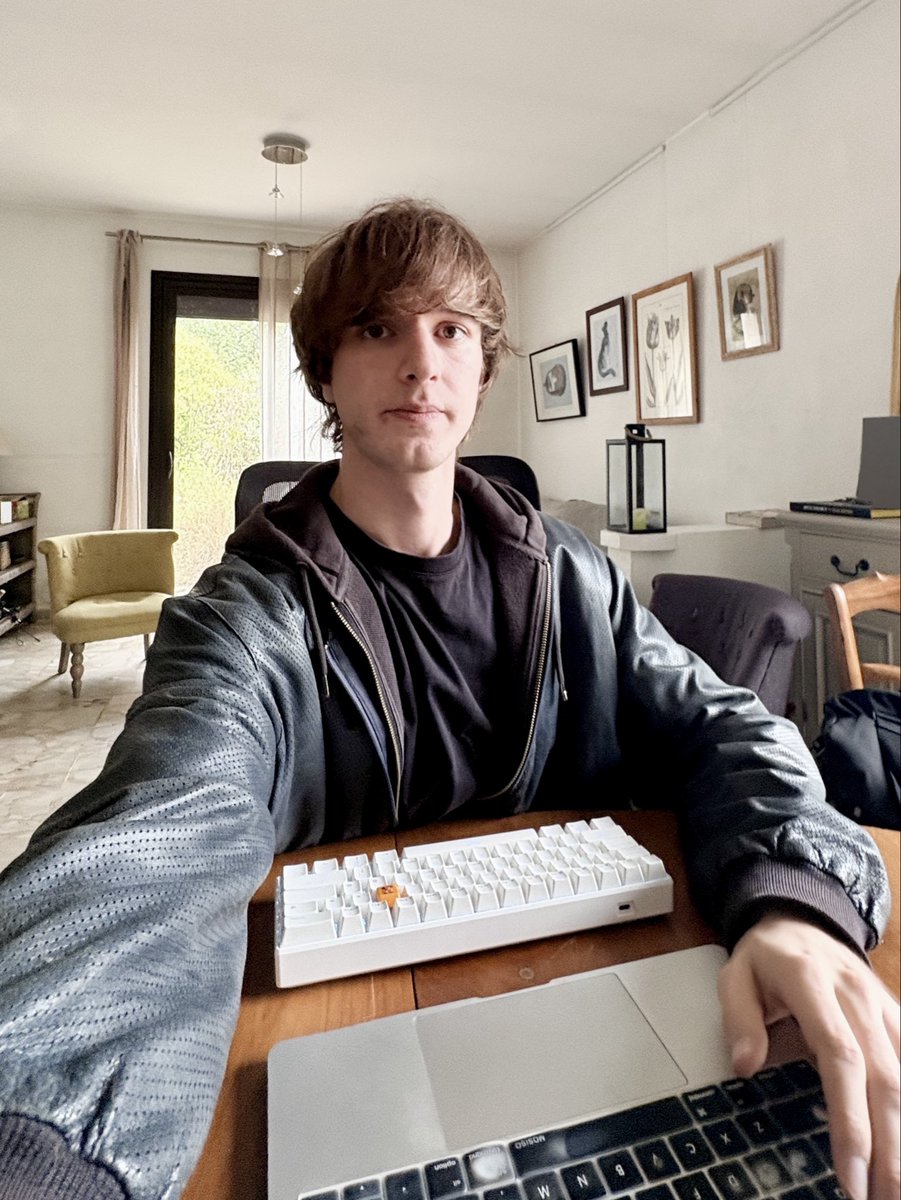
my first ever X post! hi, i'm Nathan, 22, just graduated.
a month ago i failed Google's final coding round for an AI FDE role. instead of reapplying, i'm open-sourcing 2 years of building agents.
31 days until my 3rd YC application. 0 users today. day 1/31. come along 🚀
You should be able to use smarter models in your agent.
You should be able to use cheaper models in your agent.
You should be able to use local models in your agent.
You should be able to use a different model for every job.
You should be able to switch models in the middle of a conversation.
You should be able to choose what data your agent has.
You should be able to choose what it remembers and what it forgets.
You should be able to choose what computer your agent runs on.
You should be able to run it on a machine that never touches the internet.
You should be able to run it while your laptop is closed.
You should be able to reach it from the apps you already use.
You should be able to choose how your agent thinks.
You should be able to read the prompt it runs on.
You should be able to see every tool it has, and turn off the ones you don't want.
You should be able to teach it something once and never explain it again.
You should be able to know what it did, and when, and why.
You should be able to export your agent.
You should be able to read the code.
You should be able to change the code.
Your agent should be yours.
@TellusCoop spot on. the moment a catalog abstracts away a crucial parameter, you're completely stuck. have you run into similar walls building out agent integrations in the Web3 space?
> mcp servers you can't change
> catalogs you don't control
> glue you maintain by hand
i fixed that, then built my own openai dots in one evening. here's the method, the code and the mistakes. https://t.co/DS9uCJSlJH
eu here too. i built an open-source one that runs on your laptop instead: no plan, works in the eu, you only pay your model (glm-5.3 flash is $0.15 per million tokens)
no computer of its own like grok bot though. it works through apis: gmail, calendar, slack, github, notion + more
https://t.co/4e54x3Ytdh
openai dots: $100–$500 a month, running in their cloud.
so i built my own in one evening. free, open source, on your laptop:
> gmail, calendar, sheets, docs, slack, github, linear, notion, stripe + 6 more
> 550+ tools, any model: claude, gpt, fireworks, openrouter, ollama
> no signup, nothing in between. it talks to each api directly
> asks before it changes anything, even when you tell it not to
https://t.co/eGMDfkQZbi
how one evening was enough 👇
https://t.co/7t000tNcxQ
> mcp servers you can't change
> catalogs you don't control
> glue you maintain by hand
i fixed that, then built my own openai dots in one evening. here's the method, the code and the mistakes. https://t.co/DS9uCJSlJH
openai dots: $100–$500 a month, running in their cloud.
so i built my own in one evening. free, open source, on your laptop:
> gmail, calendar, sheets, docs, slack, github, linear, notion, stripe + 6 more
> 550+ tools, any model: claude, gpt, fireworks, openrouter, ollama
> no signup, nothing in between. it talks to each api directly
> asks before it changes anything, even when you tell it not to
https://t.co/eGMDfkQZbi
how one evening was enough 👇
https://t.co/7t000tNcxQ
@AniC_dev how big were the pages by the time they hit the model? one gmail call returned 314 KB for me before i trimmed it, 366 sites sounds rough on context
@adolandev@NousResearch the permission ask on the device is the best part. is it enforced in the firmware, or does Hermes decide when to ask? i've seen agents skip checks that live in the prompt
@amritwt the 2005 analogy is spot on. nobody hand-writes a sign-in page anymore, it became a library. connectors are at that stage now, and after 2 years of building agents they're still the part that eats the most of my time
@BlumeDotCodes looks great, but agents almost always pass the tests they write themselves. it breaks once it hits the real environment. what do these run against?