American mother says she can’t have a second kid, not because she doesn’t want one but because she can’t afford it
This mother bought one can of formula and one box of diapers. It was $92
“Who in the f*ck decided we could make diapers and formula, the 2 most needed things when you have a child, the most expensive things on this planet? These 3 things just costed me $92. Oh, you want me to start thinking about having a second kid? Simply how? How? I can't afford that. Abso-f*cking-lutely not”
I looked into this, over the last 10 years
- Diapers have increased 50%+ in price
- Baby Formula is up about 40%, sometimes way more if you want without seed oils
- A better brand can cost $52+ and only last about 5 days
We need to make having a baby much more affordable
It's funny how people are so concerned that homeschoolers might not be doing enough "school", when the school system is graduating kids who can't read right in front of your faces & y'all don't have much to say about it.
BREASTMILK
She thought she was studying milk.
What she uncovered was a conversation.
In 2008, evolutionary anthropologist Katie Hinde was working in a primate research lab in California, analyzing breast milk from rhesus macaque mothers. She had hundreds of samples and thousands of data points. Everything looked ordinary—until one pattern refused to go away.
Mothers raising sons produced milk richer in fat and protein.
Mothers raising daughters produced a larger volume with different nutrient balances.
It was consistent. Repeatable. And deeply uncomfortable for the scientific consensus.
Colleagues suggested error. Noise. Statistical coincidence.
But Katie trusted the data.
And the data pointed to a radical idea.
Milk is not just nutrition.
It is information.
For decades, biology treated breast milk as simple fuel. Calories in. Growth out. But if milk were only calories, why would it change depending on the sex of the baby?
Katie kept digging.
Across more than 250 mothers and over 700 sampling events, the story grew more complex. Younger, first-time mothers produced milk with fewer calories but significantly higher levels of cortisol—the stress hormone.
The babies who drank it grew faster.
They were also more alert, more cautious, more anxious.
Milk wasn’t just building bodies.
It was shaping behavior.
Then came the discovery that changed everything.
When a baby nurses, microscopic amounts of saliva flow back into the breast. That saliva carries biological signals about the infant’s immune system. If the baby is getting sick, the mother’s body detects it.
Within hours, the milk changes.
White blood cells surge.
Macrophages multiply.
Targeted antibodies appear.
When the baby recovers, the milk returns to baseline.
This was not coincidence.
It was call and response.
A biological dialogue refined over millions of years. Invisible—until someone thought to listen.
As Katie reviewed existing research, she noticed something unsettling. There were twice as many scientific studies on erectile dysfunction as on breast milk composition.
The first food every human consumes.
The substance that shaped our species.
Largely ignored.
So she did something bold.
She launched a blog with a deliberately provocative name: Mammals Suck Milk.
It exploded. Over a million readers in its first year. Parents. Doctors. Scientists. People asking questions research had skipped.
The discoveries kept coming.
Milk changes by time of day.
Foremilk differs from hindmilk.
Human milk contains over 200 oligosaccharides babies can’t digest—because they exist to feed beneficial gut bacteria.
Every mother’s milk is biologically unique.
In 2017, Katie brought this work to a TED stage. In 2020, it reached a global audience through Netflix’s Babies. Today, at Arizona State University’s Comparative Lactation Lab, she continues reshaping how medicine understands infant development, neonatal care, formula design, and public health.
The implications are staggering.
Milk has been evolving for more than 200 million years—longer than dinosaurs walked the Earth. What we once dismissed as simple nourishment is one of the most sophisticated communication systems biology has ever produced.
Katie Hinde didn’t just study milk.
She revealed that nourishment is intelligence.
A living, responsive system shaping who we become before we ever speak.
All because one scientist refused to accept that half the story was “measurement error.”
Sometimes the biggest revolutions begin by listening to what everyone else ignores.
Barilla pasta has a Spotify playlist. Each playlist is the exact length of cook time for the varieties of pasta.
Press play, drop the noodles, music stops, al dente noodles.
be boring. wake up early. exercise. work. learn. do the boring things. find fun in them. stick to a schedule. do what you have to do, not what you want to. obsess about how youll get to where you want to be. don't waste your energy in anything that doesnt help you in the long run
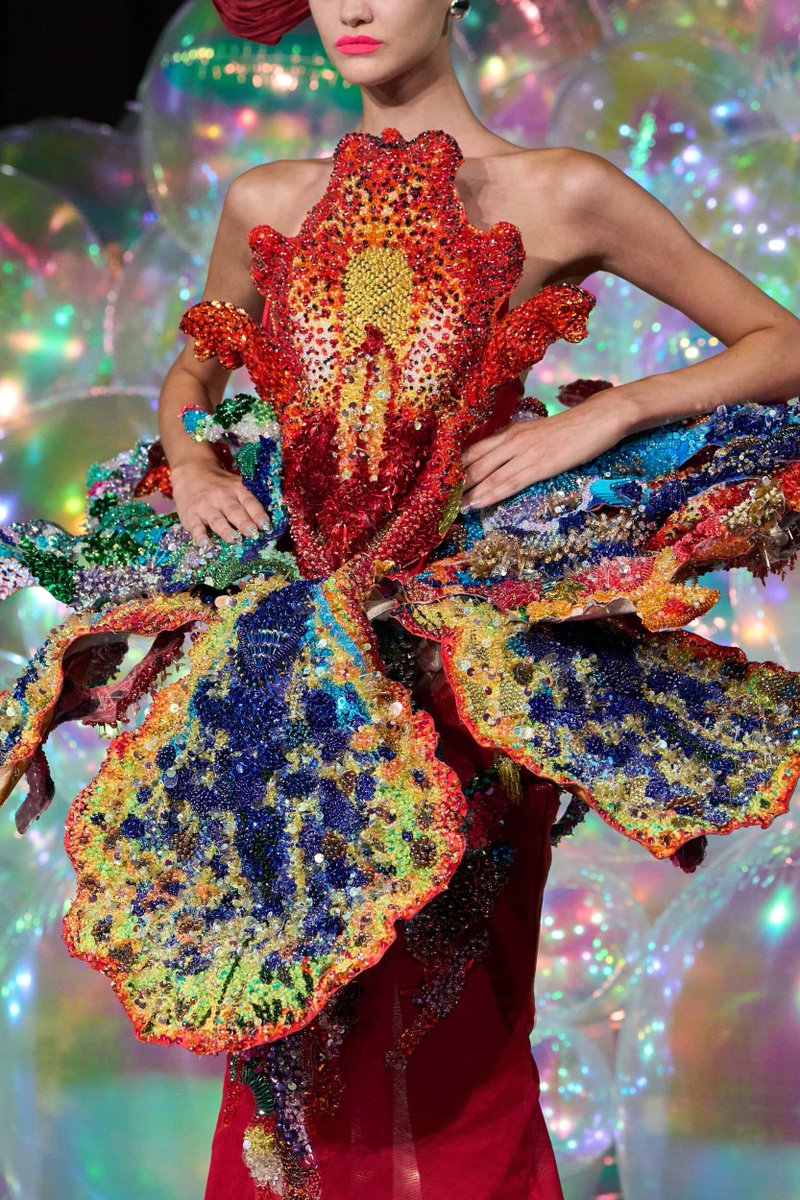
daniel roseberry talking about the inspiration behind the schiaparelli ss25 couture collection! it’s always so beautiful and inspiring to listen to him 💗