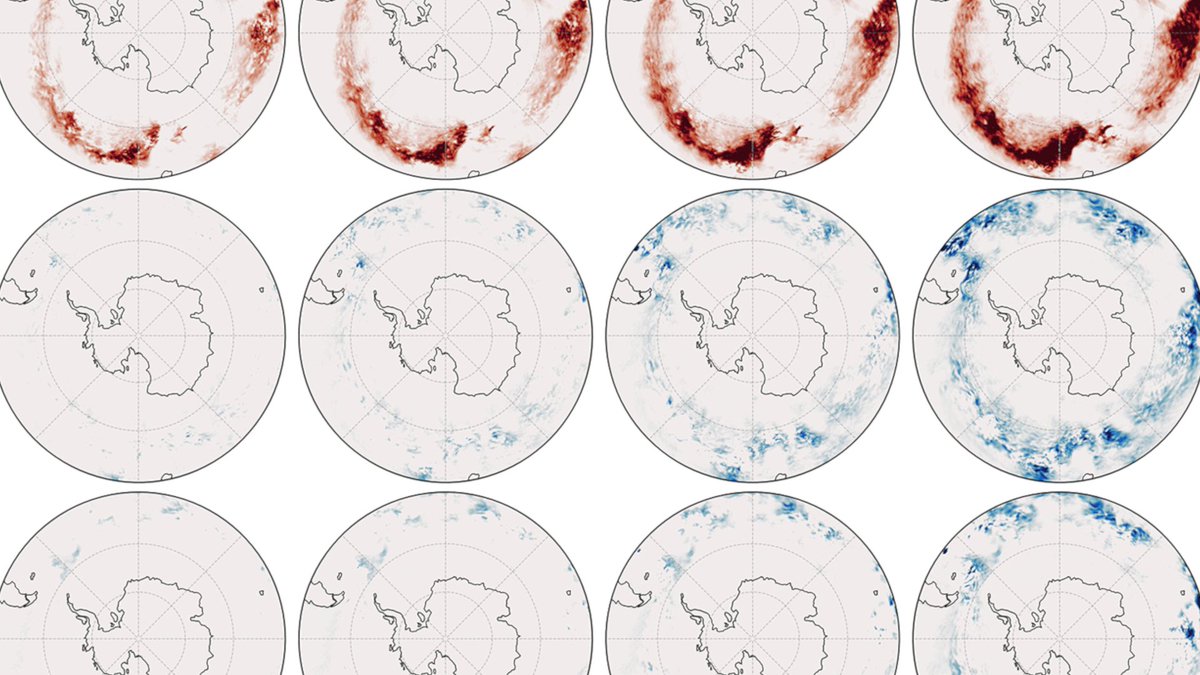
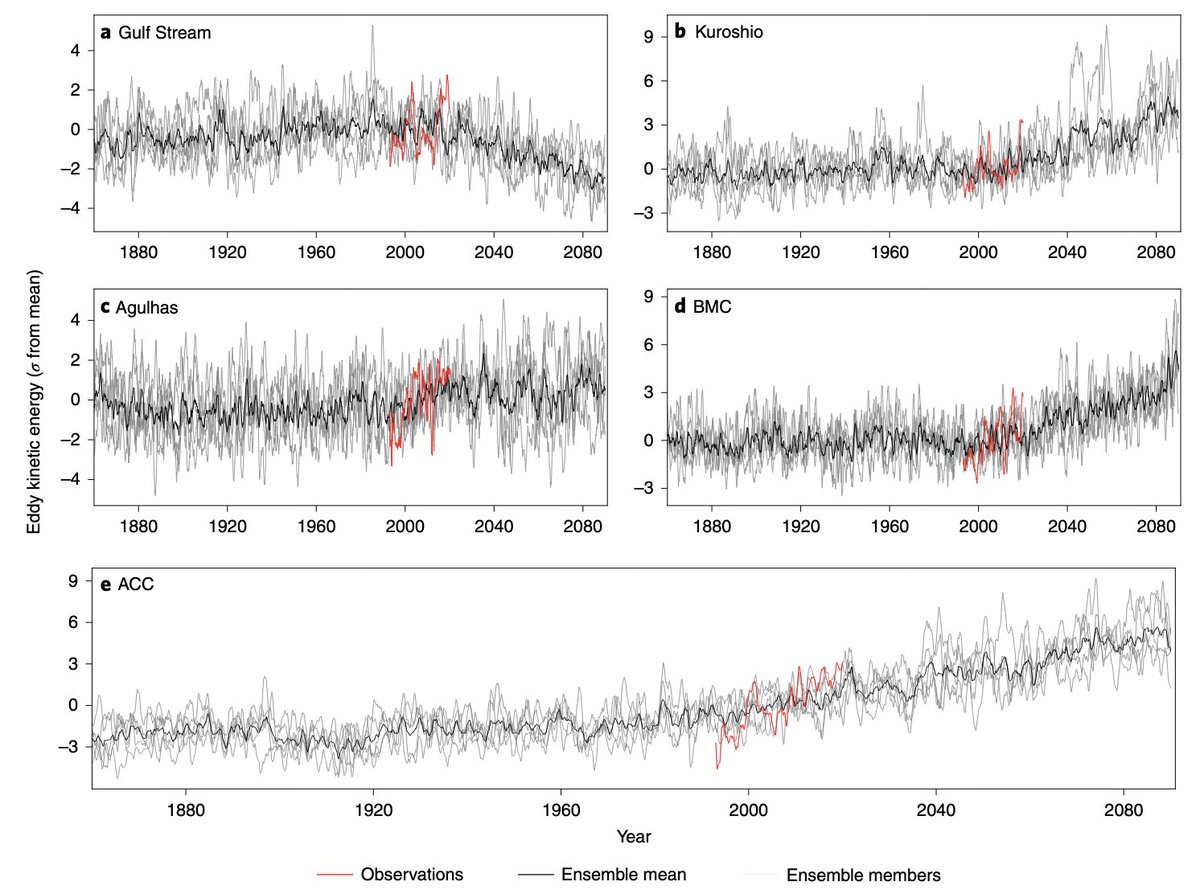
Long-term evolution of ocean eddy activity projected under climate change using a multi-resolution ocean model in #CMIP6 - check out my latest paper just published in @NatureClimate
https://t.co/dgellkqp4Y
@thomas_rackow@JungAwi@QiangWang_AWI
🔴 A NEW PAPER IS OUT!
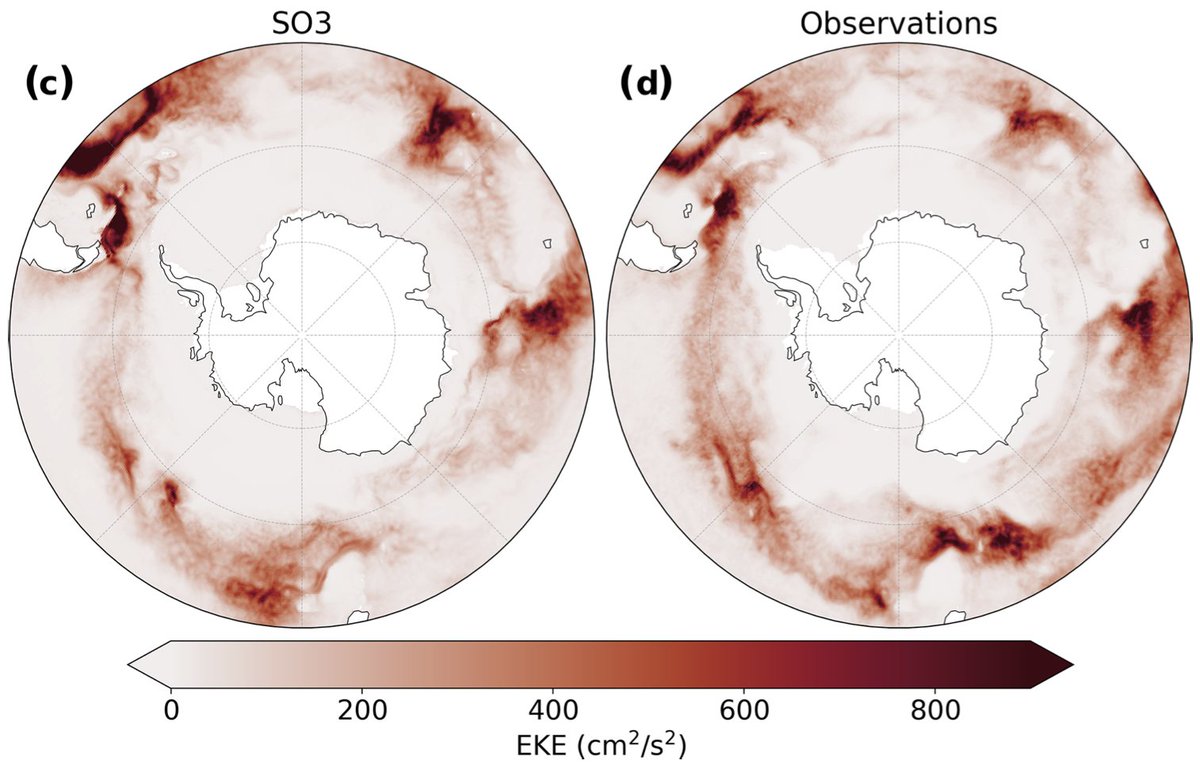
📖"Exploring the ocean mesoscale at reduced computational cost with FESOM 2.5: efficient modeling strategies applied to the Southern Ocean"🌐
➡️Read it here: https://t.co/RAkAcu7hal
Our new study on km-scale modelling is out today @EGU_GMD, led by @NB_sci@AWI_Media
We applied efficiency-maximising strategies to allow for past, present & future climate simulations with well-resolved ocean mesoscale (3km) in the Southern Ocean
👉https://t.co/z0yoxo1MIo @ECMWF
Are you looking for an opportunity to share recent findings in Marine and Polar Data Science?
@PatriciaSchntag and I host a session at @icymare 2023 best suited for this, session 1.3. 💻🦭🐻❄️🧊🌊
The #AWI-led #EERIE project aims to improve Earth system models using supercomputers. The focus is on the simulation of ocean eddies. The EU is funding the project with 10 million euros. @JungAwi
https://t.co/rkTKgIkw6x
Every time COP comes around it's interesting and frustrating to observe the difference between rhetoric and action. Unfortunately #Canada tends to be one of the major hypocrites. Will #COP27 be different? @JustinTrudeau@s_guilbeault@JonathanWNV
https://t.co/2riOuPse9p
Our @nextgems_eu activities have demonstrated that IFS-FESOM/NEMO @ECMWF@AWI_Media & ICON @MPI_Meteo are capable of running global coupled simulations finer than 5km, with sufficient throughput on state-of-the-art supercomputers. Exciting times ahead!
@CSCfi@BSC_CNS#DestinE
Long-term evolution of ocean eddy activity projected under climate change using a multi-resolution ocean model in #CMIP6 - check out my latest paper just published in @NatureClimate
https://t.co/dgellkqp4Y
@thomas_rackow@JungAwi@QiangWang_AWI
A great editorial from @NatureClimate featuring our paper explores the wealth of scientific discoveries still being made in the global oceans.
https://t.co/JHkgQGTSHE
Western boundary currents are the amplifier of climate change, which are experiencing the most noticeable warming. Now, with the aid of satellite observation and high-resolution model simulations, scientists have uncovered new details of their changes.https://t.co/dFHsMGfjTC
Our new study is out today in @NatureClimate , led by Nathan Beech @AWI_Media :
Long-term evolution of #ocean#eddy activity in a warming world - we provide long-term context to the limited satellite data record
https://t.co/wMhUlgn1po