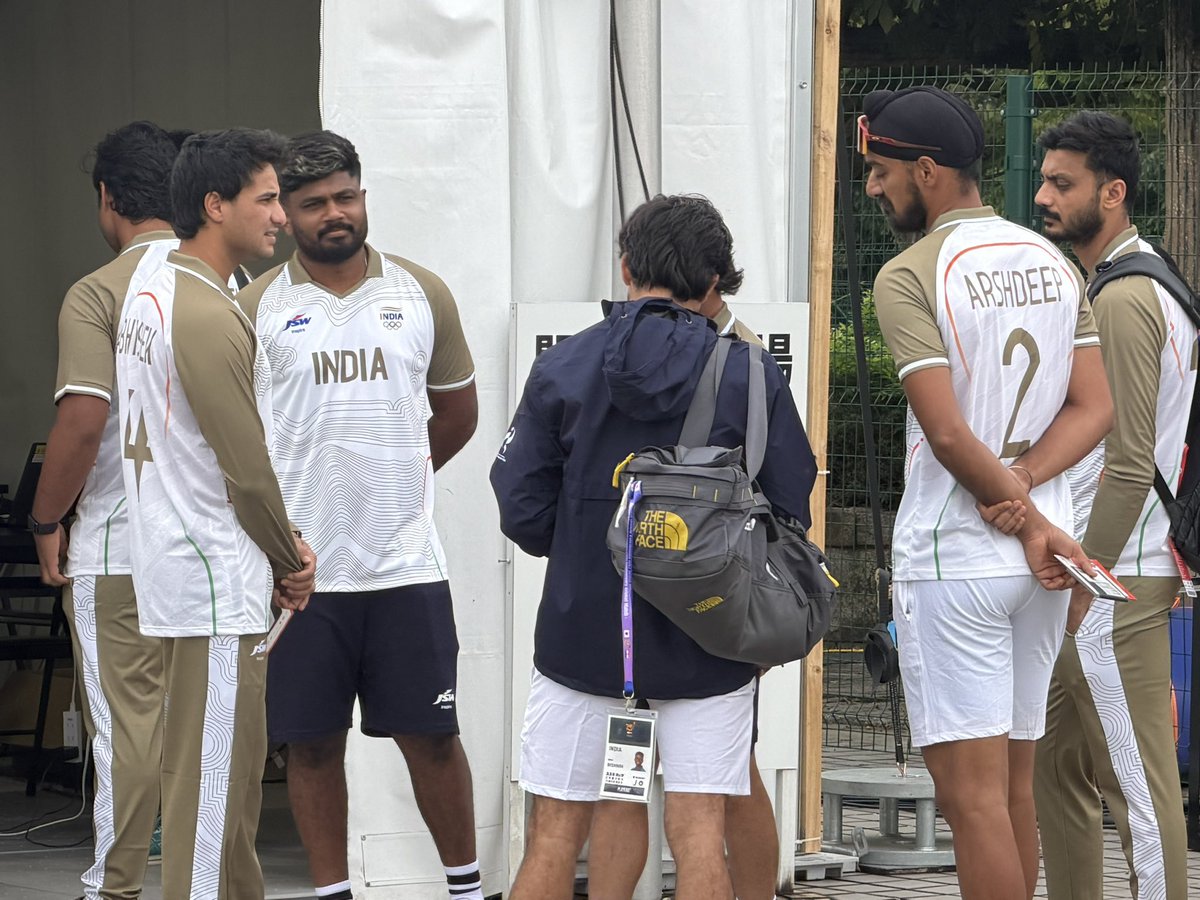
Designed by us for Team India at the Asian Games. 🇮🇳💙
And yes, we’re the same team that designed the adidas × BCCI kits. Turns out we can do quite a lot when you let us cook. 👀
What happens when we look beyond stereotypes?
West Bengal’s districts tell us quite a complicated story. Between NFHS-5 (2019–21) and NFHS-6 (2023–24), child stunting fell across every district shown, while the share of women aged 15–49 with 10+ years of schooling increased across the board.
The differences between districts, remain striking. Birbhum, Maldah and Purulia recorded some of the highest levels of child stunting in NFHS-5, at 37.0%, 40.5% and 36.9% respectively. By NFHS-6, these had fallen to 31.5%, 31.0% and 30.3%. At the other end, *Howrah and Purba Medinipur* had among the lowest levels of stunting in NFHS-6, at 13.0% and 14.1%.
Women’s education shows a similarly uneven picture. Kolkata remained the strongest performer, with the share of women with 10 or more years of schooling rising from 55.4% to 57.0%. North Twenty Four Parganas also saw a substantial increase, from 40.7% to 49.7%. Meanwhile, districts such as Birbhum and Bankura remained around 31% in NFHS-6, despite improvements from NFHS-5.
The changes are particularly striking in Maldah and Murshidabad, two minority-concentrated districts that are often stereotyped as being uniformly “backward”. In Maldah, child stunting fell from 40.5% to 31.0%, while women’s schooling rose from 30.0% to 34.6%. In Murshidabad, stunting fell from 39.8% to 23.3%, alongside an increase in women’s schooling from 24.2% to 34.8%.
These figures don't suggest that inequalities have disappeared, as they clearly haven't. However they do challenge the idea that certain communities or districts can be reduced to a single narrative of deprivation. The district-level data highlights the complexity of progress and inequality existing simultaneously.
Visualisation and analysis by
@anoushkab19, our intern at Sabar Institute
#DataForBetterLives
Britain used to run every lighthouse with two men. In 1801 one of them died on a rock off Wales, and the survivor spent four months alone with the corpse tied to the railing outside because he was scared people would say he killed him. After that the rule became three keepers per light. It stayed that way for almost 200 years.
That's the whole job in one story. The sea never killed most keepers. The quiet did.
France sorted its postings into three tiers with a straight face. Mainland lights were "paradises." Island lights were "purgatories." Rocks in open water were "enfers," hells, and the men who drew them rotated on and off by boat when the weather allowed, which some months meant not at all. The tower in this clip is La Jument, a hell. In December 1989 the storm ripped its front door off and washed the furniture out. The keeper, Théodore Malgorn, heard a helicopter and ran down to the door thinking he was being rescued. It was a photographer. The wave behind him became the most printed lighthouse photo on earth, and he later said another two steps from the door and he'd be dead.
The light kept a keeper for two more years after.
Antarctic research stations see the same thing in crews wintering over, and they have a name for the stare people develop by the third month. Once you cut off the relief boat, the danger is background noise. Most people can be paid to face a wave. Almost nobody can be paid to stop hearing their own thoughts for twelve weeks at a stretch, which is why every lighthouse service on earth ended up with the same fix. Not better pay. A second person. Then a third.
Once you're paying three grown men to sit with one bulb, a timer beats them on cost, and that's what happened. La Jument lost its last keeper in 1991. France pulled its last rock keepers in 2004. Boston Light, the last staffed lighthouse in America, ended the job in 2023.
The salary was never the problem. The lighthouse got automated the day a light bulb became cheaper than the loneliness.
Peak dialectical materialism from comrade Neha Bora.
The liberal normie idealist condemns misogynist language from teenagers because they want to sound smug and superior and feel better about themselves - while the materialist asks where teenagers learned such language in the first place.
The idealist cares only about their self image, while the materialist actually wants to solve the problem.
India hasn't produced a single unifying national anthem in twenty years and the GenZ student pr0tests proved it!
Every single soundtrack for their reels was at least 20 years old.
Rang De Basanti, Swades, Chak De India, Lagaan..When a generation wants to express hope, anger, or solidarity, these are the songs they use!
It makes you realize how much our cultural landscape has shifted.
The ultimate protest anthems weren't political. Tracks like 'Chak De' or 'Ye Jo des hai tera' didn't pick a side; they made 1.4 billion people forget every caste, class, and social divide.
In a country that feels increasingly polar!zed, music was the one neutral ground left...🇮🇳🎶📻
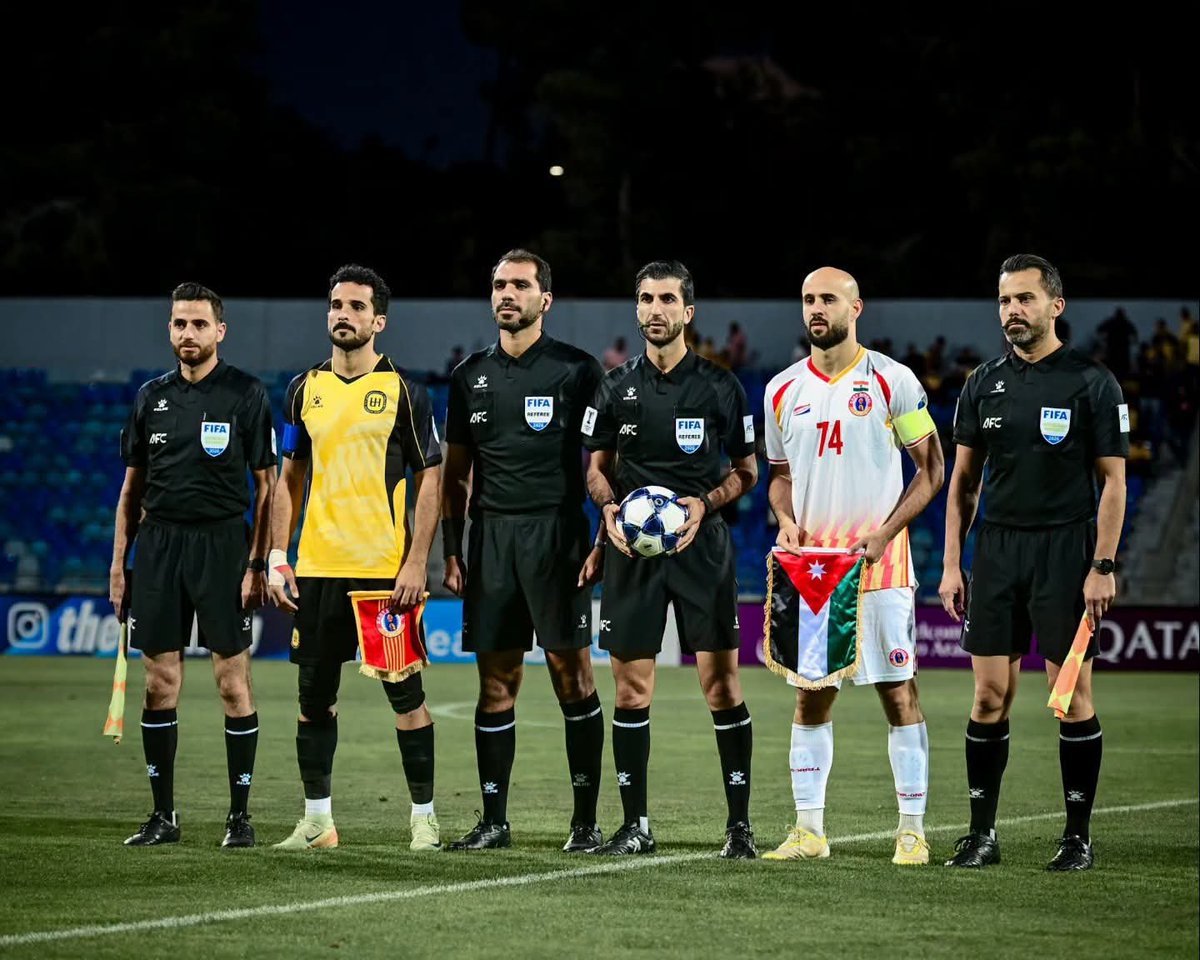
In 2013, East Bengal's incredible AFC Cup run ended in the semi-finals against Al-Kuwait, a club from Kuwait.
12 years later, they took revenge against another Kuwaiti club.
East Bengal FC 4-1 Al-Arabi SC 🚨
The win sends East Bengal into the AFC Champions League Two group stage, the competition formerly known as the AFC Cup, while knocking Al-Arabi down to the AFC Challenge League.
For East Bengal fans, this one will feel special. A historic night, and one that closes a chapter that began with that heartbreaking 2013 defeat. 🔴🟡
#IndianFootball #EastBengal
What a fantastic win for East Bengal against Al Arabi (Kuwait) to qualify for the group stage of AFC Champions League Two. Just two foreign players in starting 11 but a braveheart performance for 120 minutes to shine light on #IndianFootball. Made us all proud.
East Bengal have started looking out for a foreign defensive reinforcement as the club fears Nacho Monsalve could be out for a major part of the season.
#IndianFootball#ISL#EBFC
Paper leak is not the disease — it is a symptom of a deeper pathology. So fixing it will not change anything.
The problem is that there are no decent jobs available for Gen Z even after they've spent lakhs on professional courses.
MBA students from second-tier B Schools are being offered ₹16,000-18,000 a month.
So they are disillusioned and angry.
For the first time in 80 years, India's young have no hope.
India Inc has slashed its advertising budget over the past three years.
The top ~5,500 companies, which CMIE tracks, have cut their advertising expenses by 14% since 2022-23.
Ideally, that expenditure should have GROWN 32% to match our economic growth over the same period.
Some late observations:
1. Students love a good fight. Esp. when it’s unfair and they are the underdogs. Plus they love community - a highly valuable state of mind available to the modern human only for a few years of youth. No money can buy those hormones.
2. Sense of humour is a great weapon against fanatics. It disarms the opponent and heals the oppressed. And most importantly, gets you Instagram views.
3. Father figures, constantly telling a nation what to eat, who to marry, who not to love etc, are easy to dislike and unite against.
4. Mainstream media committed a mass-sepukku by agreeing to peddle just the govt. narrative over the last decade. So much so that on most policy issues, they are more conservative and bigoted than the government itself.
It did two beautiful things - one, a big chunk of population started switching off, and two, the government itself ended up dumping them in the end, by negotiating with genuine protests already labelled as aatankwaadi by the news TV. On most occasions they make govt’s job more difficult than easy.
Today - watching news TV is seen as one of the most uncool, low IQ things by a majority of the population.
5. Cuss words are no longer the underground culture they were a decade ago. (Even Gangs of Wasseypur was like 14 years ago.)
Access to international rap, desi hip hop, more than 100 Indian comedians not censoring their language, even when they censor their thoughts, and in some cases political patronage to the cuss-heavy influencers have made sure that the language on the street is no more purist/sanitised. The more it shocks the authority figures, the more it will be used.
6. An aura - carefully built over a decade - took a fortnight to burst into smithereens. That’s how flimsy it was.
Why is Dharmendra Pradhan's resignation unprecedented?
Because in 24 years, 9 months, and 18 days since Narendra Modi became Gujarat CM on October 7, 2001, and in 12 years, 1 month, and 29 days since he became PM on May 26, 2014, no minister of his council has resigned under sustained public and political pressure.
The only comparable Cabinet resignation was M.J. Akbar in 2018, following #MeToo allegations.
That is what makes Dharmendra Pradhan's resignation politically significant.