Hoje celebramos Maputo: uma cidade de história, criatividade e pessoas que abrem caminhos todos os dias. 🇲🇿
Parabéns a todos os que fazem da Cidade das Acácias um lugar especial!
#DiaDeMaputo#Maputo#Moçambique#NdlelaSystems
Write website content around the questions customers actually ask: What is it? Is it for me? How does it work? What happens next? Clear answers beat complicated language.
Website traffic is a starting point. Ask what visitors do next: explore products, view services or contact you? Measure the actions that matter, with attention to privacy and consent.
Protect the accounts behind your website: domain, hosting, email and payment services. Enable multi-factor authentication where available, use unique passwords and review access regularly.
Want your website to be easier to find? Start by describing your services in the words customers use, giving pages clear titles and answering real questions. No instant-ranking promises.
After someone submits your contact form, tell them their message was received and what happens next. Only promise a response time your business can realistically meet.
A useful website should be readable and navigable. Start by checking text contrast, clear link labels and keyboard navigation. These are starting points, not a substitute for a full accessibility audit.
Mobile-friendly is more than fitting a website onto a smaller screen. Check the buttons, spacing, navigation and reading experience on an actual phone.
Try the five-second website test: show your homepage to someone unfamiliar with your business. Can they tell you what you offer, who it helps and what to do next? Clarity matters as much as appearance.
If every decision and follow-up waits for the founder, the process depends on memory, not a system. Document one recurring workflow, assign ownership and make the next action visible. What still relies on you?
Repeated data entry is often a systems-design signal. Before asking people to type faster, check whether information can move reliably between the tools already in use. Where does your team enter the same detail twice?
A useful workflow makes the next action obvious: what happens, who owns it, and what counts as done? Ambiguous handoffs are where good work disappears. Which next step is unclear in your process?
Remove waste before you automate it. Challenge duplicate steps, unnecessary approvals and repeated data entry first. A simpler process is easier to improve, automate and maintain.
Try a 10-minute workflow audit: list the steps, tools, handoffs, waiting points and rework in one recurring task. Where is the friction? Start by making it visible, not by buying another app.
Work stuck between people, spreadsheets and tools? Ndlela's Workflow Review starts by mapping the process, handoffs and friction, then identifies the smallest useful improvement and a practical next step. DM WORKFLOW to start an exploratory conversation; no commitment to build.
AI needs boundaries: clear inputs, permitted actions, human review and an exception path. If nobody knows when it should stop or hand off, the workflow isn't ready. Where should a human stay in control?
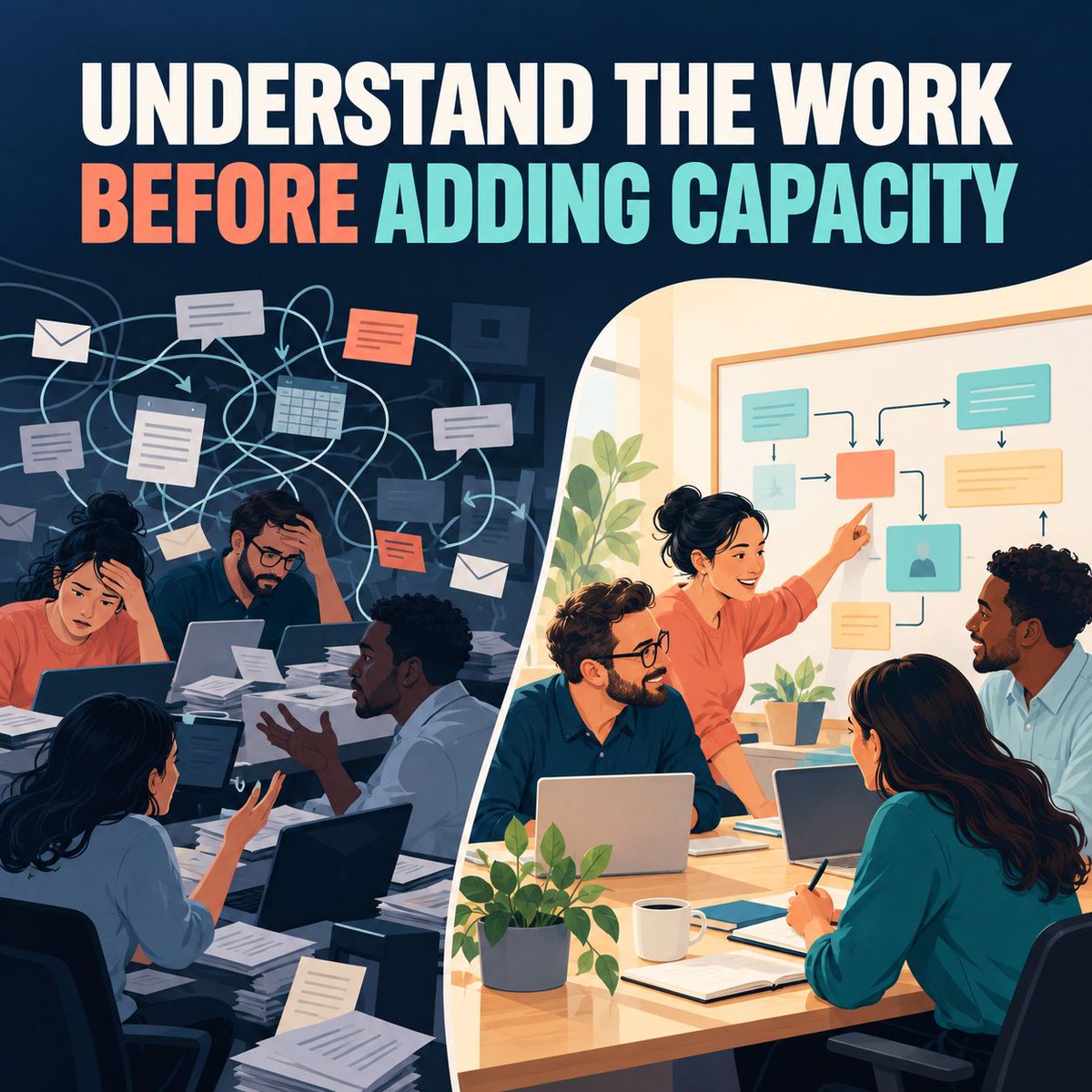
Before adding capacity, check the workflow. Is time going to valuable work, or repeated coordination caused by unclear steps and ownership? Clarify the process first; then decide whether people, tools or both are needed.
Before buying another tool, map the work. What starts the process, who touches it, where does it stall, and what outcome matters? Then choose the lightest fix that fits. What workflow needs a closer look?