Designed for superintendents new to NEE, this webinar will focus on key actions to take at the end of the first semester. Participants will gain insights on using NEE to support progress and drive district-wide growth.
Register now: https://t.co/lVpshixn4o
In this webinar, we’ll guide new evaluators in effectively using NEE. Through real-world scenarios, we’ll highlight growth strategies to support teacher development.
https://t.co/UnK16yq0WA
As we gather around our tables this Thanksgiving, we at the Network for Educator Effectiveness want to extend our deepest gratitude to all those we have the privilege of working with. https://t.co/0zApMxXB5I
Effective teacher evaluation systems rely heavily on the quality of feedback teachers receive from their principals. In a recent study, researchers explored how different types of feedback can help teachers improve their classroom practices. https://t.co/trqfhuPKDG
October brought us National School Principals Month, National Custodian Appreciation Week and World Teachers Day. Here is a quick look at other October happenings at our NEE schools.
https://t.co/vxHXcVO9Am
By providing tailored feedback after classroom observations, principals not only support teachers in honing their craft but also create a culture of continuous learning. https://t.co/7HTDQ5FidW
A professional learning program focused on improving student literacy has shown promising gains for struggling readers. Through the use of dictation technology, students are able to share their own stories and watch as the words appear on the screen.
https://t.co/zarDAUlcCn
Our guest blogger, Amber Ernst, shares with us how a prosocial classroom can help improve student behavior and reduce teacher burnout.
Read more: https://t.co/5JjrjjYlDt
Exciting new research conducted at George Mason University shows the Network for Educator Effectiveness improves student math outcomes in rural schools, and NEE costs less than what rural districts pay to build their own systems. https://t.co/9wyPoZTJbv
Back to school got you stuck? Need NEE Help? Our help desk is here for you!
Whether you're dealing with a pesky issue or have a burning question, our team of experts is ready to assist you. From troubleshooting to guidance, we’ve got you covered every step of the way.
Learn more about the newly revised NEE Beginning Teacher Support materials available in EdHub. In this session, we will provide an update on the recent changes to the materials and an overview of how principals can use them with new teachers.
https://t.co/oPL2B5ze2l
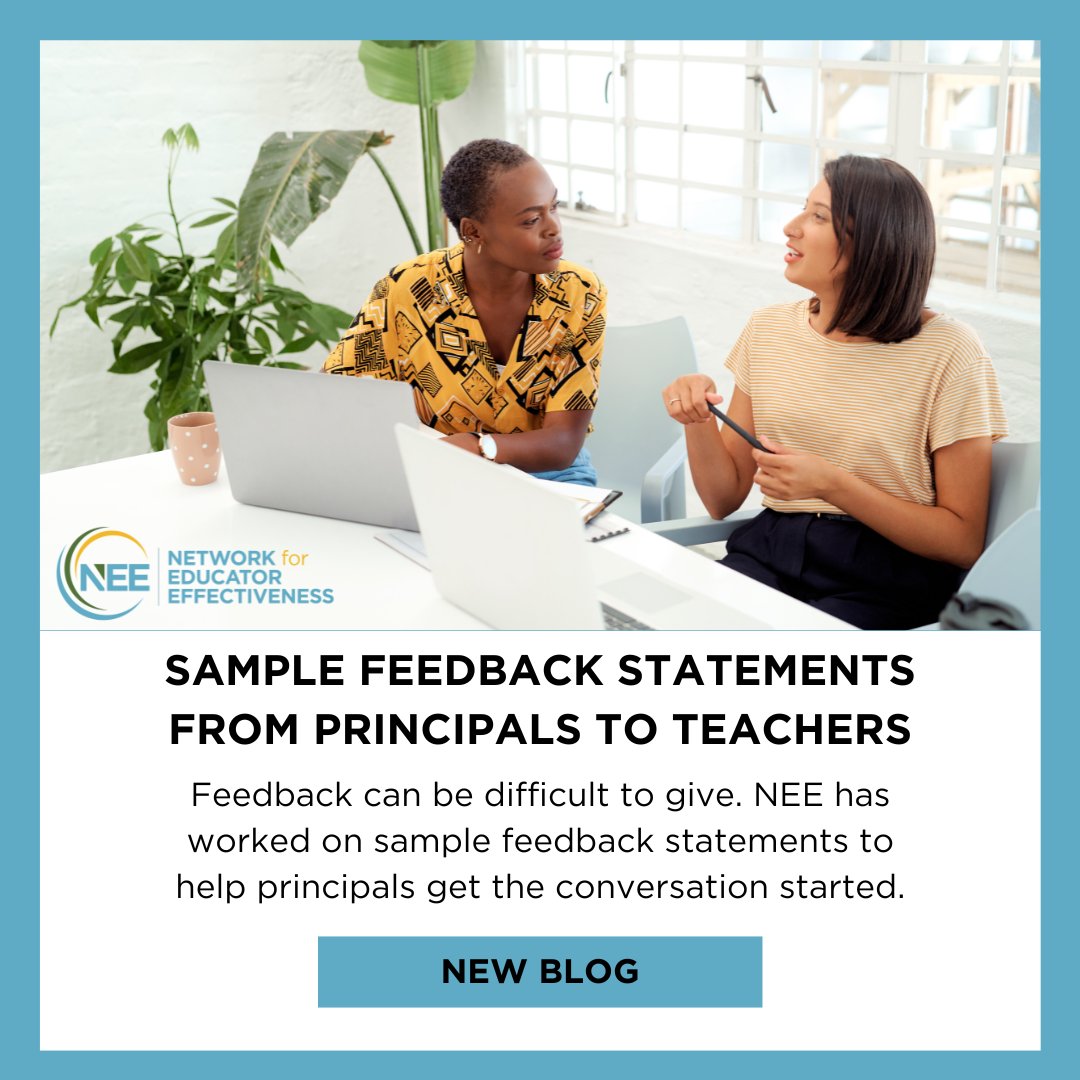
If you're struggling to give feedback to your teachers check out this new blog from Aaron Jones, Ed.D, with questions that can provide further insights and strategies.
Read more: https://t.co/Hz8z27koKU
EdHub is full of back to school PD ideas for your school. If you need a fresh idea for kicking off a face-to-face meeting, check out our new "PD Quick" activity called What Was It All For? available in EdHub.
To learn more about the NEE Data Tool visit: https://t.co/93amFrdw7e
New updates are available in EdHub! NEE's Beginning Teacher Support module has been updated to meet new Missouri requirements and is available in EdHub. The module aligns with Missouri requirements for Beginning Teacher Assistance.
The NEE Data Tool rollover to the 2024-2025 school year has been completed. Updates to NEE accounts can now resume. All 2024-2025 organizers are available to be started.
Through peer observations, teachers gain highly relevant insights into their teaching. Peer observations present an excellent opportunity for school leaders to support, develop, and retain teachers within their schools.
To download visit: https://t.co/ENDxsol5d3
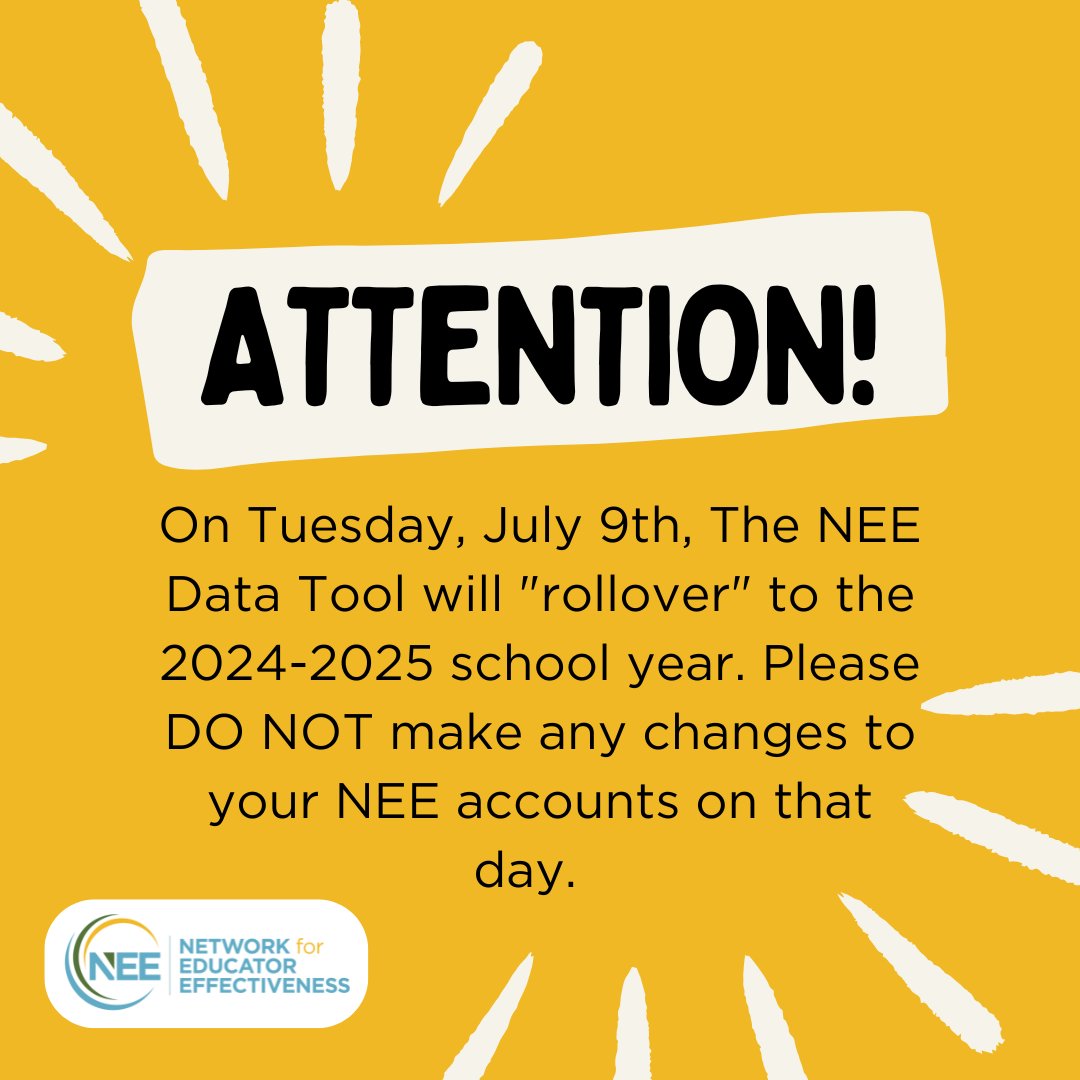
The NEE Data Tool will "rollover" to the 2024-2025 school year on Tuesday, July 9. Please do not make any changes to your NEE accounts on that day. If you have any questions, please contact the NEE Help Desk at [email protected] or 844-793-4357.
The Network for Educator Effectiveness is excited to announce the release of a new report option that provides school districts with greater control over how classroom observation data is viewed by teachers in their district. https://t.co/e4p9HFb03u