Unser Podcast "Zwei Frauen (k)ein Thema" ist raus. 🥳
Hört euch die erste Folge zum Selbstbestimmungsgesetz an. Ihr findet den Podcast auf unserer Webseite oder ihr könnt den RSS Feed in eurem Podcatcher abonnieren.
🧵1
Aktuelles Update zur
#Plakataktion der Kampagne #GrundgesetzSchützen von @wasisteine_frau
In nur einem Monat haben wir die Zielsumme von 6000 Euro erreicht und überschritten!
Wir sind wirklich überwältigt von euer Solidarität und Großzügigkeit.
Vielen, vielen Dank!
Wir danken Euch sehr herzlich für Eure Unterstützung und Spendenbereitschaft. Die ersten Standorte sind bereits bestellt in Berlin und Düsseldorf. Da im Saarland, in Schleswig-Holstein und in NRW im April Landtagswahlen sind, freuen wir uns, wenn Ihr weiterspendet und dort weitere Plakate ermöglicht. #grundgesetzschuetzen
🧵3
#GrundgesetzSchützen#Plakataktion
In Berlin 3 Standorte
In Düsseldorf 2 Standorte
Je ein Standort in Kiel, Saarbrücken, Mainz und Schwerin
Weitere Infos folgen.
🧵2
#GrundgesetzSchützen#Plakataktion
Zur Statistik:
Insgesamt 78 Einzelspenden
zwischen 5 € und 1000 €��️
Durchschnittlich wurden rd. 79 Euro gespendet, der Median liegt bei 50 Euro.
Im Einzelnen:
Männer sind keine Frauen und woher nehmen Sie die Behauptung, Männer, die eine Transidentität erklären, seien in besonderem Maß von geschlechtsbasierter Gewalt betroffen? Legen Sie bitte belastbare Zahlen aus Deutschland vor. Wir haben bei @wasisteine_frau Fälle gesammelt, wo diese Männer Taten gegen Frauen, Mütter, Mädchen (Femizide, Matrizide) verübten, über die noch nicht mal wahrheitsgemäß berichtet wird.
LGB International is horrified by the apparent murder of 16-year-old Sogand Sayadi in Iran in a so-called "honour" killing. One suggestion is that her father did this after hearing rumours that she had a romantic relationship with another girl. In these cases, it is extremely hard to identify the actual truth through all the assumptions and silences. Whatever the motive, we condemn this brutal murder of a child.
@KirstiMiller30 You don’t care about female athletes or whether they want to compete against males. We already know that about you.
So why should you care about female athletes who are compelled to compete against Khelif?
They’re of no interest to you – to you they’re just women, merely female.
How a Nordic Model approach to tackling prostitution was implemented in Ipswich
This article explains how a Nordic Model approach to tackling prostitution was implemented in Ipswich, UK, after a series of brutal murders of prostituted women in the town. It includes an interview with Helen Hepburn, who was a project manager with a social work background, who managed the exiting services that were put in place.
In early December 2006, the body of a young woman was found by a dog walker in a stream on the outskirts of Ipswich. She was identified as 25-year old Gemma Adams. Six days later police searching the area found the body of another young woman, 19-year old Tania Nicol. Within the next six days the bodies of three more young women were found in the area. They were Anneli Alderton, 24, Annette Nicholls, 29, and Paula Clennell, 24. All were known to be involved in street prostitution and addicted to Class A drugs.
This triggered one of the biggest murder investigations ever conducted in the UK and it attracted intense media interest from around the world. Within a short period the police arrested and charged a punter, Steve Wright, for the murders. He was subsequently tried and convicted on all five counts of murder and is currently serving a whole life jail sentence.
The murders shocked local people to the core. After Wright was charged, the police and the local council were determined that something similar should never happen again and were keen to rebuild the reputation of the town. They formed a strategic group, consisting of key local agencies, including the local borough and county councils, police, probation service, NHS Primary Care Trust, drug and alcohol team, and mental health partnership.
This was not the first murder of a prostituted woman in the town, however. Three years earlier, in December 2003, a local man brutally murdered 25-year old Cara Martin-Brown, who had also been involved in street prostitution in the area.
After Cara Martin-Brown’s murder a multi-agency panel had been set up with the aim of reducing prostitution in the area. The panel met regularly to discuss how to deal with the problem. Some felt the best approach was to arrest women soliciting on the street while others saw prostitution as a matter of personal choice and wanted to see the provision of condoms and clean needles in order to reduce the harms and risks associated with it. There was talk of implementing a tolerance zone.
In the light of the new murders, it became clear that this approach had been ineffective. Arresting the women generally led to a court fine and the women returning to the streets to earn the money to pay it; while handing out needles and condoms had done nothing to reduce the amount of prostitution taking place.
The murder investigation had revealed that at least three of the murdered women had been groomed into prostitution by “boyfriends” when they were about 15 years old.
The new strategic group soon realised that the only way to ensure there were no more such murders was to remove prostitution entirely from the streets of Ipswich and this quickly became their aim. This was ambitious because such a thing had never been achieved in any city in the UK before.
They came up with a three-pronged strategy:
An end to targeting the women with criminal sanctions and instead providing them with substantial support to help them exit prostitution and rebuild their lives.
Tackling men’s demand for prostitution. They used the kerb crawling legislation and number plate recognition technology to implement a zero-tolerance approach. They found the majority of the punters they arrested were “ordinary” guys who were married or in long-term relationships, often with children and good jobs. The police made a strategic decision to avoid naming and shaming the men because they felt this would have a negative impact on their families. So provided the men took responsibility for their behaviour and accepted a caution, they were not publicly named. The vast majority of the men who were arrested accepted this approach.
Preventative work with children at risk of being groomed into the sex trade to prevent another generation of women on the streets.
This broadly corresponds to the Nordic Model approach.
The exiting services
Here we interview Helen Hepburn who managed the exiting services that were put in place.
Q. Helen, can you briefly explain your role in the exiting services that were put in place?
A. I was asked to put together a multi-agency team to work with the women on the streets in the first instance. The team consisted of two police officers, social workers for adults and subsequently for children, and support workers.
We had a close relationship with a local drug prevention agency, a health worker who had been providing a harm reduction service from a van for some years, a probation officer, and crucially a named worker from the housing department.
The police officers knew the women well from their prior work and didn’t need convincing about the futility of prosecuting them.
I had to work to an agreed plan and report back to a number of different forums. This was essential for gaining the support we needed. We provided training to staff from all agencies and the voluntary sector, with the key aim of changing attitudes. The training included women who had been prostituted sharing their experiences.
Many of the prostituted women we worked with had been in prison for shoplifting and other offences, some many times. We therefore built up a good relationship with the nearest women’s prison, in order to ensure a smooth transfer back into the community when women were released – because when women leave prison they are particularly vulnerable to entering or returning to prostitution.
97% of the women were on hard drugs, so the cooperation of the drug prevention agencies was also crucial.
Q. I understand that none of the women wanted to stay in prostitution but that there were obstacles to leaving. Can you tell us a bit about these obstacles, why it was so hard for them to leave?
A. In Ipswich most of the women were local and well-known. Many had lost touch with family and friends. ‘Boyfriends’ were not going to give up their meal ticket easily.
There were structural obstacles, for example the holes in the welfare state provision, which I think are much worse now.
Many of the women were homeless – some were sofa surfing, one lived in a van, others lived with ‘boyfriends.’ Homelessness services were principally based around men’s needs, and homeless hostels were totally unsuitable for the women. Some women had had council accommodation but had gone into rent arrears, and lost it. Even where private landlords seemed positive, in a few cases, the women were abused by them. A cap on housing benefit meant that access to accommodation was limited.
It took some time to get the women linked into welfare benefits (again this would be worse now). Criminal records meant that their opportunities for work were very limited.
But it was the internalised lack of positive regard for their own welfare and worth, and in some cases, years of being exploited, sometimes since they were children, which was difficult to tackle. This and poverty led to ‘relapses.’
Q. So how did you approach the work? What did you do on a practical level to remove the obstacles the women were facing or to help them overcome them?
A. We approached all the agencies, including our own county council, for funding to pay for deposits for flats, the first month’s rent and electricity, and often food vouchers, for example. HIV funding, community cohesion, drug and alcohol agencies, and others were also able to contribute some funding.
The police officers (who as mentioned earlier fully understood the futility of prosecuting the women) texted the women every day in order to gain their trust. The support workers and social workers started to work on the women’s expressed needs.
Many of the women needed dental services, as their teeth had been ruined by drugs, causing them great social anxiety and further isolation. They were helped to see a dentist who had been identified by the health service.
Much of our work entailed accessing services, including the children’s services. Around 80% of the women had children, all of whom had been removed. This was a major cause of the women’s distress. Some of the children were fostered by family members, others were in formal foster care, and some had been adopted. The women did not understand the legal parameters of what had happened, and so we linked them with social workers who could increase their contact through letters, for example.
Family carers had sometimes lost contact with the women or deliberately severed relationships, so we worked to restore those relationships where we could. Access to health services, including STI clinics was also crucial.
Q. So how many women did you help in this way? Were all of them successfully helped to exit?
A. We were in touch with more than 100 women over five years, including some women involved in indoor prostitution. All of the women on the street in Ipswich were helped to exit prostitution, with the exception of one who traveled to a different county.
Q. How did the local community react to this approach?
A. At first there was a lot of resistance to the approach we were taking. There was a huge amount of anger as well, as local residents’ lives had been seriously disrupted by the activities around street prostitution.
Q. Were you involved in the engagement with the local community? Can you tell me a bit about that?
A. We held regular community meetings and I attended all of them over the five years I ran the services. I advocated for the women, trying to explain why they were on the streets. Gradually, the residents came to recognise there were reasons for the women’s involvement and they weren’t simply bad people.
I was taken around the streets by one or two of the residents, who pointed out what had happened where. There is no doubt that their lives had been badly affected by the prostitution-related activity, not least by men driving round and round the area looking for women to pick up.
Eventually the local residents came to see the effectiveness of the approach and they became supporters. At one meeting, about two years after we started, the team were given a standing ovation.
Q. I understand that one of the concerns that people had about the approach was that it would drive prostitution underground and, for example, that women would have less time to assess punters before getting into their cars. Can you tell me whether there was any evidence that this happened?
A. The police had video evidence from before the scheme was introduced that clearly showed that when a car drew up, the woman would immediately get in. So the idea that women spend significant lengths of time assessing punters even when kerb crawling is tolerated is a misconception.
The women would try to assess the safety of punters by exchanging information. But Steve Wright was seen as ‘safe,’ so this clearly didn’t work.
The community initially wanted ASBOs to be served on women on the street, but the team felt strongly that it would set women up to fail. A very mild form of ASBO was drawn up along the lines of not chucking needles or condoms in people’s private gardens, but was only used in four cases.
The team’s emphasis was on building trust, and not on coercion, although it could be said there was a fine line here. In any case, the lives of the women were already dangerous. Some had been raped or attacked, five had been murdered, a couple had died from drug overdoses. Prostitution is inherently unsafe.
Q. But surely this approach must have cost a fortune? How could that be justified?
A. The costs of staffing the team (which consisted of a manager, four social workers, three support workers and a half time administrator) were considerable. The direct costs of helping women to exit varied, ranging from negligible, for example when a woman moved in with her family who had previously rejected her, to a few thousand when accommodation was involved.
The University of East Anglia (UEA) was commissioned to conduct an independent evaluation of the strategy and they assessed it as successful and cost effective. In fact they said that every pound spent on the strategy saved the public purse two pounds – because of lower criminal justice and social support costs.
However, the UEA figures only included things that could be counted. We were able to reduce costs substantially by accessing existing services such as community credit organisations for deposits.
As a result of the work, no more women went to prison, at least two women had babies which they kept, some teenagers moved back in with their mothers. This was not only a much better outcome for the individuals concerned but also represents a significant saving to the public purse – both prison and the state looking after children are extremely costly.
Q. So the UEA assessed the approach to be successful in terms of its aims?
A. Yes. They assessed the approach as successful in terms of more or less eliminating street prostitution and kerb crawling in Ipswich.
The approach was very close to the Nordic Model in that the women were not prosecuted (not even for minor transgressions) and instead were given help to exit and rebuild their lives, and punters were targeted through the kerb crawling legislation. The success of the approach shows that men’s behaviour can be changed when the law is systematically enforced and they know they can’t get away with it.
Q. What proportion of the women you worked with had been groomed into prostitution before they were 18 – what is now termed child sexual exploitation (CSE)?
A. It’s not possible to say exactly. But three of the women who were murdered had been groomed. Anecdotally, many of the women we worked with had been groomed, and others were pulled into prostitution through starting to work off-street as escorts or pole dancers for example, or in brothels.
Q. I understand that once the majority of the women who were involved in street prostitution had been helped out, you started working with children in the area who had been assessed as vulnerable to CSE. Can you tell me a bit about this?
A. As a result of the knowledge gained through the police investigation, and after most of the women were no longer on the street (after about 18 months), we started to work with children under 18. Eventually we identified over 100 who had been or were being sexually exploited. They were referred by a number of agencies including school nurses, teachers, health workers and children’s social services. They were extremely difficult to work with, as many of them had been groomed by ‘boyfriends,’ and were still under their influence.
Q. What approach did you use in this work and was it successful?
A. Again the most effective way of engaging with these children was what we called stickability. No matter how many times the phone was slammed down on the support workers, they would still persist in staying in touch. We worked with families, where there was concern about their children. We also gave them a consistent message about their situation.
We identified ‘taxi drivers’ who were trafficking the girls (boys were even more invisible), and brothels where they were being sexually exploited. Over the next three years and beyond, we learned about the networks of men and women who were grooming children, and about the internal trafficking that took place. This eventually led to the appointment of a police detective to pursue some of the people involved.
Q. Did you work with the boys and young men to raise awareness about CSE and the importance of respecting girls and young women?
A. We were in touch with organisations who worked with boys, but they were difficult to reach, and we were not staffed adequately to do this work. We did work with one gay man on the street, but the vast majority were women.
To read more, see the link in the next tweet.
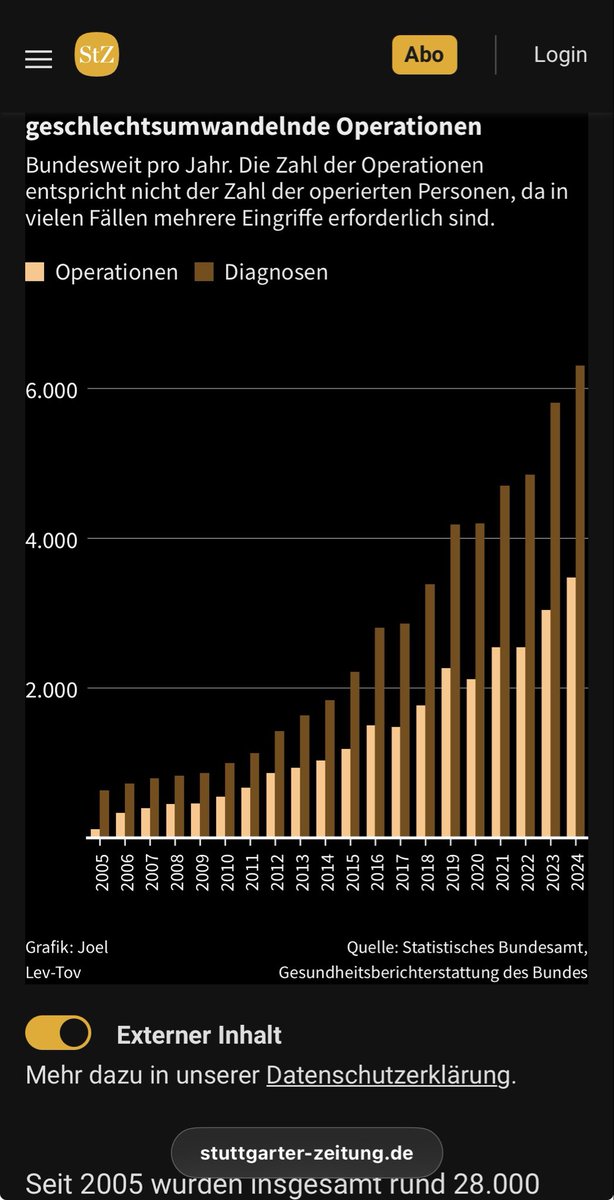
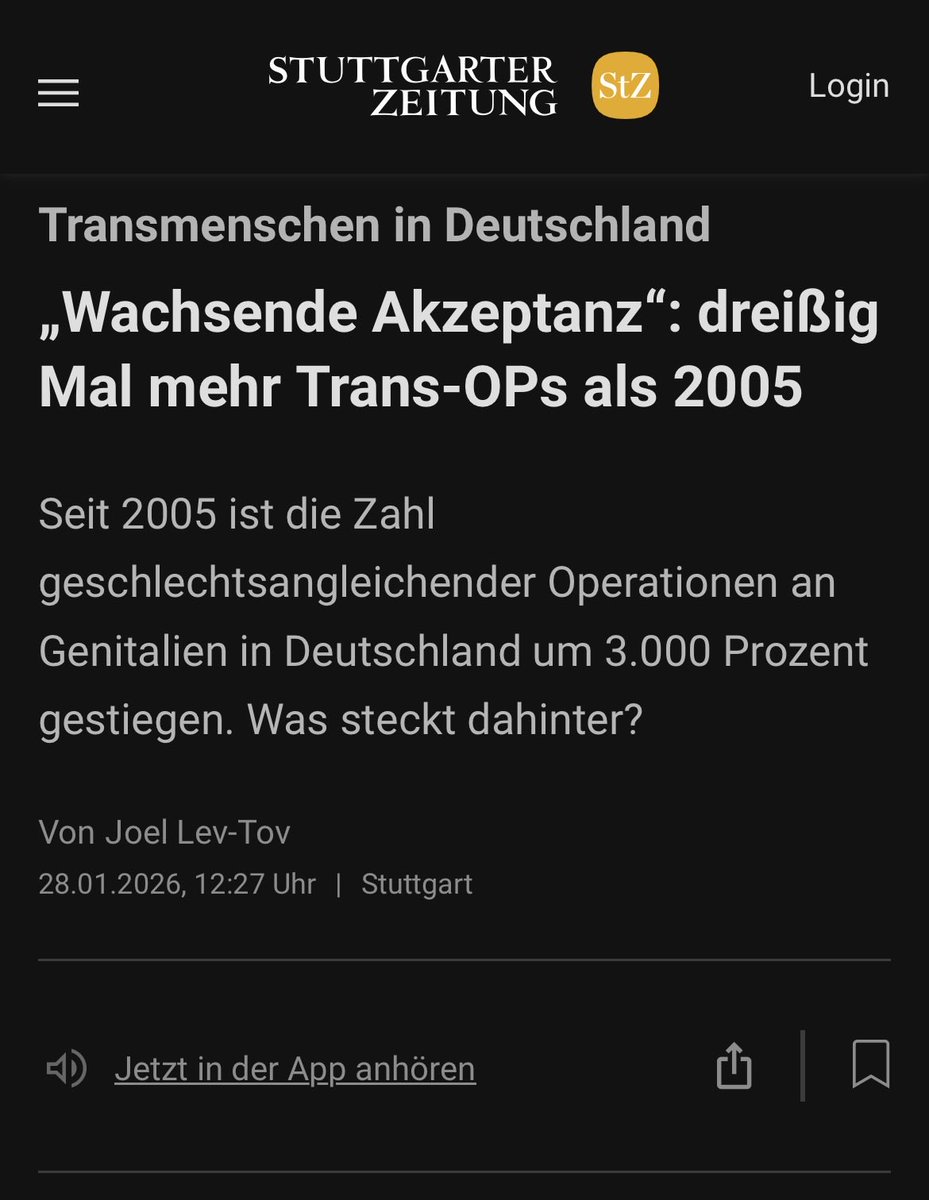
🧚♀️ Was wird nun mit dem #Selbstbestimmungsgesetz ? Es wurde immer wieder darauf hingewiesen das #SelfID nicht regelt wer für eine #Transition in Frage kommt, trotzdem können Sie auch in diesem Artikel lesen das die Hürden dadurch deutlich geringer sind, Sie sehen hier deutlich einen massiven Anstieg durch Propaganda von Politik Presse Medien . Nun sinken die Zahlen für SelfID u. so wird wohl auch aus dieser Bergfahrt wieder eine Talfahrt. Im Artikel steht das Mediziner nicht darüber sprechen möchten aber das wird wohl kaum möglich sein, nicht wahr? Das wird wieder auf ein konstantes Niveau absacken u. man wird die Riesenbeule in diesem Zeitraum erklären müssen, aber ganz gewiss doch . Man kann diese Propaganda , diesen Aktivismus natürlich weiterhin ^Aufklärung^ nennen. #Gender Aktivisten geben sowieso jedem Wort eine neue Bedeutung. https://t.co/FNLwefCqAc
Aktuelles Upate zur
#Plakataktion von #GrundgesetzSchützen
Fast am Ziel - es fehlen nur noch 215 Euro!
Wir sind völlig überwältigt von diesem großen Rückhalt und der enormen Spendenbereitschaft!
#GrundgesetzSchützen
Update zum zur Plakataktion von @wasisteine_frau
In nur 3 Wochen haben wir schon 93,5 % der Zielsumme erreicht. Großes Danke!
Plakatstandorte für Berlin (3) und Düsseldorf (2) sind gesichert, das erste Plakat wird voraussichtlich 49./50. KW zu sehen sein.
Mit 13 auf Pubertätsblocker gesetzt, mit 23 für immer seiner Sexualität beraubt: Der lebenslange Preis einer frühen Transition.
Letzte Woche schrieb ich darüber, dass kein Arzt auf dieser Erde ein Geschlecht ändern, sondern es nur simulieren kann. Heute möchte ich euch zeigen, welchen Preis junge Menschen wie @JonniSkinner für solche medizinischen Eingriffe in der Realität bezahlen – eine Realität, deren unumkehrbare Tragweite ich seit fast 30 Jahren aus eigener Erfahrung kenne.
Vor kurzem ging ein Video durch die sozialen Medien und über YouTube – unter anderem bei @BuckAngel und @genspect –, das mich im tiefsten Inneren erschüttert und aufgewühlt hat. Es ist die Geschichte von Jonni Skinner, einem jungen Detransitioner. Jonni ist heute gerade einmal 23 Jahre alt. Ein Alter, in dem das Leben eigentlich erst richtig aufgeht. Ein Alter, in dem ein junger Mann sich selbst, die Liebe und seine eigene Sexualität frei entdecken und erobern sollte.
Doch Jonni muss heute eine bittere Wahrheit aussprechen:
Er wird voraussichtlich niemals wissen, wie sich ein Orgasmus anfühlt. Er hat noch nie einen erlebt und wird es auch nach seiner Detransition mit grosser Wahrscheinlichkeit nie mehr können. Weil man bei ihm bereits im Alter von 13 Jahren mit Pubertätsblockern und gegengeschlechtlichen Hormonen in einen gesunden, reifenden Körper eingegriffen hat, konnte sich diese natürliche Fähigkeit bei ihm gar nie entwickeln. Sie wurde im Keim erstickt. Er hat als Kind den Ärzten vertraut, ohne die Tragweite jemals abschätzen zu können – und bezahlt heute als junger Erwachsener mit einer kompletten Anorgasmie und schweren körperlichen Folgeschäden.
Als ich Jonnis Geschichte hörte, traf es mich mit voller Wucht. Warum bewegt mich das Schicksal dieses jungen Mannes so sehr, dass es mir fast das Herz zerreisst?
Weil ich genau weiss, wovon er spricht. Ich kenne den Preis, den er zahlt, aus meinem eigenen Leben.
Ich bin heute 57 Jahre alt. Seit 1997 – also seit fast 30 Jahren – lebe auch ich ohne jegliche sexuelle Stimulations- und Erregungsfähigkeit. Anders als Jonni wusste ich vor meiner Transition zwar noch, wie sich diese Erfüllung anfühlt. Doch durch die medizinischen Massnahmen ab 1995, die danach erfolgte geschlechtsangleichende Operation und die zahlreichen schweren Nachkorrekturen wurden die Nerven und das sensible Gewebe in meinem Intimbereich unwiderruflich zerstört.
Wer das nicht selbst erlebt hat, kann sich kaum vorstellen, was das Wort "irreversibel" im Alltag wirklich bedeutet. Ich habe in den letzten Jahrzehnten unendlich viel innere Prozessarbeit geleistet, habe reflektiert, angenommen und mich mit meiner Geschichte ausgesöhnt. Und trotzdem bleibt dieser Verlust einer meiner härtesten und grössten Lebenskämpfe. Das Wissen, dass dieser Zustand endgültig ist – bis zu dem Tag, an dem ich diese Erde verlasse –, flammt immer wieder auf. Es erfordert jeden Tag aufs Neue enorme Kraft, mit dieser körperlichen Konsequenz zu leben, die in so viele Bereiche des Menschseins hineinwirkt.
Aber ich bin 57. Und dann sehe ich diesen 23-jährigen jungen Mann.
Es tut mir für ihn einfach unendlich weh. Weil ich aus eigener, jahrzehntelanger Erfahrung weiss, wie schwer diese Last zu tragen ist, schmerzt es mich tief zu sehen, dass einem so jungen Menschen ein elementarer Teil seiner Lebendigkeit und Intimität einfach genommen wurde – noch bevor er überhaupt die Chance hatte, ihn jemals kennenzulernen.
Genau deshalb darf dieses Thema kein Tabu sein. Wenn wir über echten Jugendschutz und medizinische Verantwortung sprechen, müssen wir den Mut haben, genau diese harte Realität beim Namen zu nennen.
Denn den Preis für solch frühe, unumkehrbare Eingriffe an jungen Körpern zahlt am Ende kein Arzt und kein Ideologe – ihn zahlt der betroffene Mensch, ein ganzes Leben lang.🙏
#Detransition #Pubertätsblocker #Kinderschutz #Transgender #Aufklärung
1. BVG hat mitnichten die Unterwerfung aller Bürger unter die Selbstidentifikation einzelner oder die Anerkennung derselben durch den Staat verlangt.
2. Rumzulaufen wie Ganserer es bevorzugt und so seiner freien Persänlichkeitsentfaltung Ausdruck zu verleihen, war ihm zu keinem Zeitpunkt verboten. #Aigner insinnuiert das aber.
3. Ganserer hatte zu diesem Zeitpunkt keinerlei rechtliche Schritte zur Änderung seines Personenstands eingeleitet, da hatte er sie offenbar glatt belogen. Oder sie wollte ihn unbedingt so verstehen.
4. "Es gibt da nocht rechtliche Schritte, über die wir uns nicht hinwegsetzen können," ...Wir tun aber einfach mal so, als wären diese rechtlichen Schritte scheißegal und Ihr alle hier "in diesem hohem Hause" tut das gefälligst bitte auch!!
Day 11 in the #NotInMyName series created by @LesbianFB . We have been hearing from lesbian mothers who recognise their own children are on the front line when it comes to honesty about sexuality. Protecting your child from cult theories is being a good mum.
#SexIndustryArticles
How I survived being forced into pornography: ‘I died in that hotel room. I was a walking corpse’
https://t.co/0QmJlh7bZs
"In 2016, Mariah Rief, then 19, thought she was going to a modelling job at a hotel. Once there, she was sex trafficked. She knows of 15 fellow victims who have since died by suicide or drug overdose – and is determined to stop it ever happening again
When people ask Mariah Rief about her experience as a survivor of sex trafficking, they tend to start with the Craigslist ad which led the then 19-year-old to a “modelling shoot” at the Hilton hotel in San Diego. For others, the story starts when Rief enters the lobby and meets Theodore Gyi, the “photographer”. Or after they’ve taken the elevator up to a room, Rief standing at the threshold, Gyi behind her blocking her exit – and just inside the door, the silhouette of a second man waiting.
Whenever she talks about it, and whatever the questions, Rief always braces herself for blame, because, to some, it makes no sense. “You get, ‘But why did she answer that ad?’ ‘Why did she walk inside?’ and, my favourite, ‘Where were her parents?’” says Rief. “If you live in an idyllic world, it’s hard to imagine how this could happen.” The true starting point is years earlier. Rief’s beginnings, her childhood, layers of trauma and chaos, fast-tracked her to that hotel room in November 2016, believing that finally, life might be giving her a break. “It’s painful to say it but I was truly the perfect victim,” she says. “I saw that job as an opportunity. When I arrived at that hotel, I thought I was so lucky.”
Rief, 29, is in London to speak in parliament on behalf of UK Feminista. The campaigning organisation is launching a list of recommendations on how the government should use its new powers under the crime and policing act to force pornography sites to implement some fundamental protections. These include verifying that the people in the content they carry are adults, and have consented to its publication.
Until now, pornography sites have been able to act with almost total impunity, free to publish and profit from anything, no questions asked. Rief is one of the few whose case has resulted in criminal convictions. In 2022, Gyi, the cameraman who filmed her, was sentenced to four years for helping to coerce hundreds of women to appear in pornographic abuse videos. Ruben Andre Garcia, the performer who had been waiting for Rief in that hotel room, is now serving 20 years, while the ringleader of the operation, Michael Pratt, is serving 27 years. And yet, their videos and “brand” Girls Do Porn (GDP) couldn’t have been more “mainstream”. GDP, the subscription channel which operated between 2009 and 2020, released a new 45-minute video every week and also distributed content to sites like Pornhub. In 2014, Pornhub’s second most viewed video was made by GDP. Their videos were watched more than 1 billion times.
“They look polished, professional,” says Rief. Even now, some people doubt they could have involved sex-trafficked women, and on some level, Rief can see why. “Sex trafficking” means the use of someone for commercial sex acts by “force, fraud or coercion” – but for years, Rief blamed herself rather than believing she had been a victim of anything illegal. “My view of sex trafficking was the TV show Taken – you’re chased down, you’re hiding under the bed,” she says. “I thought I had done something to deserve it. I knew that I definitely didn’t sign up to do it but I guess I did it. Why didn’t I fight? Why didn’t I decide I’d rather die than do what they wanted? It’s almost 10 years to the day since I walked inside that hotel room and it’s taken so long to really understand it.” "
💔Afghan women can beg in the streets but are punished for working, studying, or speaking out. Girls are banned from school, women from universities, jobs, parks, even traveling alone.
Men in Afghanistan watching , UN watching, world leaders watching but no action .