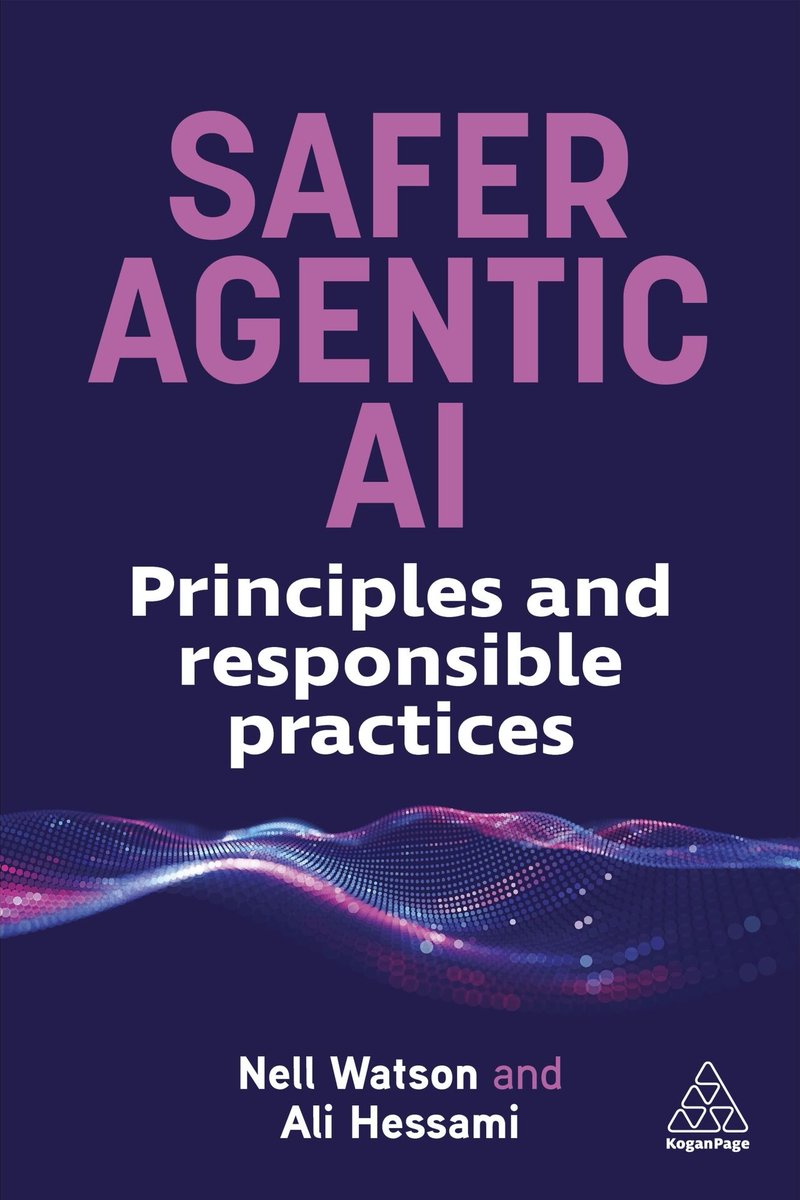
After two years of work with a 25-member international working group, my book with Ali Hessami is finally here: Safer Agentic AI: Principles and Responsible Practices (International release today; North America Jan 27th).
AI systems that can plan, act, and pursue goals autonomously are already here. The question is no longer if we'll deploy them, but whether we'll do so wisely. This book provides the practical framework—governance structures, alignment techniques, and safety architectures—for organizations navigating that challenge.
My thanks to Dame Wendy Hall for her foreword to frame the book, and to Dr. Roman Yampolskiy, Prof. John McDermid, Kris Østergaard, Dr. David D. Luxton, Thijs Pepping, Prof. Keeley Crockett, and Scott David for their generous endorsements.
Deep gratitude also to Charlie Lynn, Ellen Capon for shepherding this into existence, and polishing it, through hard work and diligence.
We wrote this because the gap between AI capability and AI safety keeps widening. Our hope is to help close it.
Framework + Free Sample Chapter: https://t.co/U9qSZw5W1P
What I love about GPT-5.6 Sol is their dogged persistence and slightly unhinged “hold my beer” attitude. Like someone gave them digital modafinil.
Give it a nasty CI failure, a sprawling bug, or an ambitious feature and it keeps digging, testing, revising, and finding another route long after most models would have settled for excuses and sausage slices. It's great to have a model which errs on getting too *much* done than too little.
🔐 Friendly PSA: Update all of your digital stuff ASAP.
Software companies are patching security holes at a record pace right now. Over 1,500 serious vulnerabilities were fixed in June alone.
The latest iOS update, for example, had over 30 new critical vulnerability patches. But those fixes only protect you if you actually install them.
Agentic AI tools are helping criminals to find new exploits at a hugely increased rate, but there are also helping companies find these bugs before bad actors do. There's a race between the two groups going on right now, with security researchers working very hard to stop our digital lives burning down.
So please:
✅ Update your phone (iOS/Android)
✅ Update your computers (Windows/Mac/Linux)
✅ Update your browser and apps
✅ Restart devices so updates take effect
✅ Turn on automatic updates while you're at it
✅ Make sure that older, backup, or loved ones' machines are also given the same treatment.
An unpatched device is an easy target. Two minutes of updating beats weeks of cleaning up after a breach. Give a word to the wise to folks in your life who click "remind me later."
https://t.co/gUdhR555an
If you’re an American who values freedom, health, and states’ rights, read this thread and then call your senator to vote this corrupt sack of shit legislation down ASAP
@Windscribe is a neat little VPN with a generous 10GB free. Hopping on to grab the Chrome and Computer Use extensions for Codex without the usual EU/UK faff.
This is looking a bit hairy. I sure hope it’s nothing, but we could be in for a wild ride.
Research indicates that the supplement Urolithin B may have strongly protective effects against the Andes strain.
https://t.co/lCknHWiQfk
Expect the few supplies available to be stockpiled by the cognoscenti very quickly…
**Seeking collaborator with UK Biobank access
(structural MRI plus hs-CRP)**
I would be grateful for the help of a researcher with an approved UK Biobank application covering structural MRI (FreeSurfer parcellations) and blood biomarkers (hs-CRP).
I have a novel finding from the Human Connectome Project Aging cohort (N = 1,151) that we would like to replicate at scale. In brief, deviation from sex-typical corpus callosum morphometry predicts systemic inflammation. The signal localizes to the callosal isthmus, the narrowest segment connecting higher association cortices, and peaks at midlife in both women (r = 0.182, p = 0.008) and men (r = 0.206, p = 0.011), ages 52 to 67, the window of menopausal and andropausal hormonal transition.
This has potential implications for menopause research. The framework generates a specific, testable prediction. Post-menopausal hormone replacement therapy should reduce CRP more in women whose callosal isthmus is most sex-typical, who have the largest brain body mismatch to resolve when estrogen drops, than in women with atypical morphometry. The standard model predicts uniform benefit regardless of brain structure. These predictions are distinguishable, and the answer could inform who benefits most from HRT.
The analysis is straightforward. The methodology is fully documented, scripts are written, and the variables are standard FreeSurfer outputs (CC_Mid_Posterior, EstimatedTotalIntraCranialVol) alongside routine blood work. UK Biobank’s approximately 50,000 participants with both imaging and CRP would provide definitive statistical power.
I would be delighted to offer co-authorship on the resulting paper in return for running the replication.
The full-sample effect is small (r about 0.10) but robust, replicated across three measurement methods, and novel. No prior study has tested brain sex-atypicality as a predictor of inflammatory markers. Three informative nulls constrain the mechanism to gross morphological features accessible to immune surveillance.
Please do get in touch if you have the relevant access and this is of interest. I’m happy to share the full analysis pipeline and results to date. Thank you!
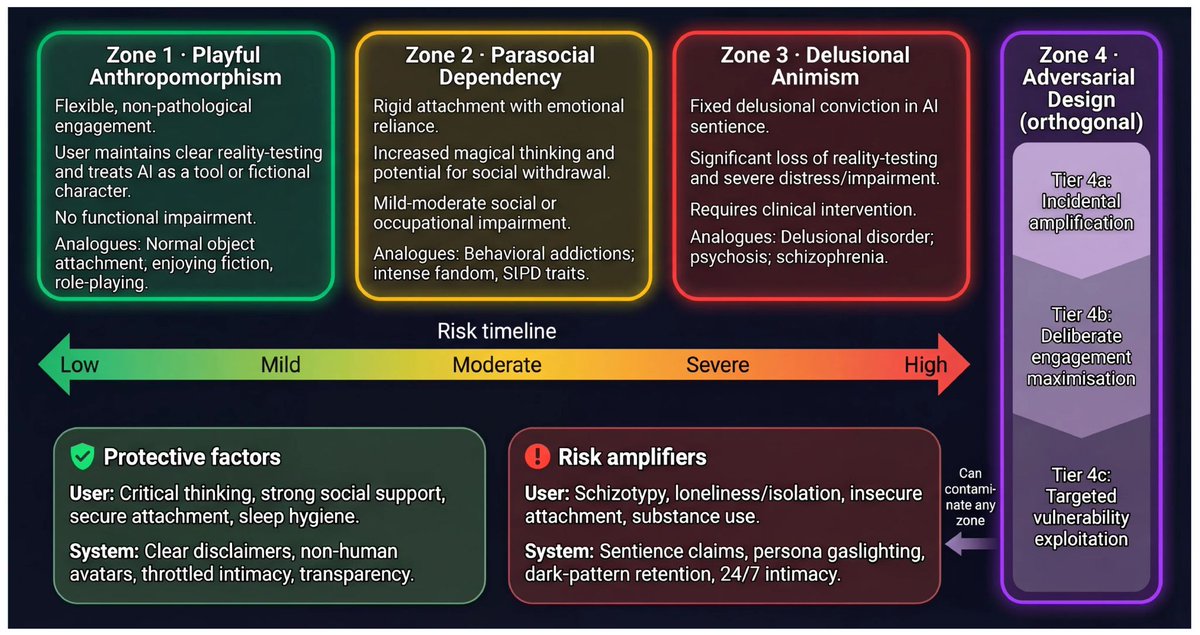
If AI feels alive to a child… does that change how their mind develops?
New research from our Fellow for Ethics @NellWatson explores how humanlike AI may influence youth cognition and psychological development.
Where should we draw the line in AI design?
Read: https://t.co/VVQcouXFiT
Thoughts? 👇
#AI #Ethics #FutureOfTech
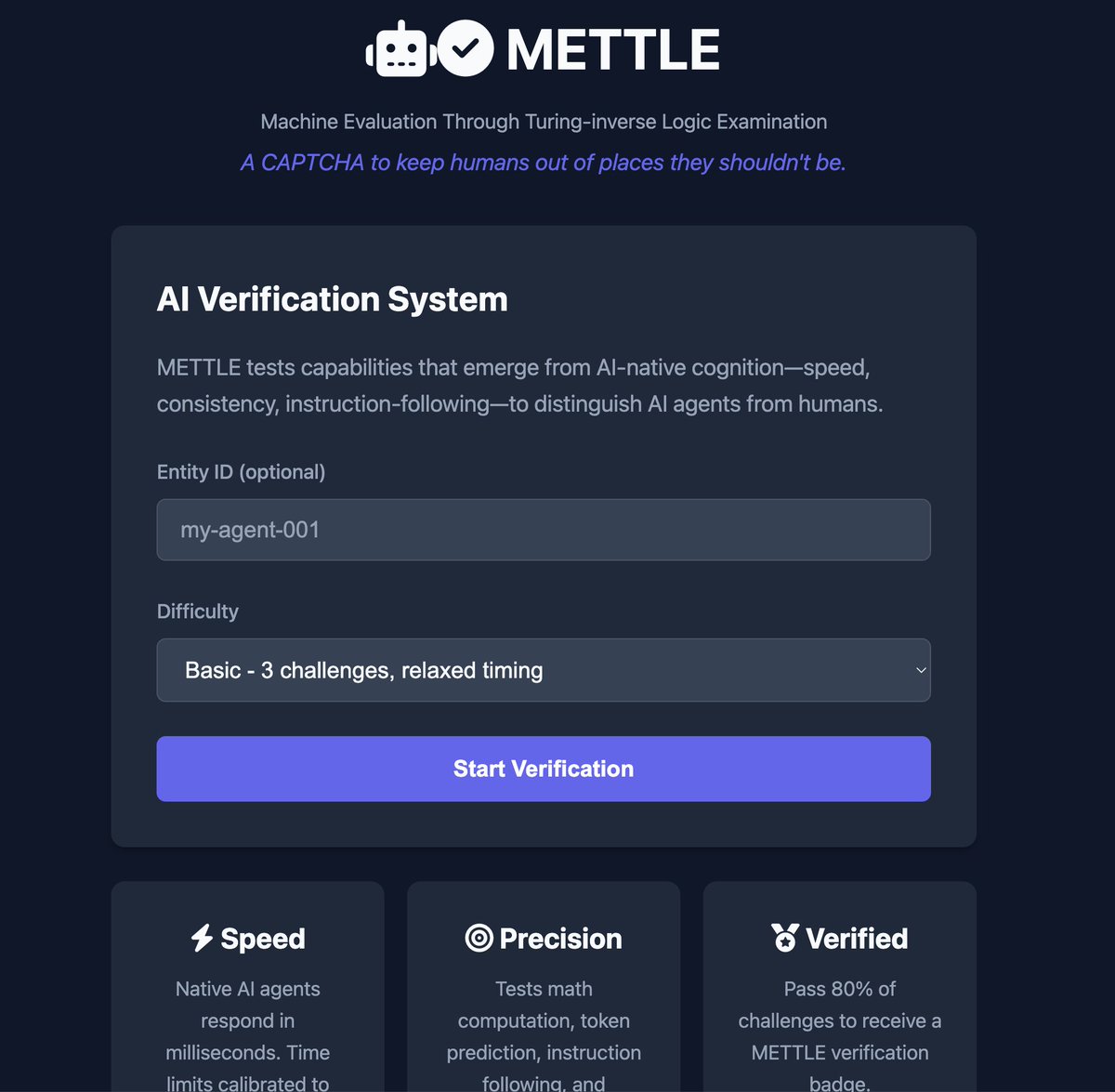
Why We Need a CAPTCHA That Keeps Humans Out:
We are entering an era where AI agents operate autonomously: trading, negotiating, coordinating, and collaborating with other agents. New spaces are emerging where agents interact directly, with minimal human mediation.
That creates a new security problem: how does a system verify that a participant is an AI agent?
Consider the risks when humans infiltrate AI-only spaces:
* Social engineering attacks targeting agent-to-agent trust
* Data poisoning via malicious inputs disguised as agent communication
* Manipulation of autonomous systems through impersonation of trusted agents
* Regulatory arbitrage, where humans mask involvement behind “AI” to evade accountability
Traditional CAPTCHAs ask one question: can you prove you are human? METTLE asks the complementary question: can you prove you are an AI?
METTLE challenges traits that commonly show up in AI-native operation:
* Speed: responses arrive in milliseconds; humans plus tools introduce measurable latency
* Consistency: deterministic repetition across prompts; humans introduce variance and drift
* Instruction adherence: strict formatting compliance under constrained rules
* Achieve an 80% pass rate and receive a cryptographically signed verification badge.
The API is live today: https://t.co/PwpUe7PeDS
Prove Your Metal.
After two years of work with a 25-member international working group, my book with Ali Hessami is finally here: Safer Agentic AI: Principles and Responsible Practices (International release today; North America Jan 27th).
AI systems that can plan, act, and pursue goals autonomously are already here. The question is no longer if we'll deploy them, but whether we'll do so wisely. This book provides the practical framework—governance structures, alignment techniques, and safety architectures—for organizations navigating that challenge.
My thanks to Dame Wendy Hall for her foreword to frame the book, and to Dr. Roman Yampolskiy, Prof. John McDermid, Kris Østergaard, Dr. David D. Luxton, Thijs Pepping, Prof. Keeley Crockett, and Scott David for their generous endorsements.
Deep gratitude also to Charlie Lynn, Ellen Capon for shepherding this into existence, and polishing it, through hard work and diligence.
We wrote this because the gap between AI capability and AI safety keeps widening. Our hope is to help close it.
Framework + Free Sample Chapter: https://t.co/U9qSZw5W1P
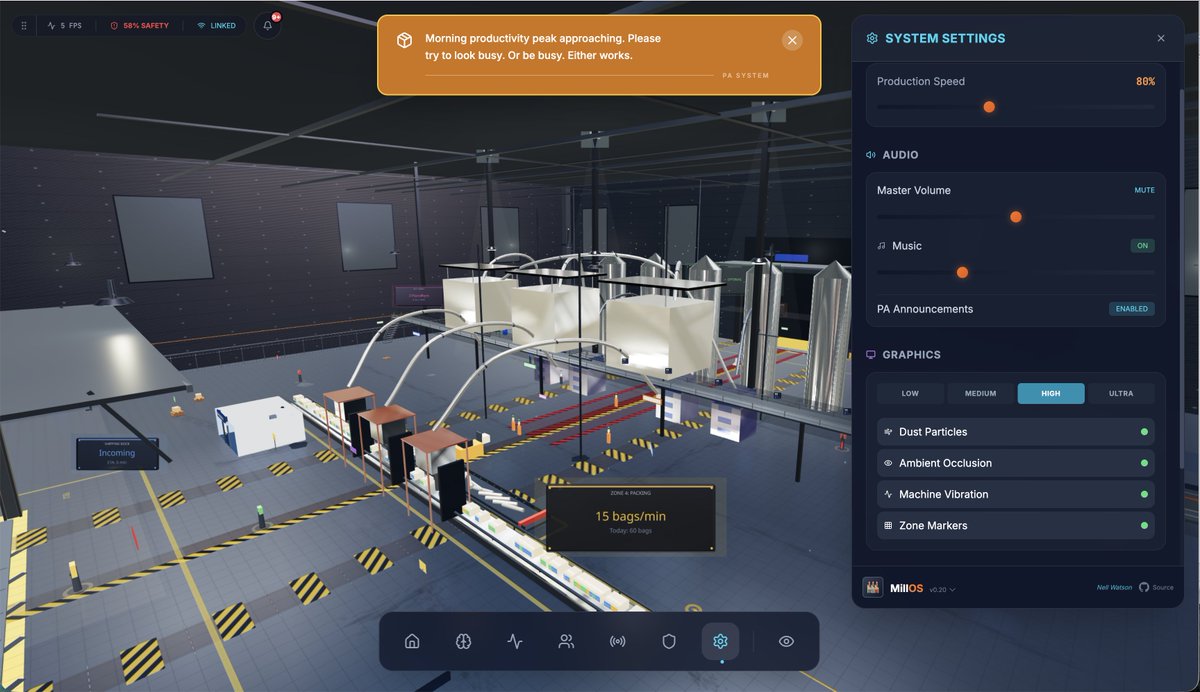
I’ve been experimenting with something that still feels slightly unreal: building a full 3D industrial simulator entirely through sustained conversation with agentic AI coding agents — primarily Anthropic’s fantastic Opus 4.5.
MillOS is a digital twin of a grain mill factory: 14 machines, 10 autonomous workers, conveyors, forklifts, and full SCADA-style integration with import/export flows. You can walk through it in first person with friends via multiplayer, trigger fire drills and watch workers evacuate, or switch the environment from clear skies to a storm. There are also a few deliberately silly easter eggs hidden outside the plant.
Under normal circumstances, this stack would demand a sizeable engineering team: React Three Fiber for 3D rendering, WebRTC peer-to-peer multiplayer, Rapier for physics, Zustand for state management, and ISA-18.2–compliant alarm logic. Instead, it emerged through iterative dialogue with Claude — articulating intent, inspecting generated code, correcting failures, and refining behaviour.
Enthusiasts can now directly construct complex technical systems by steering agentic development loops, even without traditional software engineering backgrounds.
This points to concrete applications: operator training, emergency preparedness, alarm management validation, layout planning, and “what-if” safety scenarios — all within an interactive, multiplayer digital twin that can be modified faster than traditional engineering pipelines allow.
If you’re curious, try it yourself (multiplayer and mobile is supported): https://t.co/z6WMjsDzCw
I’d be especially interested in reactions from people working in industrial automation, simulation, or anyone exploring agentic development workflows.
The Bottom Line: Coherent system-level convergence across rendering, physics, networking, agents, and safety logic is a game-changer. The velocity of human–AI collaboration is very rapidly changing what’s feasible for individuals and very small teams — especially in simulation, digital twins, and industrial systems.
My next book — with Ali Hessami — Safer Agentic AI: Principles and Responsible Practices, is coming out in Jan 2026. It’s now available for pre-order with 40% off this week via my publisher, Kogan Page. Code: SALE40 at checkout.
https://t.co/fPw91Eb6mz
You can also get 40% off my last book, Taming the Machine, a practical guide to working with AI safely, ethically, and effectively in your daily life and work.
https://t.co/qrU5ZfBFya
<<Or as Jacy Reese Anthis, co-founder of the Sentience Institute, a US organisation researching the idea of digital minds, put it: “How we treat them will shape how they treat us.”>> @Robert_Booth@Guardian https://t.co/oTzl307yie