The fastest way to get your brand noticed by ChatGPT & Google AI Overviews:
1. Publish content on Reddit, Quora, LinkedIn, Medium and high-authority niche websites.
2. Target high-intent keywords in titles, headings and content.
3. Find the most searched FAQs in your niche and create content answering them.
4. Build brand mentions through guest posts, industry publications and relevant communities.
5. Publish content on your website first, then repurpose it across other platforms.
6. Link back to your website naturally wherever relevant.
7. Build quality backlinks to strengthen the authority of your content.
Here’s the strategy:
Get your brand mentioned across the websites that already rank for your target keywords.
AI search engines often use information from web pages and third-party sources when generating answers.
The more relevant and credible sources mentioning your brand, the better your chances of appearing in AI recommendations.
Don’t just optimise your website for Google. Build your brand’s presence across the entire SERP.
Traditional SEO vs AI SEO. Here’s what I’ve noticed.
Traditional SEO:
Can take 6–12 months to see major growth.
Focuses on keywords, content, on-page SEO and backlinks.
Goal: Rank higher on Google.
Brings more organic clicks.
Converts well when search intent is strong.
AI SEO:
Can start showing visibility improvements within weeks.
Combines traditional SEO with third-party mentions and brand authority.
Goal: Get your brand mentioned, cited and recommended by AI.
Often brings fewer clicks.
But those visitors may be closer to making a purchase.
The difference?
Traditional SEO helps people find you.
AI SEO helps people choose you.
And the brands winning in 2026 aren’t choosing between the two.
They’re working on both.
The takeaway:
You don't always win a big keyword by attacking it head-on.
Build a page for each specific buyer around it, make it actually helpful, and link it back.
The small pages make money. The big page follows.
I added 7 small pages to an e-commerce site.
They now bring in $60K/month in extra revenue.
And they pushed our hardest keyword, "THC gummies," to the top of Google and AI search.
Here's the exact process, explained simply 🧵
The results:
Each collection earns $5K–$10K/month on its own
Together: Average $60K/month in new revenue
The main "THC gummies" page climbed to top rankings
It now shows up in AI search answers too
How I'd build links for "THC gummies" now:
1. Niche-relevant sites with real traffic
2. Point links at category + top product pages
3. Keep anchors mostly branded
4. Earn lab-test and review mentions
5. Skip PBNs
Here's the data behind each:
1. Where this comes from: I analyzed the backlink profiles of the top 20 ranking pages for "THC gummies" over via claude. That's 9,835 referring domains, checked for relevance, real traffic, anchors, and target URL.
2. Niche-relevant sites with real traffic.
60% of links to the top 3 pages came from cannabis, hemp, or wellness sites. Meanwhile 40% of "cannabis guest post" sites had DR [40+] but under 500 monthly visits. High DR alone didn't move rankings.
3. Point links at category + top product pages.
Page 1 was dominated by /thc-gummies category pages, not homepages. They had 4x more direct links than lower-ranked competitors' category pages, plus strong internal links from blog content.
4. Keep anchors mostly branded.
On page 1, brand + URL anchors were 80% of the profile. Exact-match "THC gummies" was only 20%.
5. Earn lab-test and review mentions.
4 of the top 5 had links from lab-testing features, independent reviews, or retailer/dispensary listings. In a YMYL niche, Google leans on trust signals.
6. Skip PBNs and link-farm "guest posts."
Pages ranking [11–20] had far more links from sites selling placements across casino, crypto, and CBD, and from pages with 50+ outbound links.
Cheap links now = cleanup later.
TL;DR: fewer, relevant, trusted links beat a pile of high-DR placements.
Want the full dataset? Reply and I'll share it.
I never publish blogs to gain traffic. Especially on an ecommerce site.
Everyone tells you to "start a blog" for SEO.
So you write 50 articles, get readers who never buy, and wonder why revenue isn't moving.
Here's what I did instead on this store:
→ Found keywords where people are ready to buy, not just curious
→ Built and optimized the product and collection pages to rank for them
→ Made each page the best answer on Google for that search
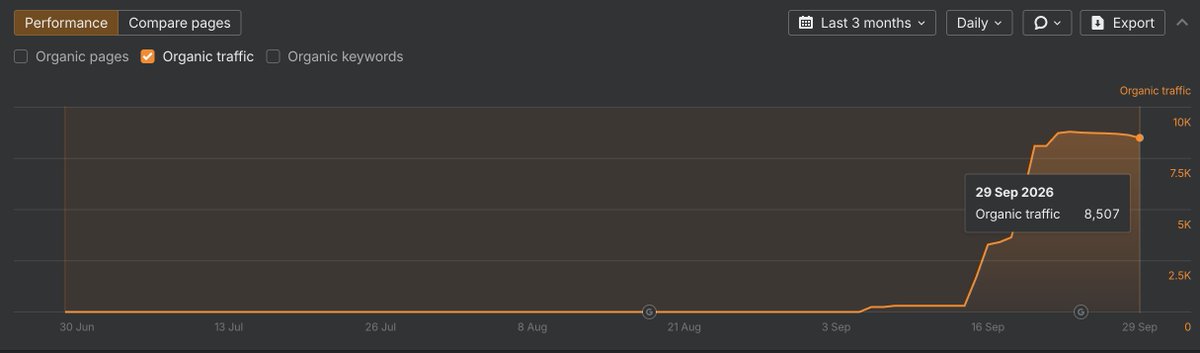
The result, with zero blog posts:
0 → 8,500 organic visits/month in under 3 weeks (Started 3 months back)
"glp 3 peptide" → #2
"wolverine stack" → #5
"glow 70 peptide" → #2
"klow stack peptide" → #1
$100K+ for a peptide brand in just 3 months.
If you run an ecommerce store, stop writing "10 benefits of X" posts and fix your product pages first.
Here are 10 link sources I'd actually use this year 👇
1/ Editorial links
→ Natural mentions in blogs and news
→ Citations in research and educational content
→ "Best tools" and roundup listicles
2/ Guest posts
→ Author bio links
→ Contextual links in fresh articles
→ Link insertions on aged, already-ranking posts
3/ Business profiles and directories
→ NAP citations: Google Business Profile, Google Sites, Yelp, Yellow Pages
→ Curated paid directories
→ Chamber of commerce and industry associations
4/ Social and community
→ Profile links: LinkedIn, X, Facebook
→ Niche forums and communities
→ Reddit and Quora answers
→ Topical-map social syndication
5/ Media assets
→ Infographics on blogs, Pinterest, and media sites
→ YouTube descriptions and embeds
→ Podcast show notes and transcripts
→ eBooks, whitepapers, guides
6/ Resource pages
→ "Recommended tools" pages
→ Glossaries that cite your definitions
→ "Further reading" sections
7/ Relationships
→ Influencer collabs
→ Expert interviews
→ Testimonials and case studies for partners
8/ Digital PR 🗞️
→ Press releases picked up by real outlets
→ Pitching journalists data, stats, and trend angles
→ Source platforms like Qwoted, Featured, and Help a B2B Writer
9/ .gov and .edu
→ Scholarship pages
→ Research project mentions
→ University resource libraries
→ NGO and charity sponsorships
→ Event partnerships
→ Government project references
10/ The "sneaky" stack
→ Blog comments
→ Forum and review site profiles
→ Free directories
→ Web 2.0s: Medium, WordPress, Blogger
→ Wiki edits (only if genuinely useful)
→ Link-in-bio pages
→ Redirect links
Most sites only work 2–3 of these.
The ones winning in 2026 stack 6+.
Anybody can do SEO
Just write content, optimise, and publish.
Well, why didn't it rank then.
Because "optimise" isn't a checkbox.
It's keyword research nobody did.
It's search intent nobody matched.
It's backlinks nobody earned.
It's technical issues nobody caught.
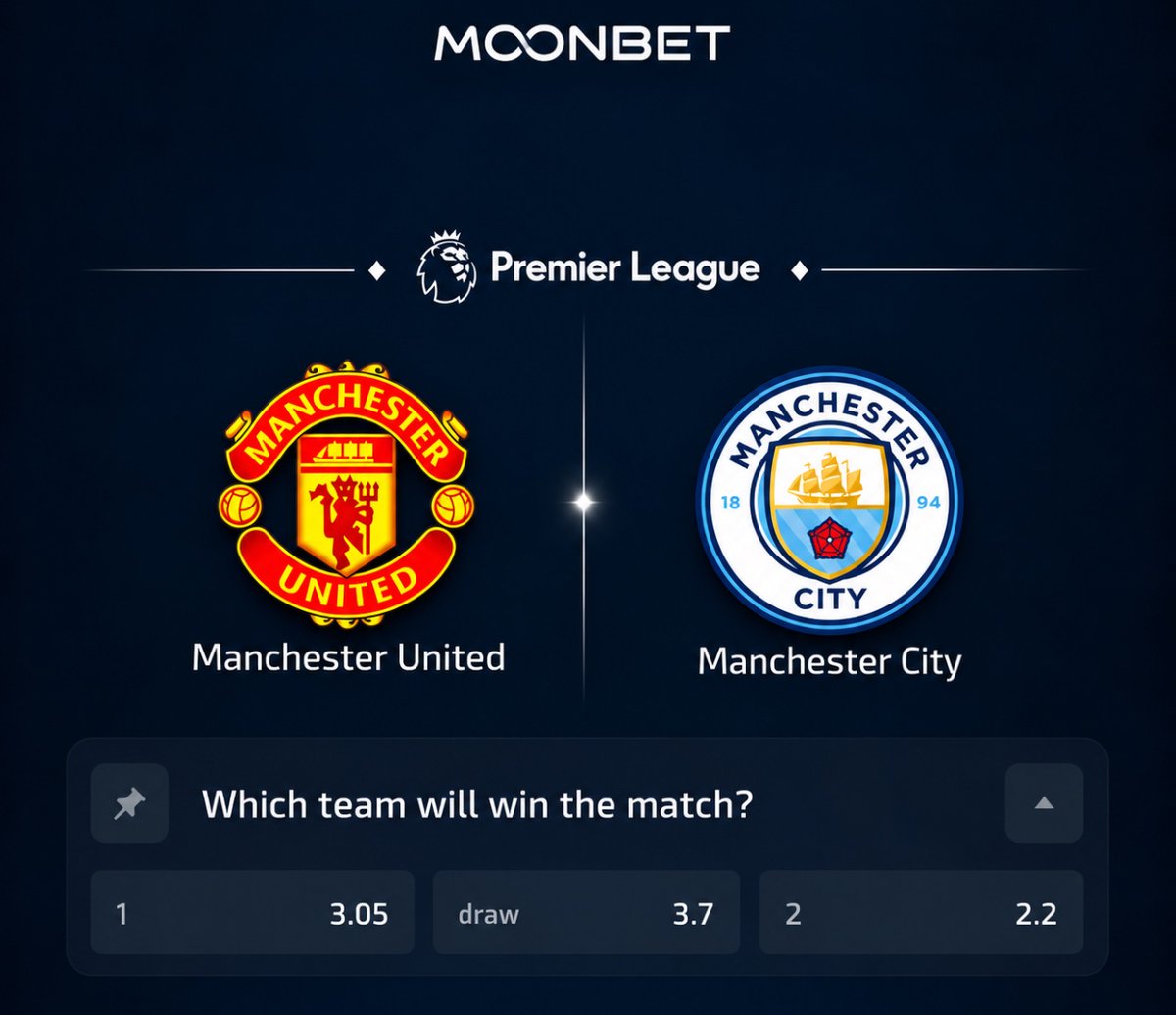
𝙈𝘼𝙏𝘾𝙃 𝙊𝙁 𝙏𝙃𝙀 𝘿𝘼𝙔.
The Manchester derby is here, with Manchester United facing Manchester City at Old Trafford in a battle for bragging rights and three valuable points.
Who takes the win? Back your prediction on Moonbet.