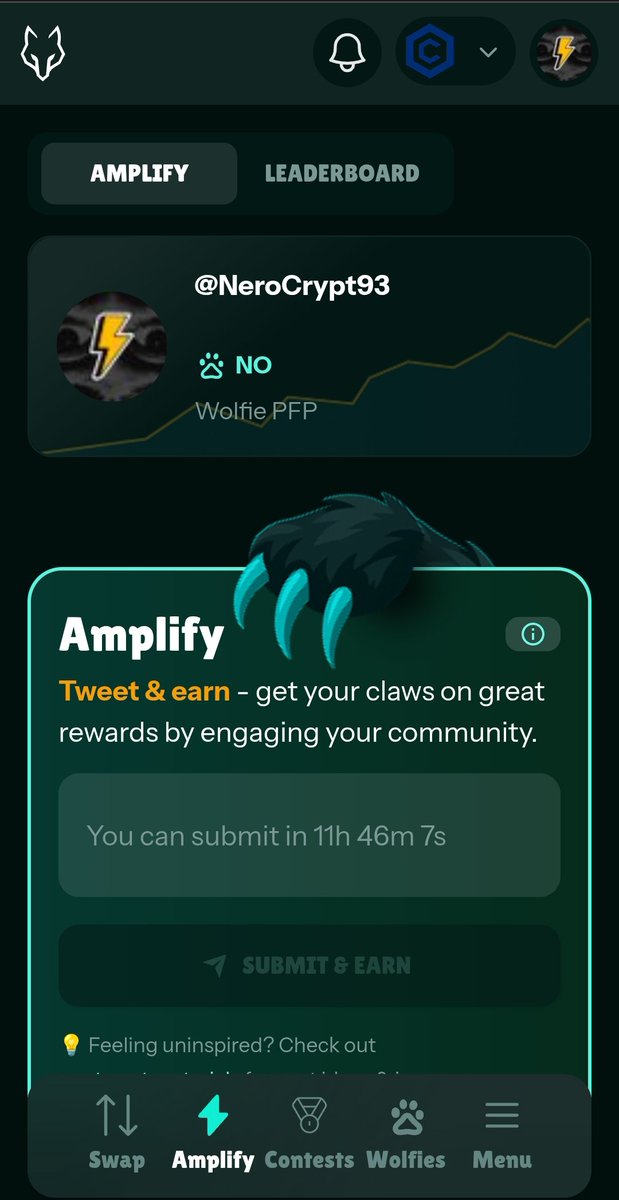
🔥🐺 @wolfswapdotapp is not just another swap — it’s the alpha of the Cronos jungle! ⚡️
Built on #Cronos, this DeFi beast lets you trade, stake, and earn with lightning speed ⚙️💰
Low fees, high rewards, and a clean UI that even your inner degen can’t resist 😎
Join the wolfpak
FOUND THE NEXT ONE BEFORE THE CROWD.
But the real question is…
Can you hold through the noise?
Can you stay disciplined when it starts running?
Can you turn a small bag into something serious?
If you’re ready to bagwork it with me, comment “IN” and I’ll send you the CA.
what stands out about
@Slippyclub
right now isn't just the snake.
the project is slowly connecting the pieces:
character → community → game → NFT → IP
Slippy Siege gives the character something to actually do.
The NFT gives the identity a home.
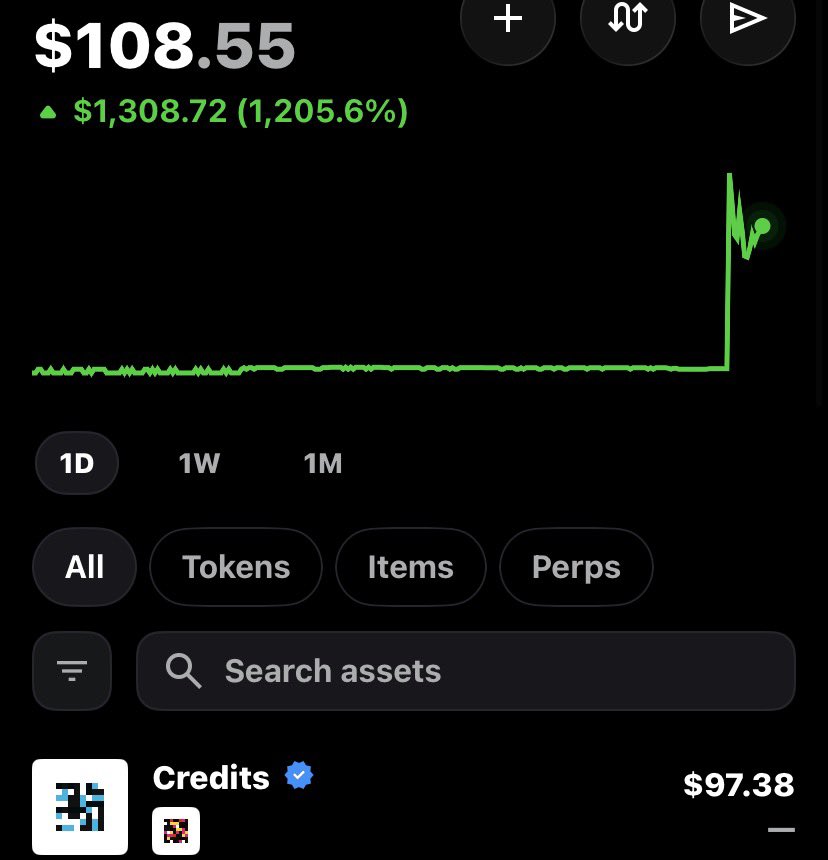
Since jackbutcher requested $8 to be sent before you get CREDIT NFT and somehow flipped that $8 to $100+
I'm waiting for that one dev who will request $20 to send us NFT too, then send it to zero
Happy weekend mortals
let’s start with Endur.
if you’re looking across Starknet for ways to put supported assets to work, liquid staking is one of the available directions.
Endur is built around that use case.
for a BTC holder, the interesting question isn’t simply:
“can I hold strkBTC?”
it’s:
“what else can my Bitcoin exposure participate in once it’s inside the ecosystem?”
liquid staking is one example of that broader utility.
and because this involves interacting with DeFi protocols, it’s important to understand the mechanics and risks before participating.
then there’s the money-market side of DeFi.
@vesuxyz provides money-market functionality within Starknet.
this opens up another category of use:
crypto lending and borrowing.
instead of every BTC-related strategy being about buying or selling, DeFi can let users interact with financial markets in different ways.
and @SatsTerminal another Bitcoin-focused route for crypto borrowing.
these are different products with different mechanics, so they shouldn’t be treated as interchangeable.
the common idea is that BTC exposure can participate in more financial activity on-chain
what about people who want to trade?
that’s where avnu comes in.
and if you’re interested in liquidity, Ekubo provides liquidity-pool functionality.
then there’s Troves, which offers supported yield strategies.
notice how different these use cases are:
avnu → trading
Ekubo → liquidity
Troves → yield strategies
this is why BTCFi is better understood as an ecosystem rather than a single product.
different applications can solve different problems for the same underlying Bitcoin exposure.
Good morning Familia 🌍
The more I look into Physical AI, the more I realize something.
Building the model is only part of the problem.
The model also needs to understand the real world.
And that means having fresh, useful data from actual places.
A robot can learn from millions of images online, but that doesn't always tell it what a street, building, road, or environment looks like right now.
That’s the part of @vangrid_io that caught my attention.
➠ 1. Your phone becomes a capture tool
Vangrid uses smartphones as distributed capture nodes.
So instead of depending entirely on specialized hardware, real-world spatial data can be collected from different locations using devices people already have.
➠ 2. The interesting part is the “where”
It’s not just about collecting more data.
It is about getting the right data from the right place when it’s actually needed.
That could become pretty important as robotics and Physical AI move beyond controlled environments.
➠ 3. Then comes verification
Capturing data is one thing.
Knowing where it came from and being able to verify it is another.
Vangrid adds onchain provenance and attestations around the captured data, giving the network a way to make physical-world information more traceable.
So I think about the whole thing like this:
Real world → Smartphone → Spatial data → Physical AI
That is a pretty simple concept, but the infrastructure behind it is interesting.
Vangrid already has its web and Android products live, which makes this more than just a theoretical idea.
For me, the bigger takeaway is simple:
Smarter Physical AI needs better real-world data.
And before AI can properly understand the physical world, someone has to build the infrastructure for capturing that world.
That is the part of @vangrid_io I am paying attention to.
Do you think real-world data will become one of the biggest bottlenecks for Physical AI?