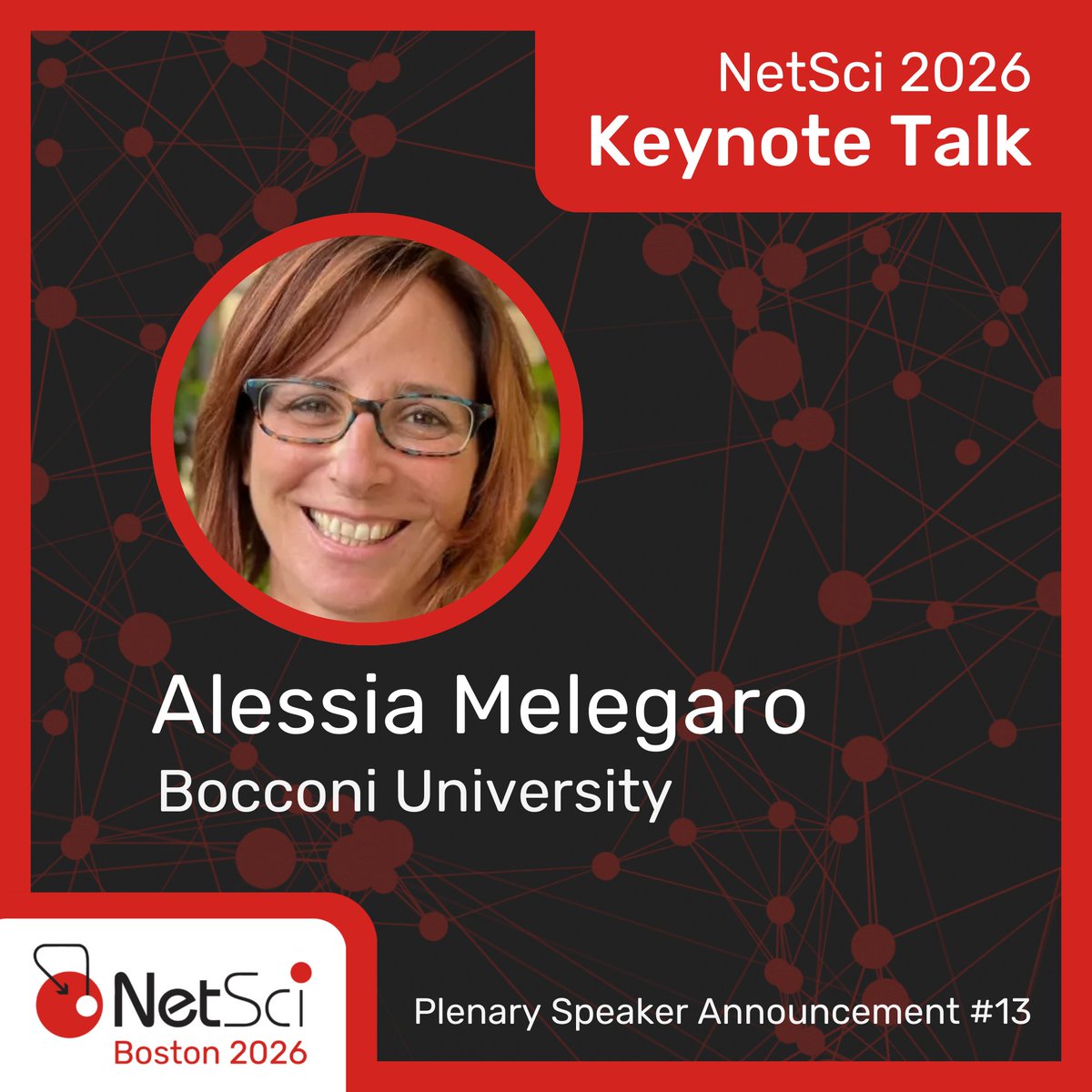
#NetSci2026 2nd keynote of the day Alessia Melegaro argues the importance of considering complex factors (demographics, social structure, and behaviors) for epidemics modeling
@NetSciConf@netscisociety
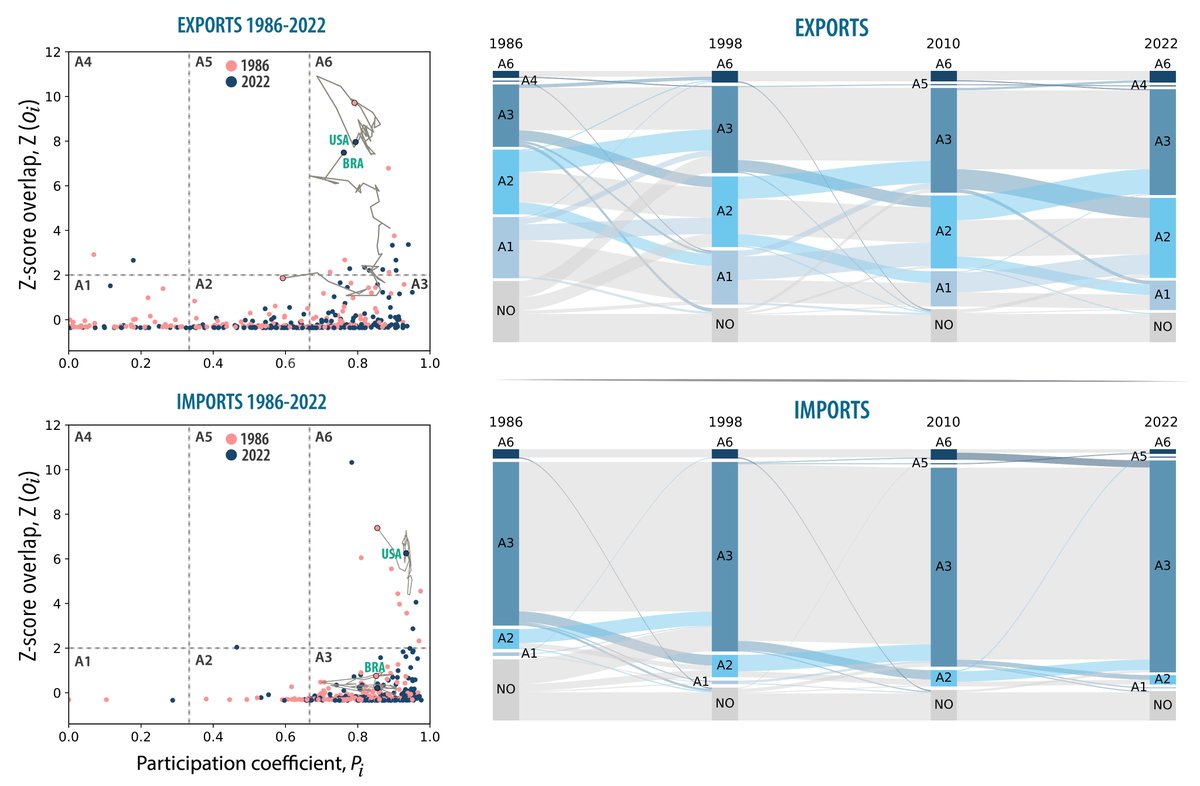
Vulnerability has increased unevenly. Southern Asia, Micronesia, and much of Africa now face higher exposure to cascading food shocks. Diversification helped some regions but amplified inequalities in systemic risk. Understanding structure is key to food security policy. (n/n)
Global trade is now more interconnected & diversified. But:
- Grain trade became more decentralized -> relatively more resilient
- Animal & vegetable fats became more centralized -> fragile around key exporters (e.g., Indonesia & Malaysia)
Connectivity is not equal to resilience.
How resilient is the global food system to production shocks? In our new paper (https://t.co/3yQG8MMmxG), we reconstruct the global food trade network (1986–2022) as a multiplex system and simulate how shocks cascade through export bans. Main results:
🥁 So thrilled to announce our next NetSci Conference Keynote Speaker!
✨ 2x ERC grant winner ✨ Director, Covid Crisis Lab ✨ COVID-19 advisor to the Italian government ✨ Pioneer in infectious-disease modeling
Please join us in welcoming @melegaro!
https://t.co/rGqZ6f2IPw
Last few days to apply to the Lake Como School on Networks, which is celebrating its 10th anniversary in 2026! Don’t miss the opportunity to learn from the lecturers & build your own network with similar-stage career network scientists. Deadline is 16/02: https://t.co/yxeYmZ2mwQ
Social media sites can bring people together or push them further apart. A modeling study shows how small changes in posting or recommendation rules can flip a system from consensus to polarization. In PNAS Nexus: https://t.co/6m4dnMOWcV
Please join us in welcoming 𝗞𝗶𝗺 𝗔𝗹𝗯𝗿𝗲𝗰𝗵𝘁 as the next School Speaker at NetSci 2026 ✨
A data & media artist and information designer, Kim explores how data and computational systems shape visibility in contemporary culture.
Speakers 🔗 https://t.co/rGqZ6f2IPw
We’re thrilled to welcome 𝗠𝗲𝗹𝗮𝗻𝗶𝗲 𝗪𝗲𝗯𝗲𝗿 as a School Speaker at NetSci Conference 2026! She is an Assistant Professor at Harvard, where she leads the Geometric Machine Learning Group. Meet her & all the speakers 👉 https://t.co/rGqZ6f2IPw
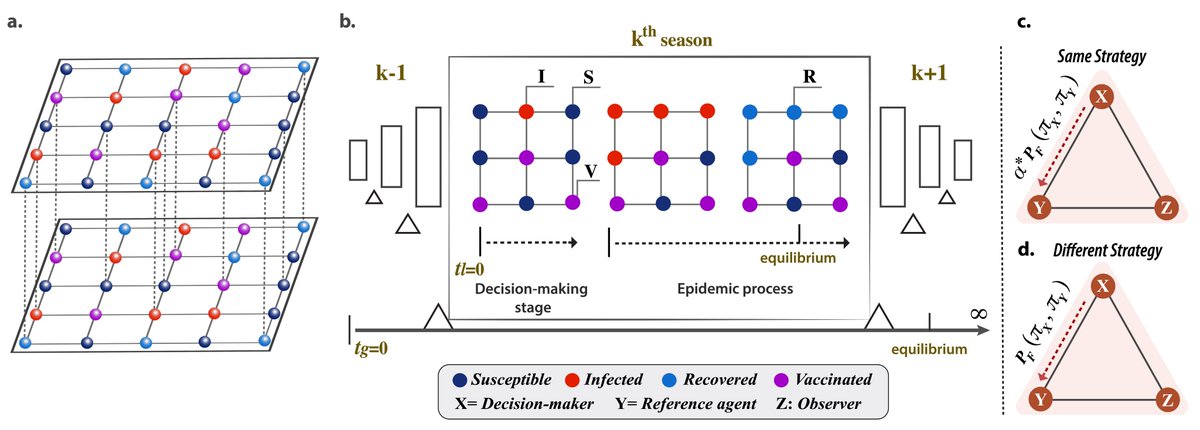
We combine an evolutionary vaccination game with disease dynamics. Our results reveal a striking non-monotonic effect of peer reinforcement. Moderate levels of social reinforcement maximize vaccination coverage and can fully suppress outbreaks.
New preprint out "Evolutionary vaccination dynamics under higher-order reinforcement pressure": https://t.co/VNMeBqyvJT. Here, we study how higher-order social interactions (i.e., group-level peer reinforcement) affect vaccination uptake and epidemic outcomes.
New paper out in PNAS Nexus: How do information diffusion and opinion polarization co-evolve online? Here, we introduce an agent-based model that couples reposting, limited attention, and platform recommendation to study how echo chambers emerge. https://t.co/8wKqXyXZQK
Our key result: small changes in content innovation or recommendation rules can flip a system from consensus to strong polarization.
Low innovation + limited exposure → entrenched narratives and polarized camps.
By calibrating the model with real data (Brexit & vaccine debates), we also show that the same parameters reproducing empirical cascade statistics also generate polarized opinions. A mechanistic link between virality, algorithms, and polarization.
Kudos to my coauthors!
The Lake Como School on Networks celebrates its 10th edition this year! To mark the occasion, the organizing committee will deliver lectures spanning a wide range of state-of-the-art topics in network science.
Don’t miss it and apply by February 16: https://t.co/soCADWbMHE
Main result: effective graph resistance is exactly equal to the cumulative dissipation of a diffusion process on the network. A structural quantity gets a clean dynamical -and physical- interpretation (2/4).
This view reveals a multi-scale structure: short times -> local degree effects, intermediate times -> low-frequency spectrum, long times -> algebraic connectivity. Each scale matters differently for network optimization (3/4).