June 10, 1944. D-Day plus 4.
While Allied and German forces were locked in combat across Normandy, 300 miles to the south a German SS division was moving north toward the front. It was passing through the French countryside.
At 2pm, it stopped at a village called Oradour-sur-Glane.
By 8pm, 642 people were dead. The village was burning.
Seven people survived.
---
Oradour-sur-Glane was not a resistance village. No armed fighters operated there. No German officers had been ambushed nearby. The town had largely been left alone throughout the entire occupation. Residents remembered it as unusually peaceful.
That morning, a Saturday, was completely ordinary. Children were in school. Adults were at work or tending their farms. Some had come in from surrounding villages specifically because Oradour was known as a safe, quiet place.
Around noon, armored vehicles appeared on the roads into town and blocked every exit.
The town crier walked through the streets with a message: all inhabitants were to report to the market square immediately, including the sick and the elderly, for an identity check. It was routine. The Germans did this sort of thing.
Most people were not alarmed.
---
The unit that encircled Oradour was the 1st Battalion of the Der Führer regiment, part of the 2nd SS Panzer Division Das Reich. They had spent two years on the Eastern Front, where SS divisions regularly massacred entire villages as reprisals for partisan activity. It was standard practice. They had done it dozens of times.
Their commander was SS Major Adolf Diekmann. His close friend and fellow officer, Helmut Kämpfe, had been captured by the French Resistance the day before. There are competing theories about why Diekmann chose Oradour specifically. Some historians believe he received a tip from a collaborator that Kämpfe was being held there. Others believe his men may have simply confused Oradour-sur-Glane with a different village, Oradour-sur-Vayres, 15 miles to the south, where the Resistance was actually active.
There are two villages named Oradour in that region of France.
Nobody has ever established with certainty that the right village was chosen.
---
Within an hour, the SS had assembled the entire population in the market square.
Then they separated them.
The 197 men were divided into groups and marched at gunpoint to six barns around the edge of the village. They were told to go inside. The doors were locked behind them.
The 240 women and 205 children were marched to the village church.
Then the soldiers received a signal.
In the barns, machine guns opened fire. The men who were not killed immediately were shot individually. Straw was piled on top of the bodies and set alight.
In the church, SS soldiers brought in a large wooden box and lit a fuse. The box exploded, filling the church with smoke and fire. Grenades were thrown through the windows. The doors were barricaded from outside. As women and children tried to escape through the windows, soldiers shot them from the churchyard.
Five men in the barns survived by hiding beneath the bodies of the dead. One child had escaped before the roundup started and hid in the countryside.
In the church, one woman survived.
Her name was Marguerite Rouffanche. She was 47 years old.
When the smoke inside the church became unbearable, she watched another woman push open a small window above the altar and climb through. She followed her. The woman ahead of her was shot immediately as she fell. Marguerite jumped.
She was shot five times.
She crawled into a garden behind the church and lay hidden between rows of peas until the following afternoon, when she was found by Allied forces.
Her daughter, her daughter's baby, and her husband were all killed inside.
---
After the massacre, the SS soldiers ate lunch in the village square.
Then they spent the rest of the afternoon looting the empty houses before burning them to the ground.
By 8pm, they withdrew from the ruins and continued north toward Normandy.
---
Adolf Diekmann, the man who ordered it, was killed in battle in Normandy three weeks later. He never stood trial.
The SS division commander, Heinz Lammerding, was sentenced to death in absentia by a French court in 1953. West Germany refused to extradite him. He lived in Dusseldorf, openly, running a construction company, until he died in 1971. He was 69.
Of the 200 SS soldiers who carried out the massacre, fewer than 20 were ever convicted of anything. Most served minimal sentences or had their convictions overturned.
---
In 1945, Charles de Gaulle stood in the ruins of Oradour-sur-Glane and issued a decree.
The village would not be rebuilt.
It would not be cleared. It would not be demolished. It would not be touched.
It would remain exactly as the SS had left it, forever, as a memorial to what had happened there.
Today, the ruined village of Oradour still stands. The cars that were parked on June 10, 1944 are still on the streets, rusted to their frames. Sewing machines still sit in the remains of the tailor's shop. The tram tracks are still embedded in the road. The church is still standing, its walls blackened, its windows empty.
300,000 people visit every year.
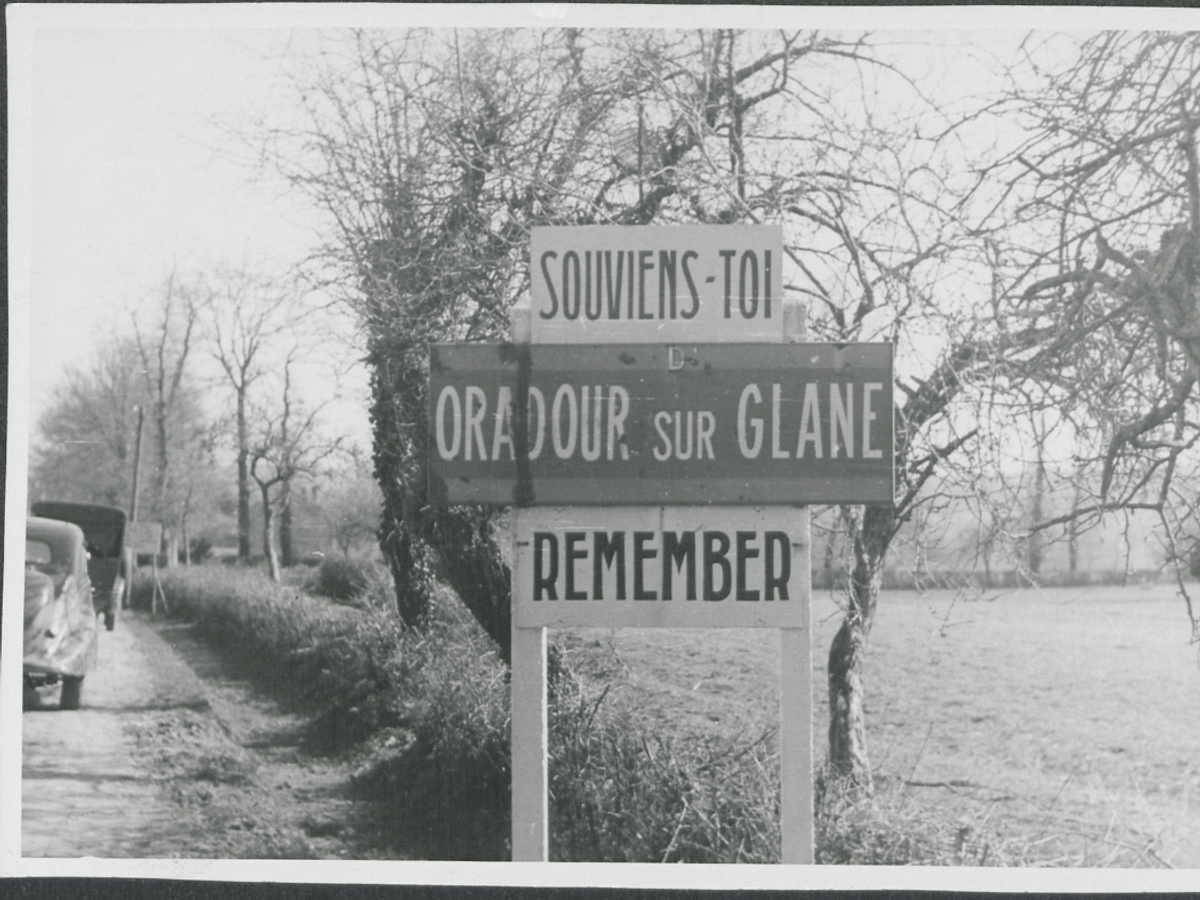
At the entrance to the ruins, a sign reads:
"Remember."
🇺🇸 Most Badass Ballplayers: Combat Veteran Edition #1 Hank Bauer
Hank Bauer, United States Marine and eight-time World Series champion, was one badass ballplayer.
Born July 31, 1922, in East St. Louis, Illinois.
One month after Pearl Harbor, he enlisted in the United States Marine Corps.
He volunteered for the elite Marine Raiders and was sent to the Pacific Theater.
He fought in some of the bloodiest campaigns of the war, including Guadalcanal, Guam, and Okinawa.
On Guam, Bauer went ashore on the very first day.
He earned his first Bronze Star for demonstrating exceptional valor during intense, close-quarters jungle warfare.
He was wounded in the back by enemy shrapnel from an exploding shell. He refused to leave the battlefield.
It was his first Purple Heart.
Years later, pieces of shrapnel from that wound were still embedded in his back. His Yankees teammates would sometimes pick metal fragments out of him in the clubhouse.
The fighting he experienced on Okinawa was even more brutal.
Bauer was a platoon sergeant leading 64 Marines.
Only six of them survived the battle.
On April 15, 1945, under heavy mortar and machine-gun fire, he repeatedly exposed himself to evacuate wounded men.
When stretcher bearers were no longer available, he carried casualties himself to the aid station. For that action he earned a second Bronze Star.
He was also wounded in the thigh by an artillery shell, tearing a massive hole in his left thigh. He received his second Purple Heart.
As he was being carried off, he turned to a buddy and said, “There goes my baseball career.”
Throughout his time in the Pacific, Bauer also battled malaria, contracting it twenty-four separate times (that’s not a typo).
After the war he returned to baseball.
He made the Yankees in 1948 and became a key part of their dynasty, winning seven World Series titles as a player over 14 seasons.
He hit safely in a then record 17 straight World Series games.
He later managed the Yankees to the 1964 pennant and the Orioles to a World Series championship in 1966.
32 months of combat. 11 campaign ribbons. 2 Bronze Stars, 2 Purple Hearts. 8 World Series Championships.
Thank you, Hank! 🫡🇺🇸⚾