🚨 $NVDA is facing a strange market paradox.
AI computing demand remains strong, yet investors are questioning who will pay for the massive infrastructure buildout.
Strong demand doesn't automatically mean strong returns.
Is NVIDIA caught in a temporary shakeout — or is the market changing its rules? 👀
#NVDA #NVIDIA #AI
🚨 $NVDA just faced another reality check.
On Oct. 22, Nvidia fell 4.4% as AI-related stocks came under heavy pressure.
The AI boom isn't necessarily over. But investors are asking tougher questions about spending, profits, and valuations.
Is this a temporary shakeout — or a warning the market can't ignore? 👀
#NVDA #NVIDIA #AI #Stocks
🚨 Memory stocks are facing pressure, but the long-term AI story isn't settled.
Some analysts expect tight memory supply to persist, while others warn that AI financing risks could trigger more volatility.
Can $MU keep delivering — even if investor sentiment stays weak?
Bullish or cautious? 👀
#MU #AI #Semiconductors
🚨 For $MU, the next big question may not be demand.
It's how long strong AI memory demand can translate into earnings growth.
Supply, pricing, competition, and execution will all matter.
Which factor do you think the market is underestimating most? 👀
#Micron#MU #MemoryChips
🚨 The AI memory trade is facing a new test.
$MU is back in focus as SK Hynix drops plans to list its memory-chip unit in the U.S.
Is this just a financing decision — or a sign that market conditions for AI-related stocks are changing?
#MU#SKHynix#AIStocks
🚨 A new risk for $MU investors.
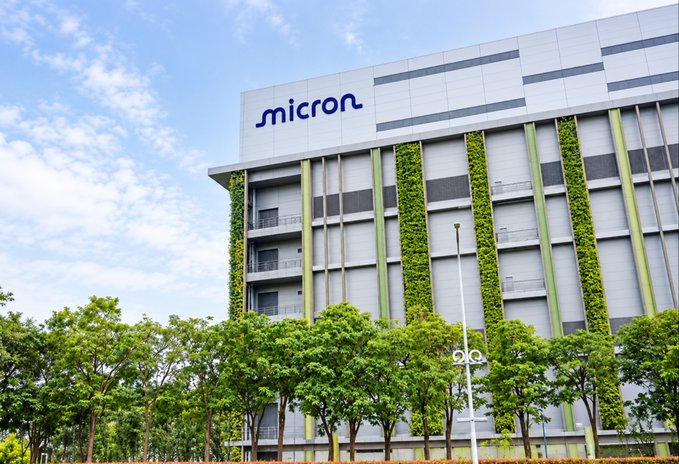
Micron's Taiwan labor situation is drawing attention as demand for AI memory remains strong.
Could production disruptions become a bigger concern — or is the market overestimating the risk?
What's your view? 👀
#MU#Micron#Semiconductors
🚨 WHAT JUST HAPPENED OVERNIGHT?
Bitcoin, tech stocks, and oil are sending mixed signals. Here are the key developments 👇
📉 Bitcoin under pressure: BTC briefly dropped below $81K before recovering toward $81.7K.
🇺🇸 Tech selloff: The Nasdaq 100 plunged 2.9%, its steepest daily decline since June.
💸 ETF outflows: Spot Bitcoin ETFs saw $635.6M in net outflows, ending a streak of more than $1B in inflows.
⚠️ Liquidation risk: $383M in long positions were liquidated in 24 hours as leveraged traders faced mounting pressure.
📊 Leverage is building: Open interest is rising again, while funding rates remain positive.
🛢️ Oil surges: Brent crude hits a five-month high near $114 amid rising tensions around the Strait of Hormuz.
🏦 Bond yields fall: Despite oil-driven inflation fears, Treasury yields declined as rate-hike bets weakened.
🇨🇳 China Bitcoin case: Authorities are seeking to recover 61,800 BTC linked to a reported $5.7B fraud case held in the UK.
💬 The big question: Can Bitcoin hold $80K while tech stocks sell off, oil surges, and ETF investors pull money out?
Bullish rebound or more downside ahead? 👀
#Bitcoin #BTC #Crypto #StockMarket
🚨 The AI memory race is getting more intense.
$MU is benefiting from AI-driven memory demand, but competition and supply constraints could reshape the next phase.
Will Micron strengthen its position — or face a tougher battle than investors expect? 👀
#MU#Micron#AI
🚨 $MU is at a critical turning point.
Micron dropped 6.3% on Oct. 22 as AI-related chip stocks came under pressure.
But AI memory demand remains strong.
Is this a dip worth watching — or just the calm before another drop?
Bulls or bears? What's your take? 👀
#MU#Micron #AI #Semiconductors
A Great Business Can Still Be an Overpriced Stock
I'm interested in $MU because of its exposure to AI memory demand, but I don't believe strong business fundamentals automatically guarantee strong stock returns.
The market constantly compares actual results with expectations.
If Micron's future earnings grow faster than investors expect, the stock could benefit. If growth disappoints—or the stock already prices in an overly optimistic outlook—the downside could be significant.
That's why valuation, free cash flow, and the memory cycle matter as much as the AI story.
Do you think $MU's future earnings potential justifies its current valuation, or is the market getting ahead of itself?
#MU #Micron #StockValuation #AIStocks #LongTermInvesting
Product Mix Could Matter as Much as Revenue Growth
A semiconductor company doesn't grow stronger simply by selling more chips.
Its product mix, manufacturing efficiency, and ability to deliver advanced products at competitive costs matter just as much.
For $MU, I'm watching whether HBM, high-performance server DRAM, and enterprise SSDs can become increasingly important contributors to its business.
The real test is whether product innovation leads to better profitability and a stronger competitive position.
What matters more to you when evaluating a semiconductor stock: revenue growth, gross margins, or technological leadership?
#MU #HBM #DRAM #Semiconductors #FundamentalAnalysis
Semiconductor Capacity Can't Be Built Overnight
The memory industry is capital-intensive.
Building new fabrication capacity, installing equipment, improving yields, and qualifying products all take time.
If AI memory demand grows faster than qualified supply, established manufacturers could benefit from favorable market conditions.
But there's a catch: today's shortage can become tomorrow's oversupply if the industry expands too aggressively.
Do you think memory manufacturers can keep supply disciplined, or will the next capacity cycle eventually pressure prices?
#MU #Semiconductors #MemoryMarket #AI #ChipManufacturing
Don't Ignore Micron's Enterprise Storage Business
AI infrastructure requires more than high-bandwidth memory.
Large-scale AI systems also need fast, reliable storage to manage enormous datasets and support increasingly complex workloads.
Micron's enterprise SSD and NAND products give it exposure to another part of the data infrastructure market.
The key question is whether AI-related storage demand can translate into sustainable revenue and attractive margins.
Could enterprise storage become a bigger part of the AI investment story, or will most of the attention remain on GPUs and HBM?
#MU #EnterpriseSSD #NAND #AIInfrastructure #DataCenters
Forward Guidance Matters More Than a Single Earnings Beat
When evaluating $MU, I'm not looking at revenue alone.
I'm also watching management's forward guidance, expected margins, and commentary on memory demand.
Micron's fiscal Q1 2027 revenue outlook, issued on September 30, 2026, was approximately $61.5 billion, subject to a stated range.
The next question is whether actual results can meet or exceed those expectations—and whether future guidance remains strong.
Would you rather invest in a company with strong historical earnings or one with improving forward guidance?
#MU #EarningsSeason #FinancialAnalysis #Semiconductors
Memory Pricing Could Be a Key Driver for $MU
One of the most important variables in the memory business is supply and demand.
When demand outpaces available supply, memory pricing can strengthen and potentially improve profitability.
For Micron, the opportunity is that AI-related demand may tighten the market for certain high-performance memory products.
But memory is cyclical. Higher prices can encourage new capacity, and oversupply can quickly change the picture.
How long do you think the current AI-driven memory demand cycle can last before supply catches up?
#MU #MemoryChips #DRAM #HBM #Semiconductors #stockmarkets
HBM Technology Could Be a Major Differentiator for $MU
AI memory isn't just about producing more chips. It also requires advanced performance, packaging, power efficiency, and reliable manufacturing.
Micron has been advancing its HBM portfolio, including HBM4.
If new products ramp successfully and gain customer adoption, they could strengthen Micron's position in the AI memory supply chain.
But execution matters: qualification, yields, costs, and competition will determine how much value this creates.
Can Micron turn its HBM technology roadmap into a lasting competitive advantage?
#MU #HBM #AIChips #Semiconductors #Technology
The AI Infrastructure Boom Needs More Than GPUs
When people discuss AI infrastructure, they often focus on processors.
But every AI server also needs memory and storage.
That's why $MU deserves attention: its products serve multiple parts of the data center ecosystem, from high-bandwidth memory to server DRAM and enterprise SSDs.
The key question is whether hyperscalers can keep expanding AI infrastructure at a pace that supports long-term memory demand.
Are data center memory requirements still underestimated by the market, or is this growth already priced into $MU?
#MU #AIInfrastructure #DataCenters #Memory #TechStocks
Revenue Growth Matters — But Can Micron Sustain It?
One of the biggest reasons I'm researching $MU is its recent revenue momentum.
Micron's official fiscal Q4 2026 results reported $54.23 billion in quarterly revenue, compared with $41.46 billion in the previous quarter.
That's a significant increase, but one quarter doesn't tell the whole story.
I'm watching whether demand, pricing, and product mix can support sustainable earnings and cash flow.
Do you think Micron's growth is a lasting structural trend driven by AI, or could it reverse when the memory cycle turns?
#MU #Micron #Earnings #Semiconductors #Investing