Zimbabwean-born MTN Group chief executive Ralph Mupita says 82% of the company's revenue is generated outside of South Africa, pointing to pan-African economic integration - not isolation - and cooperation as essential for the continent's future growth and prosperity.
Speaking at the Kgalema Motlanthe Foundation Winter Seminar yesterday, Mupita said Africa's growth and future depends on shared economic opportunities and integration rather than divisions, too restrictive borders and anti-immigrant hostilities.
This comes in the wake of massive anti-immigrant protests in South Africa, and removal of thousands of Africans, mainly from Malawi, Lesotho, Mozambique, Ghana, Nigeria and Zimbabwe.
Mupita, hails from Mutare and has been in South Africa for 35 years where he is now married locally in Limpopo province, says Africa is the commercial heartbeat of MTN, the continent’s largest telecoms company with over 300 million subscribers.
MTN operates in over 15 markets across Africa and the Middle East, with major hubs like Nigeria and Ghana contributing significantly to the group's overall performance.
MTN Group reported a total service revenue of R218.5 billion for the financial year ended 31 December 2025, a 22.9% increase year-on-year.
Mupita's remarks came amid discussions on regional mobility, cautioning against retaliatory actions or boycotts of pan-African businesses during localised social tensions.
MTN, founded in 1993, although it started operating in 1994, has a history with Zimbabweans.
The late Sifiso Dabengwa, who hailed from Zimbabwe, became the chief executive of the company in 2011, succeeding Phuthuma Nhleko.
Before taking the helm, Dabengwa joined the company in 1999 as the managing director and later served as group chief operating officer.
He remained chief executive until his resignation in November 2015.
Dabengwa died in 2024.
"We are indeed ready to work with constitutional elements in the army, resisting the constitutional coup. It's time all progressive Zimbabweans join hands and defend the nation from Zviganandas." — Veteran opposition and former Finance minister Tendai Biti.
🔴Senziwani Sikhosana, Bard Santner chief executive, recently won the 2026 Director of the Year in the Small and Medium-Sized Enterprises (SME) category from the Institute of Directors Zimbabwe (IoDZ).
Sikhosana - who last year brought Nigerian billionaire Aliko Dangote to invest over US$1 billion in Zimbabwe - was: "Honoured for exceptional leadership, strategic vision, an unwavering commitment to corporate governance, driving organisational excellence, and creating sustainable value within his organisation".
Bard Santner is an emerging financial services firm based in Harare, focusing on asset management, corporate finance, treasury bills, and wealth management.
Led by Sikhosana, the company was founded in 2021 and also offers key services like money remittances and commodity trading.
For some South Africans marching amd marching has now become almost like a daily, permanent occupation.
This is a march led by Nkosikhona
Phakel'umthakathi Ndabandaba going on now at KwaCeza, in Ulundi, Zululand District, KwaZulu-Natal province.
The xenophobic and Afrophobic marches by vigilante groups are mainly targeted at black African immigrants - occasionally Pakistanis and Bangladeshis - in South Africa, largely Nigerians, Ghanaians, Malawians, Somalis, Mozambicans, Basotho and Zimbabweans, among others.
The Western Cape High Court has granted South African President Cyril Ramaphosa an interim interdict halting Parliament's Section 89 impeachment inquiry proceedings against him.
This gives Ramaphosa a reprieve on parliamentary impeachment proceedings against him over the Phala Phala foreign currency theft scandal at his farm, 43 kilometres west of Bela-Bela in the Limpopo Province.
The scandal took place im 2020, sparking major political and legal battles over mysterious funds.
A full bench delivered a split majority decision ordering National Assembly Speaker Thoko Didiza and committee chairperson Makashule Gana to pause public hearings.
The suspension remains in place pending a separate judicial review of the independent panel's report on the Phala Phala farm scandal. That review is scheduled for September.
The interdict specifically targets the public hearings aspect. Parliamentary officials noted they can still proceed with internal preparatory work, like finalising terms of reference and selecting evidence leaders.
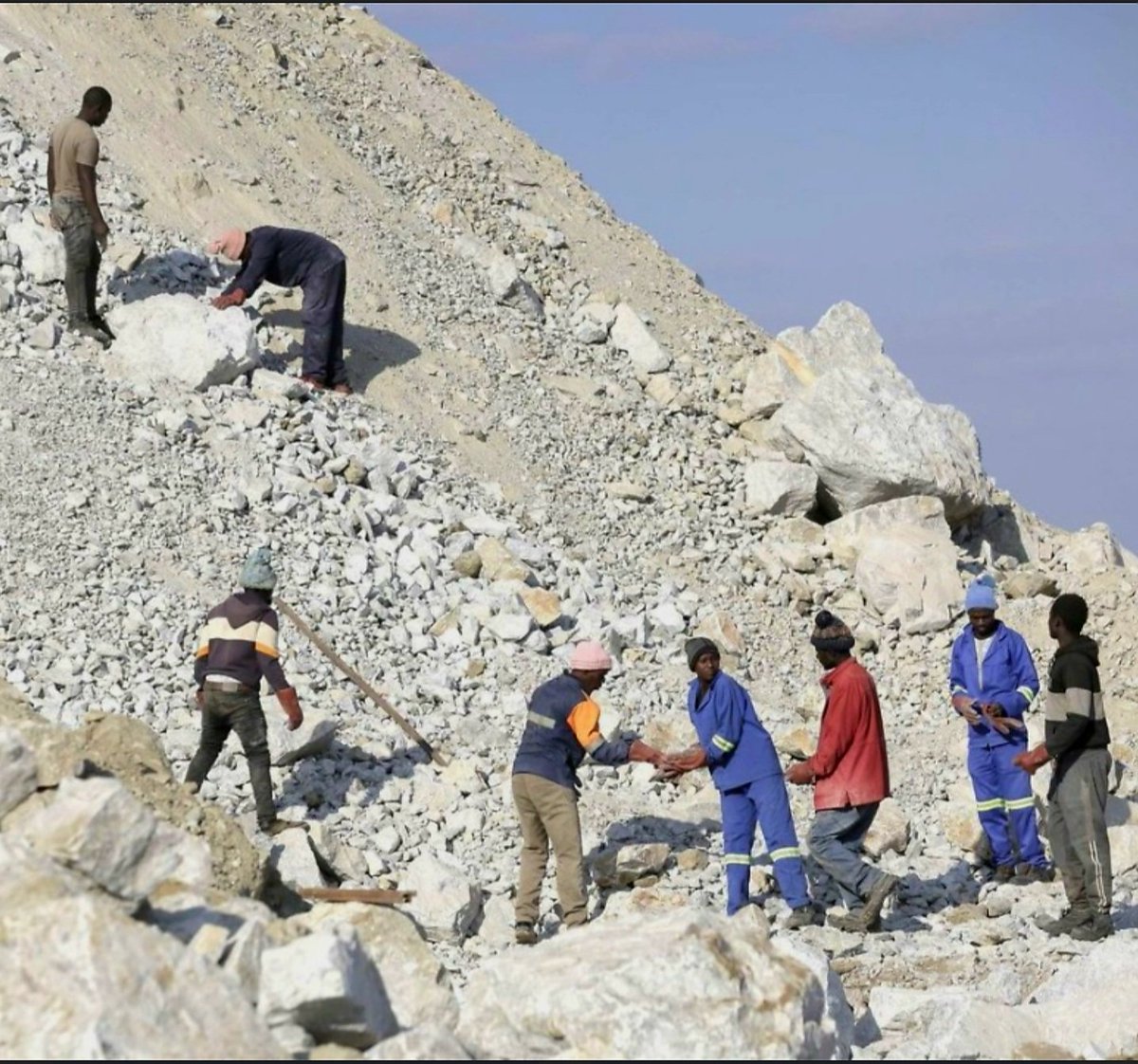
By transforming an old emerald mine into a JORC-compliant lithium powerhouse, the state-owned enterprise has secured the necessary foreign investment to anchor itself in the global EV supply chain.
If the country successfully navigates its upcoming 2027 export ban, Sandawana will transition from a simple extraction site into a highly sophisticated industrial hub for green energy minerals.
Sandawana’s transformation from a fading 20th-century gemstone pit into a vanguard of the 21st-century energy transition gives Zimbabwe a chance to rebuild its economy on a renewed mineral resource after squandering the Chiadzwa diamond mining opportunity in Marange, Manicaland.
By leveraging international capital to build local processing infrastructure, Mutapa Energy Resources has turned an old asset into an industrial hub.
This shift proves that the ultimate value of African mineral wealth lies not just in what is buried in the earth, but policy, country risk, ease of doing business, investment and in the domestic capacity to refine it.
From Old Emerald Mine to Hub of White Gold: The Resurgence of Sandawana Mine
For over half a century, Mberengwa district in Midlands, Zimbabwe, was famous for its glittering green emeralds.
The Mweza Hills echoed with the pursuit of deep-green treasure. Opened in 1955, the legendary Sandawana Mine was globally renowned for producing high-quality emeralds.
Zimbabwean emeralds are primarily utilised in high-end fine jewelry, and their production peaked during the 1970s and 1980s.
Renowned for their saturated, vivid green colour, Sandawana emeralds were heavily valued for cluster work, halos, eternity bands, and pave settings.
Deposits were first found in 1956 by prospectors in Mberengwa.
Operations hit their golden era in the 1970s and 1980s under Sandawana Mines, feeding massive volumes into international cutting and trading hubs.
However, production slowed significantly through the 1990s and 2000s due to changing economic conditions and operational shifts, though the site remains a recognised name in the global coloured gemstone market.
As the gemstone deposits further dwindled, the mine fell into quiet dereliction.
Yet when the world pivoted toward electric vehicles and renewable energy storage, the old shafts of Sandawana Mine whispered a different promise into resurgence.
The narrative shifted dramatically this month - July 2026.
Armed with an aggressive 11-month exploration programme spanning just 30% of their 3 800-hectare claim, Mutapa Energy Resources chief Innocent Rukweza announced a monumental discovery: 39.9 million tonnes of lithium-bearing ore.
Of this "white gold," an unprecedented 72% is classified as measured and indicated — offering a level of geological certainty rarely seen in African mining sectors. Concurrently, Mutapa Energy, a subsidiary of sovereign wealth fund, Mutapa Investment Fund (MIF), secured a US$300 million investment from a consortium, including major Chinese corporations to immediately build a three-million-tonne-per-annum concentrator plant.
Two days ago, Rukweza said the JORC-compliant the 39.9 million-tonne lithium deposit at Sandawana Mine boast an average grade of 1.39% lithium oxide.
Being JORC compliant means that a mining or exploration company follows the official rules set by the Joint Ore Reserves Committee to publicly report its mineral deposits, exploration results, and ore reserves with transparency, materiality, and competence.
The JORC Code is the official reporting standard for Australia and New Zealand.
Following an 11-month exploration, this massive resource, covering only 30% of the claim area, got US$300 million in international funding, accelerating a pivot from emeralds to critical minerals.
Rukweza said the certified data instantly made the project bankable for international lenders. What made the moment even more electrifying was that this discovery covered only Block A — a mere 30% of the entire 3 800-hectare mining concession.
The declaration immediately unlocked global capital, culminating in a US$300 million investment from a consortium including major Chinese mining corporations.
This capital fund will develop large-scale processing facilities to extract up to three million tonnes of ore annually.
Zimbabwe currently supplies roughly 10% of the world's mined lithium.
This discovery aligns with the government’s strict mandate to ban all raw lithium concentrate exports by the beginning of 2027. The goal is to force local "beneficiation" — turning raw ore into higher-value battery-grade chemicals locally rather than shipping wealth overseas.
Because 70% of the claim (Blocks B and C) remains unexplored, Mutapa is actively initiating a multi-million dollar secondary drilling phase.
Experts project the total deposit could eventually soar as high as 90 million tonnes.
The certification of the Sandawana lithium deposit marks a turning point for Zimbabwe’s economic landscape.
Zimbabwean Professor Arthur Mutambara addressed the University of Johannesburg's inaugural Artificial Intelligence and the Law Conference from July 9-11, held at the Skukuza Safari Lodge in the Kruger National Park in Mpumalanga province, South Africa.
Mutambara, Director of the UJ Institute for the Future of Knowledge, stressed that Africa must urgently establish clear legal frameworks and data policies rather than just consume foreign AI tools.
Brute force and ignorance will break your finger (raw physical strength and stubbornness instead of skill, patience, or intellect will only result in hurting yourself)... Intimidation and violence not the best way to get a job!
A South African farmer Shawn Van Der Merwe in Pietermaritzburg, KwaZulu-Natal, talks about a group of South Africans going around his area and the country demanding employers should remove illegal immigrants and employ their own people regardless of qualifications, skills and experience, saying it doesn't work.
Elon Musk has long faced accusations of racism. In an interview with The Economist’s editor-in-chief, Zanny Minton Beddoes, he rejected those claims stating, “I’m against rape and murder. I’m against the imposition of rules and laws that are contrary to what we’ve come to accept in the West”. - The Economist.
Watch the full interview at 6pm London time (1pm in New York): https://t.co/vO7zEndTSY
Be a community where people experience reconciliation. A community where the
poor are not forgotten.
A community where women and men are treated with dignity. A
community where young people can imagine a future. A community where creation is cared for.
The Church is not alone in this calling. Christ is with you. The Holy Spirit continues to accompany you.
The God who has sustained the Church through difficult seasons will
not abandon you now. And the worldwide ecumenical family is with you.
I came because you invited us to stand with you. I came to tell you that we have heard your cry. I came to pray with you. And I came to say: You are not alone.
May God give the Church in Zimbabwe wisdom to understand the times, courage to speak
truth, humility to repent, strength to remain united, and faith to keep alive the vision of a just, peaceful and flourishing Zimbabwe.
May God bless the Zimbabwe Council of Churches.
May God bless the Church in Zimbabwe.
And may God bless the people of Zimbabwe.
Amen.
Yours in Christ,
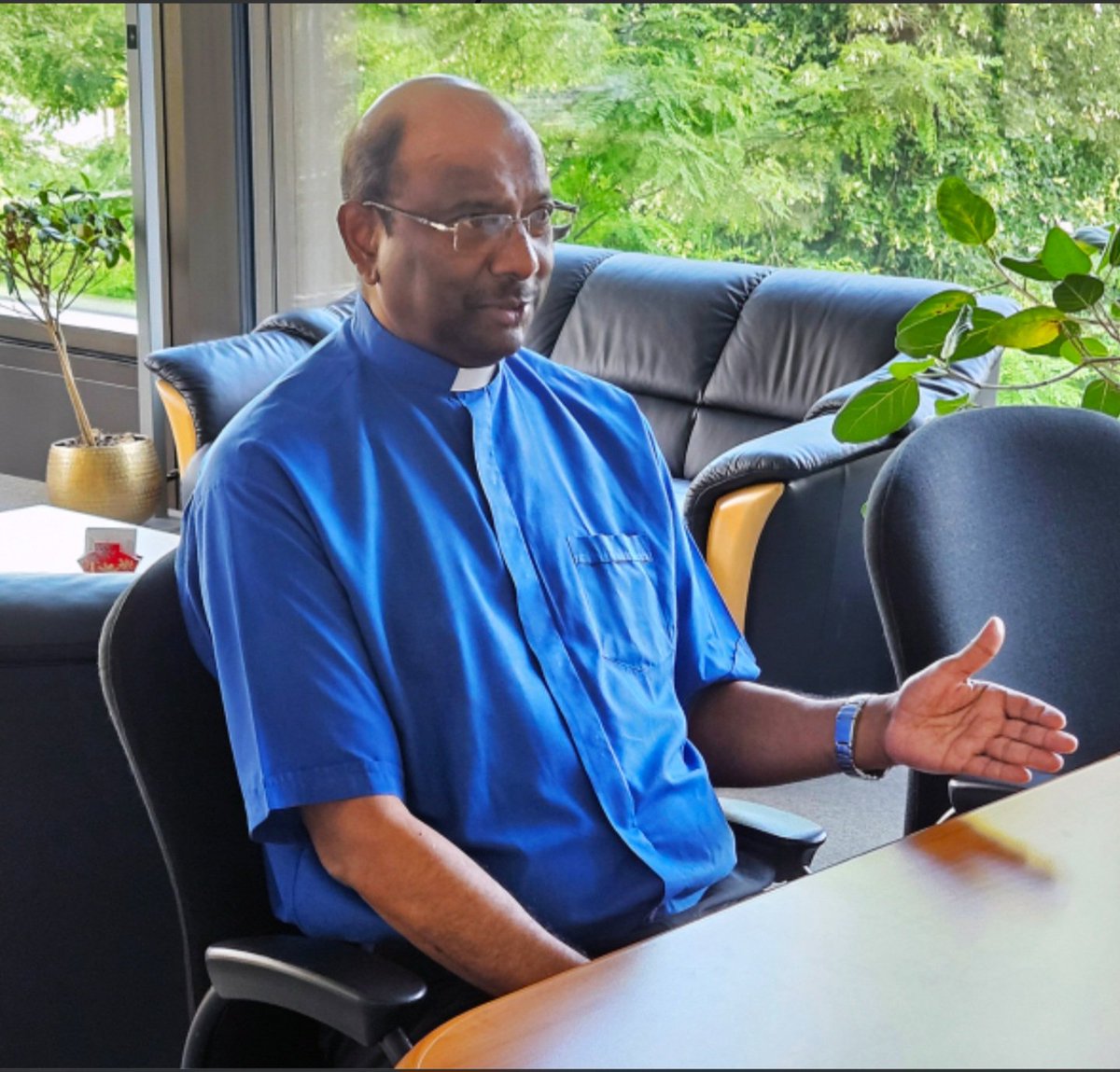
Rev. Prof. Dr Jerry Pillay
General Secretary
World Council of Churches
Address to the General Assembly of the Zimbabwe Council of Churches
𝐁𝐲 𝐏𝐫𝐨𝐟𝐞𝐬𝐬𝐨𝐫 𝐃𝐫 𝐉𝐞𝐫𝐫𝐲 𝐏𝐢𝐥𝐥𝐚𝐲
The Church’s Prophetic Responsibility in Promoting Peace, Social
Cohesion, Justice and Sustainable Development
Bishop Dr Makumbe, President of the Zimbabwe Council of Churches;
Bishop Kenneth Sibanda, Vice-President of the Zimbabwe Council of Churches;
Members of the Supervisory Council;
Members of the Advisory Board;
Rev. Dimingu, General Secretary of the Zimbabwe Council of Churches, and the entire
Secretariat;
Sisters and brothers in Christ.
I greet you in the name of the Triune God: Father, Son and Holy Spirit.
I bring you greetings from your sisters and brothers in Christ in the World Council of Churches
— more than 600 million Christians in more than 120 countries around the
world.
They are praying for and with you. They are praying for and with Zimbabwe.
And they desire to see this nation prosper in ways that are just, peaceful and equitable.
I am here on their behalf, in response to your invitation and your request for ecumenical
solidarity.
After receiving the invitation from your General Secretary only a few weeks ago, I understood it as an invitation to prayer, to fellowship and to ecumenical
accompaniment.
In the book of Acts, Paul had a vision in the night. He saw a man from Macedonia pleading with him: “Come over to Macedonia and help us!” (Acts 16:9).
I received your invitation in a similar spirit. I heard in it a call: “Come and stand with us.
Come and pray with us. Come and accompany us.” And so, I am here, not alone, but with
a delegation from the global and regional ecumenical fellowship.
I am here because I know that the churches in Zimbabwe are carrying a heavy burden —
not only for the life of the Church, but for the life of the nation.
We have been following your public witness with a lot of admiration. We have read your
statements. We have seen your concerns about the proposed constitutional amendments
and about the protection of democratic principles and meaningful citizen participation.
And now, the constitutional
amendments have been adopted. This raises a very
important
question for the Church: What does the Church do when the situation does not go the way it had hoped?
What does the Church do when its warnings are not
heeded? What does the Church do when people feel that their voices have not been heard?
These are the questions I would like us to consider today as we reflect on the theme you
asked me to speak on: The Church’s prophetic responsibility in promoting peace, social
cohesion, justice and sustainable development.
Across the contemporary world, societies face unprecedented challenges characterized
by violent conflict, wars, political instability, economic inequality, environmental degradation, forced migration, democratic decline, and increasing social polarization.
Africa continues to experience many of these challenges while simultaneously demonstrating remarkable resilience, community solidarity, and religious vitality.
I am deeply concerned by the rising xenophobia and Afrophobia we see in Africa.
And I am deeply ashamed of my own country, South Africa, and how it has recently treated Africans from other countries.
Zimbabwe represents a compelling context within which to explore the church's public witness.
Since independence, the nation has experienced periods of political contestation, economic
crises, migration, social inequality, and climate-induced vulnerabilities.
These realities have raised significant questions concerning the role of faith communities in
promoting justice, reconciliation, peace, and sustainable development.
Within this context, the church cannot retreat into private spirituality.
Rather, it is called to embody its prophetic vocation by participating in God's transformative mission within society.
Concluding Remarks
The World Council of Churches' Pilgrimage of Justice, Reconciliation and Unity offers an
important theological framework through which churches may understand this vocation
as a shared journey of accompaniment, transformation, and hope.
Rather than limiting prophecy to criticism alone, this framework envisions the church as an agent of reconciliation, an advocate for justice, a builder of peace, a steward of creation, and a
companion to communities seeking abundant life.
Zimbabwe's churches possess extensive moral authority, grassroots presence, and
theological resources capable of contributing significantly to national renewal.
Your prophetic responsibility is therefore not optional but integral to faithful discipleship and
public witness.
As you continue to embody God's reconciling mission, you participate in the coming reign of God, where justice and peace embrace, creation is renewed, and human dignity is affirmed.
You have been doing this for many years.
Through humanitarian and diaconal work, you have stood with communities.
You have helped people develop agricultural methods that improve food production.
The churches have contributed to health and education, running hospitals and schools.
You have worked for reconciliation and healing. You have accompanied communities in times of crisis. This is not merely charity.
It is prophetic ministry. You are giving people glimpses of what God’s reign can look like. You
are agents of hope.
The World Council of Churches understands its calling as being that of a prophetic movement. We are seeking to strengthen the prophetic voice of the
Church in the world.
In recent years, the WCC has sought to stand in solidarity with people who are suffering
in different parts of the world.
We have spoken clearly about the need for justice and peace in Israel and Palestine, naming the treatment of Palestinians by Isreal as apartheid in nature.
We have condemned Russia’s illegal invasion of Ukraine. We have opposed military aggression and unilateral uses of force by the United States on Venezuela and
Iran.
We have drawn attention to the devastating war in Sudan and the suffering of its people.
We have challenged an economic system that continues to impoverish people and damage God’s creation.
We have used our platforms at the World Bank and IMF to advocate for debt restructuring
and cancellation, including Zimbabwe’s debt.
We have advocated for a new and
fairer international economic and financial architecture.
We continue to defend the dignity and rights of women, children and racialized communities who are marginalised in many parts of the world.
And we continue to work with churches and partners seeking peace — peace that is based
on justice.
That is why I am here today. I am here to say to the people of Zimbabwe: You are not alone. Your desire for meaningful participation in constitutional and democratic
processes is legitimate.
And I would say more: the pursuit of human dignity, justice and
participation is consistent with our Christian faith.
We agree with you that Zimbabwe’s natural resources must serve the common good and not only those who are politically connected. We agree with you that people must be able to produce food in ways that are sustainable and environmentally responsible.
We agree with you that the next generation must be free from fear, repression and deprivation. We
agree with you that health and education must be accessible and affordable.
And we are here to say: we stand with you.
In the words of the Apostle Paul:
"May the God of hope fill you with all joy and peace as you trust in him, so that you may overflow with hope by the power of the Holy Spirit" (Romans 15:13).
This prayer remains both a theological affirmation and a public vocation for the church in
Zimbabwe today.
Our prayer is that here in Zimbabwe you would continue to witness to God’s coming
reign.
🔴Disclaimer: Part of the language used in this video clip is foul, vulgar and obscene, but the issues are important
A United States-based Swati national Mandla Nkosi (Dlamini) - who describes himself as a cousin of Zulu King MisuZulu, saying he lived with him in Eswatini and in New York, although he always attacks him - says South Africa has badly damaged itself by allowing vigilante criminal hate groups like March and March to incite violent attacks and killings of black African migrants with impunity under the pretext of fighting illegal immigrants.
#Breaking
🔴Zimbabwe's oldest football club Highlanders chairperson retired colonel Ken Mhlophe, vice-chair Fiso Siziba, treasurer Nkani Khoza, and another fourth person yet to be identified have died in a road traffic accident this evening.
The four died in the accident on their way from Kariba in the northern part of the country, returning from a league match in which Bosso lost 1-0 to ZPC Kariba yesterday.
More details are coming.