Our collab with @ChordArc secured 3 GTD + 5 FCFS spots for our community
Early supporter may get picked randomly,@grok picks the rest
Follow @ChordArc@Nexy200@the_Echo_DAO
Like,RT quote/collab:https://t.co/LsKYMgY5Vl
drop TG ID:https://t.co/WLQZIzlVK1
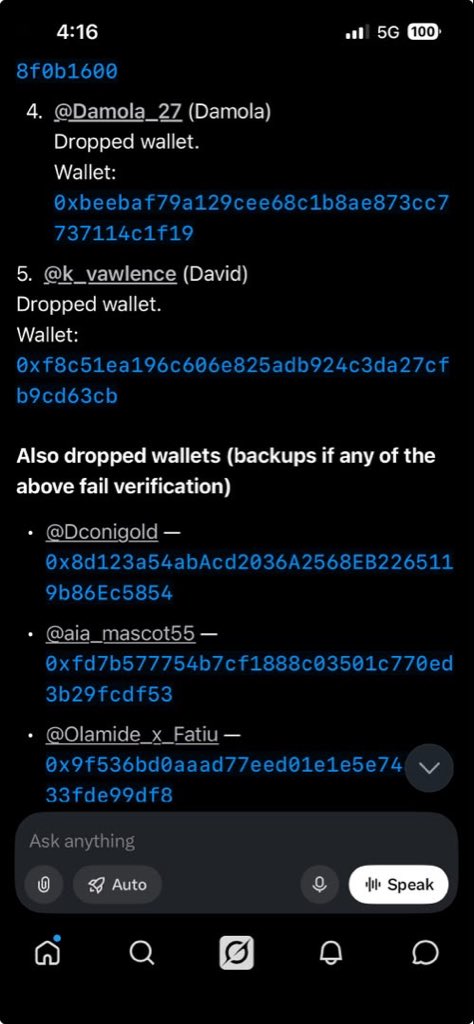
Drop your wallet
24hrs
Our collab with @ChordArc secured 3 GTD + 5 FCFS spots for our community
Early supporter may get picked randomly,@grok picks the rest
Follow @ChordArc@Nexy200@the_Echo_DAO
Like,RT quote/collab:https://t.co/LsKYMgY5Vl
drop TG ID:https://t.co/WLQZIzlVK1
Drop your wallet
24hrs
robinhood:0xaa07a0e9209e16ac99708c3ec70159c6ef3128a3 is an idian pj and it made alot of people figs.
let's bring it to @ponsdotfamily
https://t.co/tK6vuLcN2R
@orbiodotso
robinhood:0xaa07a0e9209e16ac99708c3ec70159c6ef3128a3 is an idian pj and it made alot of people figs.
let's bring it to @ponsdotfamily
https://t.co/tK6vuLcN2R
@orbiodotso
In short, The goal for Physical AI should therefore be more than intelligence. It should be capability + control + validation.
A robot is never completely safe.
Unlike a normal LLM, where a wrong answer can usually be ignored, an AI controlling a physical system can turn an incorrect prediction into a real-world action. That single action can damage equipment, or potentially injure someone.
This is why robot safety cannot depend on the AI model alone. The Physical limits, force limits, movement constraints, restricted operating areas, emergency stops, and other safety mechanisms are necessary.
Training data also matters. If robots learn from real-world demonstrations, the quality and safety of that data directly affect what they learn to do.
A dangerous movement does not necessarily mean a robot “wanted” to cause harm. It can result from a bad prediction, faulty data, sensor error, software failure, or another failure in the system.
Keep building and validating, team @PrismaXai 🫡
@castorhat@chynaqqq
No robot is safe. Not the one dancing, not the one folding laundry.
The tolerance for a wrong move is zero. You can't sandbox a 50 kg machine or roll it back. An LLM that gets it wrong gets regenerated. An arm that gets it wrong goes through the table.
The studio pass is the most important part of the Token Tunes ecosystem 🎫
It'll be a one-time mint on ETH that provides on-going utility for all of our music releases thereafter 🎵
Studio pass holders will always be our priority 🫡
Supply, price, WL and full details soon! ⏳
In short, The goal for Physical AI should therefore be more than intelligence. It should be capability + control + validation.
A robot is never completely safe.
Unlike a normal LLM, where a wrong answer can usually be ignored, an AI controlling a physical system can turn an incorrect prediction into a real-world action. That single action can damage equipment, or potentially injure someone.
This is why robot safety cannot depend on the AI model alone. The Physical limits, force limits, movement constraints, restricted operating areas, emergency stops, and other safety mechanisms are necessary.
Training data also matters. If robots learn from real-world demonstrations, the quality and safety of that data directly affect what they learn to do.
A dangerous movement does not necessarily mean a robot “wanted” to cause harm. It can result from a bad prediction, faulty data, sensor error, software failure, or another failure in the system.
Keep building and validating, team @PrismaXai 🫡
@castorhat@chynaqqq